No Marshmallows Allowed at My Thanksgiving Table

At Thanksgiving, my mother made the best oyster dressing with a recipe I never pinned her down on, and her home-cooked collards were seasoned just right with country ham.

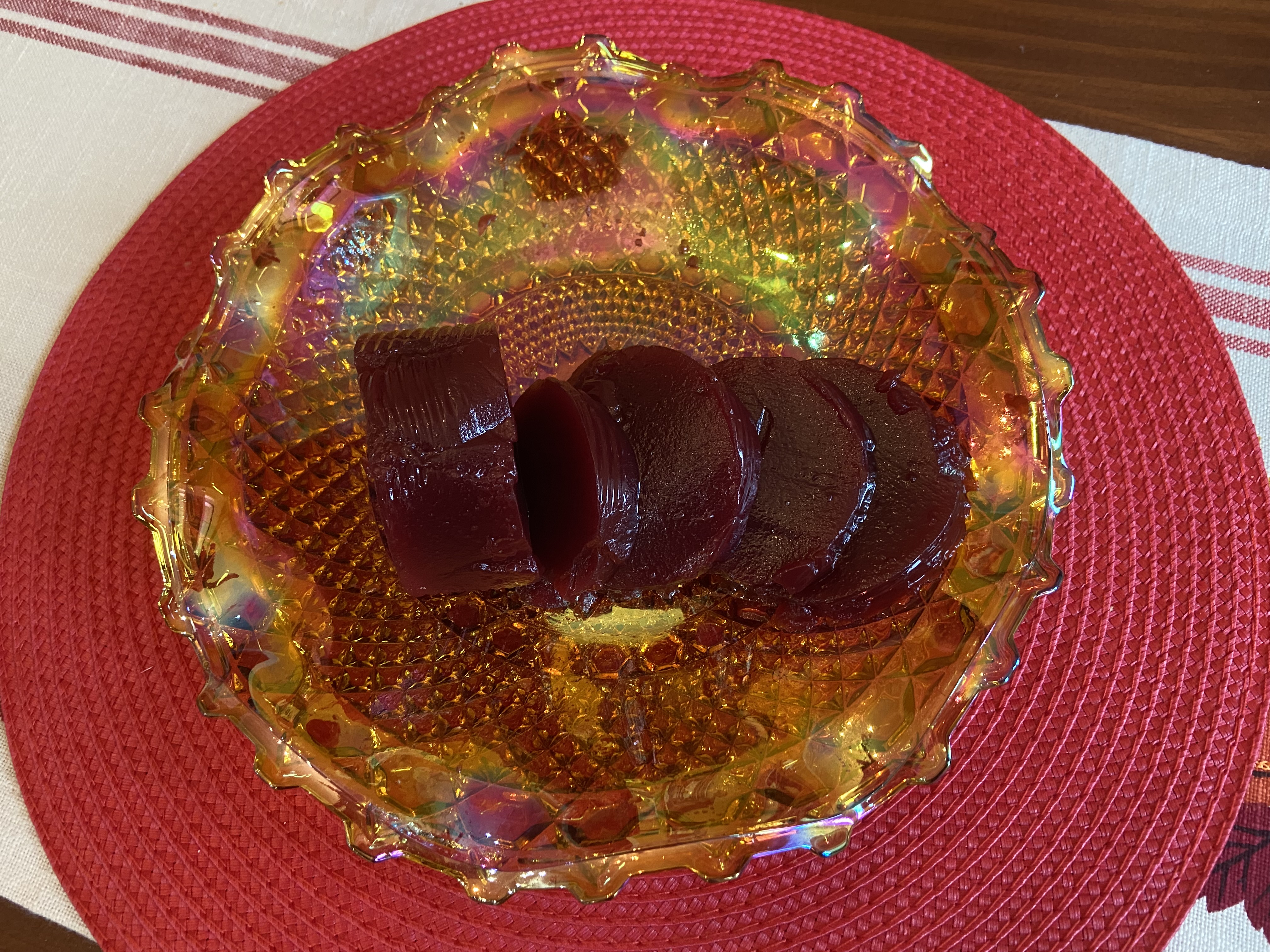
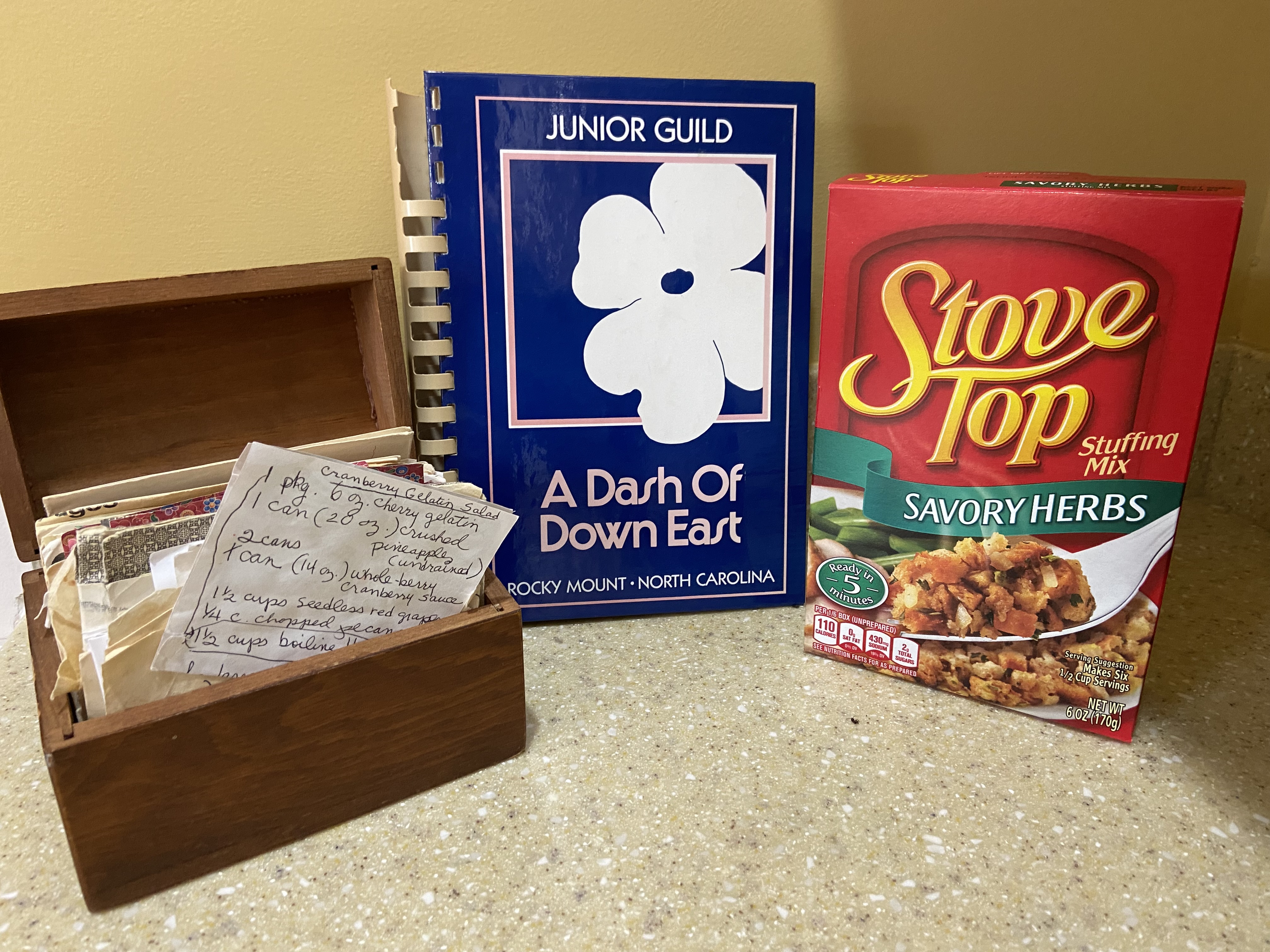
Her cranberry, however, she slid straight out of the can, plopped on a plate, and sliced at the last minute. That jellied, ridged cranberry is one of the two dishes of her Thanksgiving dinner where I think I’ve raised the bar.

Here’s how I’ve improved the straight-from-the-can cranberry side.

Cranberry Gelatin Salad (Yields 8-10 Servings)*

1 package (6 ounces) cherry gelatin to be dissolved in 1 and a half cups of boiling water

1 can (20 ounces) crushed pineapple

2 cans (14 ounces) whole berry cranberry sauce (Do NOT use that ridged gelatin stuff without the berries)

1 and a half cups of seedless red grapes, sliced (I half mine, you can decide how big you want your chunks of grapes.)

1/4 cup chopped pecans

In a large bowl, dissolve the gelatin in the boiling water. Stir in the pineapple and the cranberry sauce. Refrigerate for 30 minutes. Then stir in grapes and pecans. Pour into a 2-quart serving dish. Refrigerate until firm.

*I would give credit for this recipe if I could remember where I copied it from. Thank you, somebody, somewhere.

The dish can easily be made a day or so ahead, which comes in handy on the busy cooking day of Thanksgiving. It’s super easy to assemble; other than dissolving the gelatin, no turning on the stove or oven.

Best of all, everyone loves it!

When it comes to cooking, I do believe in fast and easy. Unlike my mother, I buy my collards already cooked. They’re more expensive, but it’s such a time-saver. My dressing is Stove Top. I fix two boxes, doctoring up one by adding a can of drained oysters. It’s as close to Mama’s dressing as I can get.

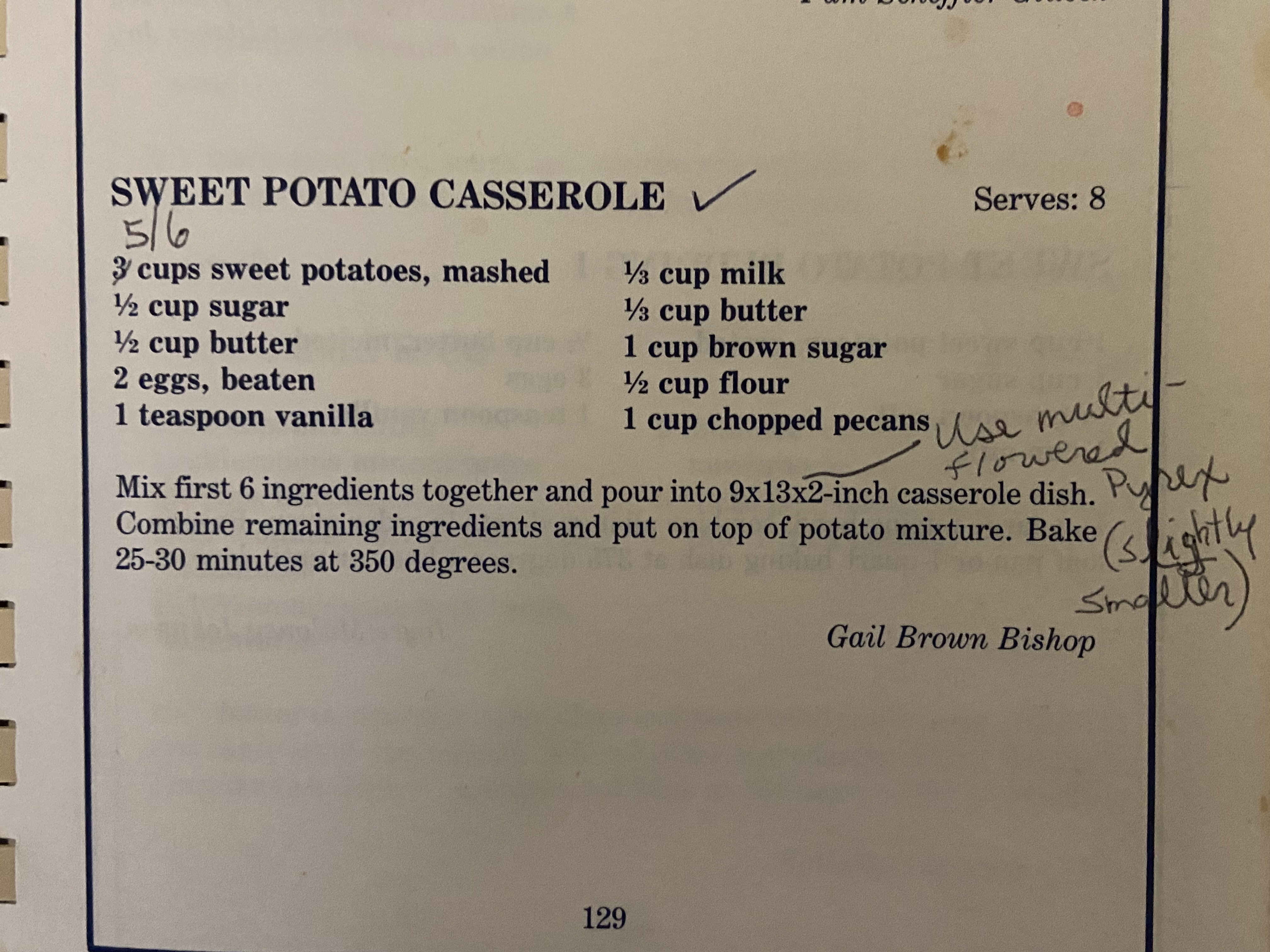
I love the 1986 edition of the Rocky Mount Junior Guild cookbook, A Dash of Down East (in the picture above). It contains real recipes for real people. The sweet potato casserole recipe, my other improvement in Mama’s Thanksgiving menu, comes from this book.

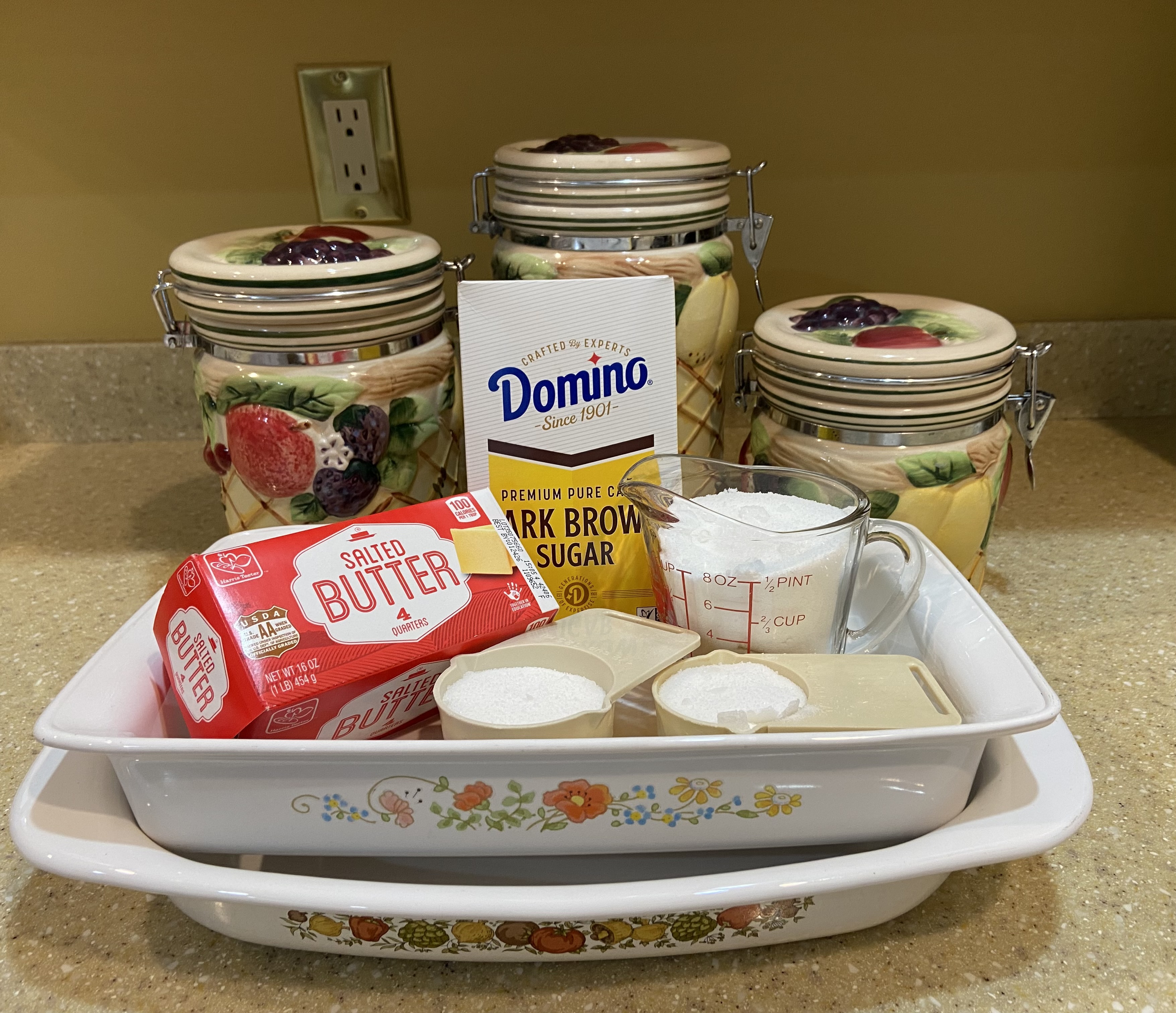
As you can see, I’ve upped the number of sweet potatoes to use and made myself a note as to which casserole dish to use each year. Thank you, Gail Brown Bishop, for this recipe. You’ve saved me from melted marshmallows on plain sweet potatoes.

I know the sweet potato casserole recipe calls for a lot of butter and sugar. But hey, it’s Thanksgiving. Maybe just exercise some portion control.

In other fall news, the squirrels–or maybe rabbits?–are at it again: gnawing on my plants. I set out several ornamental cabbages a couple of weeks ago. Some are flourishing; others have been attacked. Arrgggh! I read somewhere that used coffee grounds and bone meal deter critters, so I’ve used both around my plants.

I guess sometimes my treatments work and sometimes they don’t.

I’ve eliminated deer as likely culprits here as these plants are in the fenced-in backyard. So far, the deer have been content to munch on what’s outside the fence in the side and front yards. No evidence yet that they’ve leaped over the fence, which my deer-hunting husband has informed me they can do.

Anybody else involved in battles with plant-eating squirrels and rabbits?

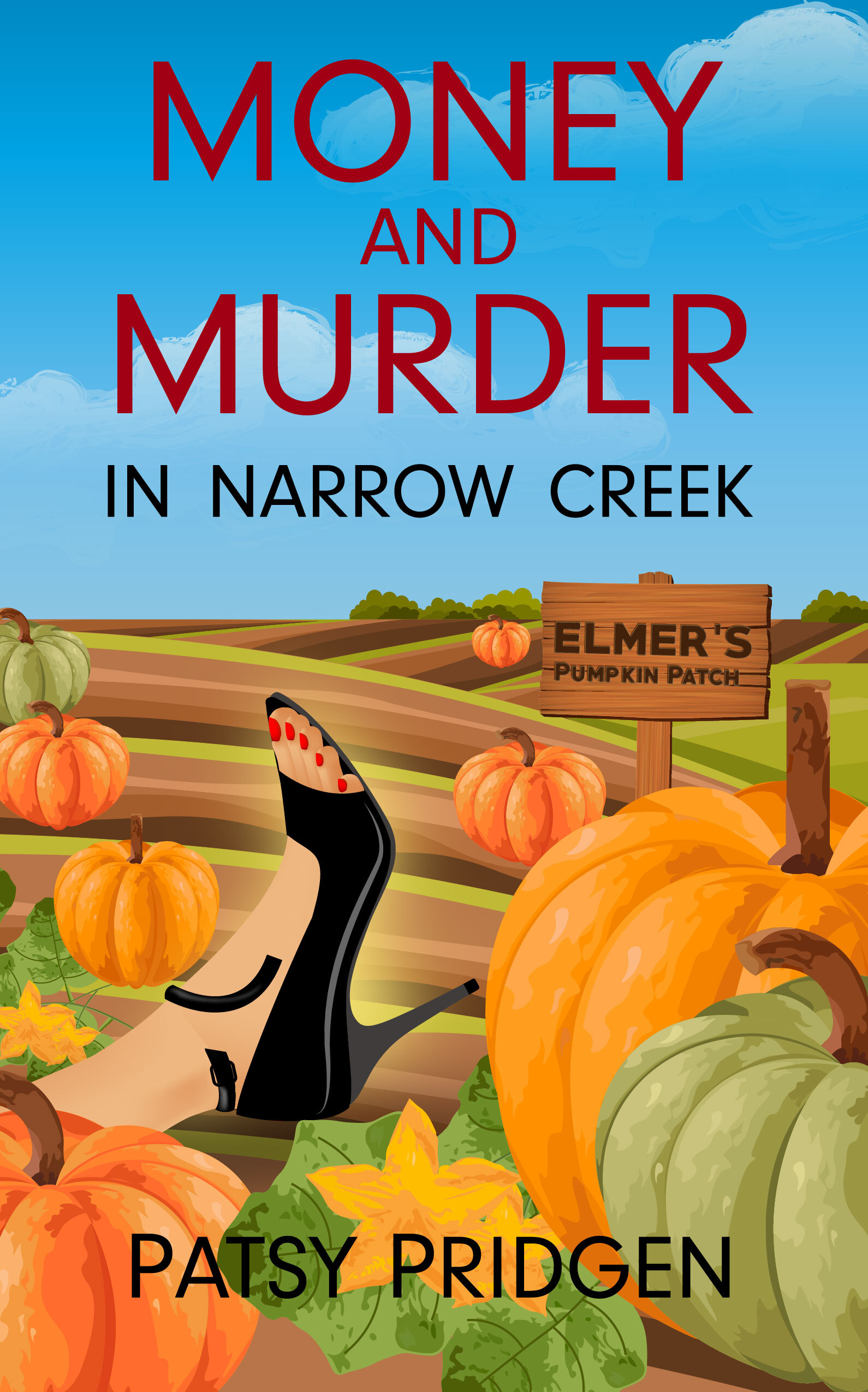
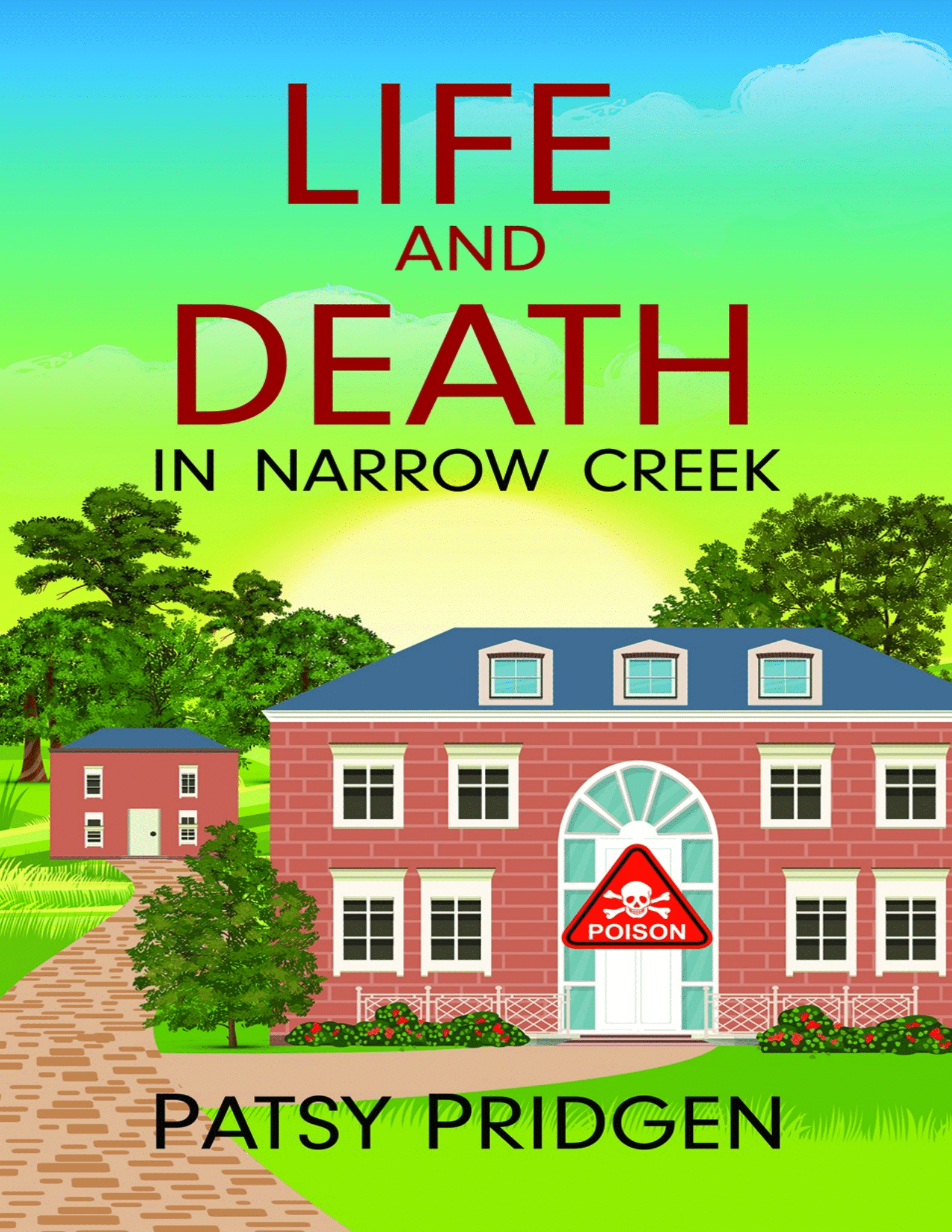
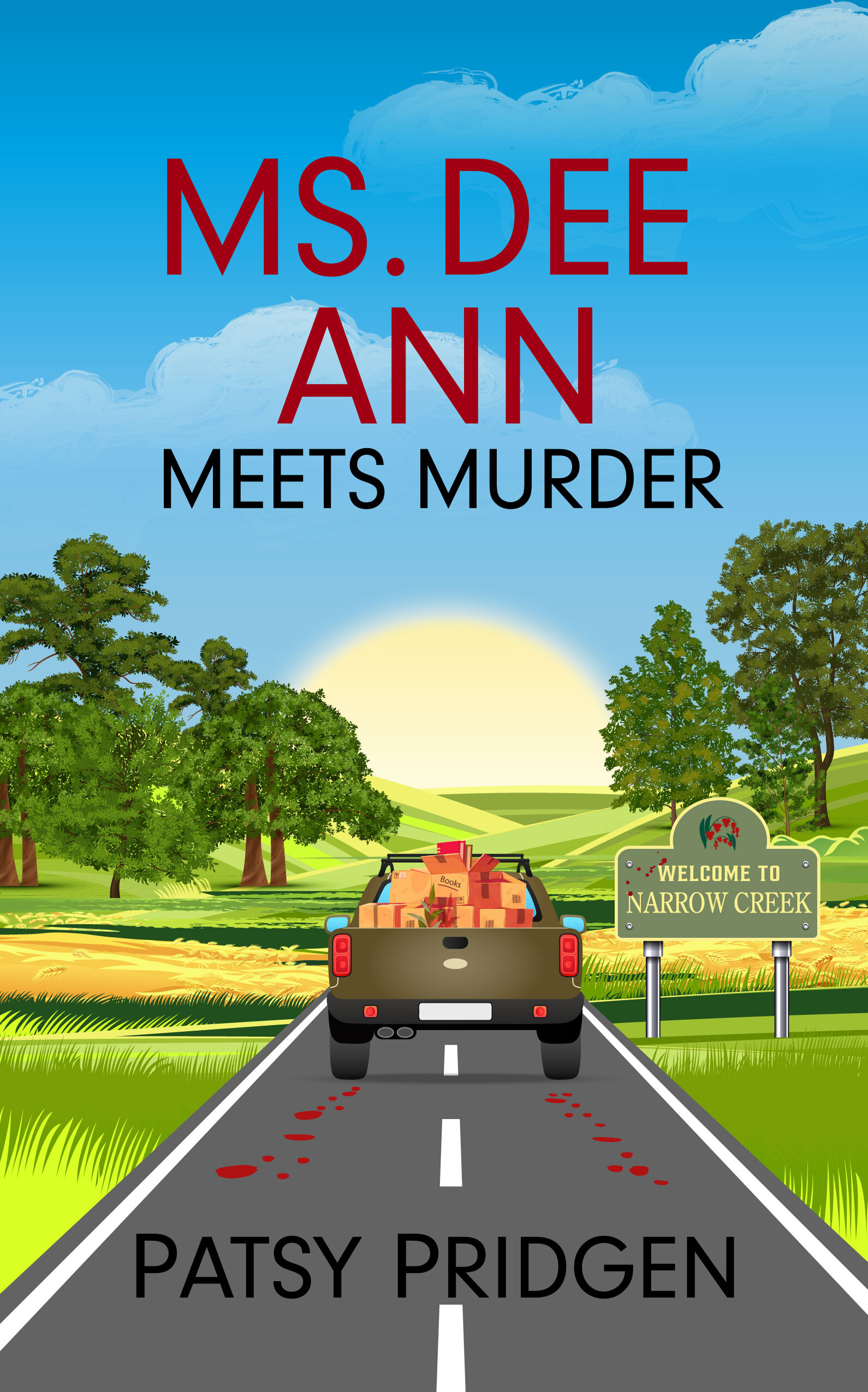
On a final note, yes, I’m still writing cozy mystery novels. I have a rough draft of a fourth, tentatively titled Mother and Murder. Right now, it’s with my Beta readers, my husband and daughters. I’ve already been advised I spelled Chic-fil-A wrong. Being a former English teacher, I spelled it Chick Filet. I guess I never look at the logo when I eat there.

I’m hoping this fourth book will be ready for publication by early spring. More about the plot later. I may print the first chapter here and you all can be my Beta readers. Happy Thanksgiving!

Posted in Uncategorized | Tagged , , , , | Leave a comment

A Virginia Trip

An unexpected bonus on my recent trip to Hot Springs, Virginia, was a visit to Thomas Jefferson’s Monticello. I didn’t realize this historical World Heritage site was directly off the interstate near Charlottesville. Why not stop?

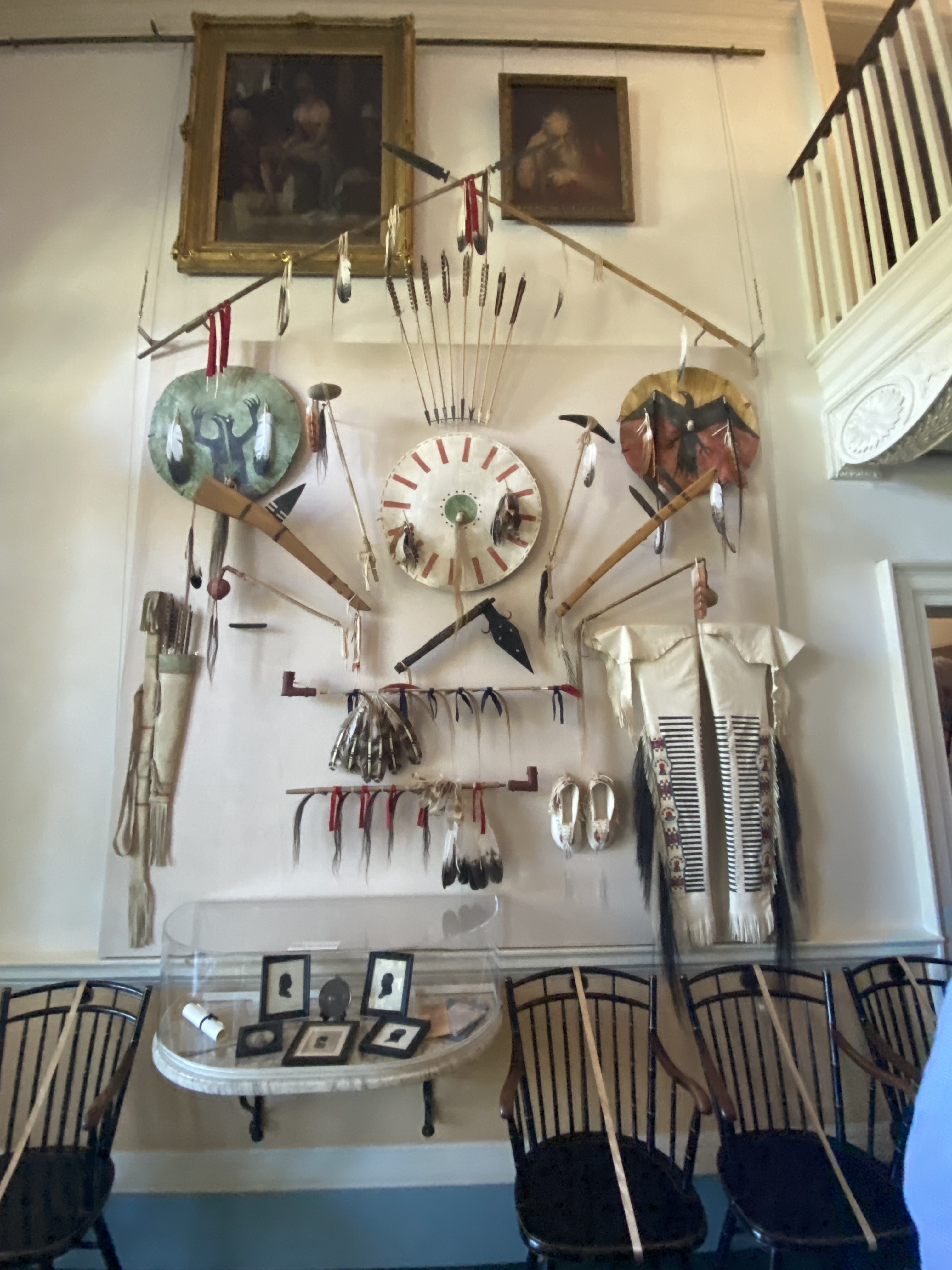
My husband and I signed up for the 45-minute guided tour of the first floor of this most unusual colonial plantation home. Like Benjamin Franklin, Thomas Jefferson was a Renaissance man–curious about lots of different subjects. The foyer of Monticello is evidence of his many interests.

Our guide told us Jefferson had a clock in every room, a bit unusual for the times. Here’s the one in the foyer, called the Great Clock, designed by Jefferson, and still functional today.

Where Jefferson retired at night was especially interesting. He designed an alcove bed between his study and bedroom.

About 60% of the furnishings on display in Monticello are original. We were told these boots were actually Jefferson’s.

Monticello is the first colonial home I’ve seen with a skylight. There are 13 total.

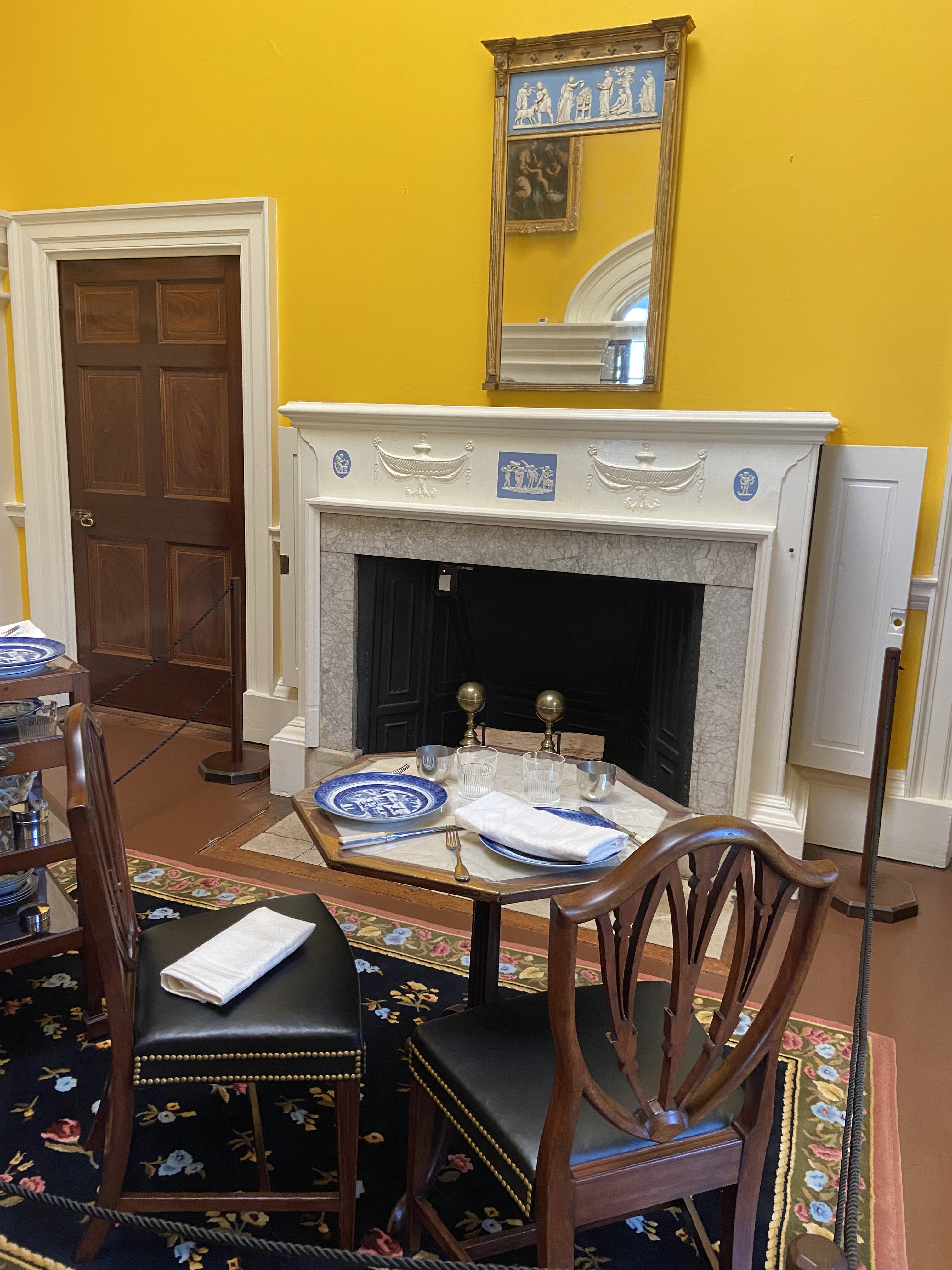
Our guide said the dining room’s mustard color is an authentic reproduction. I never thought of this shade of yellow as a colonial color. Bright!

The three portraits hanging in the parlor are of Jefferson, John Adams, and George Washington.

Once the tour was over and we left the house, we walked the grounds and found the Sally Hemings cabin. Sally Hemings, you may recall, was the slave with whom Jefferson had several children. She bargained for their children to be freed, and the four who survived to adulthood were given their liberty.

Today, there are lots of descendants from the Jefferson/Hemings family.

We stood outside the Jefferson gated cemetery, where the largest tomb was of course Jefferson’s. Prior to his death, he left specific instructions concerning the obelisk he wanted over his grave. Surprisingly, the three accomplishments engraved do not include his presidency.

Evidently, he was prouder of writing the Declaration of Independence and the Statute of Virginia for Religious Freedom, along with founding the University of Virginia.

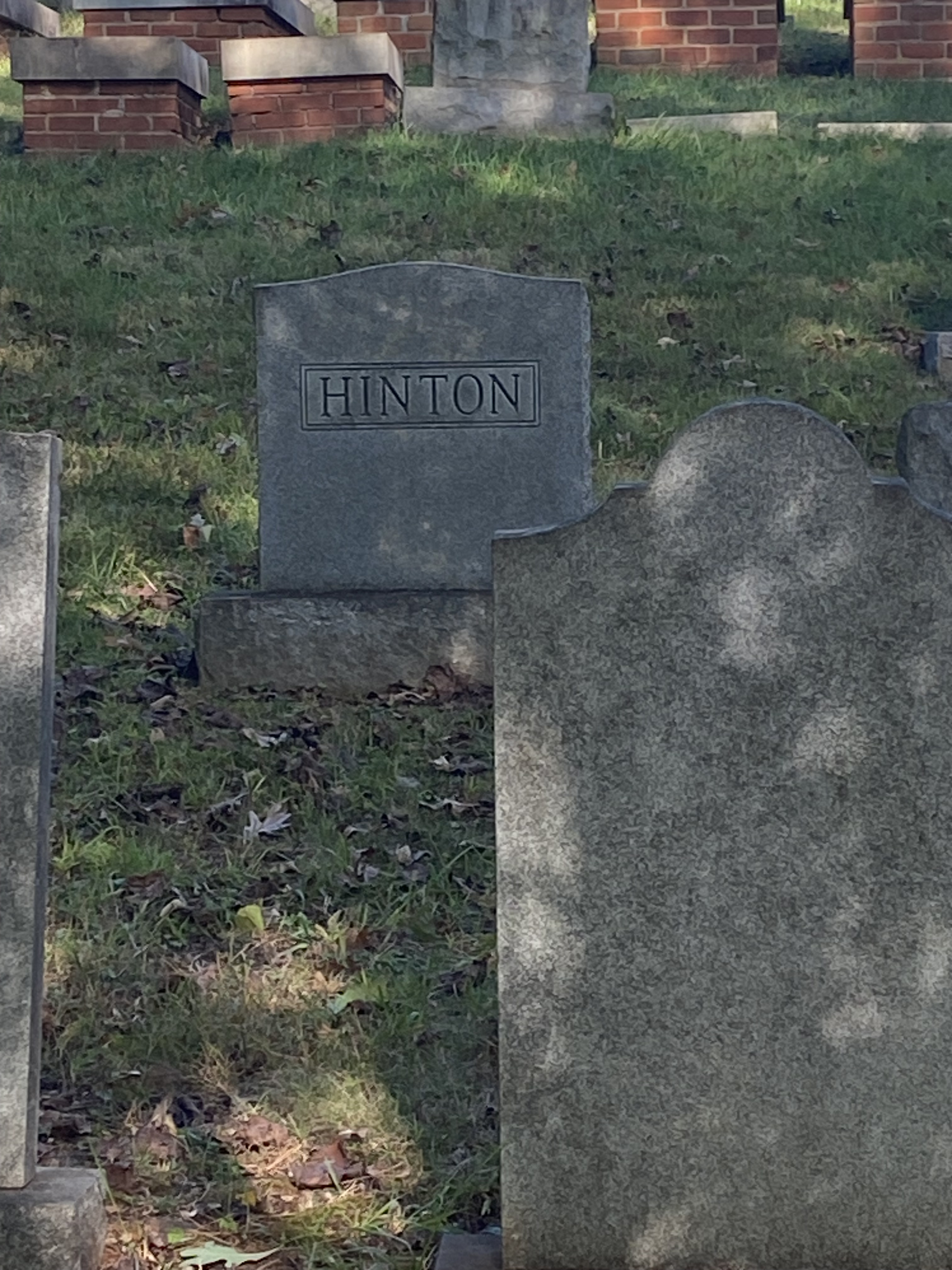
I saw this simple marker in the cemetery. Hinton is my maiden name. Maybe I’m related to Thomas Jefferson?

Before I forget, our destination, the Omni Homestead, in Hot Springs, Virginia, was as lovely as people had told me it would be.

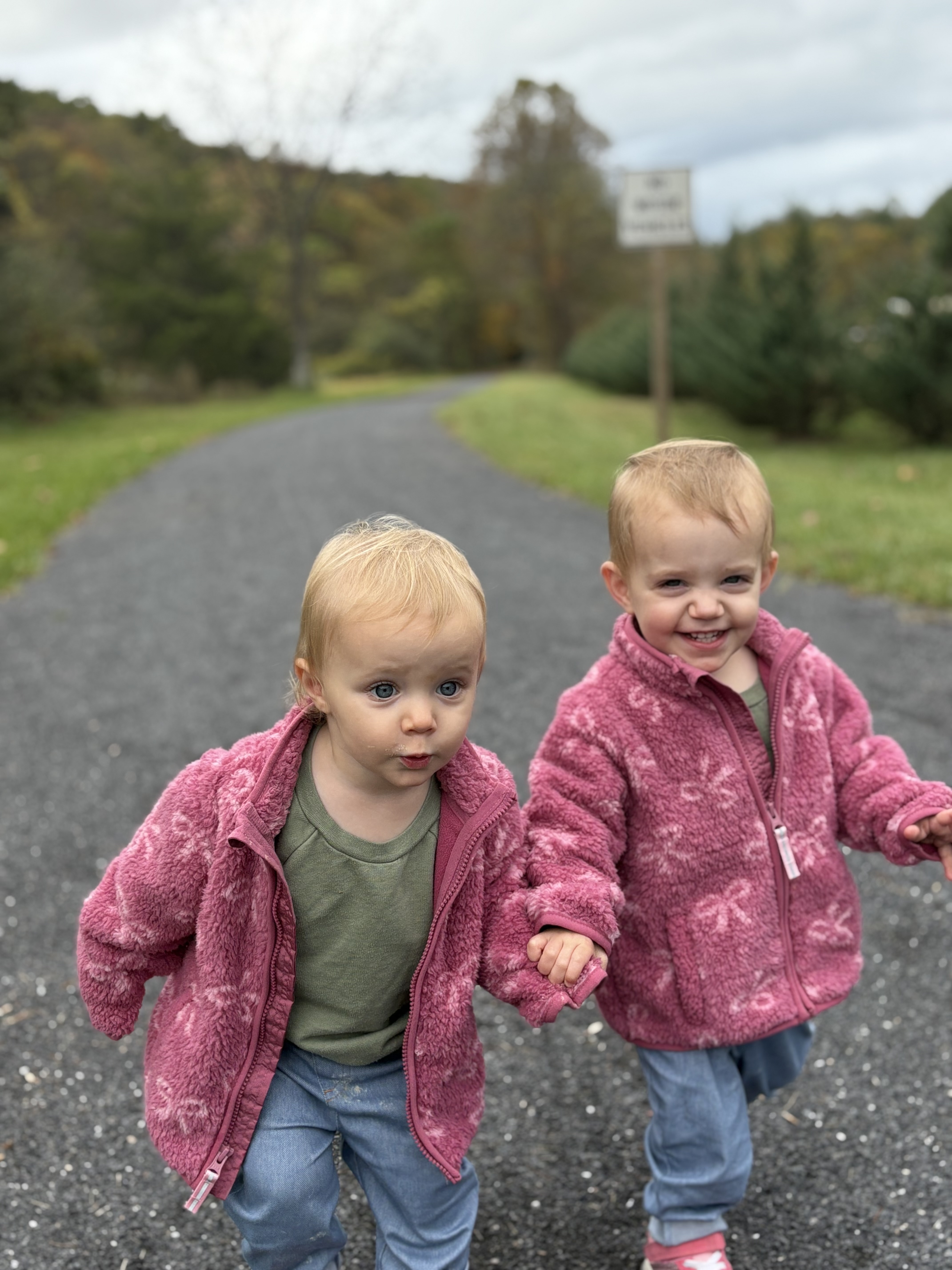
We were there for my husband’s business conference–and to spend a couple of days with these sweet granddaughters. A little history in the making here.

Posted in Uncategorized | Tagged , , , , , , | Leave a comment

Whatever Is Lovely

What do you do when you find out your city government has overspent by millions of dollars and is now going to raise your utility bill in a feeble attempt to balance the budget? You save your outrage until the state auditor’s report is finished and instead rejoice in the glorious fall season.

Start your dose of “up” by enjoying autumn leaves that have turned beautiful shades of yellow, orange, and red. Visit the mountains, as I did, if you can’t wait for the view at home.

A warning, though. Trying to hit the peak of the fall foliage season in the highlands is tricky business. Forecasters may or may not predict the best weekend, and also the colors vary according to elevation. On Beech Mountain in North Carolina this past weekend, the first in October, the peak was close.

Here’s a roadside view on the Blue Ridge Parkway between Blowing Rock and Boone, NC. Who cares whether the leaves are at their showiest? Plenty pretty for me as I rolled along the twists and turns of this special highway.

I stopped to take a picture of the humble goldenrod, growing everywhere along the Park Way roadside. Nothing says fall to me more than the presence of this wildflower.

A fall trip to the mountains wouldn’t be complete without a stop at the apple stand. They’re not cheap, but these apples seem healthier and taste better to me than the grocery-store ones with the waxy coatings. My favorite this year is the Golden Delicious variety, which, crazy as it sounds, have a hint of pear flavor.

Back home, I celebrate the October fall holiday, Halloween, with a few decorations I pull out of the attic each year. A tree limb I once picked up in the yard is adorned with that orange stretchable spider-web stuff and lit with a strand of orange lights. My husband and I plug up the Halloween “tree” every night while we watch TV or read.

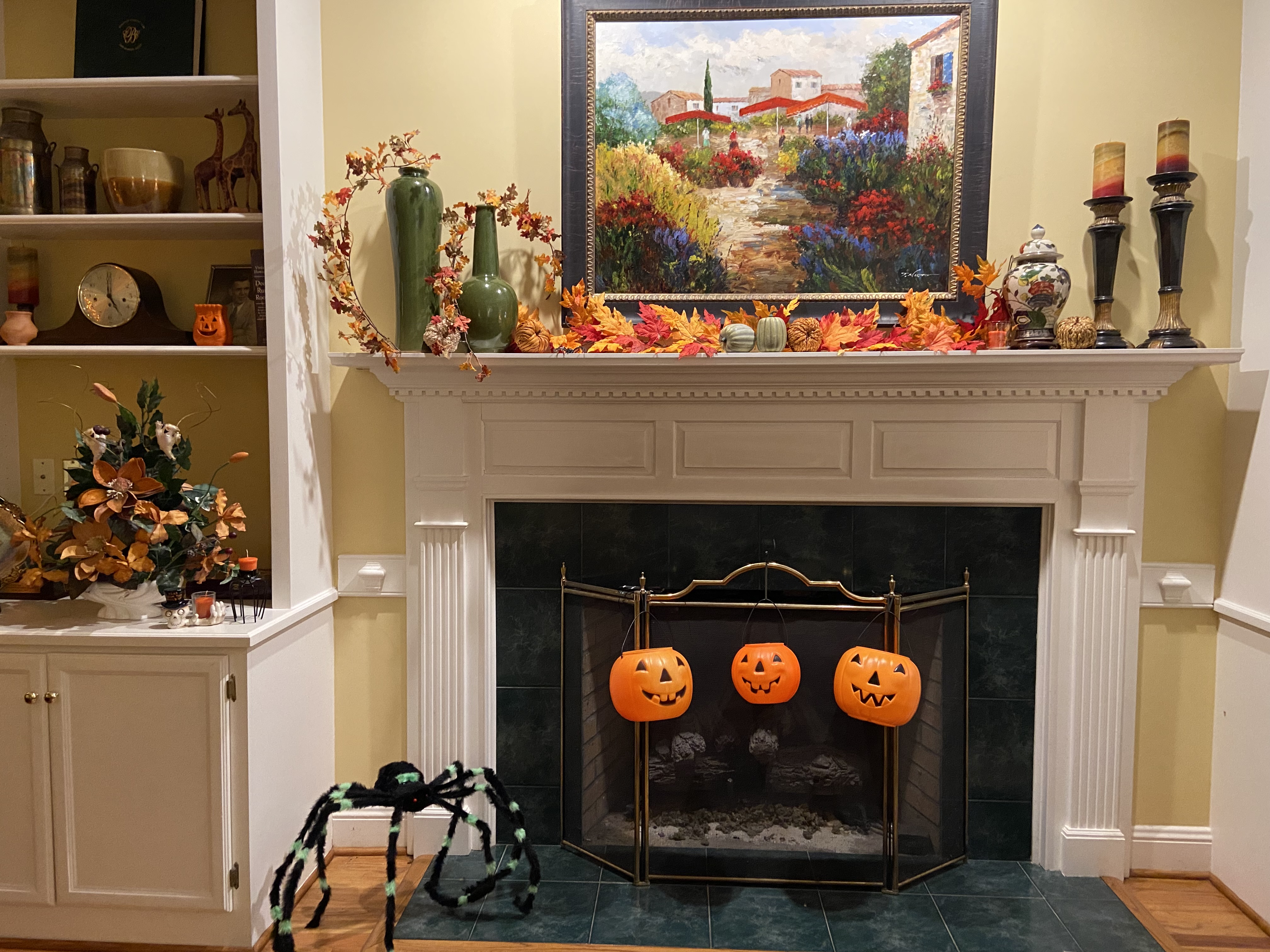
The fireplace mantel gets a dose of easy fall decorating, too. After Halloween, I’ll remove spooky items and leave the fake fall foliage up through Thanksgiving. Yes, my living room might be a little tacky for some tastes, but I like to think it’s cheerful.

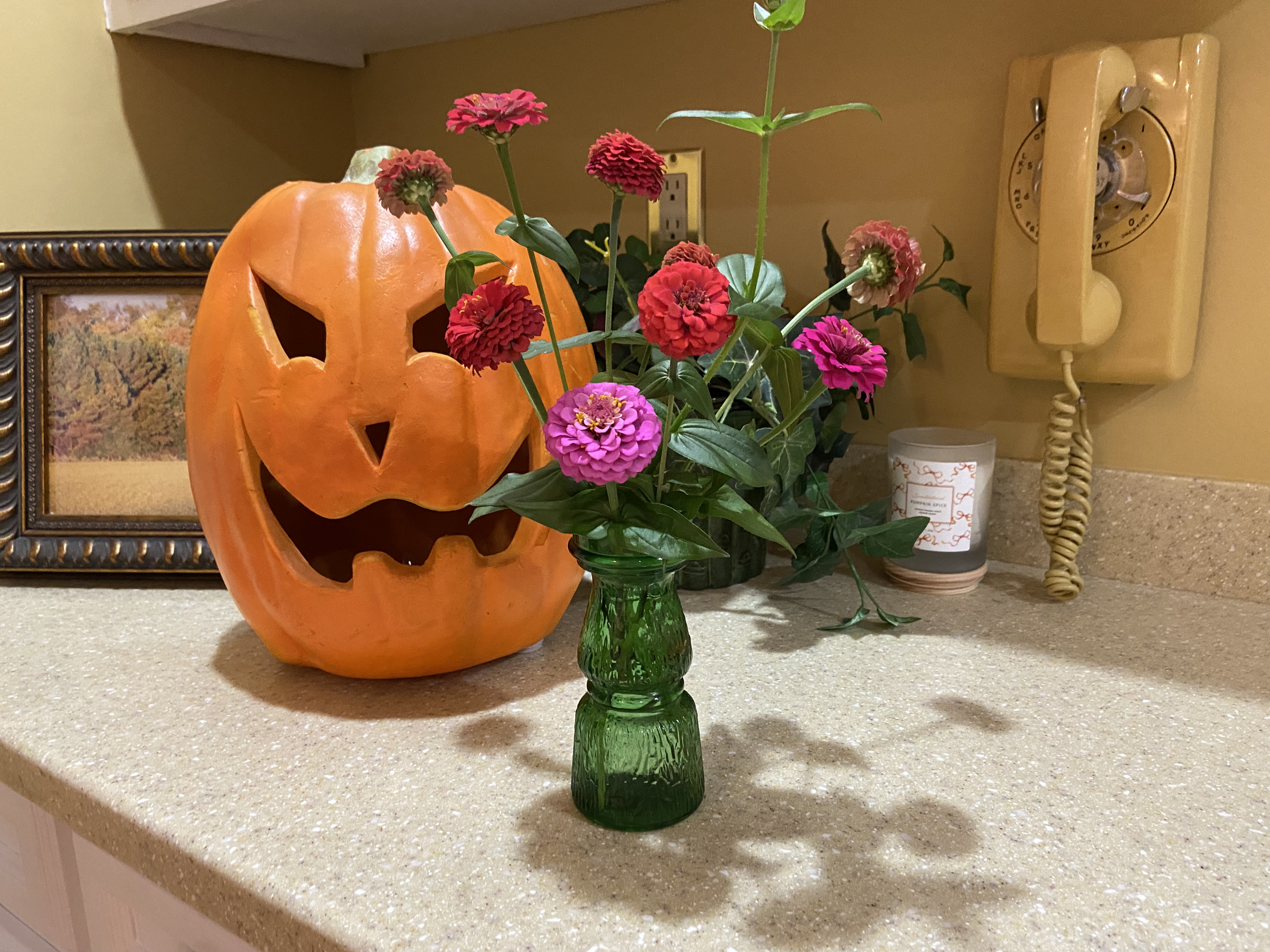
Speaking of cheerful, zinnias are the flowers that keep producing long after other summer bloomers are gone. I picked this arrangement yesterday, and there are more where these came from. (The harvest-gold phone is no longer connected, in case you’re wondering. The grandchildren have enjoyed playing with it over the years.)

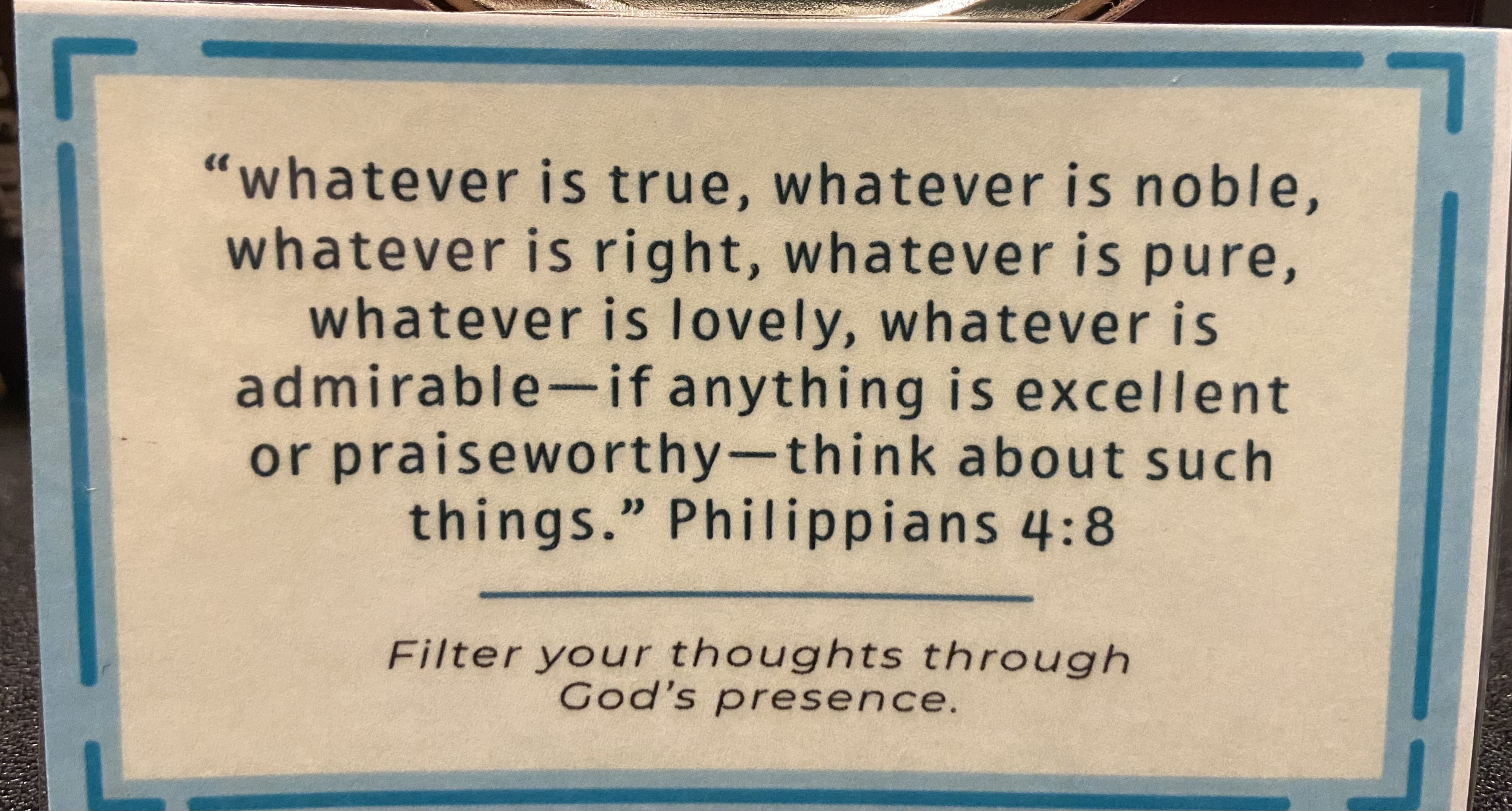
Whenever I feel, as the poet said, “The world is too much with us,” I read this Bible verse I have on a laminated card on my desk.

Whatever is lovely: fall foliage, apples straight from the orchard, zinnias still blooming.

And toddler twin granddaughters in their pink Target raincoats, the ones Grandma Patsy bought them.

Posted in Uncategorized | Tagged , , , , | Leave a comment

Canadian Rockies: Wow, Wow-Wow, and Wow-Wow-Wow!

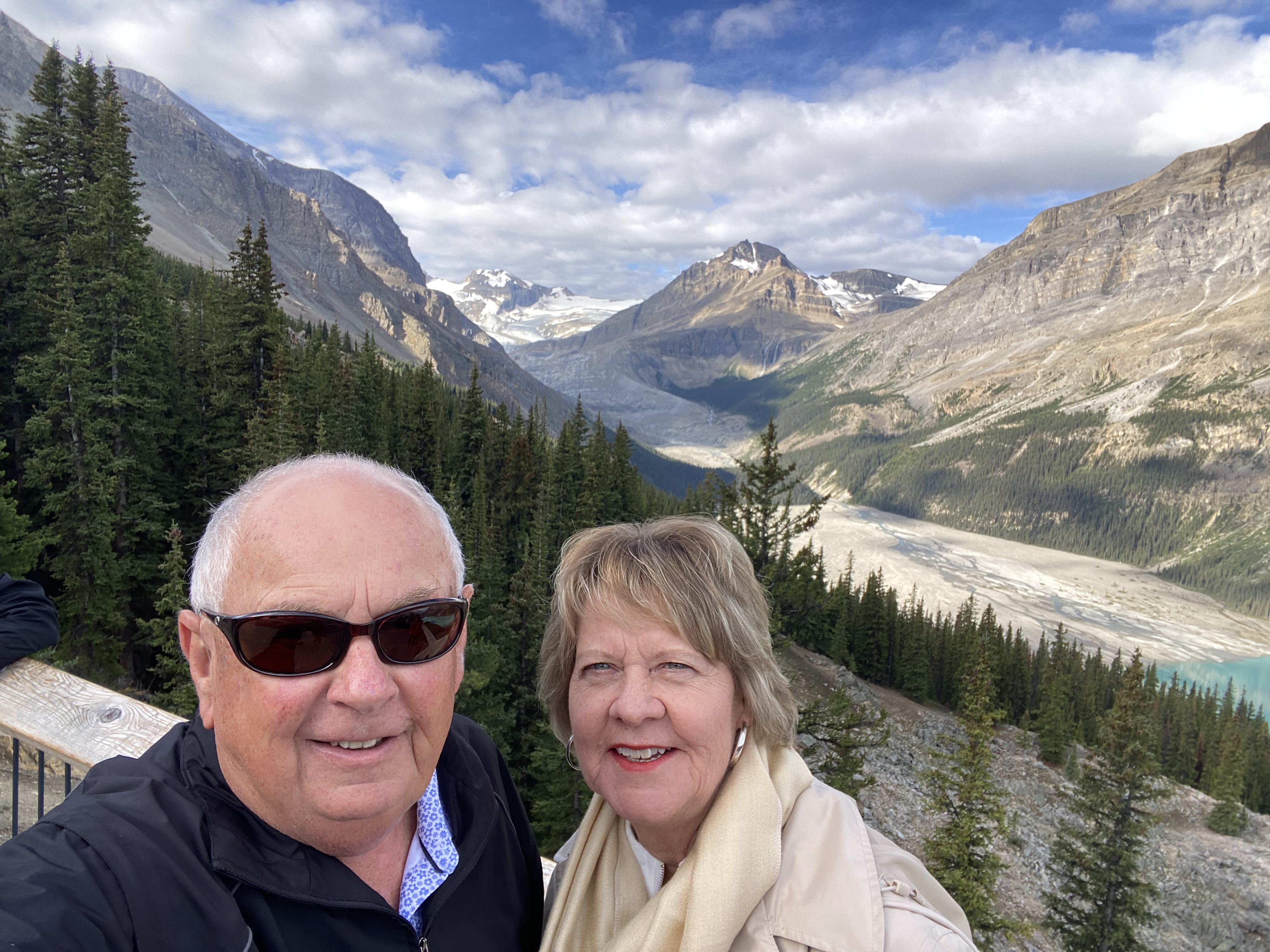
Our pictures can’t capture the majesty of what my husband and I saw on our recent trip to the Canadian Rockies. As our Caravan tour guide suggested, we rated the scenery as wow, wow-wow, and wow-wow-wow. Most of what we saw fit the triple-wow category.

Our journey began in Calgary, which was a direct, not quite five-hour flight from the Raleigh-Durham Airport. Calgary is in the Alberta Province of Canada, above Montana.

Canadian train trips are a popular way to view the Rockies, but we chose to join a bus tour with a company (Caravan) we’ve used over the years for other trips.

The railroad is a big deal in Canada, though, since the building of the Canadian Pacific Railway in the late 1800s is what opened up the western part of the country for settlement, and today, tourism. A walking tour we took in Calgary began near the historic Canadian Pacific Railway Station in Calgary, built in 1910.

Calgary, the gateway to the Rockies, is a combination of old and new. The city boasts skyscrapers but has an annual festival called the Stampede, which features chuckwagon races and all kinds of rodeo events. The Stampede celebrates Alberta’s western cowboy heritage.

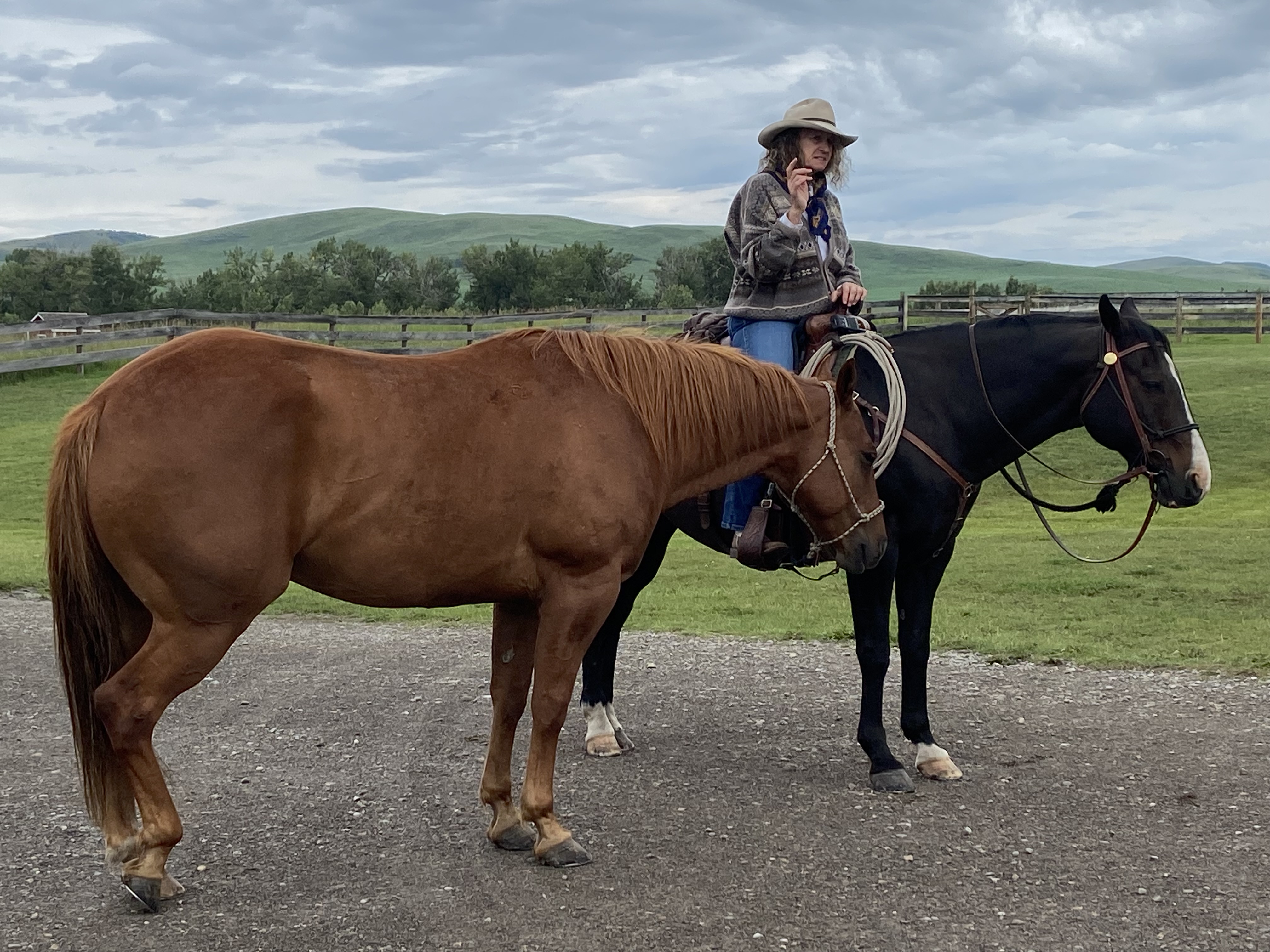
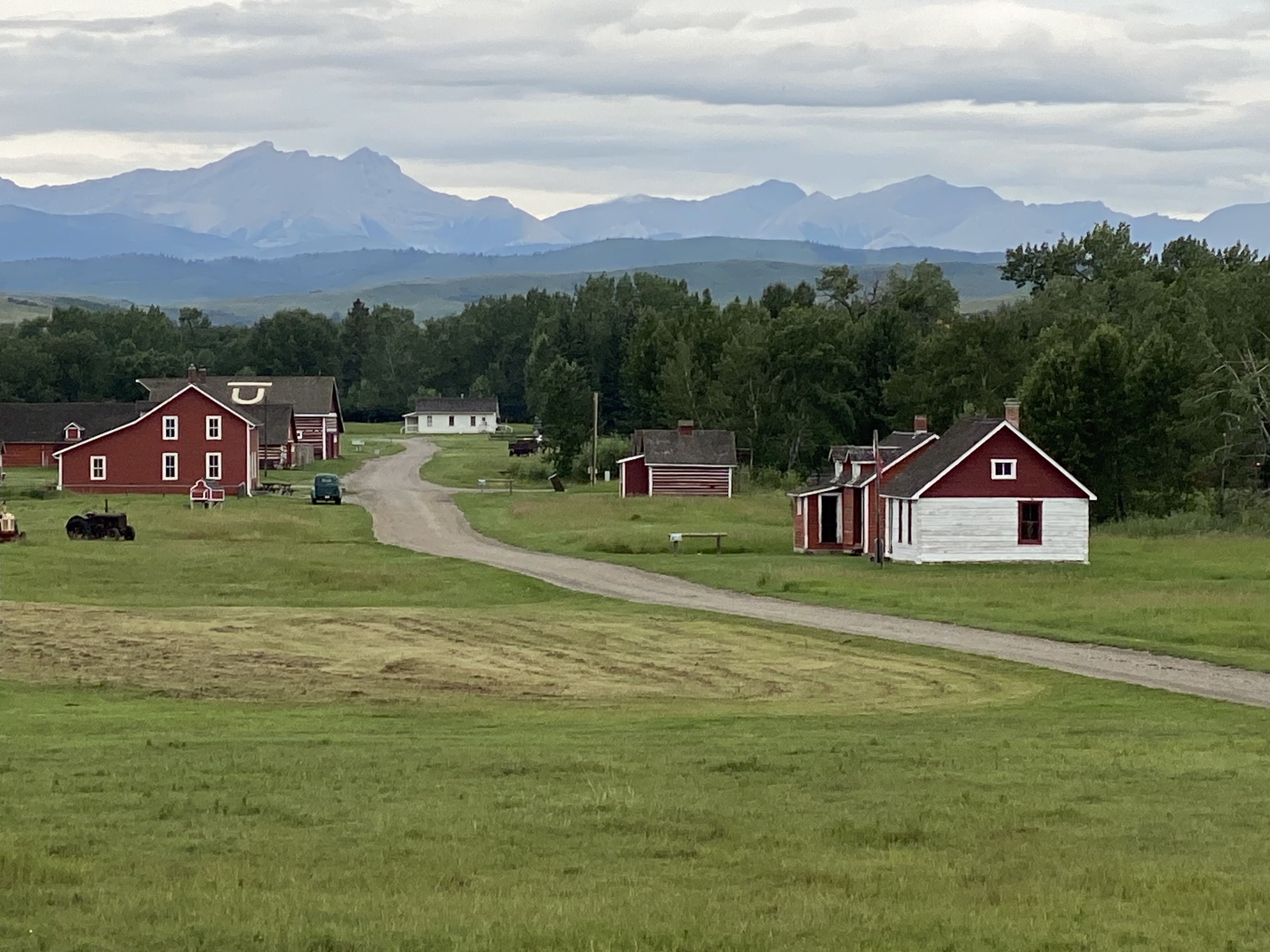
I’d never thought of Canada in terms of having a ranching, frontier, cowboy kind of history much like that of the United States. I learned otherwise. We were taken to the Bar U Ranch National Historic site, where a cowgirl filled us in on some history of the Canadian West.

On our way to the Canadian Rockies from Calgary, we rode through the prairies. The pretty yellow crop is canola.

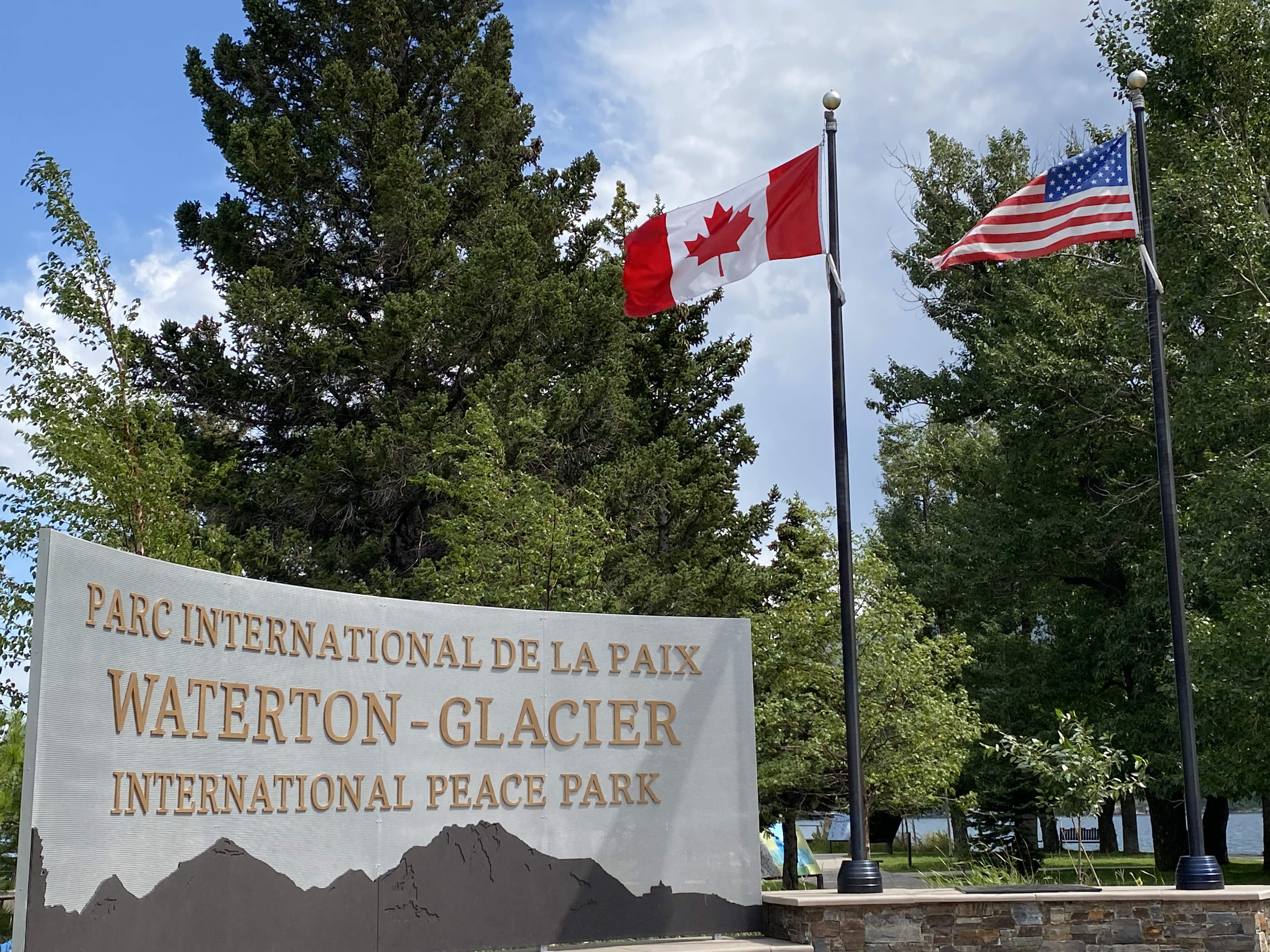
Once we reached the Canadian Rockies, we entered Waterton Lakes National Park, which joined Glacier Park in Montana in 1932 to become the world’s first International Peace Park. As you can see from the sign, Canada has two official languages: English and French.

The wow factor increased as we cruised on Waterton Lake. Looking at the snow-capped mountains that abutted the lake, I was reminded of the Norwegian fjords.

Though the trip was billed as a tour of the Canadian Rockies, we did into Montana one day to visit Glacier National Park. It was fun to explore the park in a restored 1930’s touring coach called the “Red Jammer.” And again, the scenery was spectacular.

Back in Canada, we spent four nights in beautiful downtown Banff, surrounded by the grandeur of Banff National Park.

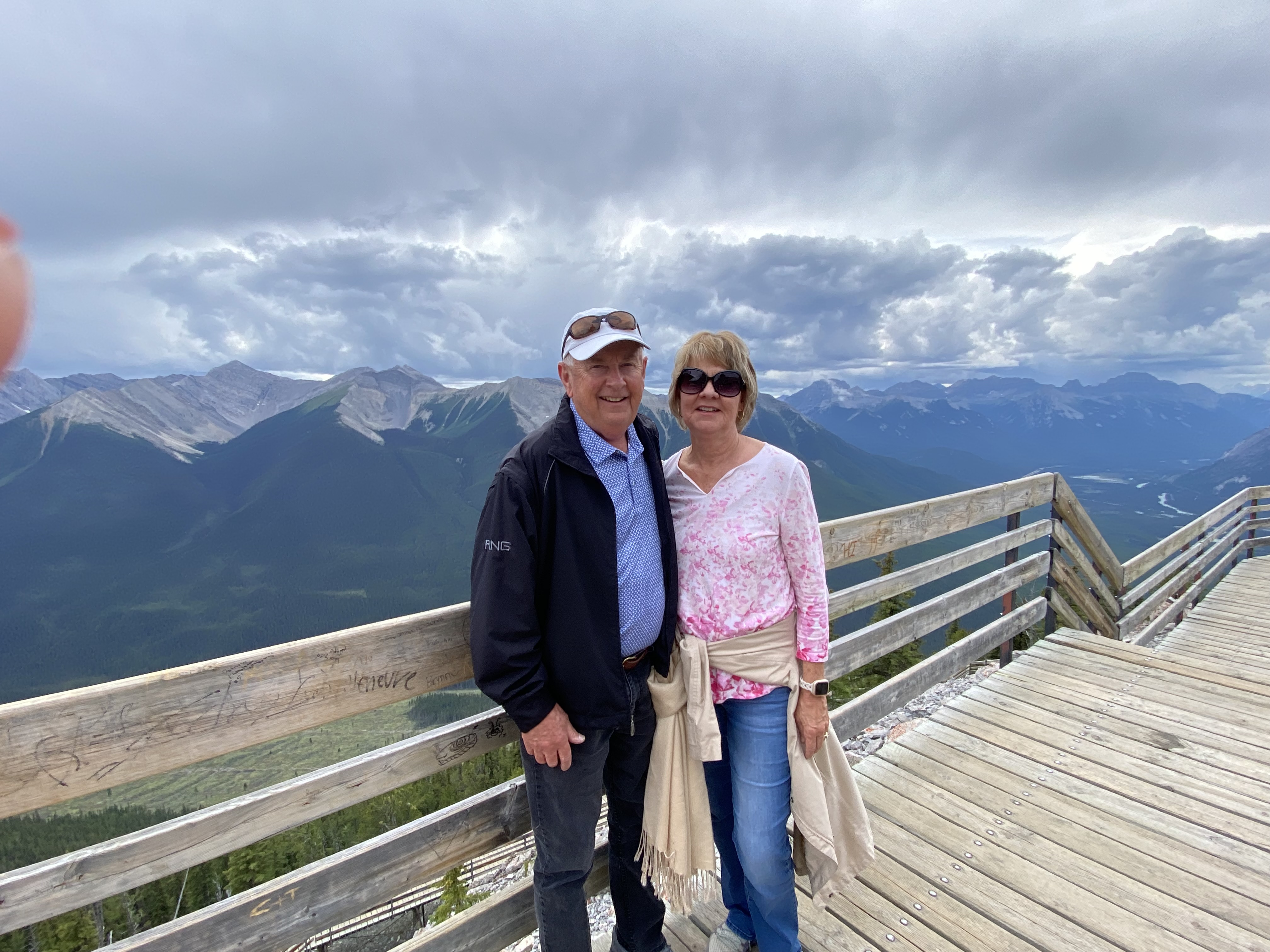
A gondola ride in Banff took us to the summit of Sulphur Mountain with steps leading to an even higher elevation. Of course we had to go the extra mile, literally. After our hike was one of the few times I was hot in the blissfully cool weather of Canada.

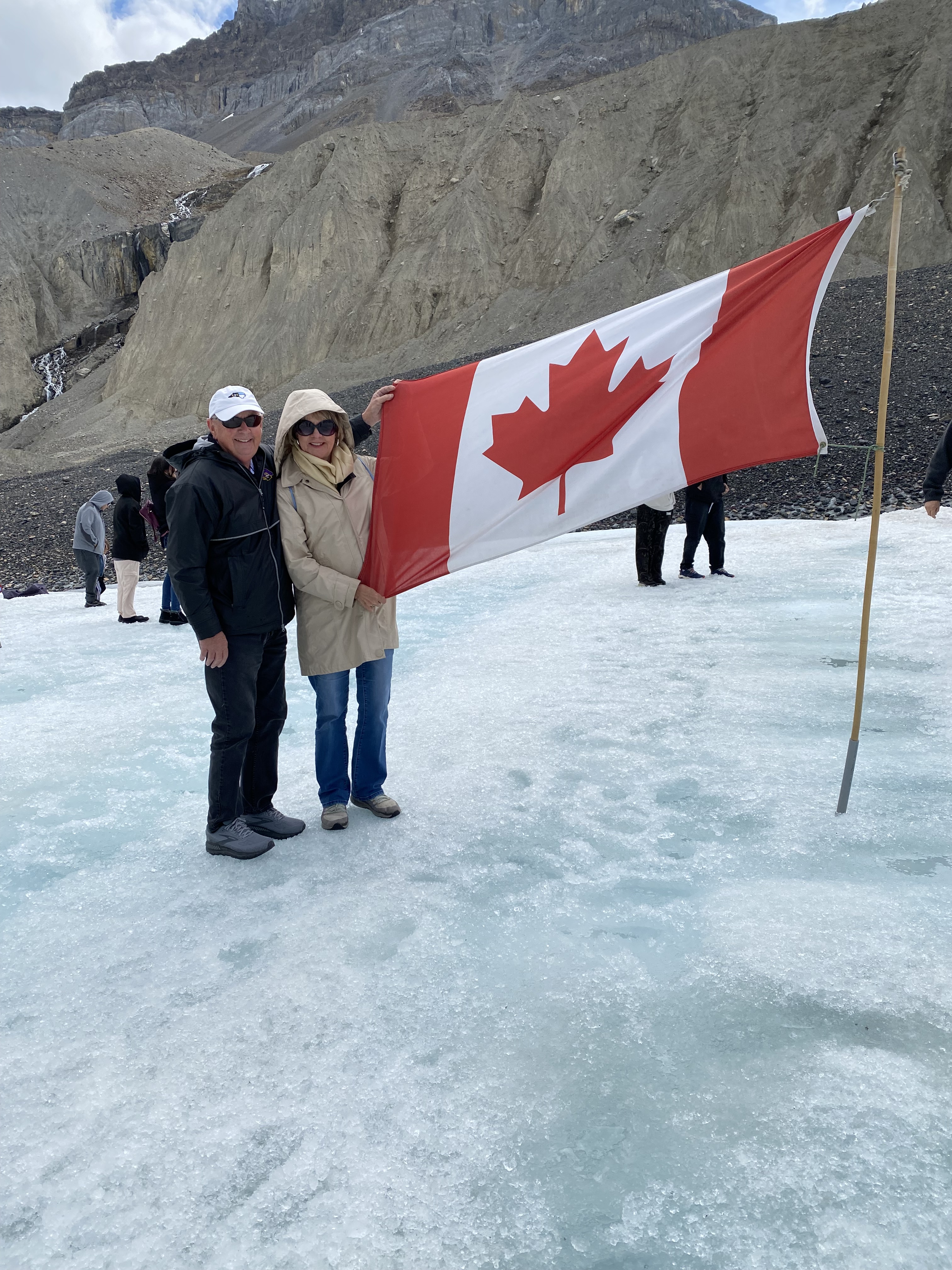
Jasper National Park, Canada’s largest at 4,200 square miles, was also on our agenda. Here we had a wow, wow, wow experience riding across the Columbia Icefield’s Athabasca Glacier on something called an Ice Explorer. We got out and tentatively walked around the glacier. Thankfully, no broken bones to report.

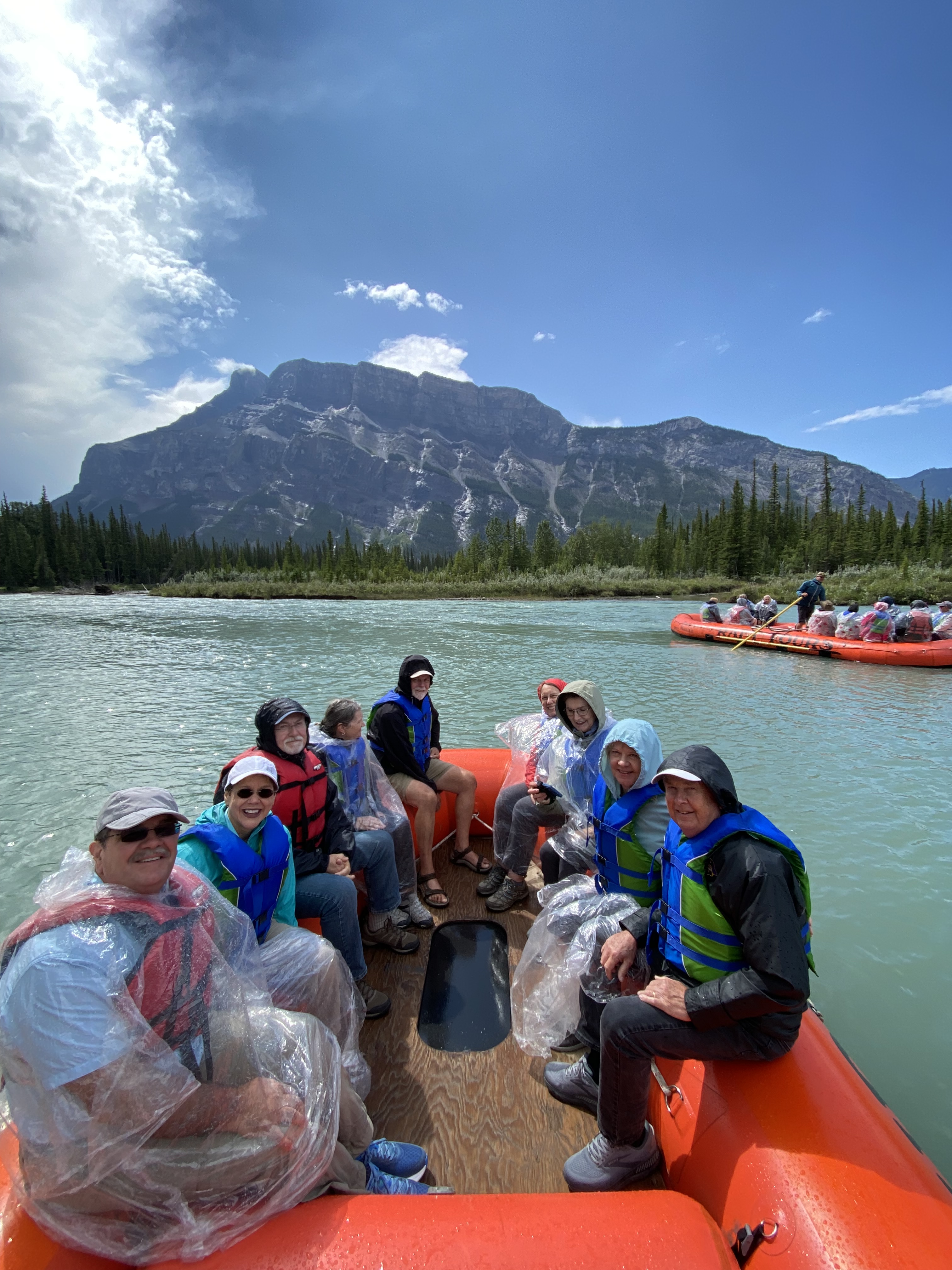
Old folks tubing, billed as a float trip on the Bow River, was another adventure. Can you identify my husband and me in this group huddled together?

The mountains and the glaciers were stunning, but the lakes of the Canadian Rockies were also spectacular. Glaciers feed Moraine Lake and Lake Louise, resulting in sparkling, turquoise-colored water.

Unfortunately, we didn’t stay in the thirteen-hundred-dollars-a-night hotel there at Lake Louise. Maybe next time….ha, ha.

Visiting the Canadian Rockies is not a hard trip from eastern North Carolina, just a roughly five-hour direct flight from Raleigh to Calgary. It’s a great vacation to take in the hot, humid days of a Southern summer when the temps in this part of Canada feel like early spring.

And once there, you’re rewarded with some of the most spectacular mountains, lakes, and glaciers to be seen in North America. Absolutely wow-wow-wow.

Posted in Uncategorized | Tagged , , , | Leave a comment

In the Blink of an Eye

First you watch your children grow up. From babies to kids to young adults, all in the blink of an eye, or so it seems. Then the cycle repeats itself with your grandchildren.

He was not the first grandchild–his older sister has that distinction–but he was the first grandson. My first boy. I’d been the mother of three girls, you see, so I had to figure out what to do to entertain a little fellow.

Turned out it wasn’t so hard. From Candy Land to chess, from popsicle stick crafts to shooting hoops–the years rolled by. Tuesday after school became our designated time together. I picked him up from school on that day until he was old enough to drive to my house after tennis practice.

A while ago, he kiddingly (I think) listed himself in my phone contacts as “My Favorite Grandchild.” He’s one of seven grandchildren, ranging in age from his almost 20-year-old older sister to 16-month-old twin girl cousins. I haven’t changed his contact listing, but of course I will go to my grave saying they’re all my favorites.

Speaking of favorites, I don’t kid myself that I’m the center of his universe these days. I’m pretty sure the last couple of years the highlight of our weekly visit has been an early dinner of takeout Japanese. After all, he’s a 17-year-old boy who, like most guys that age, likes to eat. He knows his grandma is good for a trip to Tokyo Express. He has our standing order on his phone and calls it in just about every Tuesday night.

I joke that instead of remembering Grandma’s homecooked meals, he’ll recall Tokyo Express.

In less than a month now, he’ll be off to college and those Tuesday afternoons will end. From a towheaded cutie pie to a young man, all in the blink of an eye. Makes me proud…and sad.

Posted in Uncategorized | Tagged , , , | Leave a comment

An Italian Adventure: The Venetian Islands and Country Visits

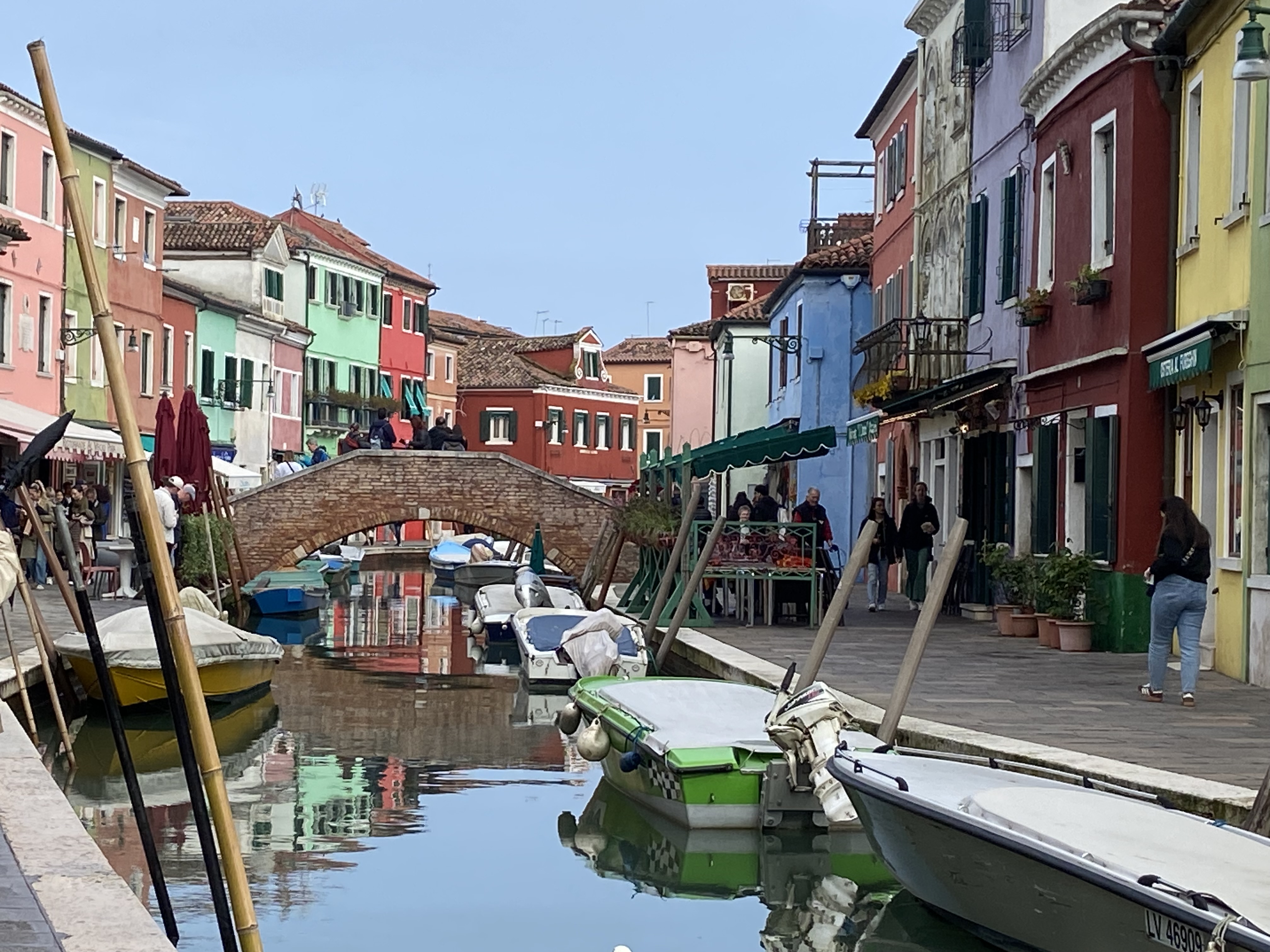
Venice might have been amazing, but the places we visited on nearby islands were absolutely charming. My favorite was Burano with its colorful houses and slower pace.

There’s not a lot going on in Burano, no great cathedrals or museums to visit, which meant we could simply relax while walking the streets and soaking up the Italian village vibe. Ever so often, we’d cross the street via one of the bridges spanning the canals, just to walk on the other side for a while.

There are a couple of stories as to why the houses here are so colorful. One is that bright colors helped residents locate their homes in thick fogs. Another theory is that fishermen who spent days on grey waters needed some color when home.

In any case, the different hues on the houses are delightful.

Burano is known for the Italian craft of making lace by hand. In the past, Italian wives occupied themselves with this activity while waiting for their fishermen husbands to return. We were taken to a demonstration while visiting the island.

It’s a dying art, though, since younger women aren’t as interested in this time-consuming occupation. Today, most of what’s sold in the shops on the island is probably manufactured somewhere else, especially if the item is relatively inexpensive.

I’m pretty sure this lace scarf I bought was not done by hand, but I still think it’s a great souvenir along with my knockoff Murano glass necklace, earrings, and bracelet.

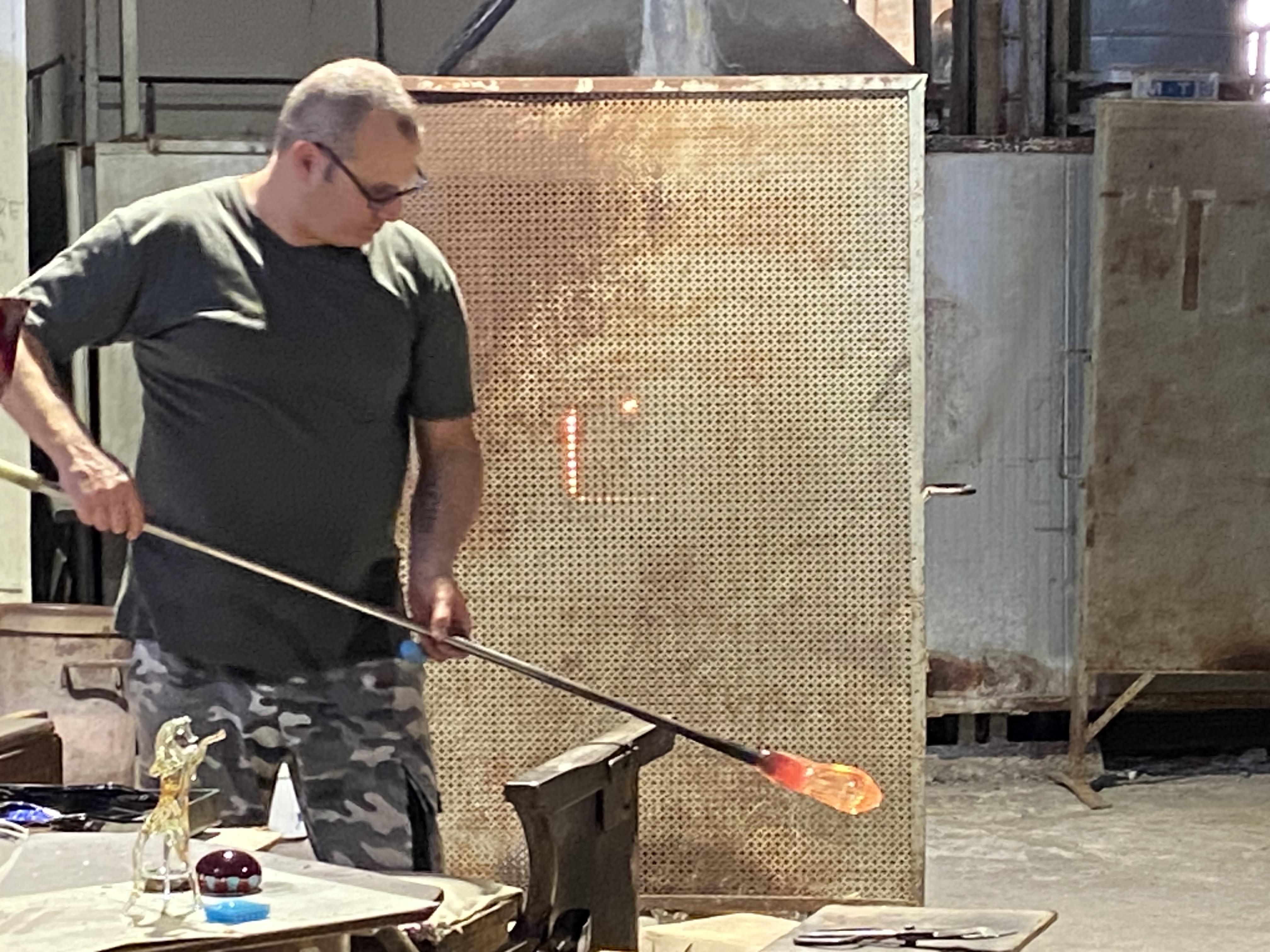
If the jewelry in the above photo were real, hand-crafted Murano glass, I would have paid far more than my total of less than 100 euros. We were taken to a demonstration of glass blowing, a fascinating skill, on the island of Murano.

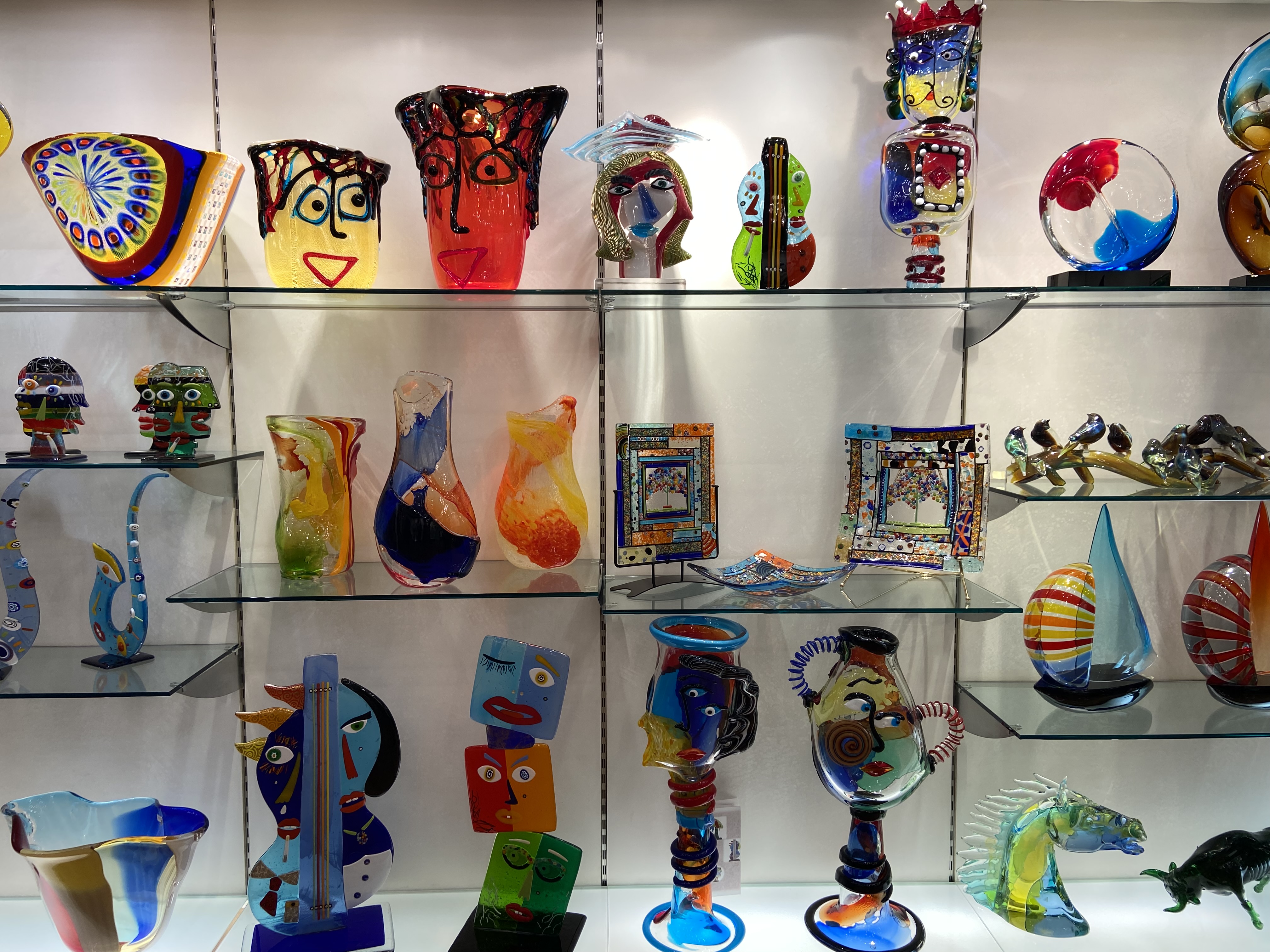
Afterwards, we were escorted to the showrooms, full of beautiful but very expensive Murano glass products. Colorful!
I’ve gone out of order so far, but the first town we visited was Vicenza. We had a few rainy days during our trip to Italy, and this was one of them. We’re still smiling, though, at least for the camera.

The lady who took this picture for us is the wife of an American serviceman stationed at a nearby US army base. She recognized we were Americans due a Tar Heel shirt worn by a member of our group (not me). She gave us the name of a good Vicenza restaurant, where I had several slices of an authentic Italian pizza (lots of prosciutto).

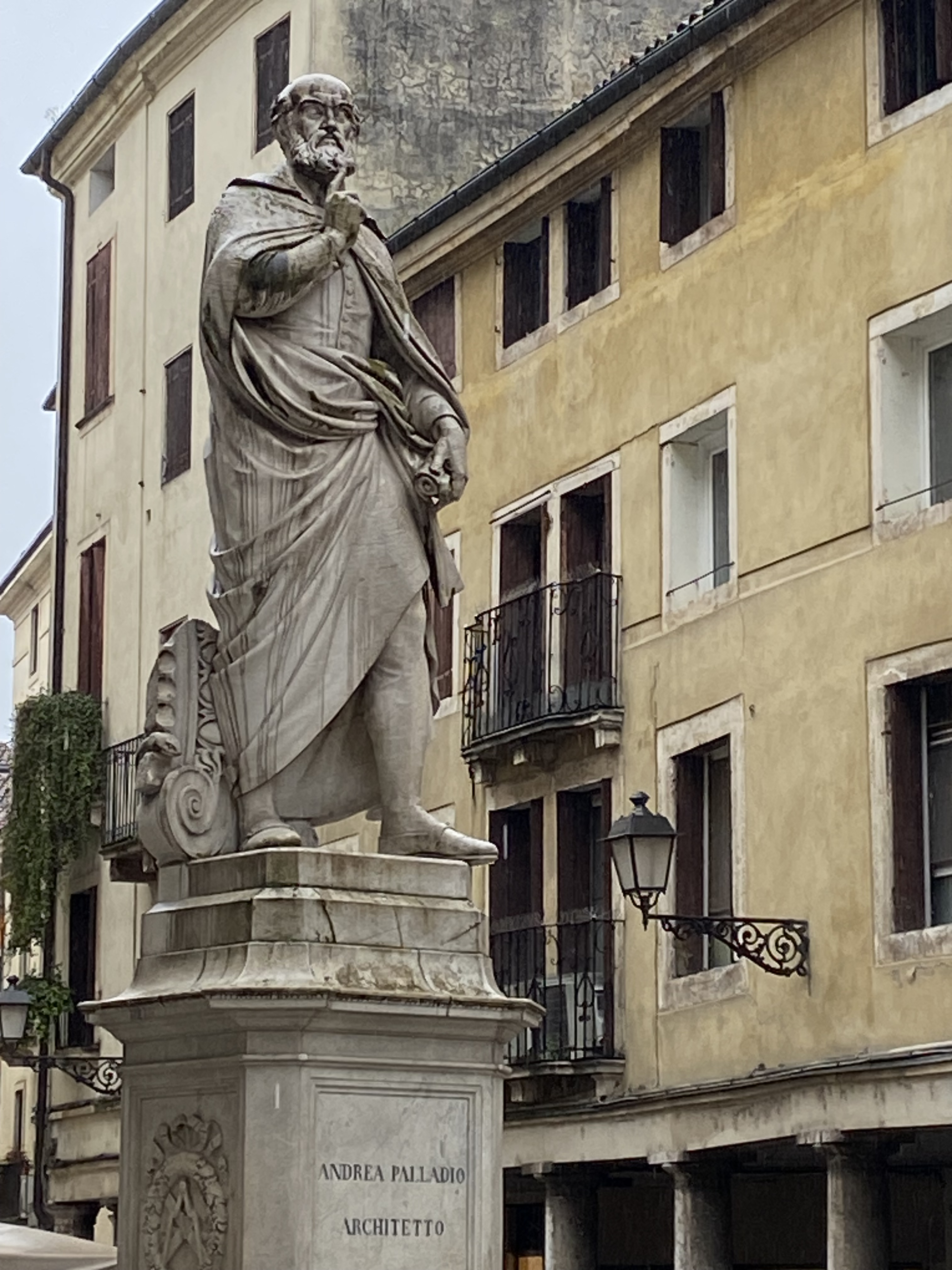
Of course, this being one of our sponsored tours, we did more than just walk around in the rain and eat pizza. Before giving us free time, our guide talked quite a bit about a man named Andrea Palladio, a famous 16th century architect who was responsible for many of the impressive buildings in town.

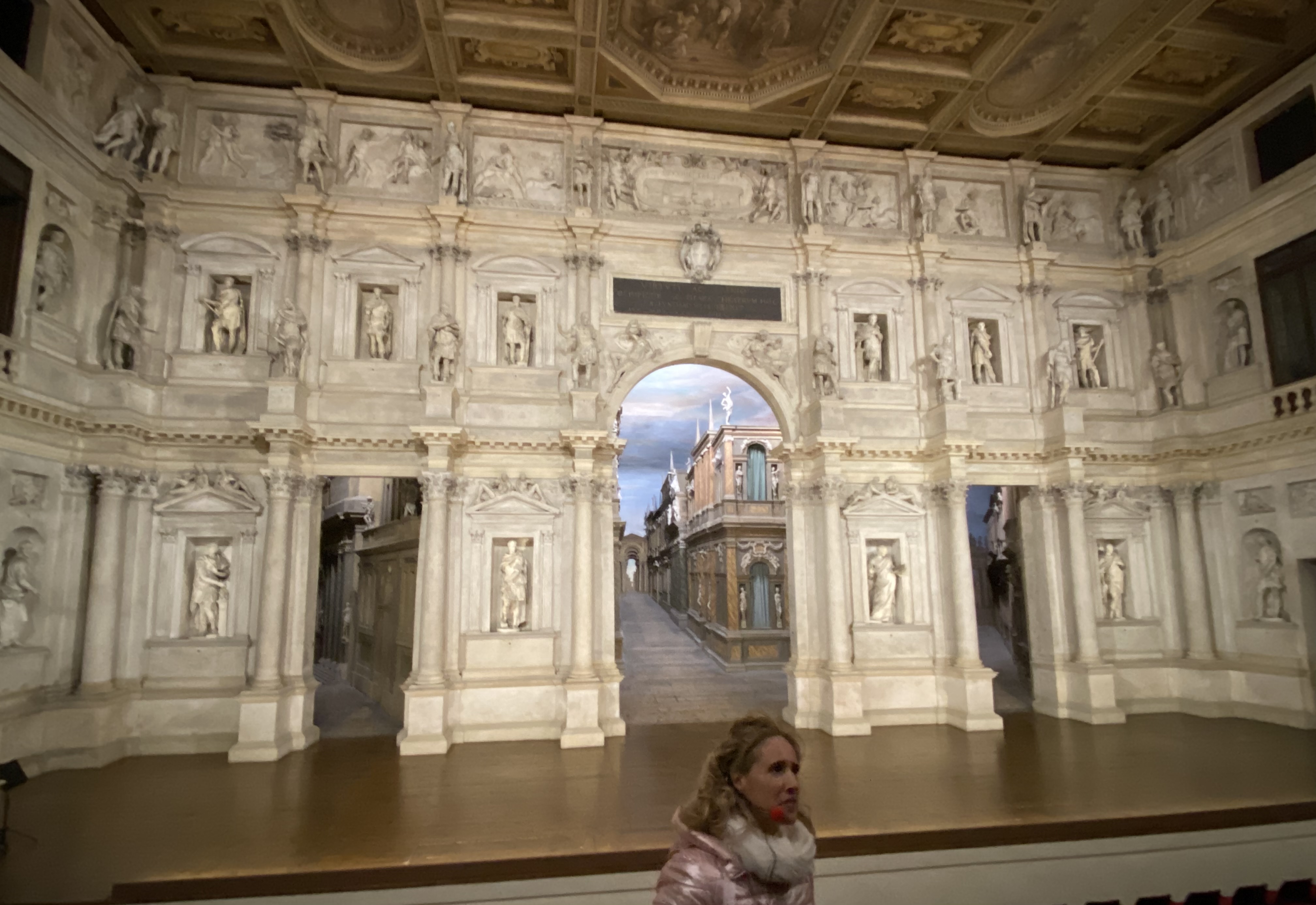
We also visited the Teatro Olimpico (Olympic Theatre), the final design by Palladio. Built in 1580-1585, the Teatro Olimpico is one of only three Renaissance theaters still in existence.

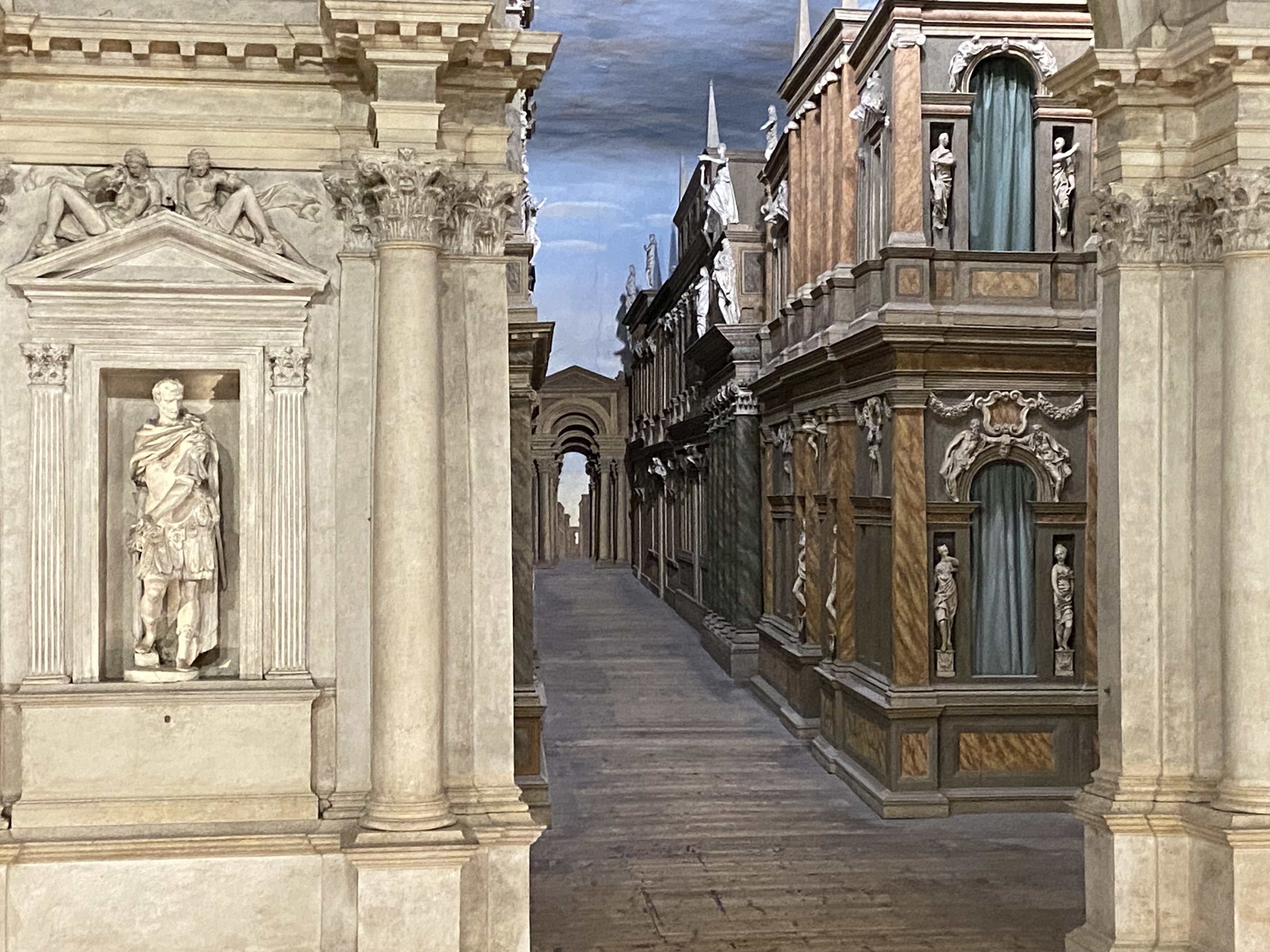
The most eye-catching feature of the theater is the stage scenery, painted to give the illusion of long streets receding to the horizon. The Teatro Olimpico, along with other Vicenza buildings designed by Palladio, are designated UNESCO World Heritage Sites.

Chiogga was another town we visited. I was initially excited that we happened to be there on the weekly street market day, thinking I would score some great Italian souvenirs. However, the market caters to what the locals need, such as socks and kitchen gadgets, stuff I could get at Wal Mart back home.

Still, Chiogga was a pretty town. I say town rather than village, because Chiogga, sometimes called Little Venice, was bigger than Burano, Murano, and Vicenza. About 50,000 people live here.

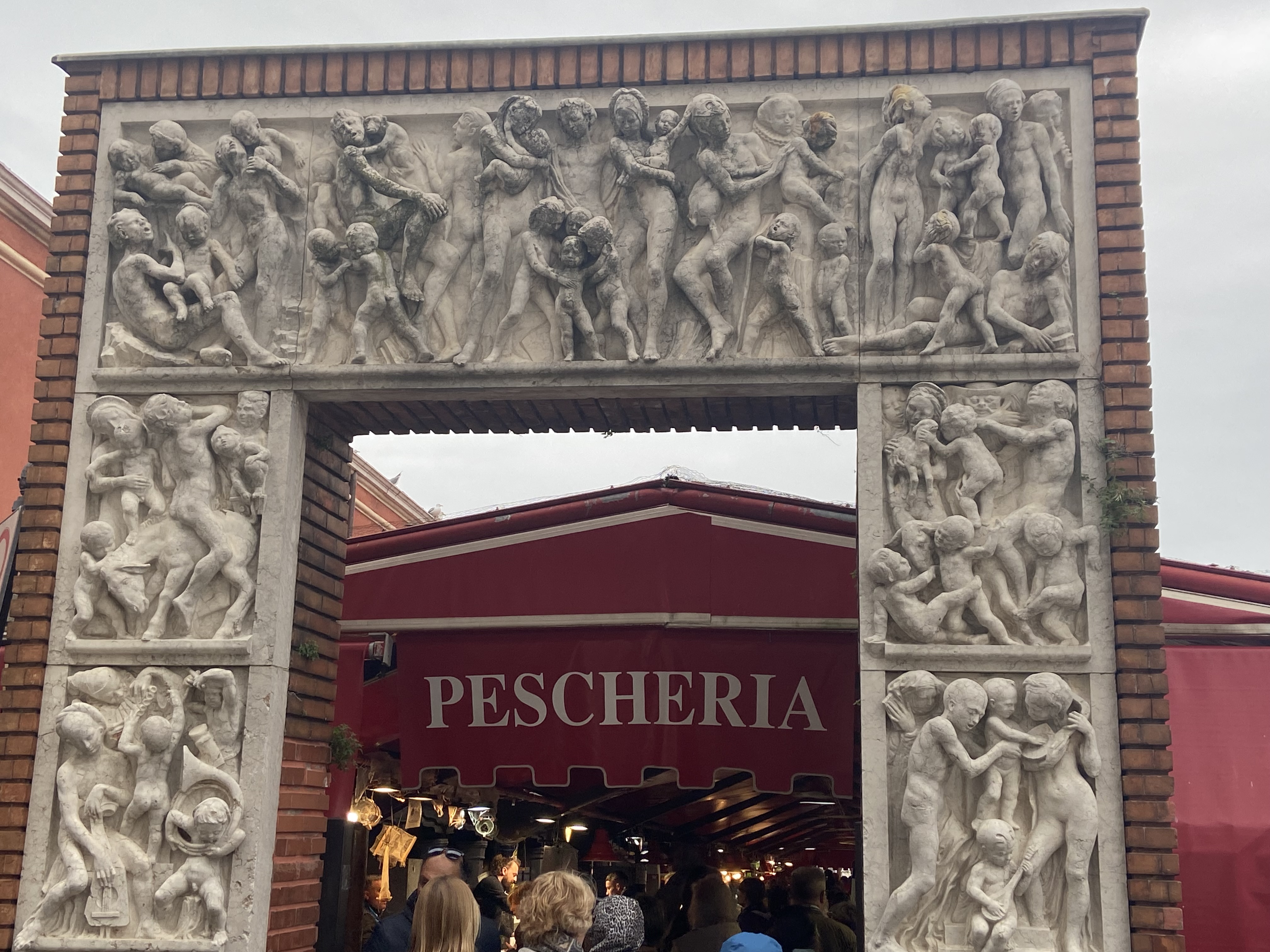
Pescheria is Italian for fish market, of which there are plenty in the Venetian area. The intricate sculptured gate of this one in Chiogga is stunning.

Twice, we rode a bus to visit Venetian villas located out in the countryside. C’Zen (House of Zen) was once a shooting lodge before being converted to a villa by the wealthy Venetian Zen family. Today, it is operated by a mother/daughter team and caters to both day and overnight guests.

The Ca’Zen Estate was a relaxing spot for a late afternoon glass of wine paired with Italian hors d’ouvres.

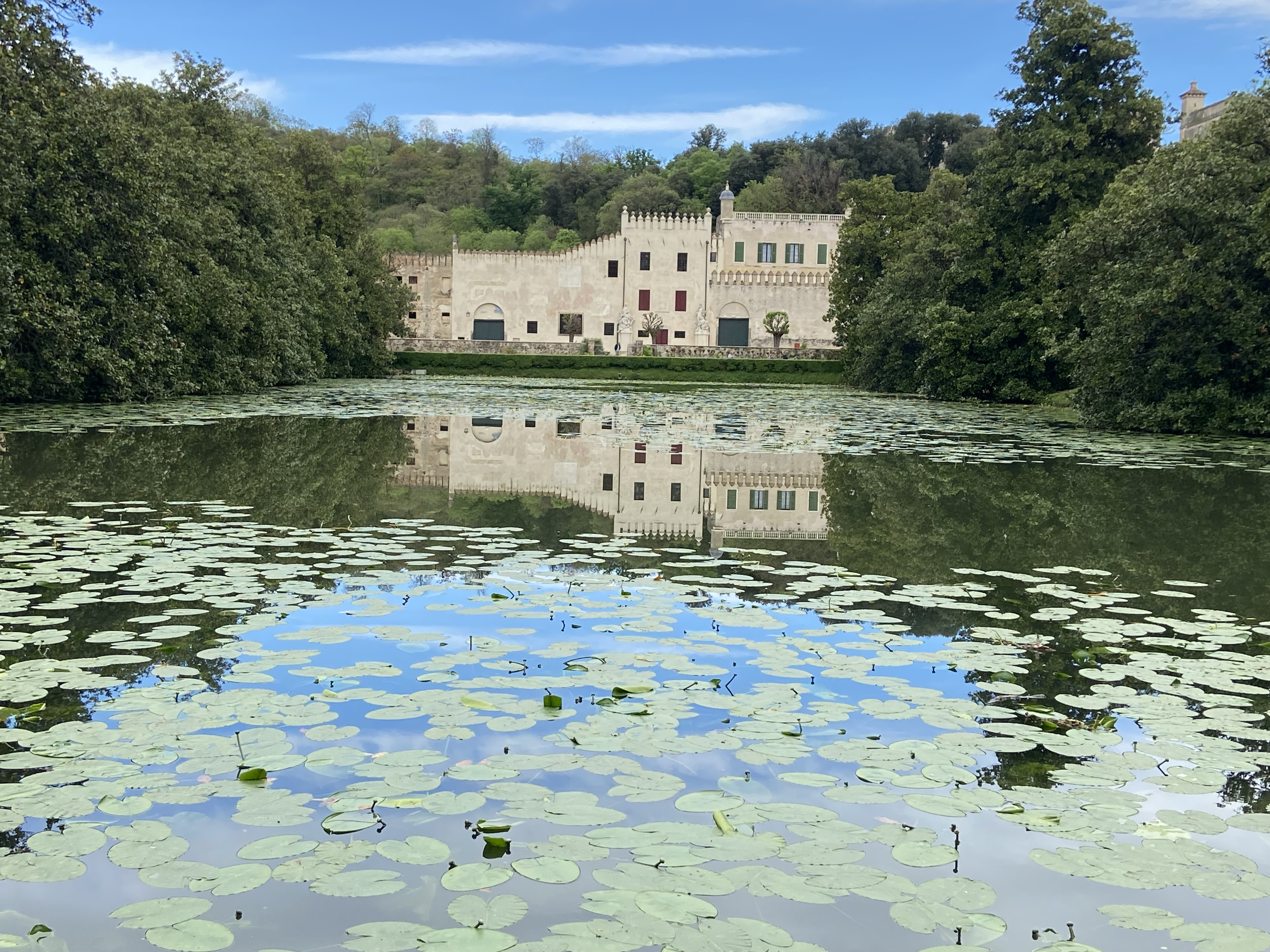
The Catajo Castle, located in the Euganean Hills, has a nice setting too.

Built in 1570 by the Obizzi family, the Catajo Castle was actually a cross between a fortress and a mansion rather than a castle. According to our guide, the Obizzis were social-climbing mercenaries who liked to show off their wealth and boast about their battlefield victories. Hmm. Sounds like a family saga that could be made into a Netflix show.

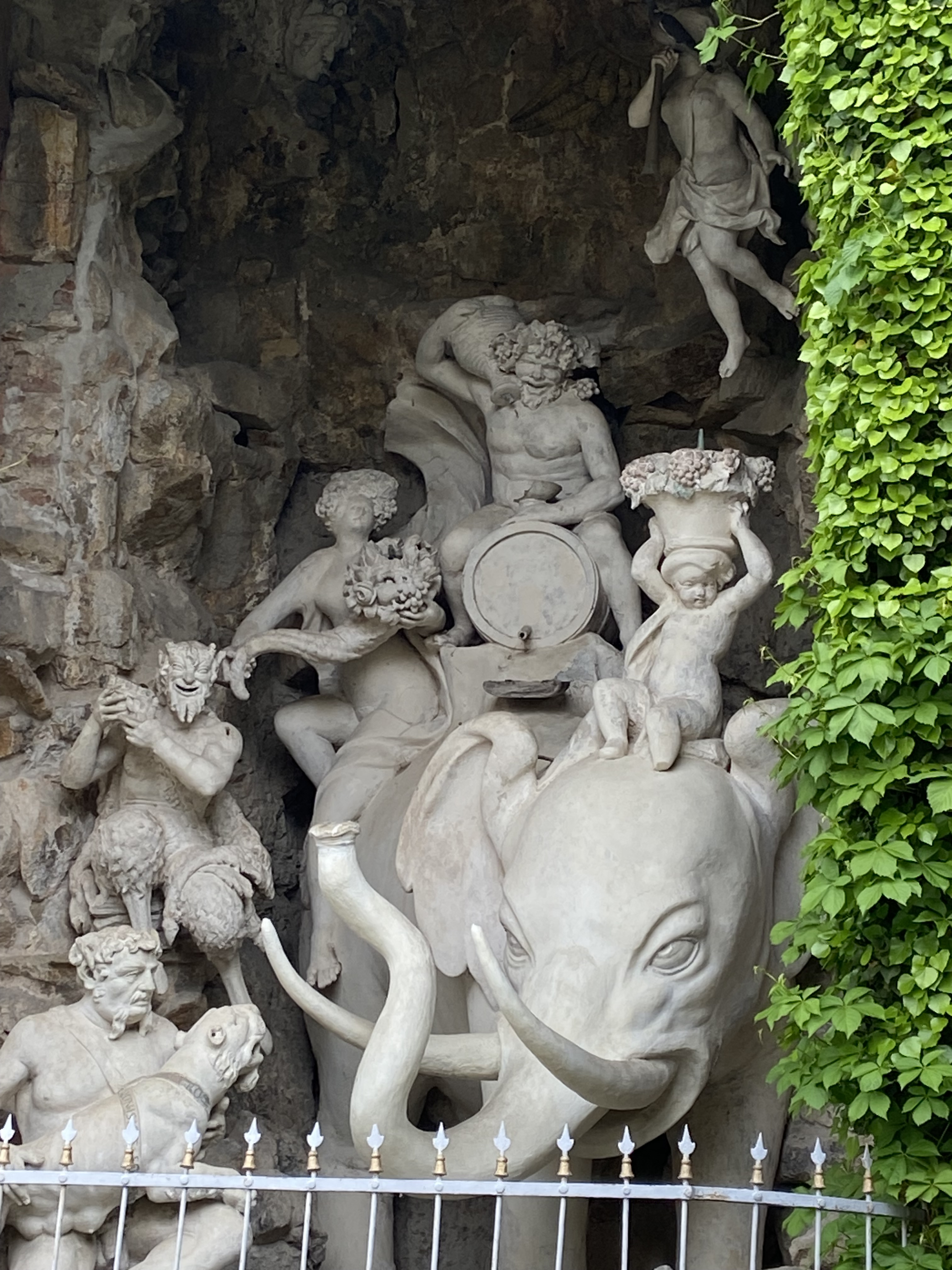
I particularly liked the sculpture of mythological figures, some astride the elephant, at the entrance to Catajo Castle. Bacchus, the god of wine (straddling the keg), is promising a good time to all who visit Catajo Castle.

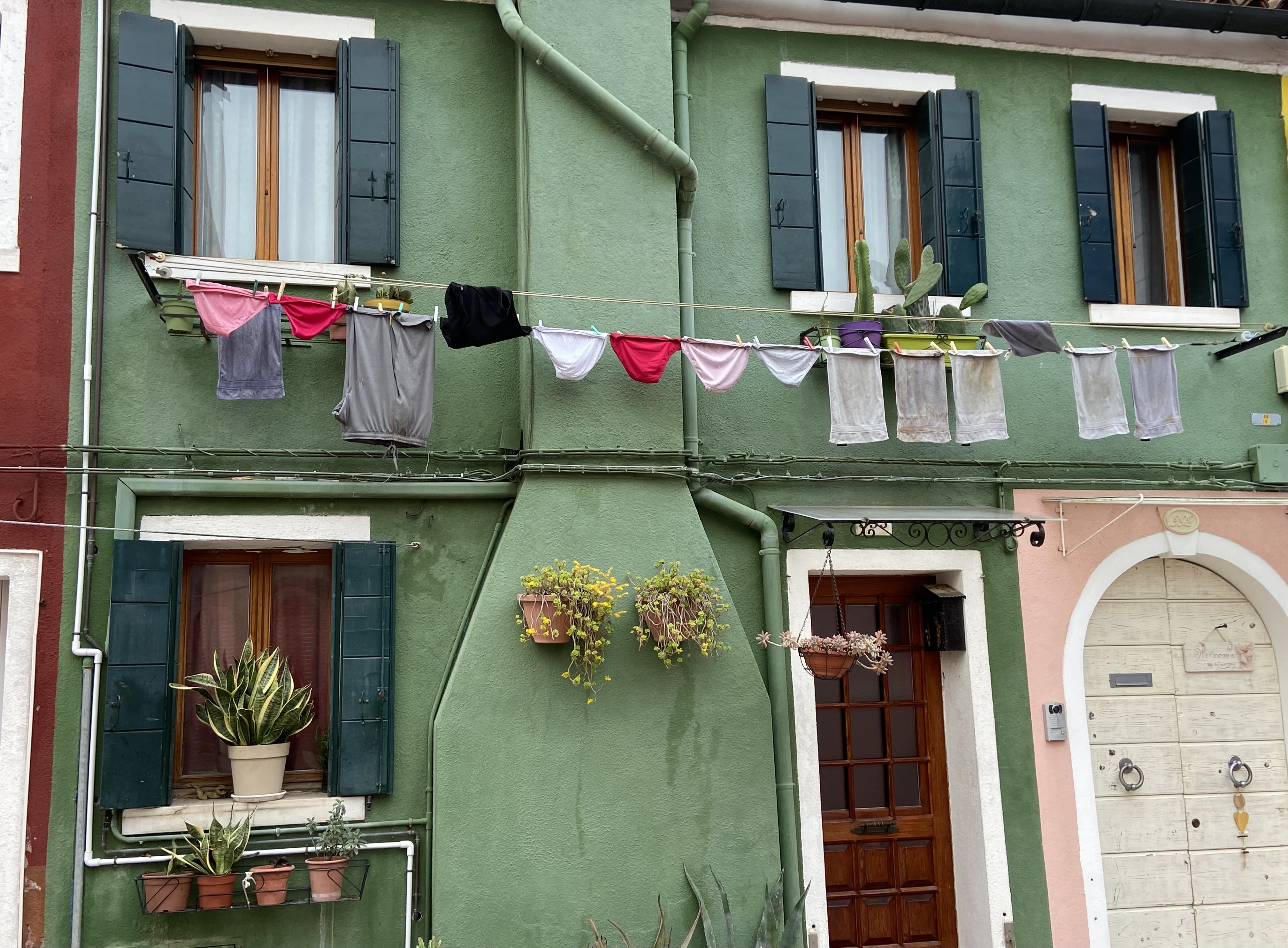
Italian sculpture, cathedrals, art, and palaces were exciting to see. But there were also the moments during my trip to Italy when ordinary life popped up, showing me that people everywhere have pets, do laundry, and display quirky lawn ornaments.

I hated to say goodbye to my favorite European country and to my Uniworld riverboat home.

Posted in Uncategorized | Tagged , , , , , , | Leave a comment

An Italian Adventure: Venice

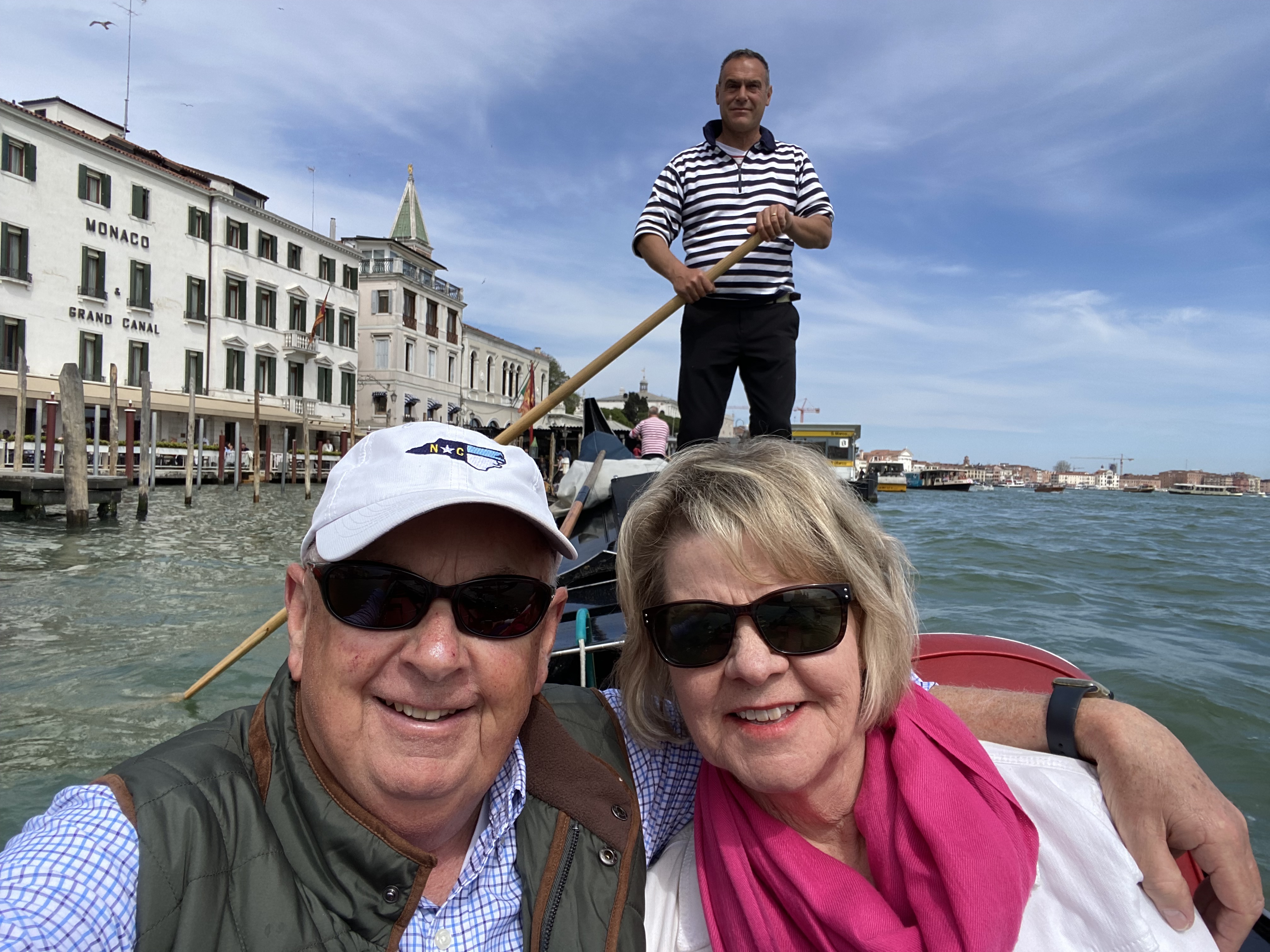
Built on 118 islands, Venice is like no other city in the world. Walking or water transportation is how you get around, although the pricey gondolas are today only a tourist attraction. The gondoliers no longer sing, but it’s still a fun ride through the Grand Canal and into the riis (the name for the smaller canals).

For a week, our Uniworld ship was basically a floating hotel in the Venice area. We spent a couple of days in Venice itself and then a few days on various islands.

We quickly learned that the winged lion, seen everywhere, is the symbol of Venice. The lion represents Saint Mark, the patron saint of the city.

This statue, the Victor Emmanuel II Monument, shows the history of Venice after its defeat by Napoleon. On one side of the statue, Venice is depicted as a fallen woman with a lion in chains. On the other side of the statue, Venice is free and united with Italy. The lion has broken its chains and is roaring. Victor Emmanuel II, the figure on top, was the king of this united Italy, beginning in 1861.

Looking at my guide’s hat, I also learned the French are not the only beret-wearing Europeans.

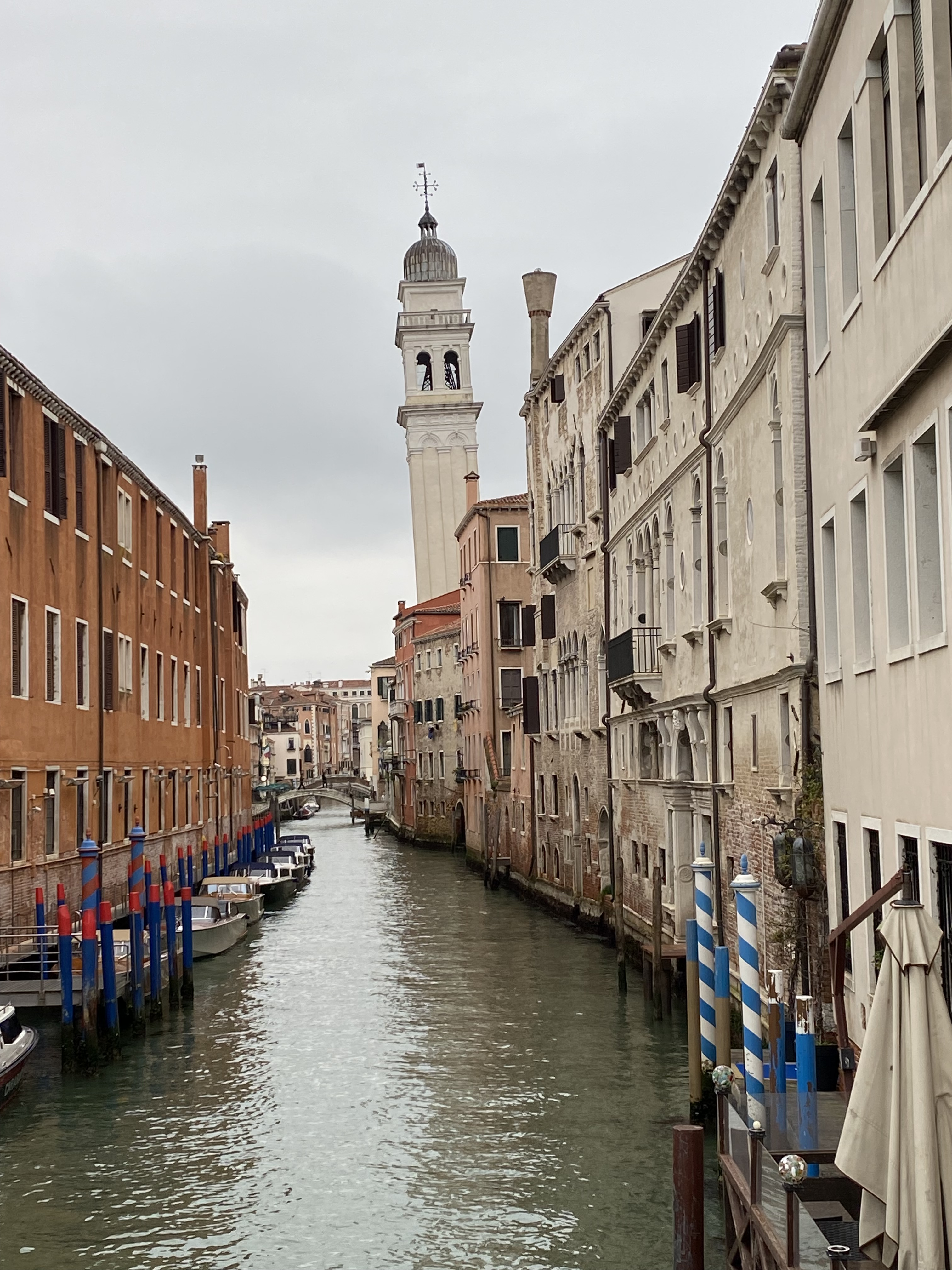
Another fun fact: Pisa is not the only Italian city with a leaning tower.

One of the benefits of traveling with a tour group is gaining access to certain famous places in pre-opening hours. Doge’s Palace, a Gothic structure which was once the seat of the Republic of Venice as well as the home of the ruler (called a doge), was more enjoyable in the early morning without the crowds that Venice is noted for.

Everything from the architecture to the paintings in this former government building is over-the-top elaborate. The entrance itself, the Giant’s Staircase, where a new doge was crowned, is flanked by two huge marble statues of Mars and Neptune, noting military and naval power. Above the entrance is the winged lion, the symbol of a free and mighty Venice.

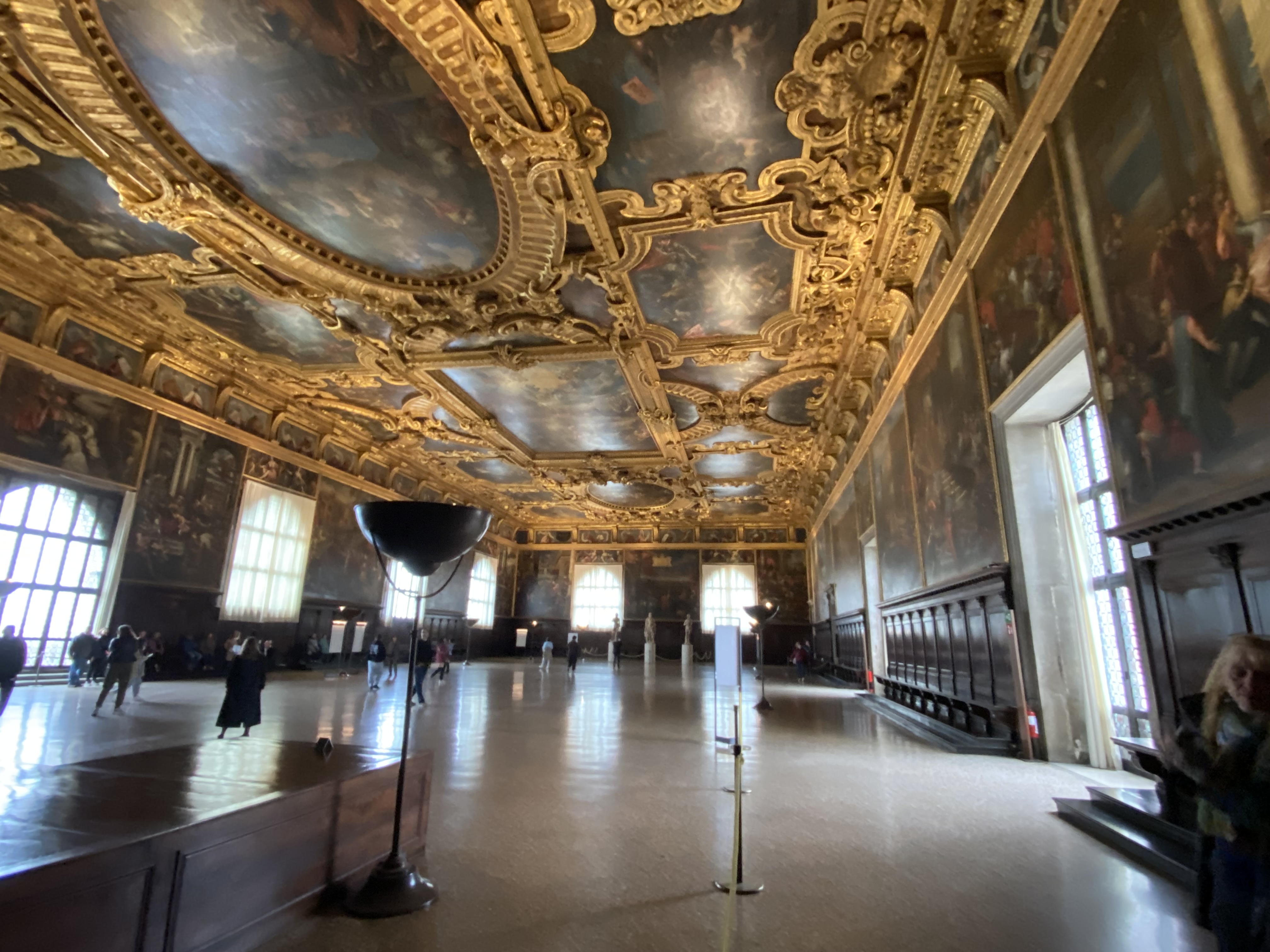
The painted ceiling in the Great Council Chamber in Doge Palace is considered one of the most beautiful in all of Italy, a country known for great art. Painted between 1575 and 1578 by Paolo Veronese, this magnificent work was commissioned to celebrate the power of the Venetian Republic. Foreign ambassadors were received in the huge room, so the painting was meant to impress all who entered with the wealth of the republic.

The Great Council Chamber was also where the Senate met to discuss government business as well as to pass sentences for criminals.

The Great Council Chamber also boasts a very famous painting, Tintoretto’s Paradise. One of the largest paintings on canvas in the world, it measures 75 feet wide and 29 feet tall. The very busy scene depicts heaven on earth.

I was unable to capture the entire painting in a photo that showed any detail, and as you can see, there are quite a few details in this enormous work.

Venice was a republic which lasted between the 8th century and 1797, a thousand years. During the Middle Ages and the Renaissance, it was a major economic and trading power and controlled territories in northern Italy. But in 1797, Napoleon’s troops stood poised to take the city. The Great Council of Venice decided to abdicate, turning control over to the French.

A painting in Doge’s Cathedral captures an elderly senator descending the Giant’s Staircase, resigned to the fate of the once powerful Venetian government.

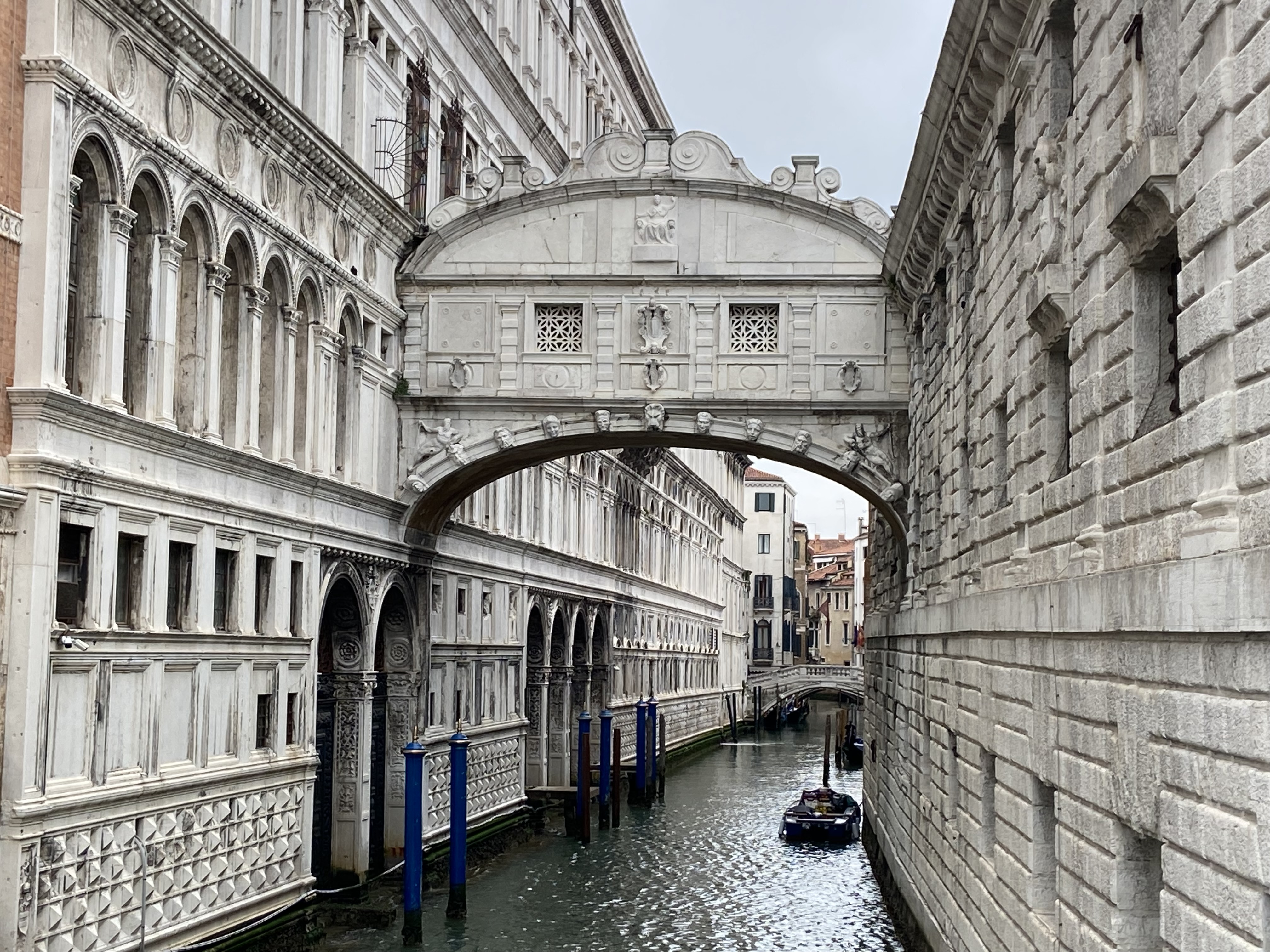
Doge’s Palace is also known for its prison, reached from the palace itself by the famous Bridge of Sighs. The story goes that the bridge was given its name by Lord Byron, who wrote of prisoners sighing as they viewed Venice for the last time from the windows of the bridge as they were led to their cells. “I stood in Venice, on the Bridge of Sighs, A palace and a prison on each hand….”

The prison was a stark contrast to the gilded rooms on the other side of this bridge.

Because it was Holy Week and there were special services, we couldn’t enter St. Mark’s Basilica, located on the same piazza as Doge’s Palace. Viewing the outside was some consolation, though.

Instead of visiting St. Mark’s Basilica, we were treated to an evening visit to the Fenice Opera House. Another elaborate, gilded interior.

An American-born opera singer performed a few arias in an informal show.

No visit to Venice would be complete without walking over the famous Rialto Bridge. Early in the morning is the best time, before it gets crowded.

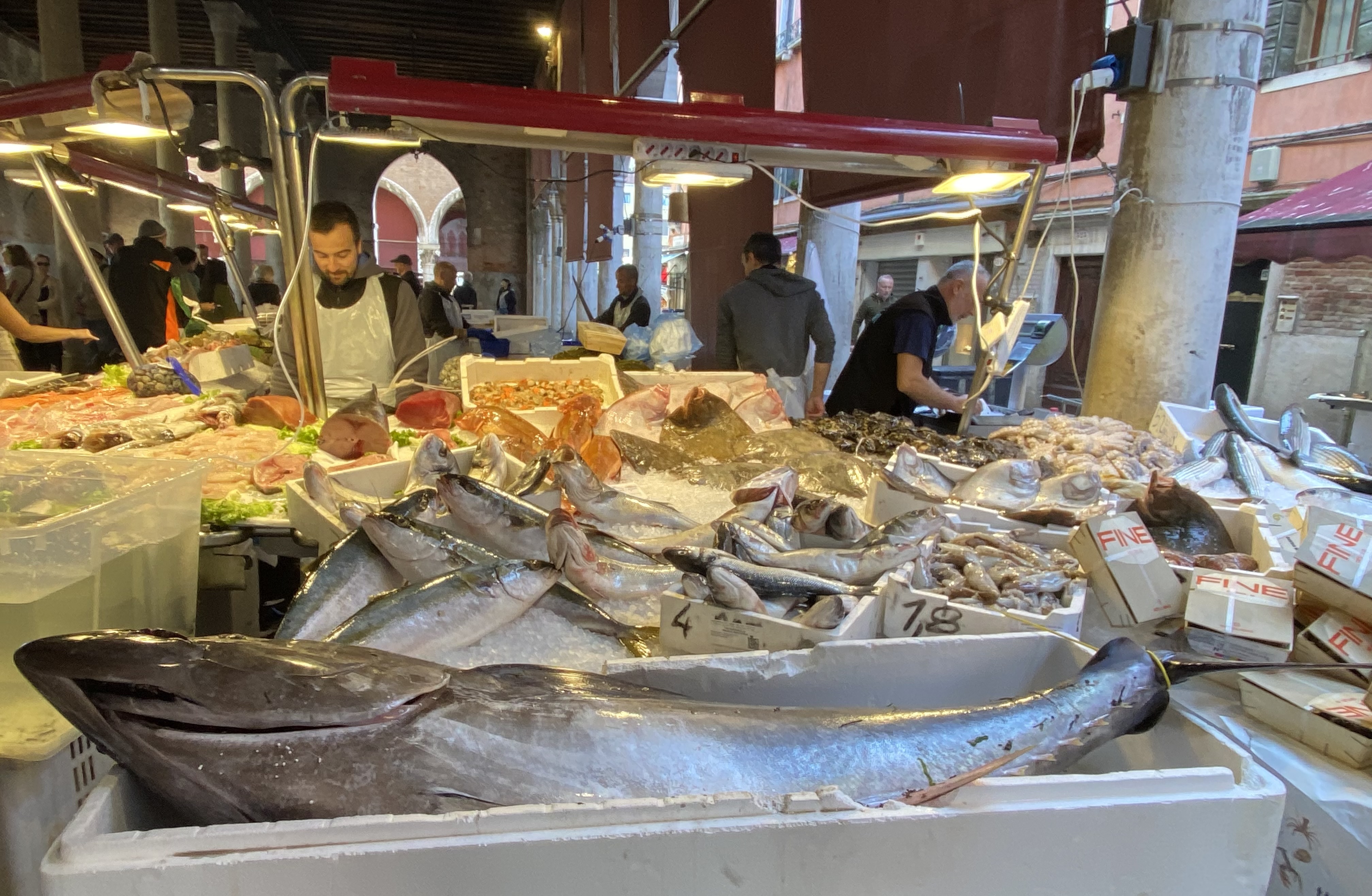
The fish market near the Rialto attracts a local market as well as sightseeing tourists.

Speaking of locals, it’s always nice to see a slice of real life in a city, especially one where the tourists can outnumber the residents. I loved stumbling upon an alley (called a calle) with a clothesline and a dog walker.

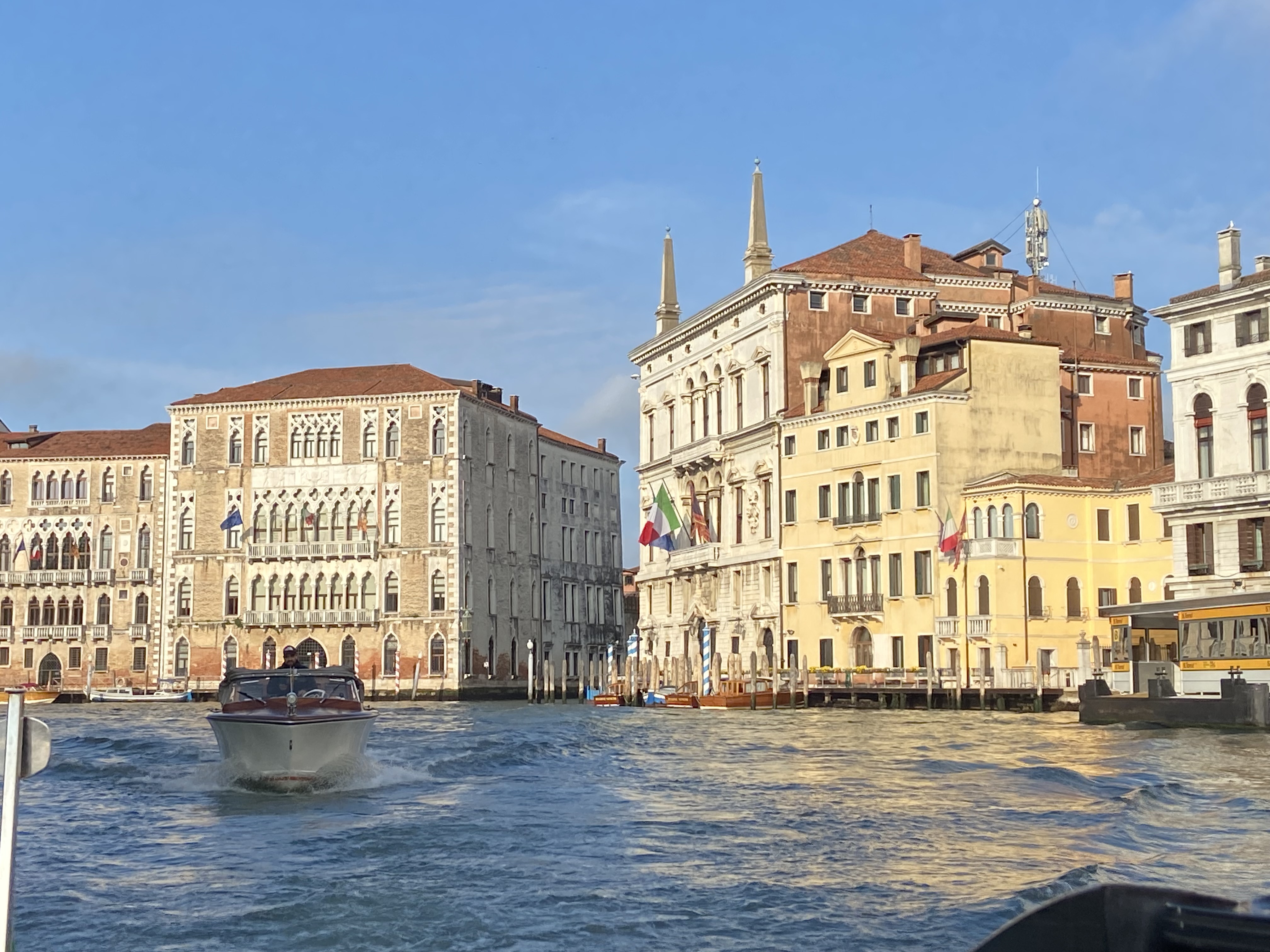
I’ll remember Venice, though, for its Grand Canal and the majestic buildings hugging the edge of the water.

In my next and last post about this trip to Italy, I’ll talk about the nearby islands we visited.

Posted in Uncategorized | Tagged , , | Leave a comment

An Italian Adventure: Lake Como, Milan, and Verona

I’m back from my third visit to Italy, my favorite European country. The ten-day Uniworld trip began in Milan and ended in Venice, with detours to Lake Como, Verona, and a few of the islands surrounding Venice.

Before any serious touring could begin, though, an Italian dinner was required. The fresh tomatoes and mozzarella on this salad were as delicious as they look, and no one can cook pasta like the Italians. Can you see why I love this country?

The group I travel with always likes to leave a day early to allow for possible airline snafus. This time we had no flight delays and used our extra day to visit Lake Como and a couple of surrounding towns located in the northern part of Italy near the Swiss border.

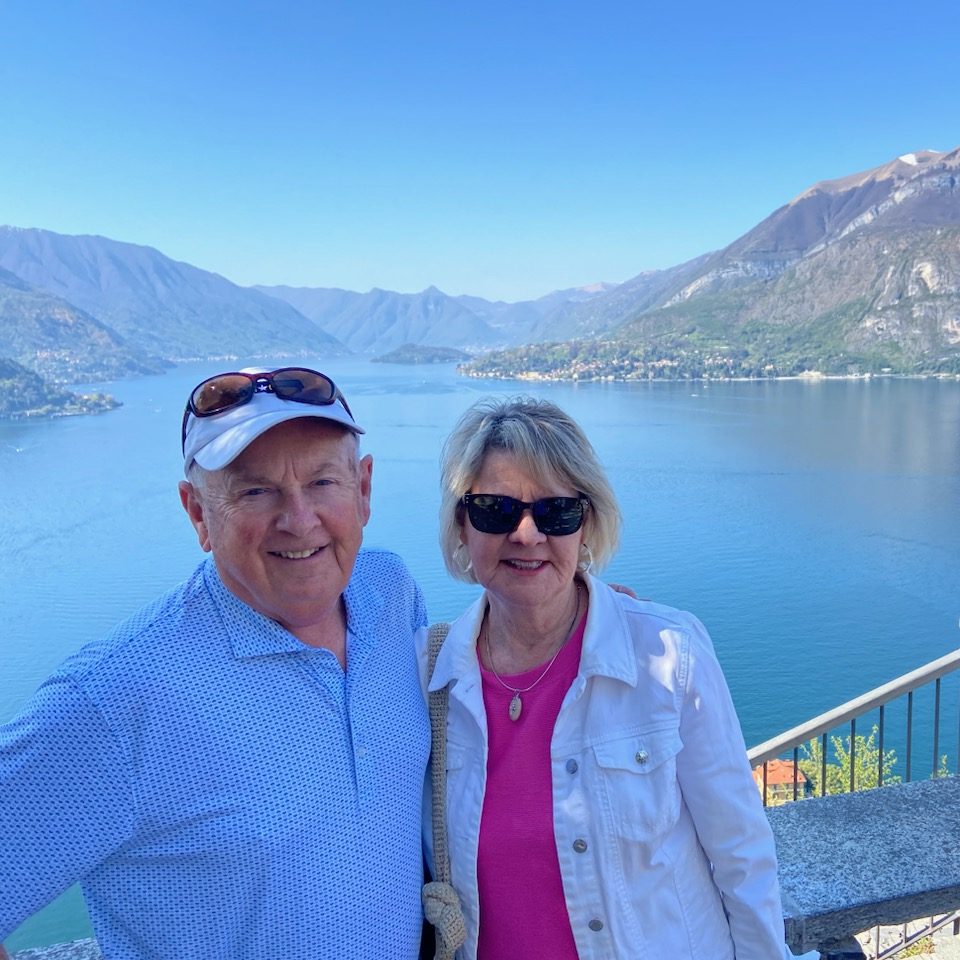
We boarded a train from Milan, and in an hour or so, we got off in a little town called Varenna on the shores of Lake Como. Here, we climbed a million steps to reach a medieval castle (Castello di Vezio), where we were rewarded for our efforts with a panoramic view of the lake. The snow-covered mountains are the Italian Alps.

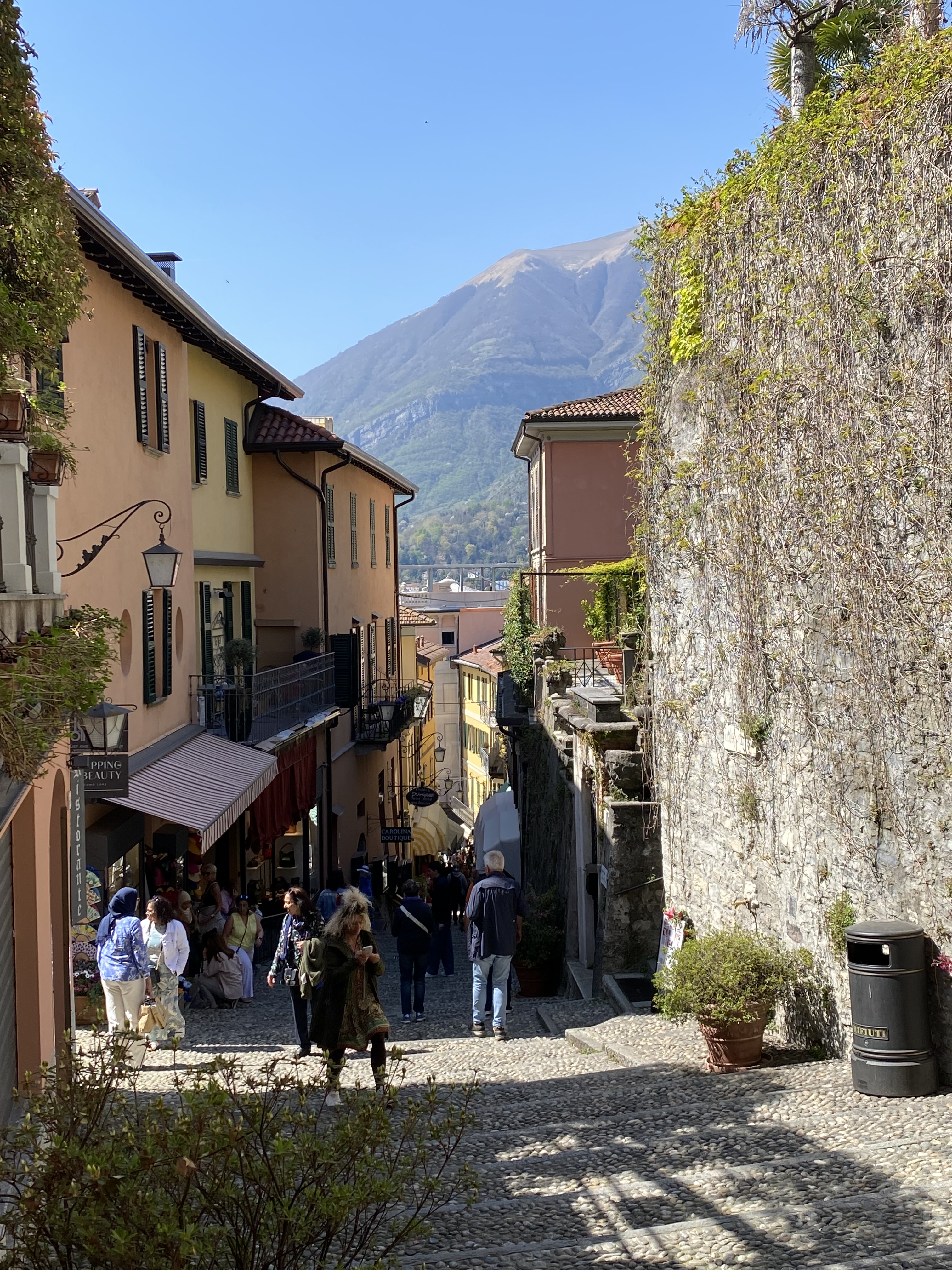
Bellagio was the second town we explored on Lake Como. With its winding, hilly streets, it’s a charming place to visit, making it possibly the most popular tourist destination on Lake Como. These crowds, here in the shoulder season of mid-April, are evidence of that. Imagine what this street must look like in summer at the height of tourist season.

My husband, a better photographer than I, did manage to capture one relatively quiet lane in this pretty town.

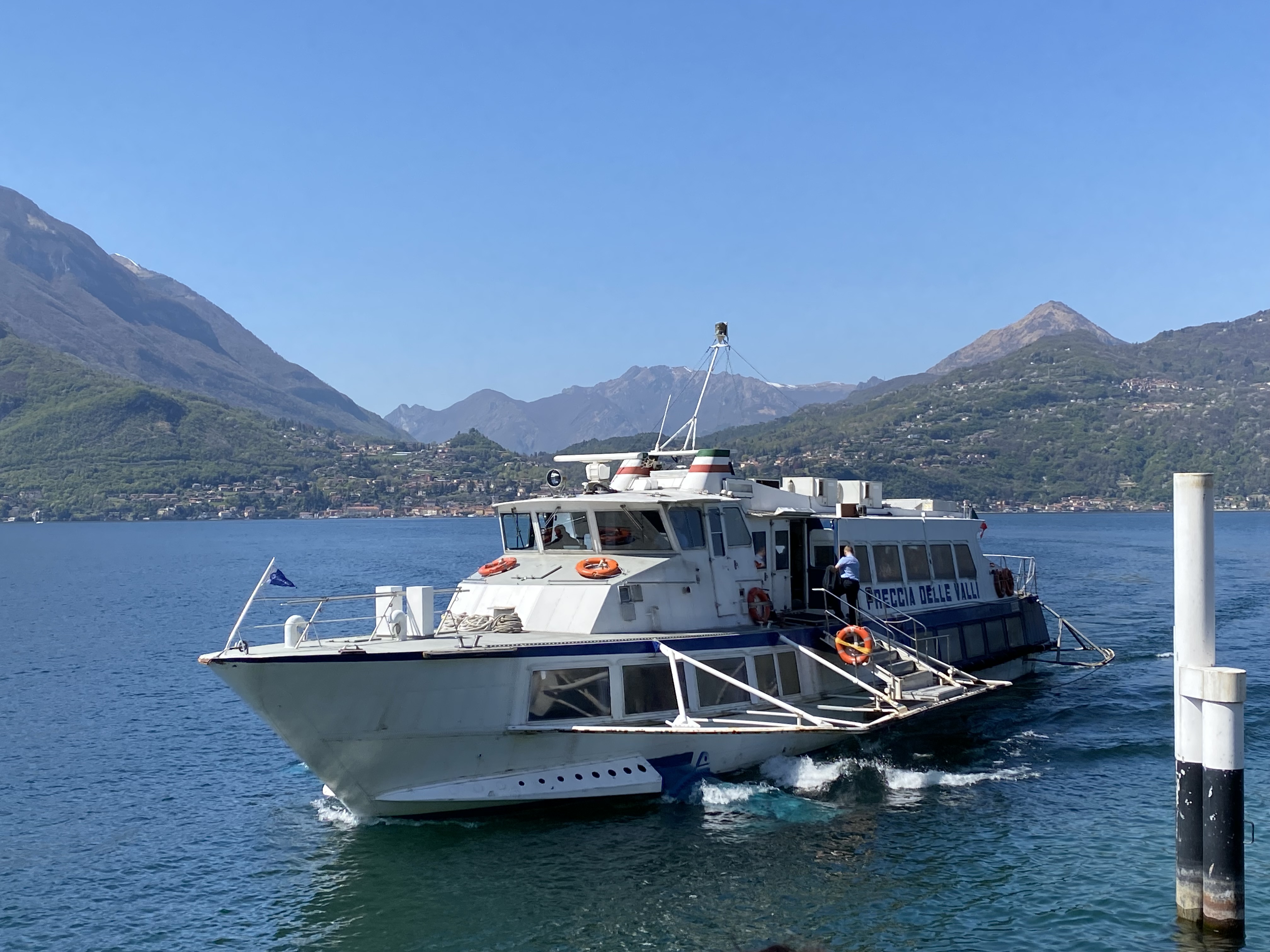
Part of the fun of visiting Lake Como, of course, was being on the lake itself. We traveled between Varenna and Bellagio on a local ferry.

After a day on our own touring the Lake Como area, we joined our Uniworld group back in Milan. Our first guided excursion was what brought me to this city: a viewing of Leonardo da Vinci’s The Last Supper.

Contrary to what I’d always thought, this work is not a framed painting but rather a mural painted on a wall in what was the dining room in the Santa Maria delle Grazie convent in Milan. It’s huge, measuring 15 feet tall and 29 feet wide.

My husband’s photo here captures the sparsity of the room. To ensure the mural is maintained at room temperature, only 25 people are allowed to enter at 15-minute intervals. We were shooed out after our allotted time.

It’s hard to believe today, but The Last Supper was not always a revered work of art. Residents of the monastery cut a new door in the wall, removing the portion of the fresco showing the feet of Jesus. Napoleon’s troops turned the area into a stable and used the wall for target practice. In 1943, during World War II, bombs tore the roof off the room, leaving the paint exposed.

Still, the power of Leonardo da Vinci’s work remains in the story he so masterfully depicts. Jesus and his disciples have gathered in the Upper Room for the Jewish Passover Feast. He has just revealed that one of the twelve will betray him. Astonishment and dismay are expressed by all, including the traitor, Judas Iscariot.

Though seeing The Last Supper was the main attraction for me in Milan, there were other interesting sights. With its intricate, pointed spires, Il Duomo, the Milan Cathedral, is the largest gothic-style church in the world. Construction began in 1386 and took nearly six centuries to complete. Judging by the scaffolding on the roof, I’m not sure the work is finished.

The cathedral has 3,400 statues, 135 gargoyles, and 700 figures.

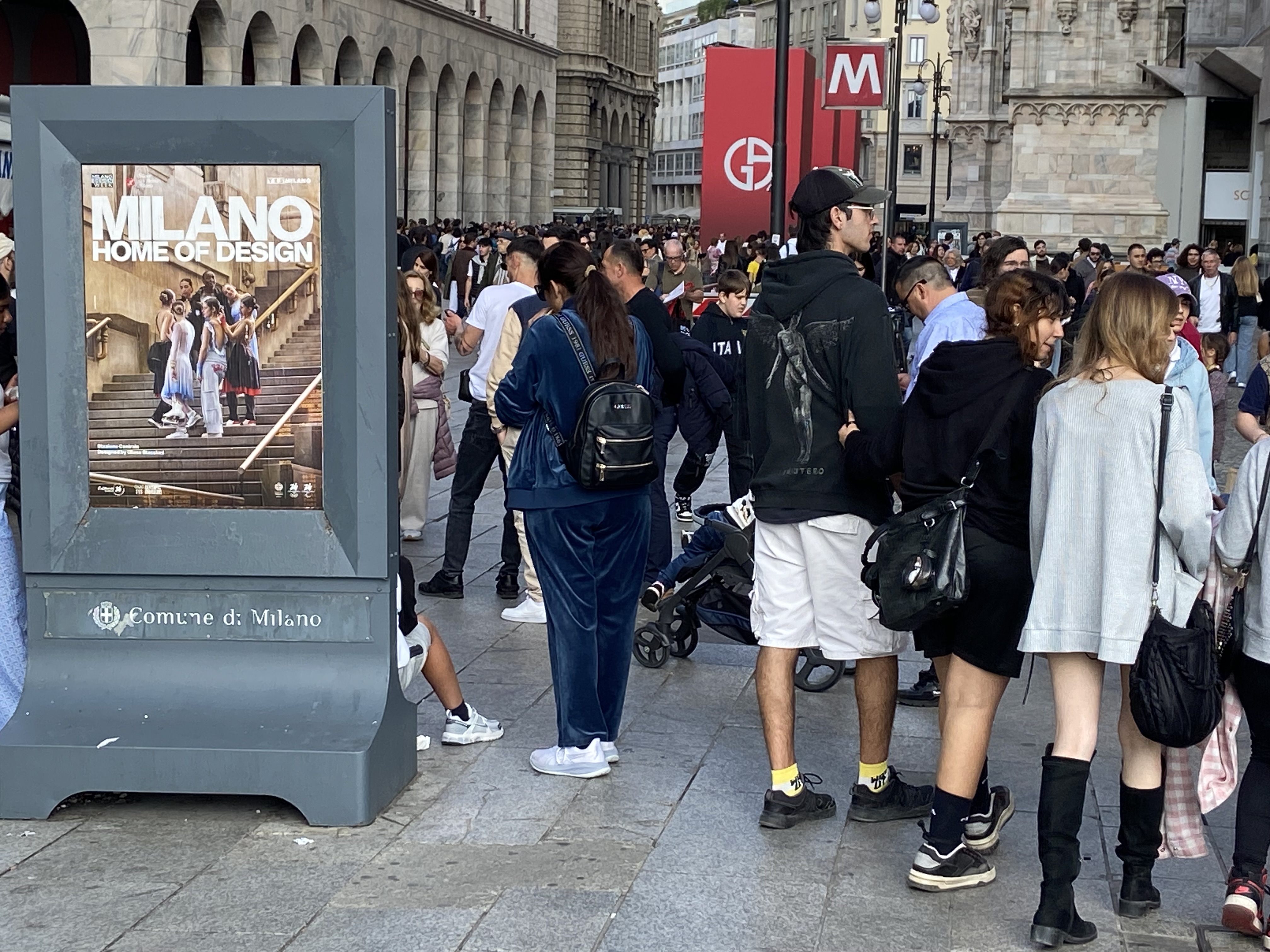
Before going inside, our group climbed to the top for an arial view of a busy Milan street.

Inside, the stained glass windows were dazzling.

To me, the most interesting interior feature of the Milan Cathedral is a spot in the dome above the apse, marked by a red light. One of the three nails from the crucifixion of Christ is believed to be stored here. The story is that the nail was brought from Palestine by St. Helen, the mother of Emperor Constantine, around 330 AD.

I think it’s safe to say we have nothing like this in America.

Milan is known as a fashion capital and boasts what is probably the most exclusive indoor mall in Europe, the Galleria Vittorio Emanuele II. Built between 1865 and 1877, the mall is shaped like a Latin cross and is covered by a glass and iron dome.

Unlike many American malls, this one is bustling with activity, although for me, such high-end stores as Prada, Gucci, and Louis Vuitton were for window-shopping only.

After a couple of days, we said goodbye to Milan with its prevalence of motor bikes and big-city feel.

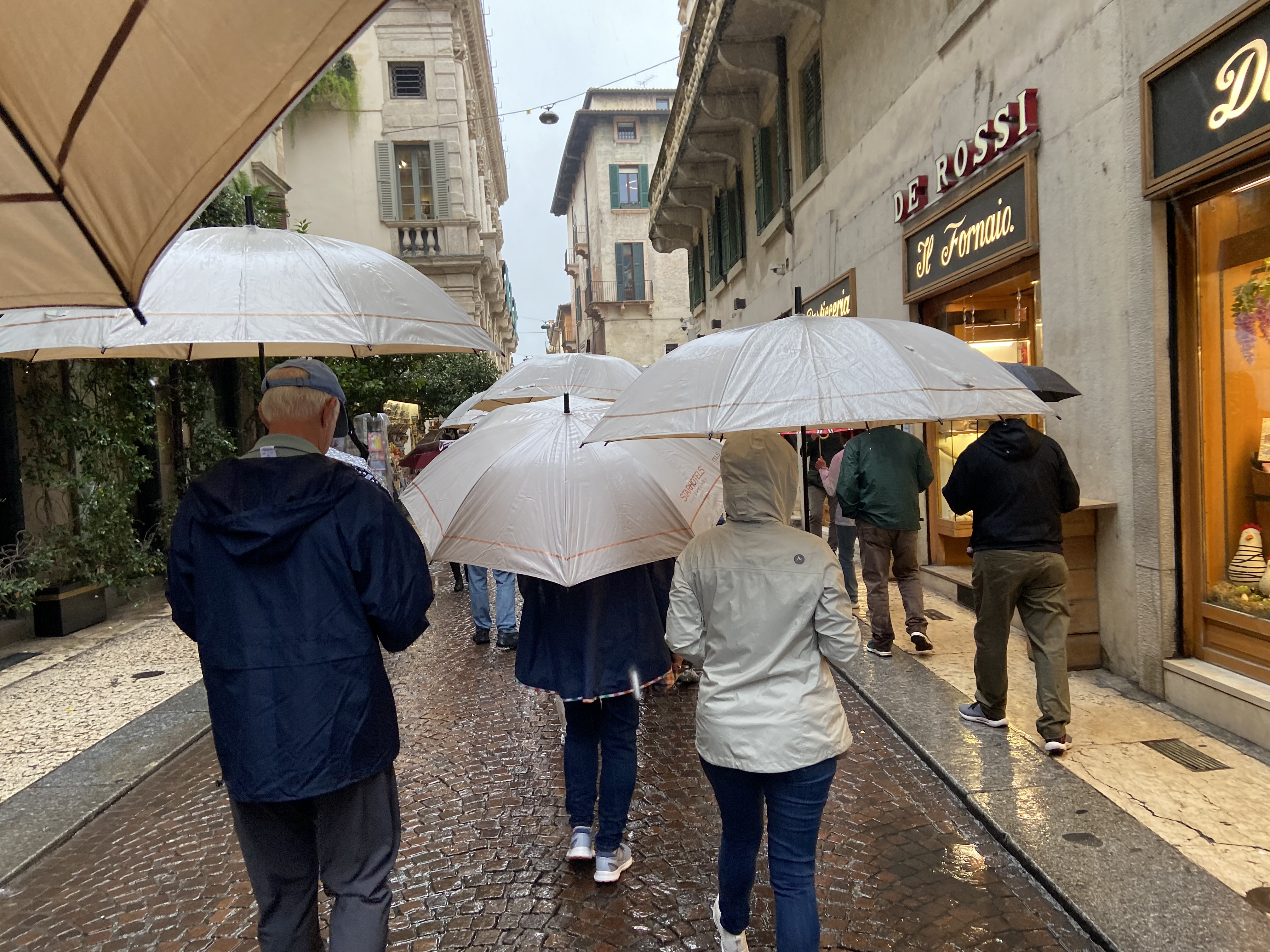
On the way to Venice, where we would board the ship for our Uniworld cruise, we stopped in Verona for a morning tour in the rain. The umbrellas match because they were supplied by our tour sponsor.

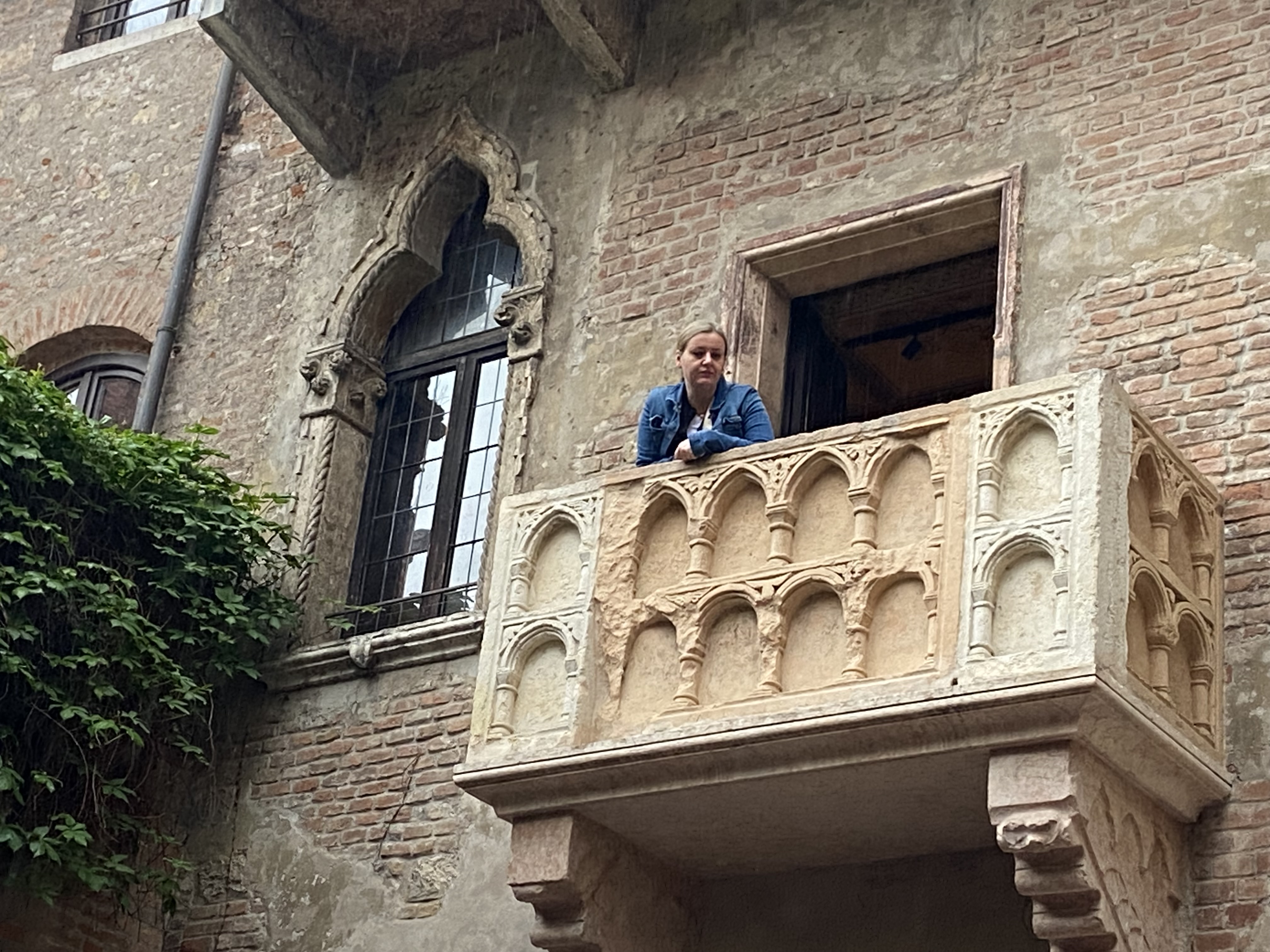
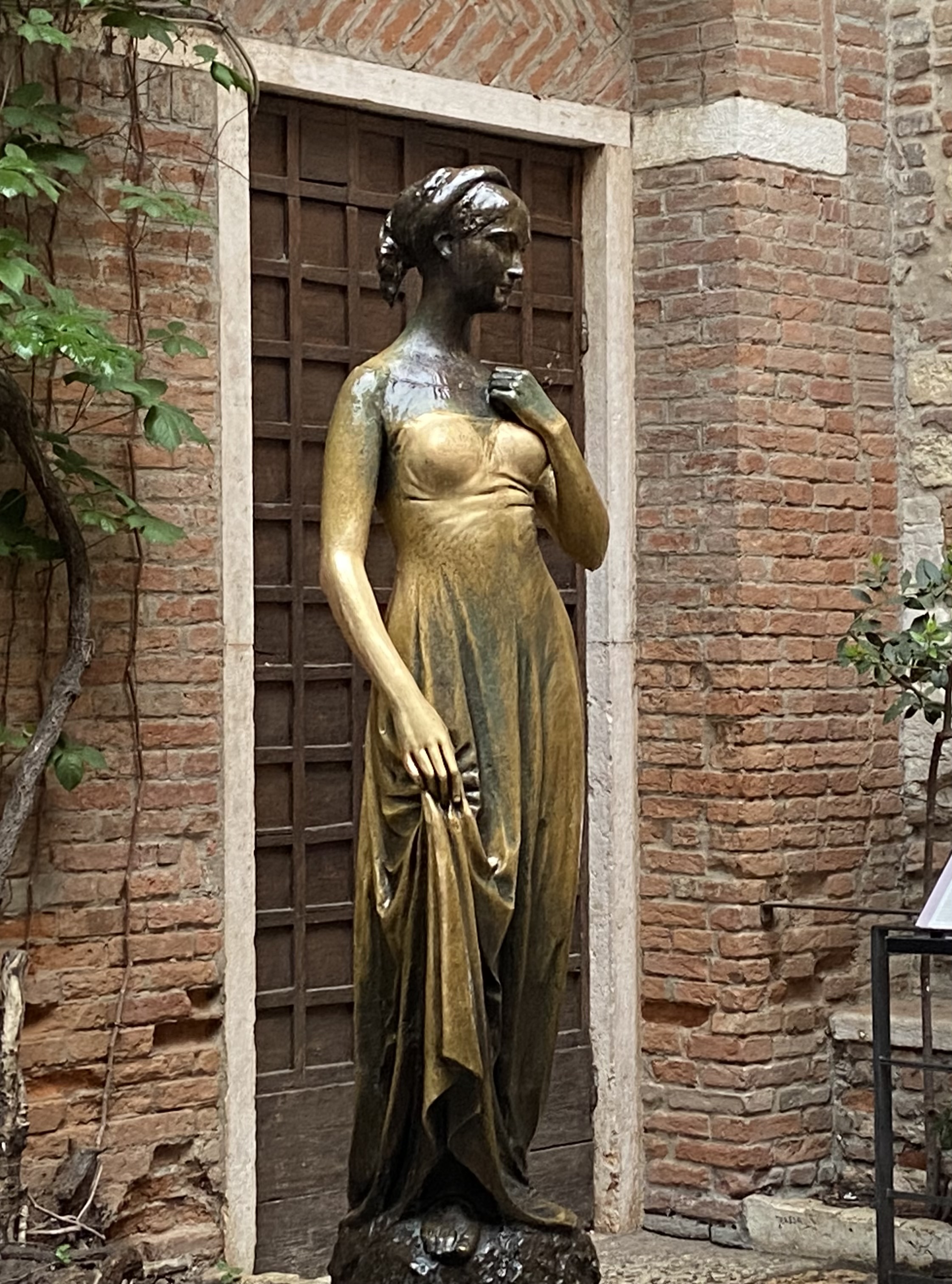
If you remember your Shakespeare, then you know that Verona is famous for being the setting of Romeo and Juliet. Despite the fact that this is a fictional play, the city has designated a Juliet balcony with a statue of the star-crossed lover nearby.

A random tourist strikes a pensive Juliet pose, don’t you think? (“O Romeo, Romeo! wherefore art thou, Romeo?”)

Verona has more to offer than just the Shakespeare bit. The Verona Arena, a Roman amphitheater built in the 1st century, is well-preserved. With a seating capacity of 30,000, this open-air amphitheater is used today for large opera performances.

Impressive. I felt as though I were back at the Colosseum in Rome.

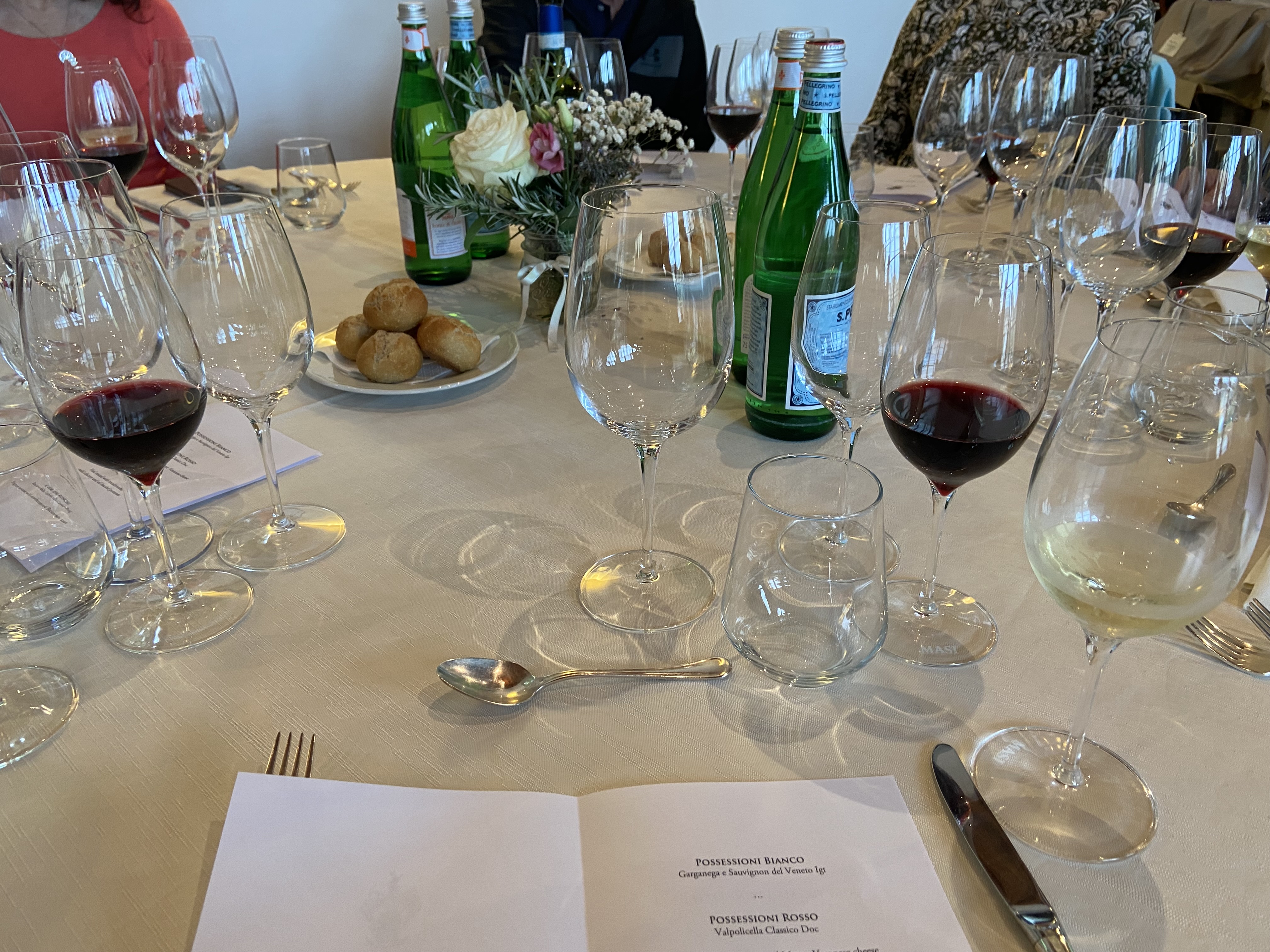
After leaving Verona, the rain stopped and we enjoyed lunch at a wine estate called Serego Alighieri in the Valpolicella wine region. Ah, the Italian lifestyle.

After lunch, it was nap time on the bus as we rode to Venice, the subject of my next post.

Posted in Uncategorized | Tagged , , , | Leave a comment

From Country to Suburbs to City to Country

My twin baby granddaughters have become apartment dwellers. I’m talking 18th floor in a recently constructed, uptown Charlotte high rise. It makes me dizzy to look out the window when I visit.

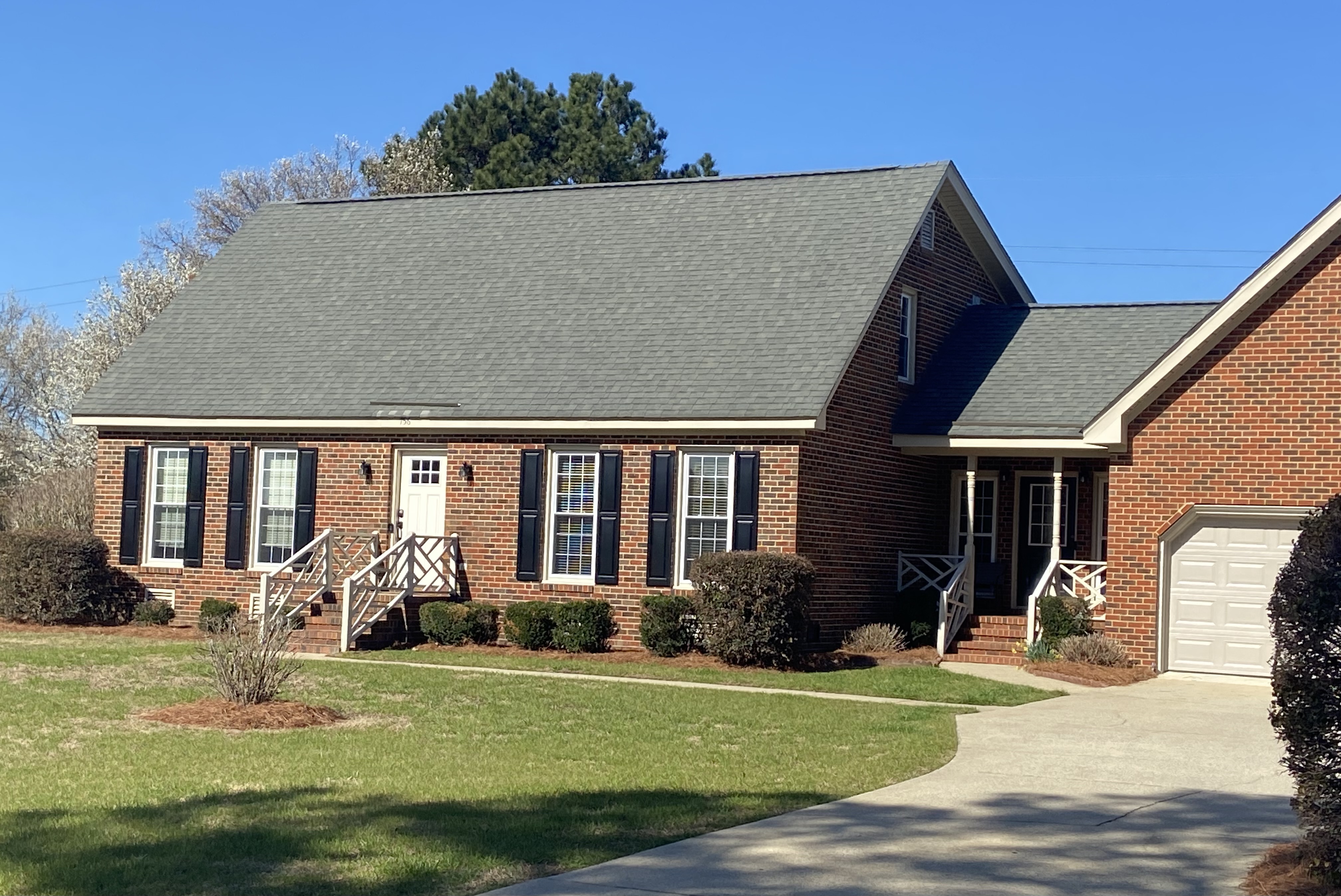
This choice of a place to call home, even temporarily, has me thinking about where all three of my daughters live. They grew up in a brick Cape Cod in a suburb of sorts, a neighborhood called Northgreen. We lived on a cul-de-sac. There was a country club pool, tennis courts, and a golf course. They could walk to friends’ houses and ride their bikes. It was a wonderful life. They had a great childhood.

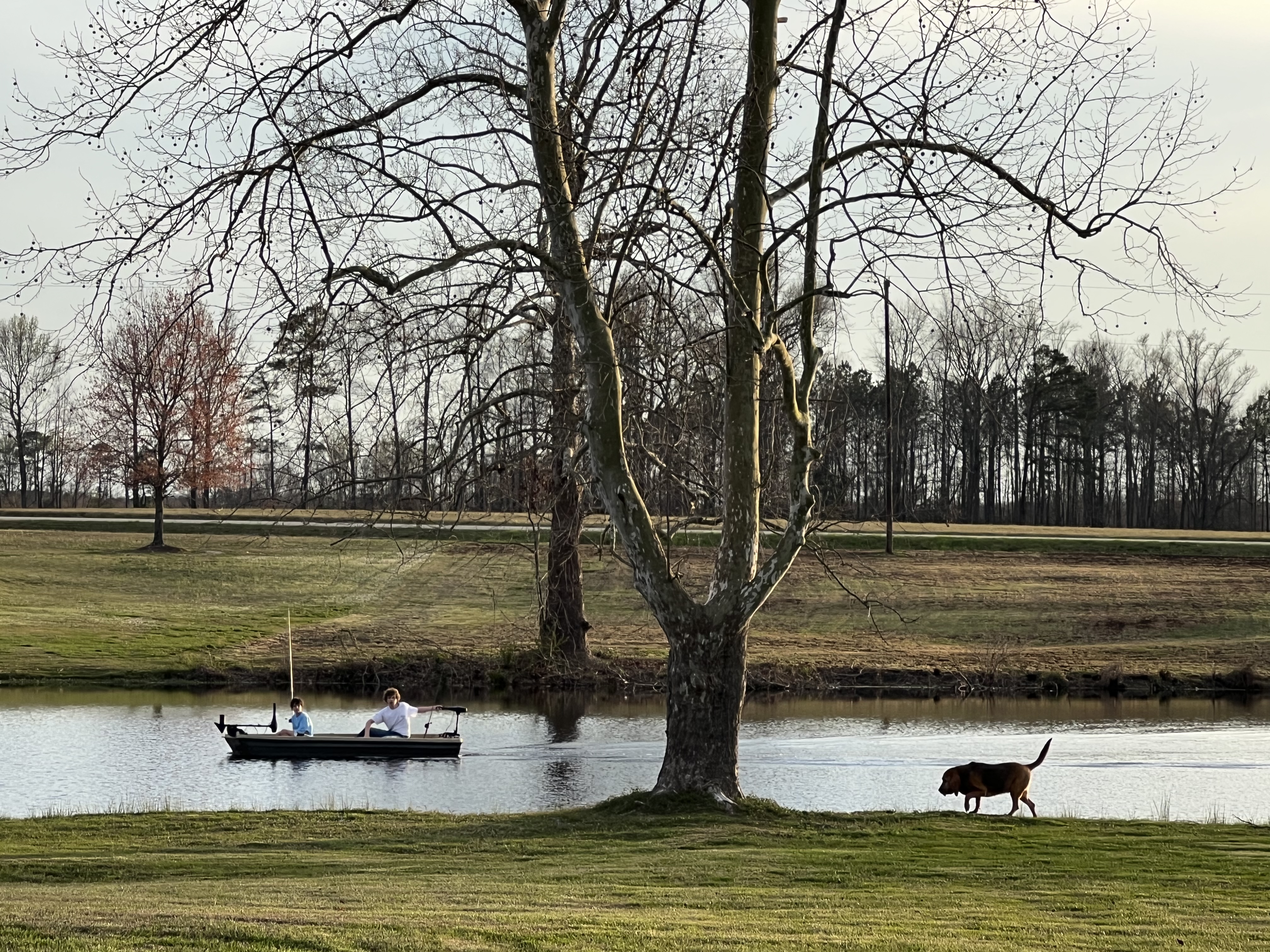
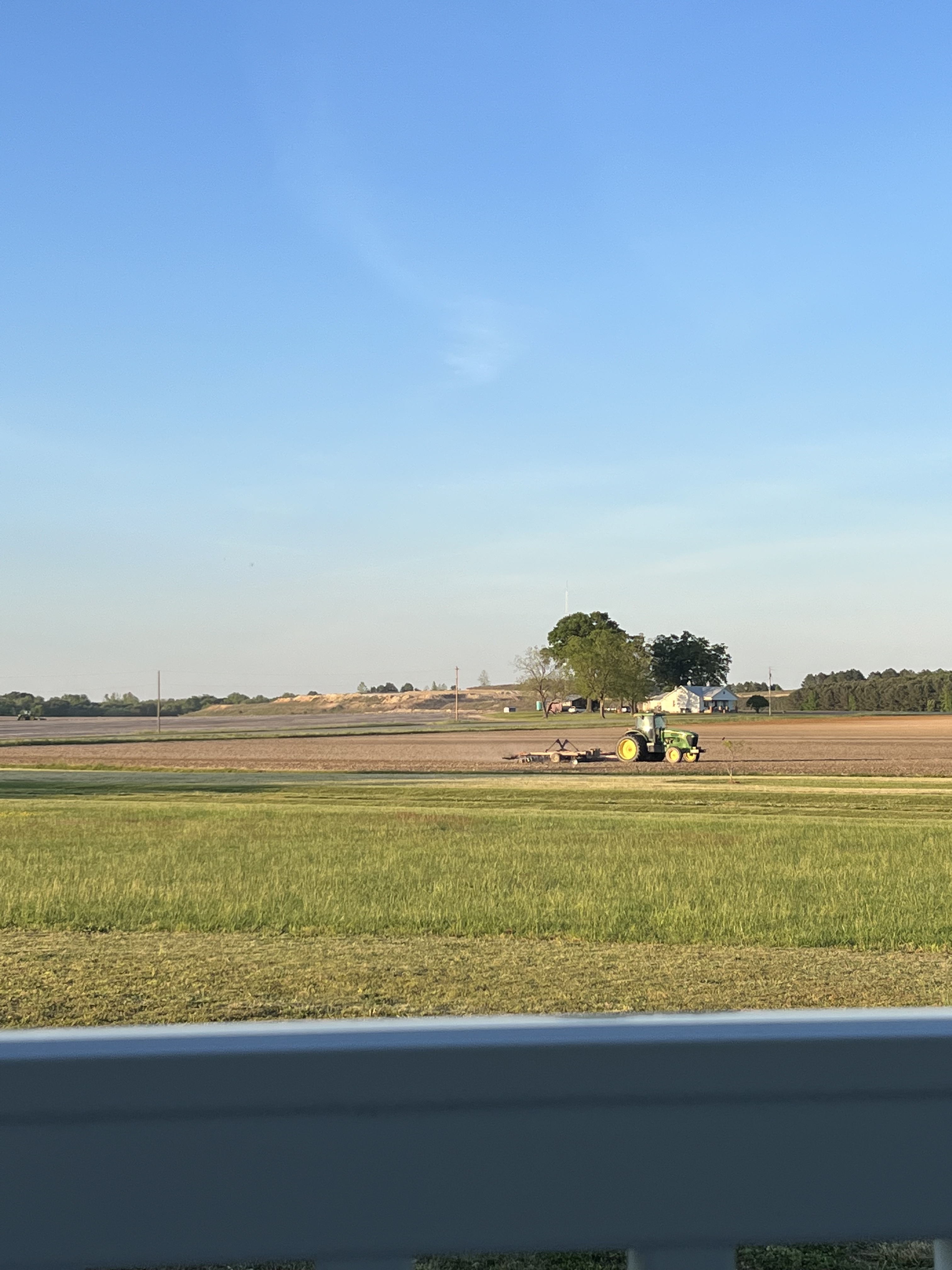
But strangely enough, not one of the three, now married and with children of their own, lives in a neighborhood like the one where they grew up. My oldest daughter chose country living. She has a house with a pond behind it instead of a golf course, and her family goes for walks on country roads rather than suburban streets. She can see tractors in the fields near her house.

It’s beautiful out in the country. And so quiet. There are neighbors nearby, but not what I’d call next door. Everybody has a few acres.

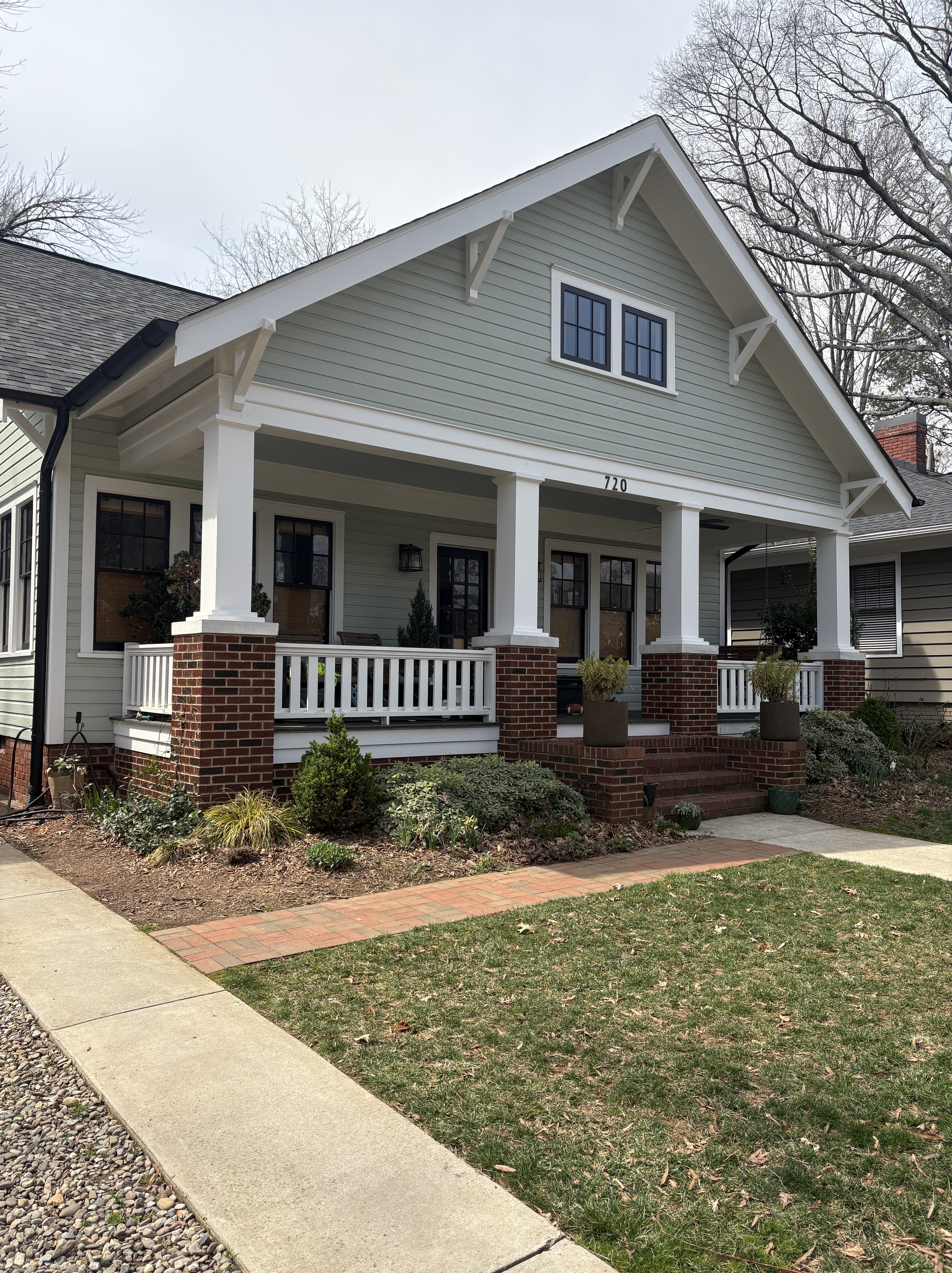
My other two daughters have gone in a totally different direction in choosing where to call home. They both live in Charlotte, the largest city in the state. My middle daughter resides in a 1920s renovated bungalow in the Dilworth neighborhood.

Back in the day of trolley cars, this area was considered a suburb of Charlotte. With the growth of the city, Dilworth today is valued for its proximity to uptown. My daughter and her family walk to the local park and restaurants. The daycare is just down the street at the Methodist church. My son-in-law often rides his bike to his uptown job at a skyscraper bank. The house next door is only a few feet away. City life.

My youngest daughter, currently the apartment dweller, has a house two blocks away from her sister’s. The 1910 Victorian she and her husband bought six months ago is in the process of being approved by the historic commission for renovation. It will be a huge project, but like her sister, this daughter loves an old home. She’s willing to spend a couple of years in an apartment while the house undergoes all sorts of repairs and possibly an addition.

I can trace these two daughters’ love of old houses back to me. I’ve always wanted to buy an old home and fix it up but never saw the opportunity. Now I feel I’m too old. Huge renovation projects take energy. Still, I can live vicariously through these city girls with their historic homes.

As for my oldest daughter, country living also hearkens back to me. I grew up in a brick ranch on sixteen acres of mostly woodland out in Edgecombe County. The view outside those windows in that knotty pine den is fuzzy, but I can tell you it was a backyard with a clothesline and farther out, a big garden. It certainly wasn’t a city skyline. By the way, that’s my handsome daddy with our dog Duchess many, many years ago.

If you have adult children, have they chosen a different type of place to live than where they grew up? Mine sure have. But come to think of it, I did too. I’ve never returned to country living.

I will leave you as I began, with the tiny apartment dwellers, who are currently practicing their crawling in the long hallways on the 18th floor…or gazing at the Charlotte skyline.

Posted in Uncategorized | Tagged , | 2 Comments

Cutting the Cable Cord, Playing Mah-Jongg, and Appreciating Winter

It seems we cut the cable cord just in time. Look how much my Optimum bill went up because some “promotional rate” I didn’t even know I had has “ended.” Thankfully, we should be refunded part of this bill since we’ve now parted ways with the cable.

When Optimum, without any warning, canceled my CBS station the other week, that was the last straw. My husband and I had talked about divorcing the cable company for quite a while, and the days I went without CBS provided the impetus we needed. I’d never forgiven Optimum for eliminating Channel 9 a few years ago. No more Greenville news and ECU sports with Brian Bailey.

Oh, I had a long list of grievances with the cable company. Ever increasing rates (cable creep, it’s called), poor customer service, the above-mentioned arbitrary canceling of my favorite stations.

I was also sick of my telemarketer-plagued landline. Doing away with cable meant I would no longer have the phone package that always seemed to be thrown in as part of the deal. I have now unplugged every landline in my house and will bury them in the electronics graveyard in the attic.

Good-bye to annoying telemarketers, at least until they find me on my cell phone.

Firing Optimum cable doesn’t mean I’ve gone off the grid, though. At my house, we now have YouTube TV, and so far, I’m loving it.

I call it TV for electronics dummies. People like me, who for years have been baffled by how to even turn on the daggone television. Now it’s no more multiple remotes and making sure the cable box is activated as well as the television. No more switching back and forth between something called HDM1 and HDM2. All that jazz that I struggled to remember and often had to call in tech support, my husband, to do for me.

Today, I’m down to a sweet little firestick with only a few options that even a tech-challenged Baby Boomer grandma like me can easily master. Look how streamlined this gadget is.

You Tube TV is not the only new entertainment in my life. Back in the fall, I learned to play Mah Jongg. Oh my goodness! Y’all, I’m in love with this tile game. I’ve never been a card player–don’t know a thing about bridge–but I’m under the Mah Jongg spell.
I know this Mah Jongg card looks complicated, but the game really isn’t all that difficult. Part of winning is strategy, and part is luck (jokers are involved). I play online and also with a group of ladies one morning most weeks. It’s time off I give myself to do nothing but have fun.

We’ve had some really cold temperatures, at least by eastern North Carolina standards. It could be the winter of our discontent, or we can look outside and appreciate the season. A beautiful January sunrise caught my eye at Emerald Isle.

This scene in the North Carolina mountains reminds me of the Robert Frost poem, “Stopping by Woods on a Snowy Evening.”

And the budding daffodils show me that spring isn’t far away… or that my annual battle with rabbits that want to snip off my flowers is starting.

That daffodil on the ground was detached from a stem above it. The one that looks snipped. Look for it. Aaargh!

Crazy rabbits, crazy world–there’s still much to appreciate even in the dead of winter.

Posted in Uncategorized | Tagged , , | Leave a comment