
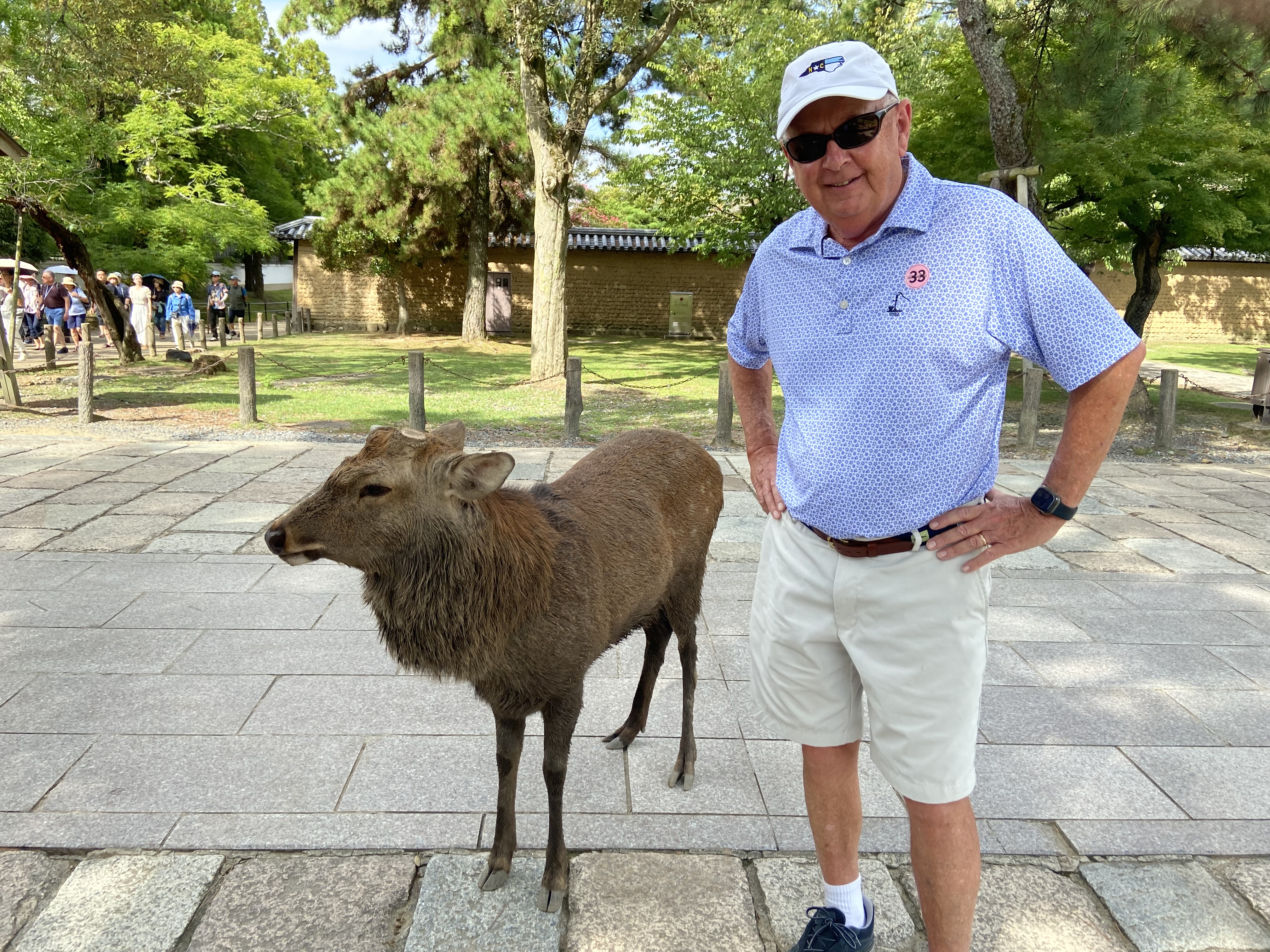
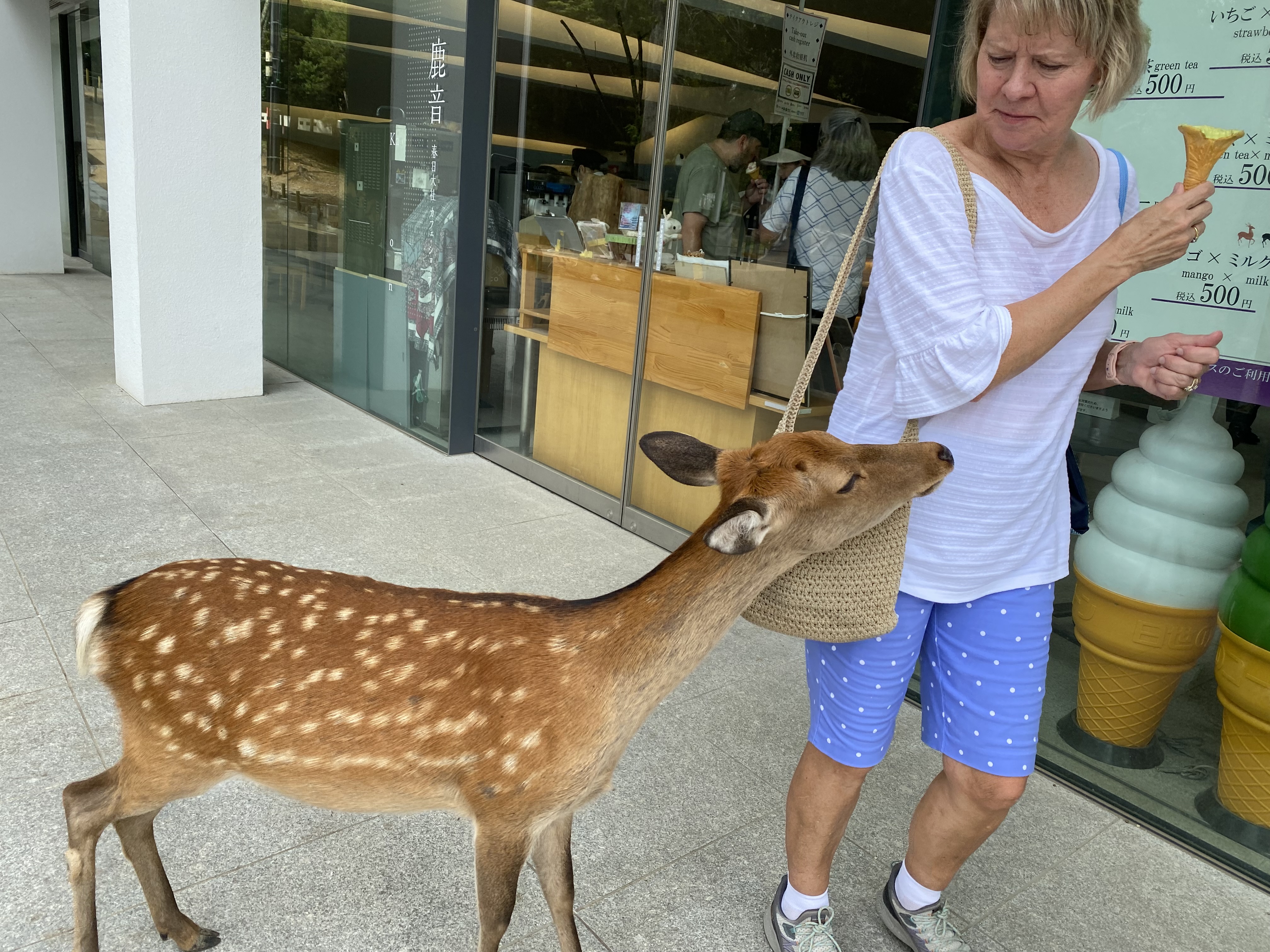
Sacred Sika deer greeted us on our next excursion in Japan. Still docked in Osaka, we visited the city of Nara, the first capital of Japan. These totally tame deer in the park near the Todai-ji Temple in Nara were a novelty at first but became a nuisance when one went after my green tea ice cream. Sacred to the Japanese maybe, but not to me.

The Todai-ji Temple is historic and big. When completed in 752, it was the largest building ever constructed in Japan.
That’s me with the umbrella. With the oppressive heat, I adopted the Japanese custom of seeking relief from the sun under a “parasol.”

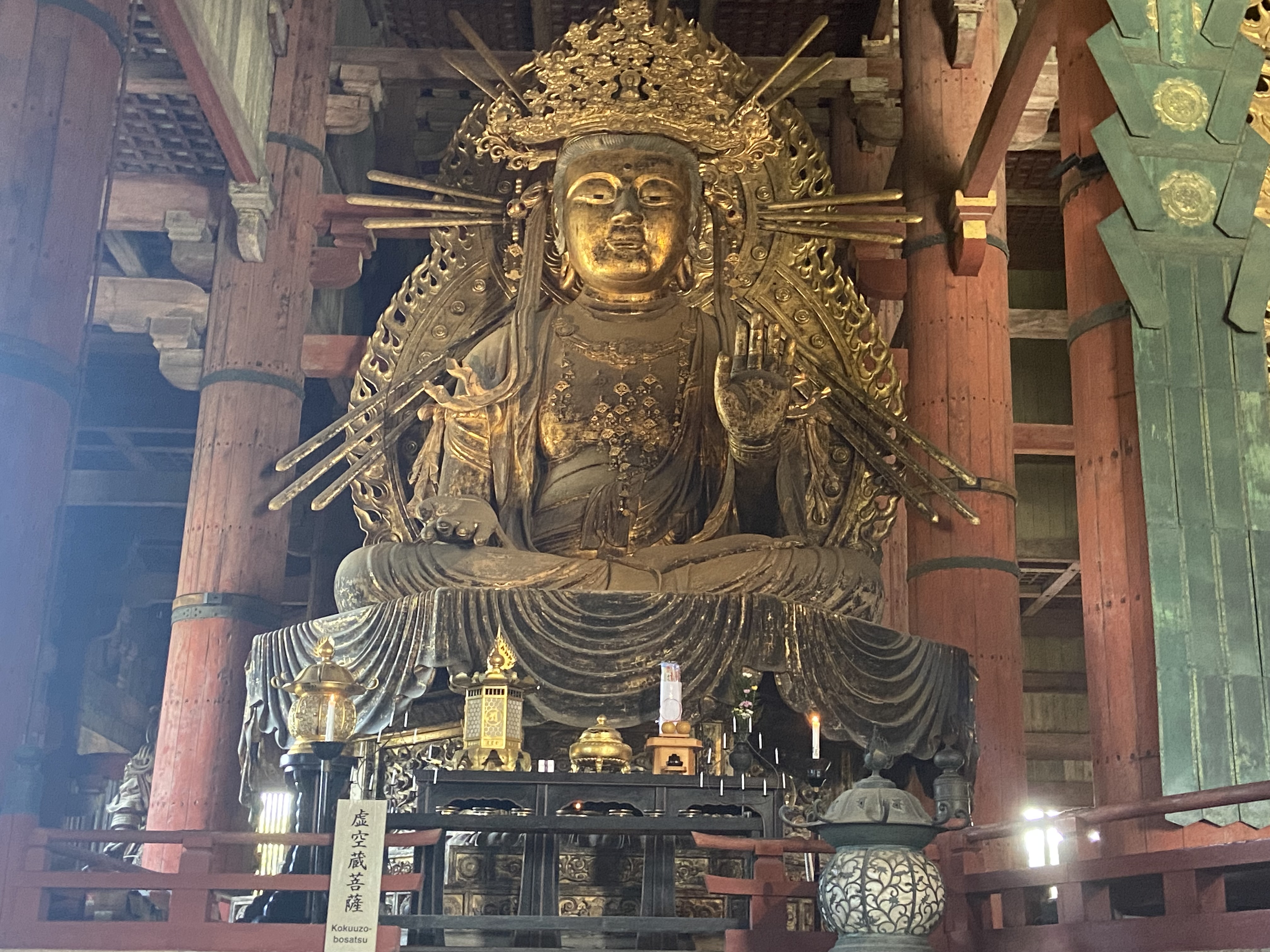
The Todai-ji Temple has to be massive to hold this giant bronze Buddha statue. The hand gestures of Buddha statues, called mudras, are meaningful. Here, the extended, cupped hand means do not worry, and the raised hand represents a shield to help believers overcome fear.

Being the largest bronze Buddha in the world, the Todai-ji Buddha statue needs a pair of golden matching guards, one flanking the left, the other on the right.

Children visiting the Todai-ji Temple enjoy climbing through this wooden structure, cut the size of the nostril of the massive bronze Buddha. Passing through is believed to bring good health and luck. I guess adults who can fit could try this too!


There are 1,223 World Heritage Sites, and I sometimes think the recognition is handed out a little too easily. The Todai-ji Temple is a World Heritage site, however, that certainly earns the title. It was my favorite Buddhist temple in Japan, and believe me, I saw quite a few.
What makes this temple special, of course, is the giant bronze Buddha and the golden guards. But there were other impressive statues as well, designated by the Japanese as National Treasures or Important Cultural Properties.


One temple down for the day, one shrine to go. The Kasuga-taisha Shrine is famous for the thousand bronze and stone lanterns marking the way to the entrance.


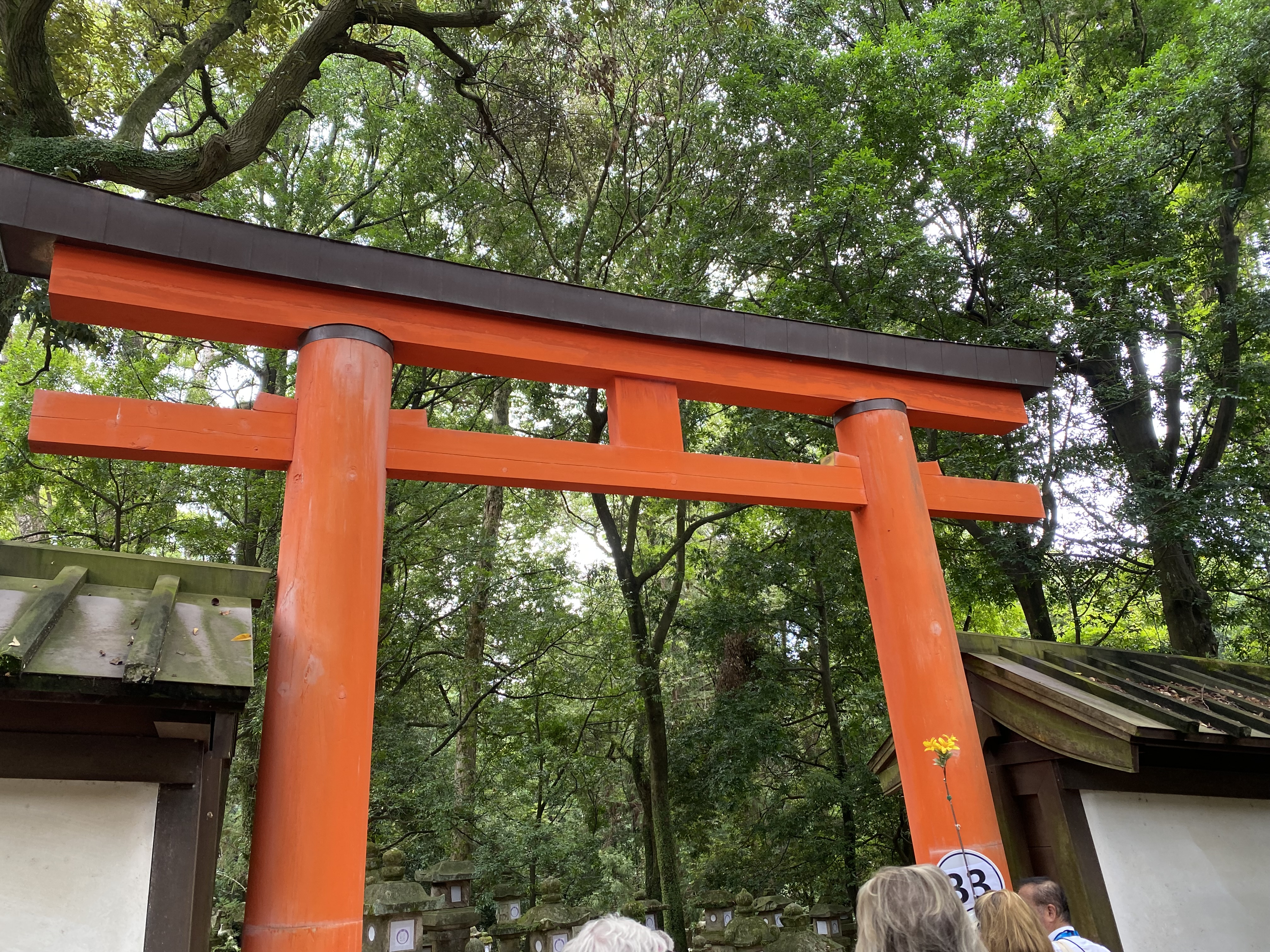
I’m honestly not sure where this picture of a torii gate was taken. (So may shrines, so many gates….) But it’s interesting to note the significance of the Torii. These gates mark the border between the human realm and the realm of the Shinto deities. Believers pause and bow before walking through.
With a population of a little over 367,000, Nara was one of the smaller Japanese cities we visited and lent itself to a short walking tour through a preserved historic neighborhood. Though no longer inhabited, this Japanese house gave us an idea of what a Japanese home in a city looked like before the advent of high rises.
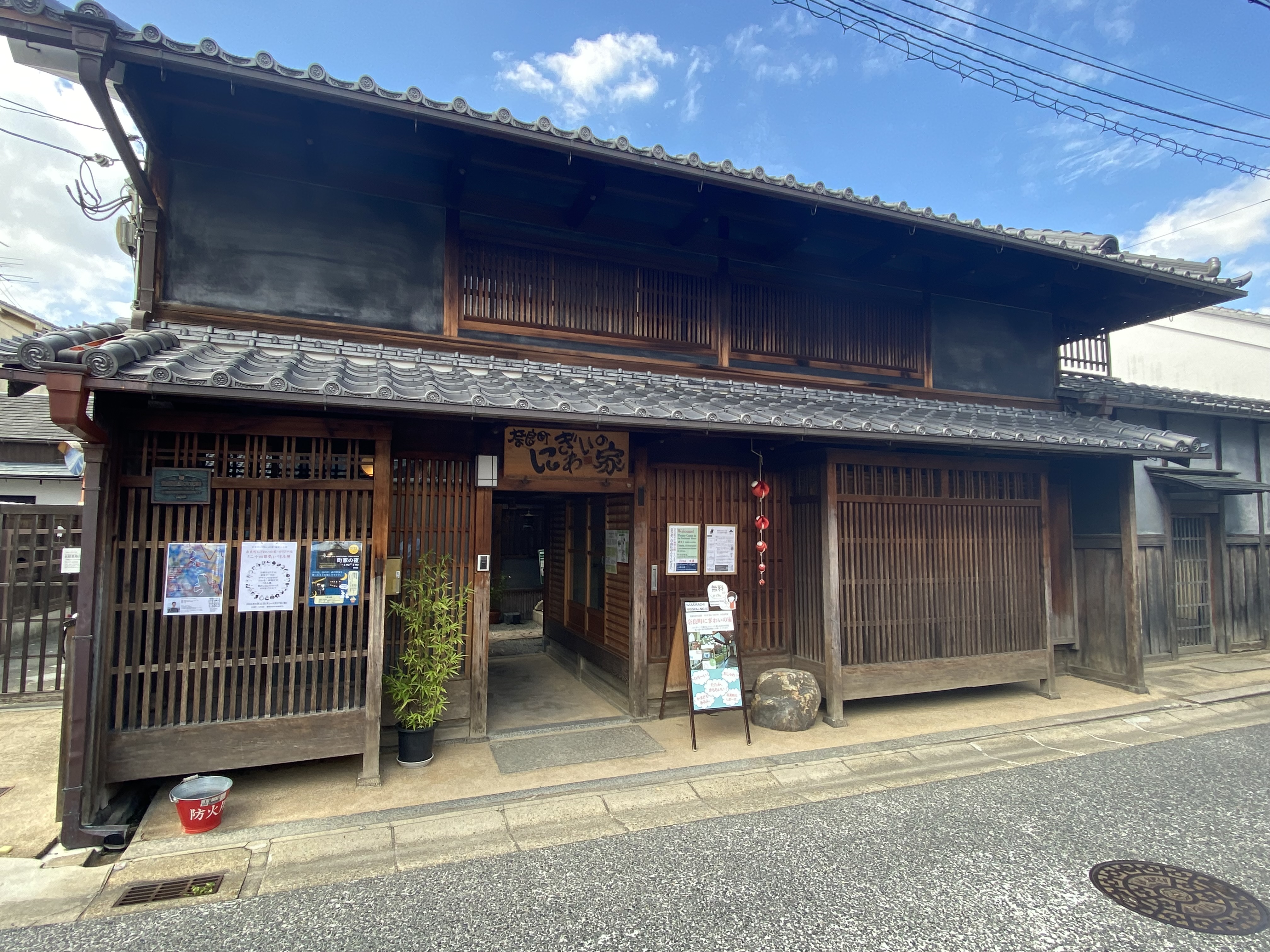
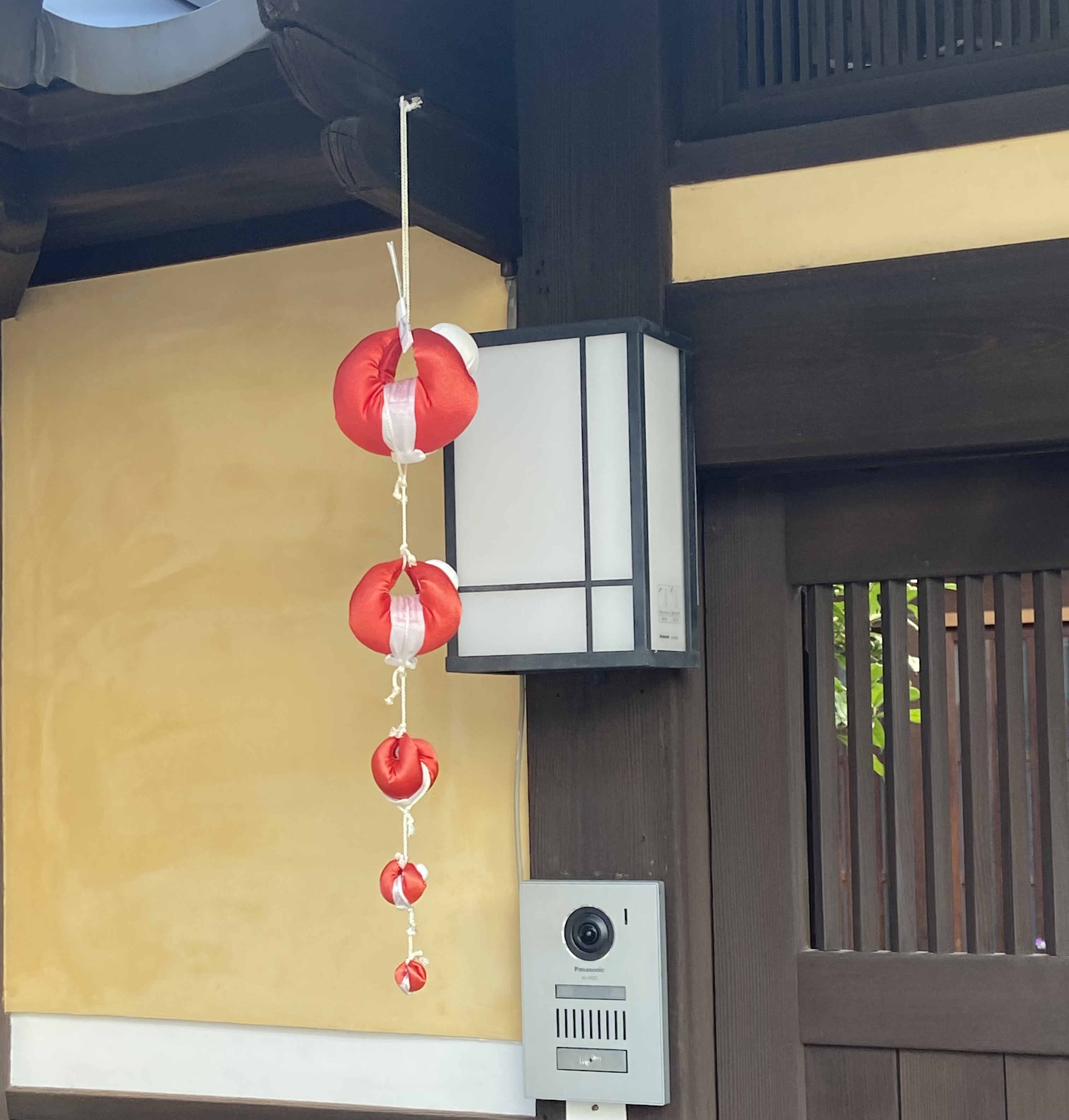
It’s hard to see, but this garland of red cloth balls depicts rolled-up monkeys. They can be worn as good luck charms (I guess in a smaller form) or hung near the doorway of a house, as you see here, with wishes written on their curled backs. Maybe no stranger a custom than the luck associated with a four-leaf clover?
Nara, a city I’d never heard of, proved to be an interesting place to visit, a reminder to me that sometimes what’s not on the must-see list in a country can be an unexpected treat.
Our next stop, which I’ll post about soon, was a city with a name we all recognize: Hiroshima.





 Patsy Pridgen