
The day we spent in Hiroshima was hot and sobering. The heat wave continued, and aside from a short visit to yet another garden, our tour was solely focused on the history for which this city will forever be remembered: the dropping of the first atomic bomb on August 6, 1945.
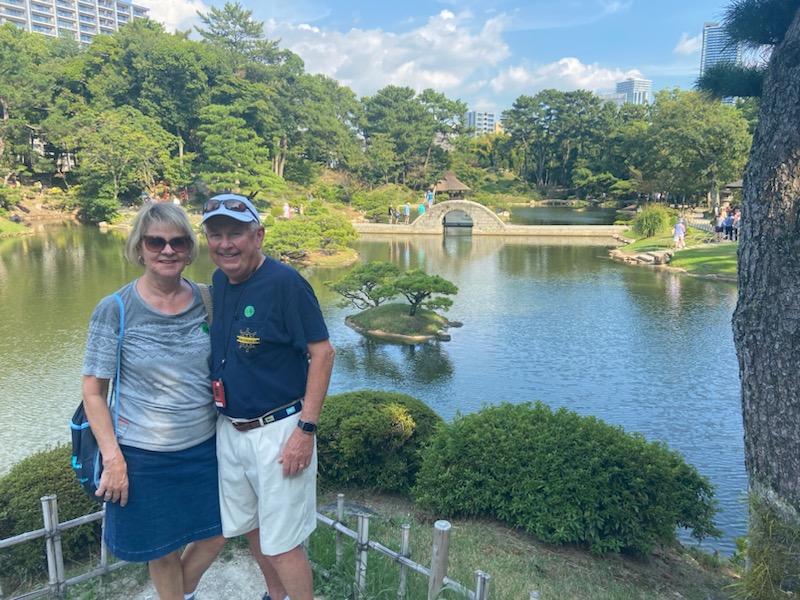

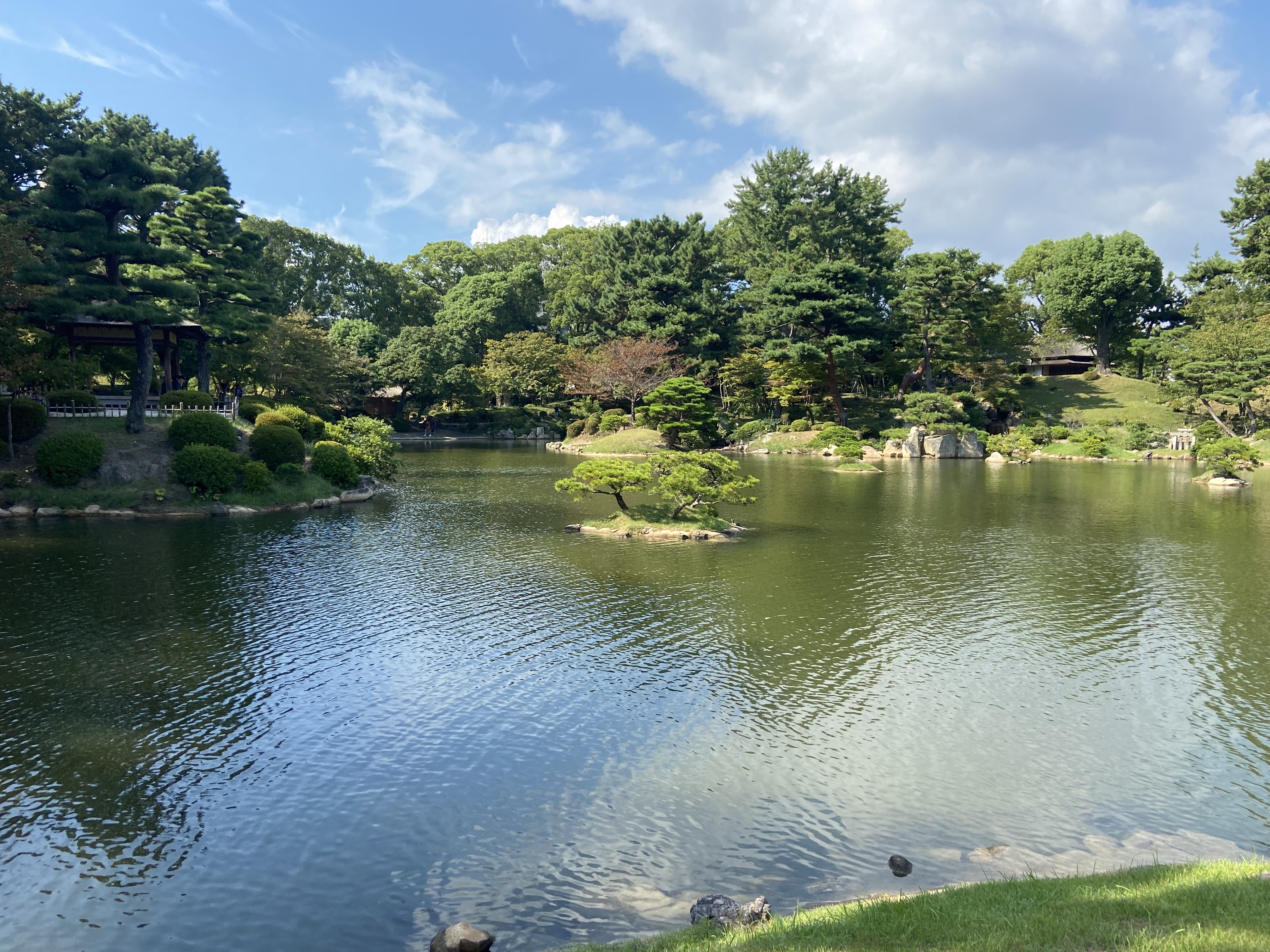
The 400-year-old Shukkeien Garden (translation: Shrunken Scenery Park) features a large pond in the center full of huge koi. This garden was about a mile away from the epicenter of the atomic bomb and thus was destroyed by the blast. Restoration began in 1949 and lasted for 30 years.

From the peaceful setting around the pond, we were taken to another part of the park to see a leaning, 200-year-old Ginko tree that was one of the very few near the epicenter to survive the bombing. Its seeds have been sent around the world to appeal for peace.

We left the tranquil Shukkeien Garden to visit Hiroshima Peace Memorial Park, completed in 1954 on an open field created by the atomic explosion. This location, near the epicenter of the blast, was once the city’s busiest downtown commercial and residential district.
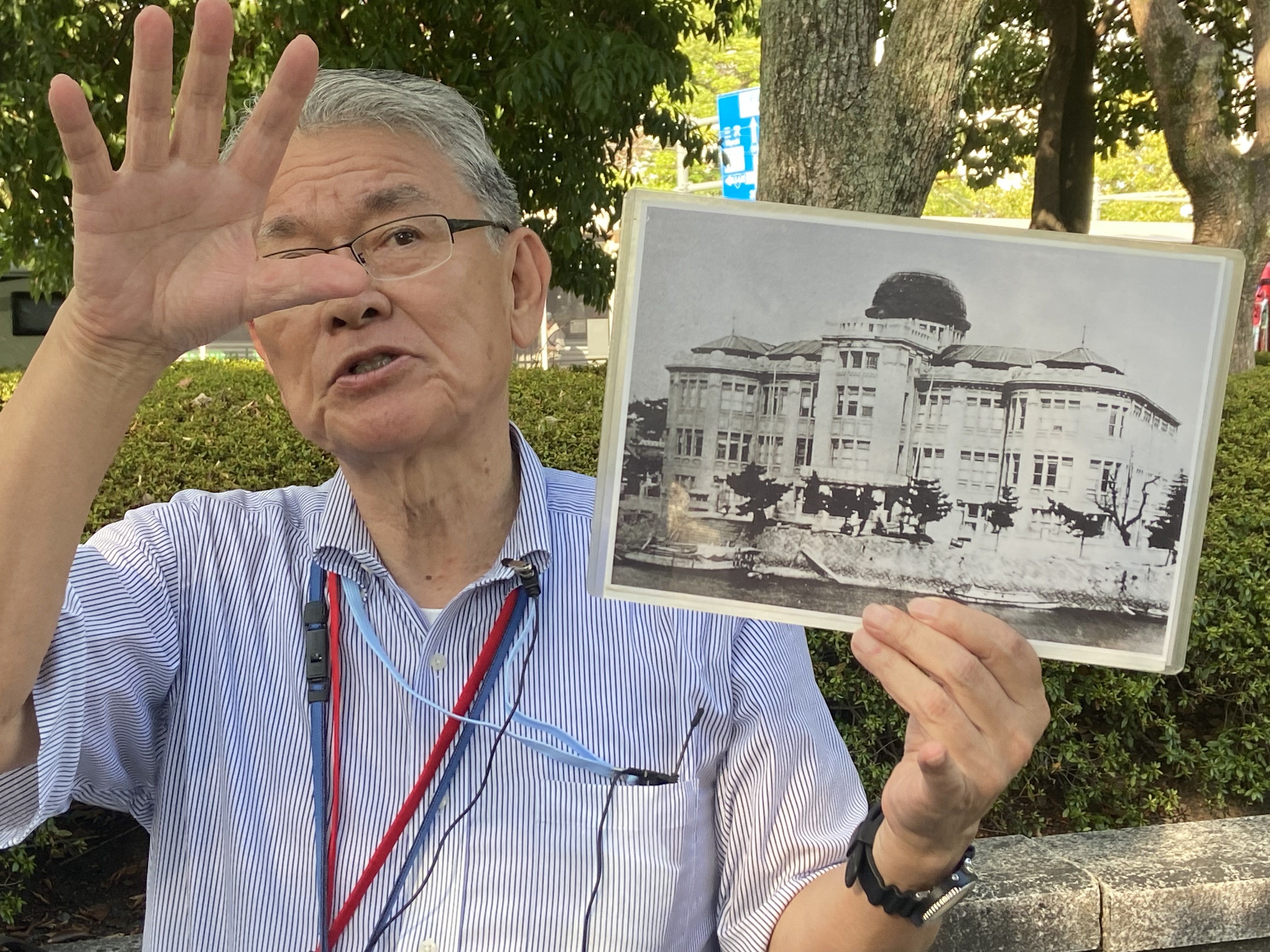
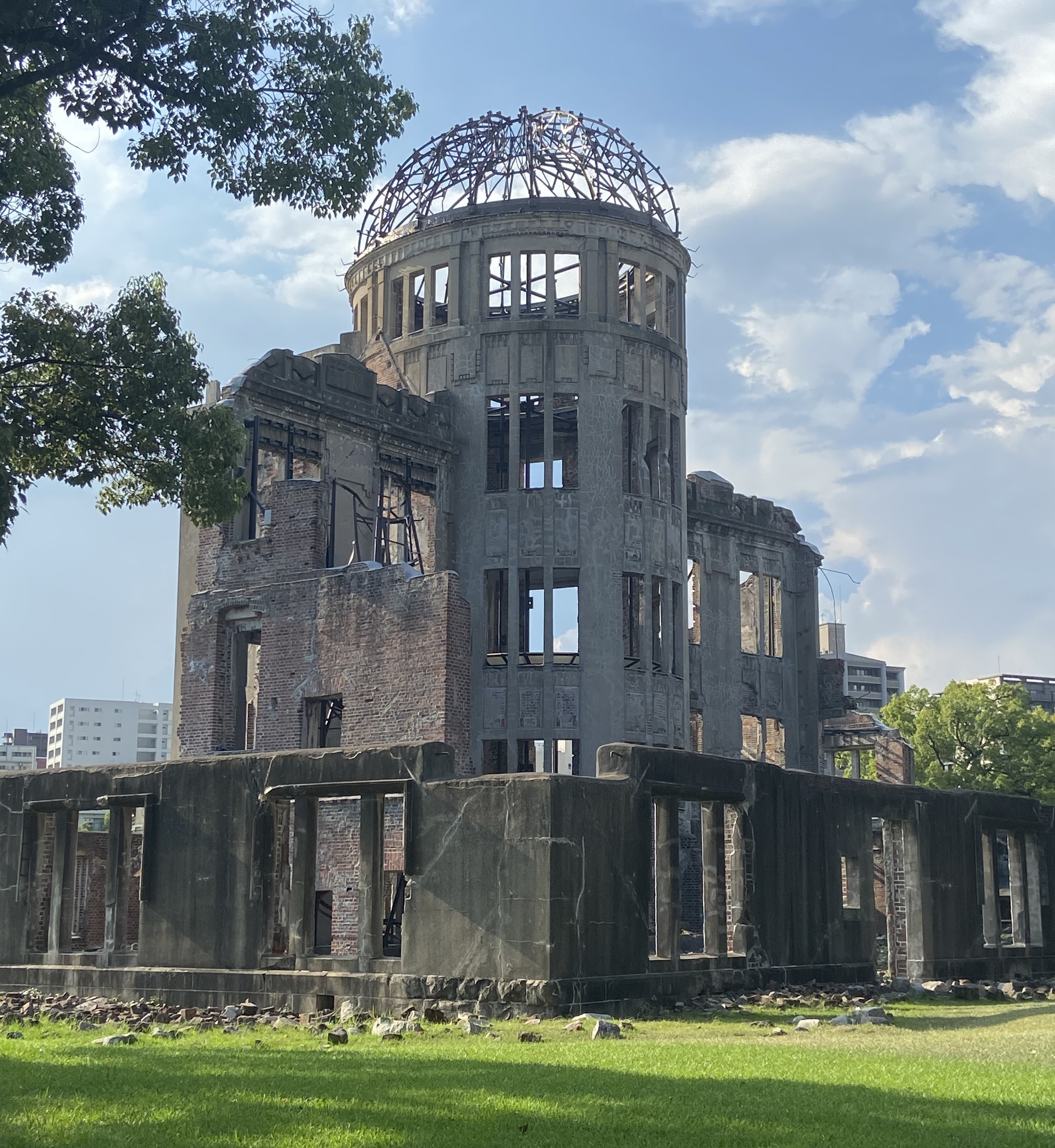
The Atomic Bomb Dome was our introduction to the park. The crumbling structure, about 500 feet away from the epicenter, survived as a skeletal ruin. It has been left that way to highlight the destructive force of the bomb.
Our guide showed us a “before” picture.
As we walked the grounds of the Peace Memorial Park, we saw several significant monuments.
The Memorial Tower to the Mobilized Students is a five-storied structure that was built to pay tribute to the over 10,000 Japanese students who died during the war. Many of these students, some as young as upper elementary school and junior high age, were “mobilized” to help tear down buildings to create firebreaks to prevent the spread of fire after air raids.
On the day of the atomic bombing, a massive building demolition project was underway in central Hiroshima. Thousands working outside that day were killed, including 6,907 students.

The Children’s Peace Monument is a statue of a girl with outstretched arms. A folded paper crane rises above her.

This statue was inspired by the true story of Sadako Sasaki, a young girl who survived the blast at age two but died ten years later of leukemia caused by radiation from the bomb. Before dying, Sadako folded over 1,000 paper cranes, believing the Japanese legend that doing so would grant her wish to recover from her illness.
To this day, colorful, folded paper cranes from all over the world are sent to this site in her memory. Many are displayed near the monument.

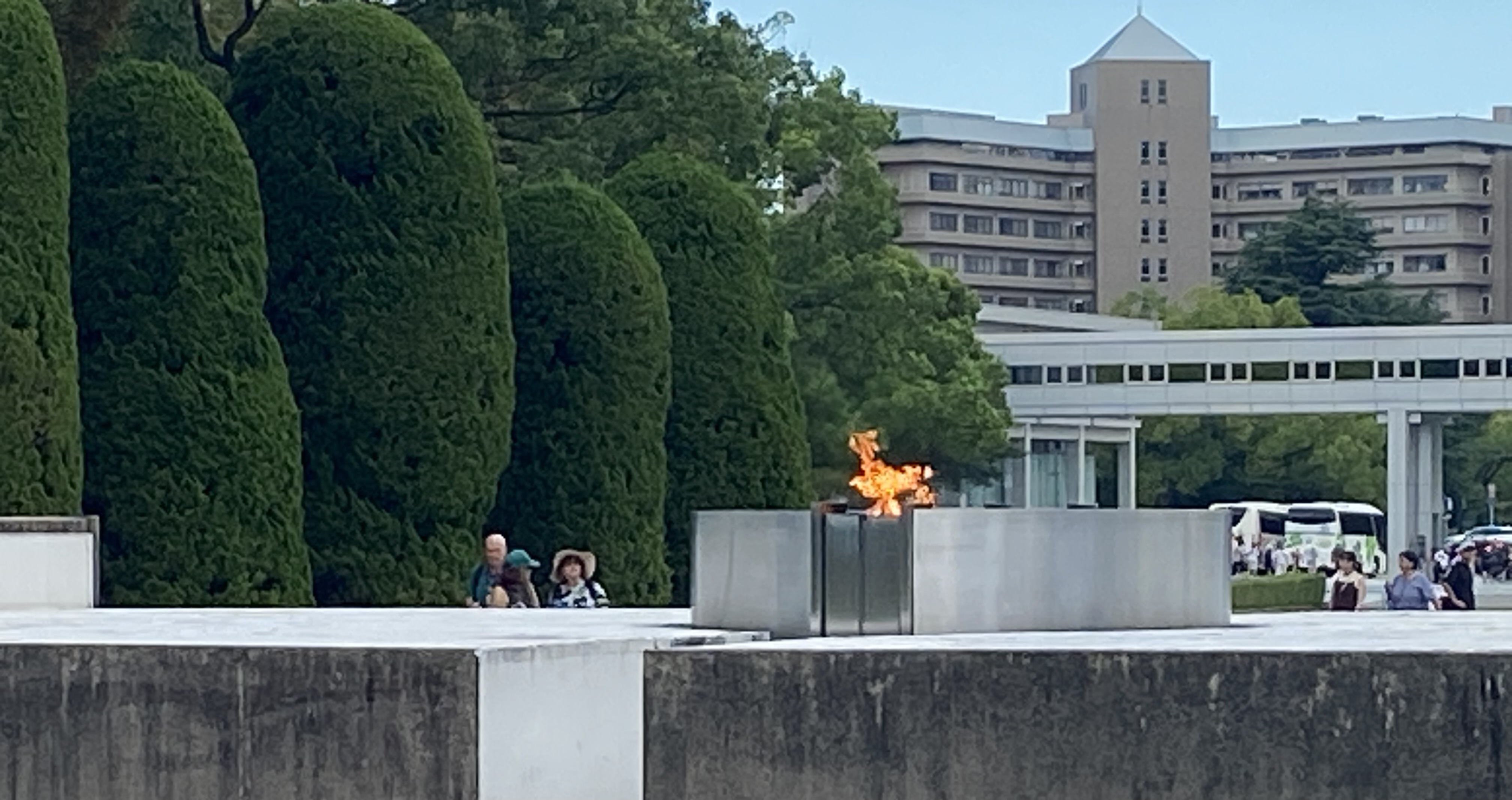
The Peace Flame has burned continuously since it was lit in 1964 and will remain so until all nuclear bombs are destroyed.
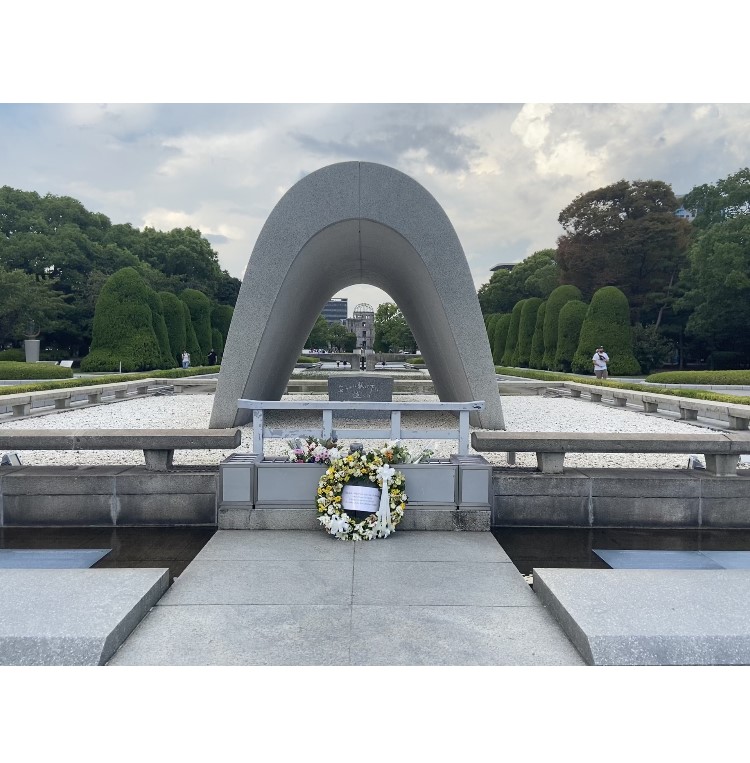
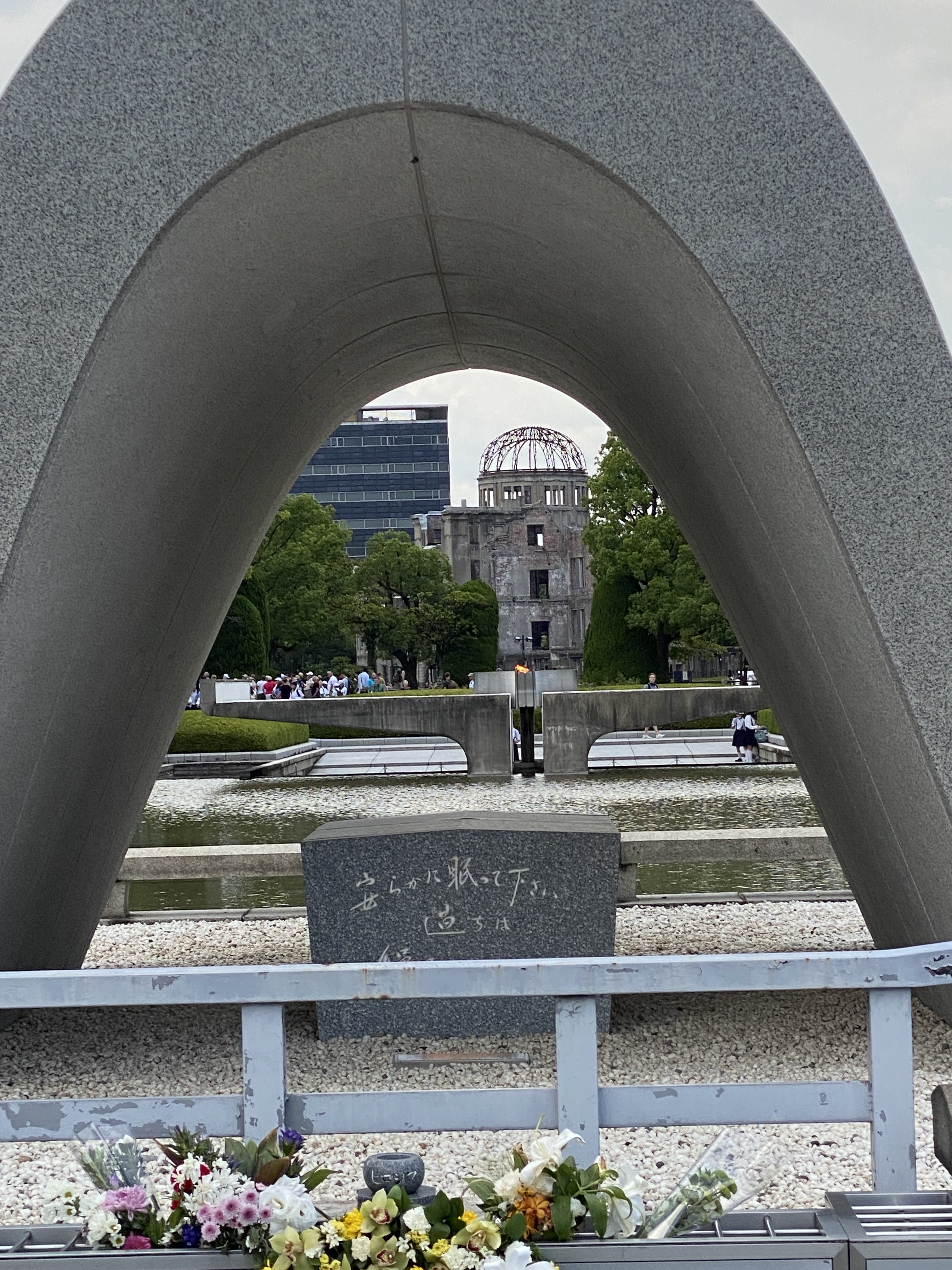
A cenotaph is a monument in honor of someone whose remains are in another location. The Memorial Cenotaph here is a concrete structure with a saddle shape that represents a shelter for the souls of the victims of the bomb. Note that it is aligned to frame the Peace Flame, and in the background, the Atomic Bomb Dome.
The stone chest in the middle holds the names of all those who died as a result of the atomic bomb. An estimated 70,000 people perished immediately in Hiroshima. More than 200,000 died due to radiation sickness in the years that followed the blast.
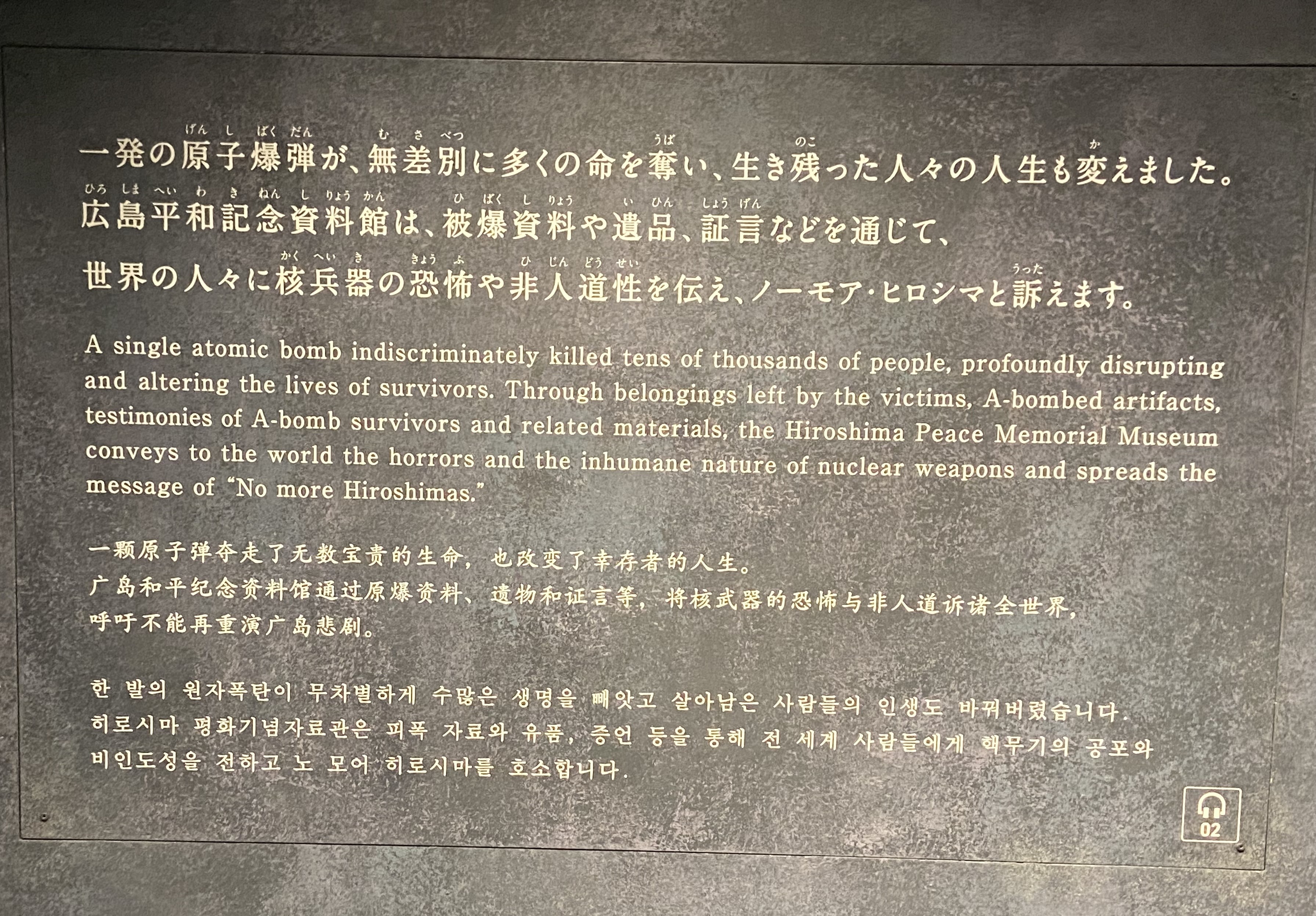
A visit to the Hiroshima Peace Memorial Museum completed our tour for the day. I found this Japanese commentary on the dropping of the atomic bomb thought-provoking. The museum featured examples of “belongings left by the victims, A-bombed artifacts, and testimonies of A-bomb survivors.” It was a pretty grim place.
After viewing such somber monuments in the Peace Memorial Park and visiting the museum, I was somewhat cheered by the sight of these Japanese schoolboys on yet another field trip, a reminder that the phoenix rises from the ashes.

In my next post, I’ll talk about our one stop in South Korea: Busan.



 Patsy Pridgen