
After our one stop in South Korea, it was back to Japan with its shrines and gardens. I had never heard of Fukuoka, our next port of call, but the city did feature a memorable Shinto shrine. A nice young man from Australia snapped a picture of my husband and me in the entrance of the Kushida Shrine.

Outside the entrance to the shrine is a huge ginkgo tree. Locals claim it is 1,000 years old and see it as a holy tree of longevity. The tree is over 108 feet (tall for Japan) and was designated a cultural asset of Fukuoka in 1954.

The Kushida Shrine is surrounded by a busy city center, but all is serene inside the gate. A purification station at the entrance is for those who wish to wash their hands and mouth to purify the body before venturing further into the shrine.
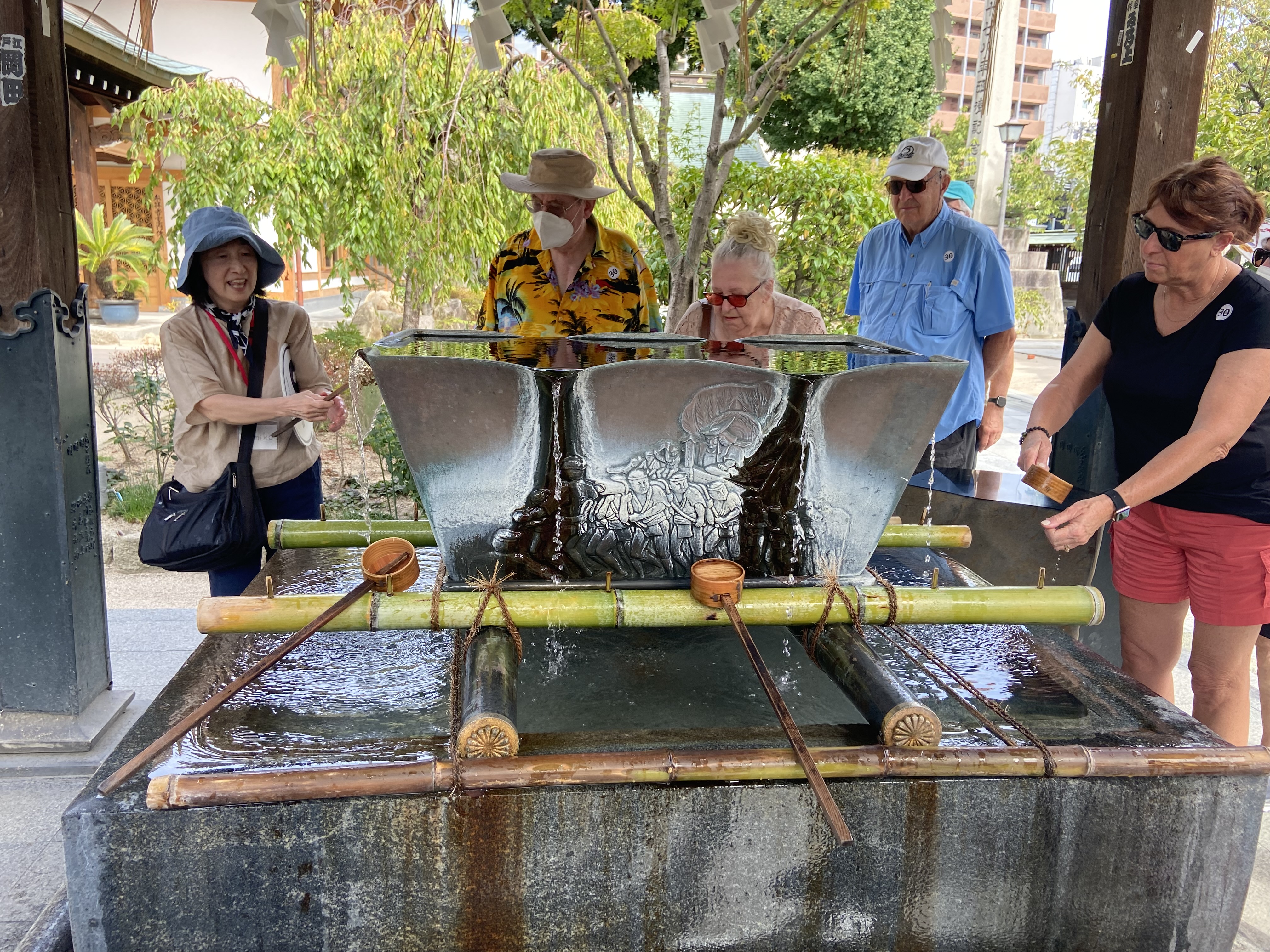
Many of the features of the Kushida Shrine were similar to what we’d seen at other Shinto shrines where nature, rather than Buddha, is revered.
The red torii gate, I remembered, marked the transition from the everyday world to the spiritual. There were also the wooden plaques, which I’d noticed in other shrines, containing the prayers and wishes of worshippers.


As we’d seen before, Shinto believers were bowing to pray.

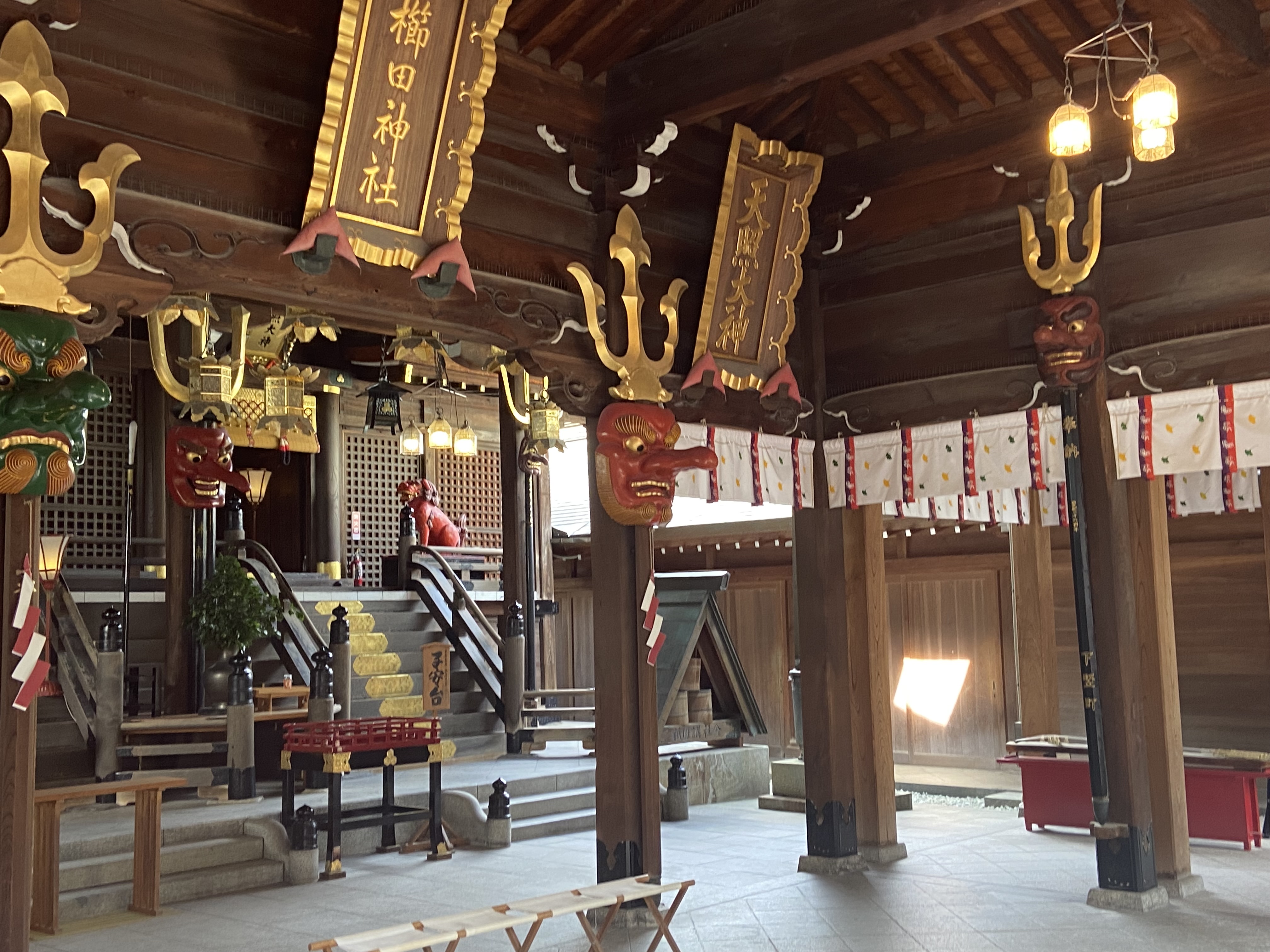
The architecture and religious artifacts were more elaborate, though, at the Kushida Shrine.
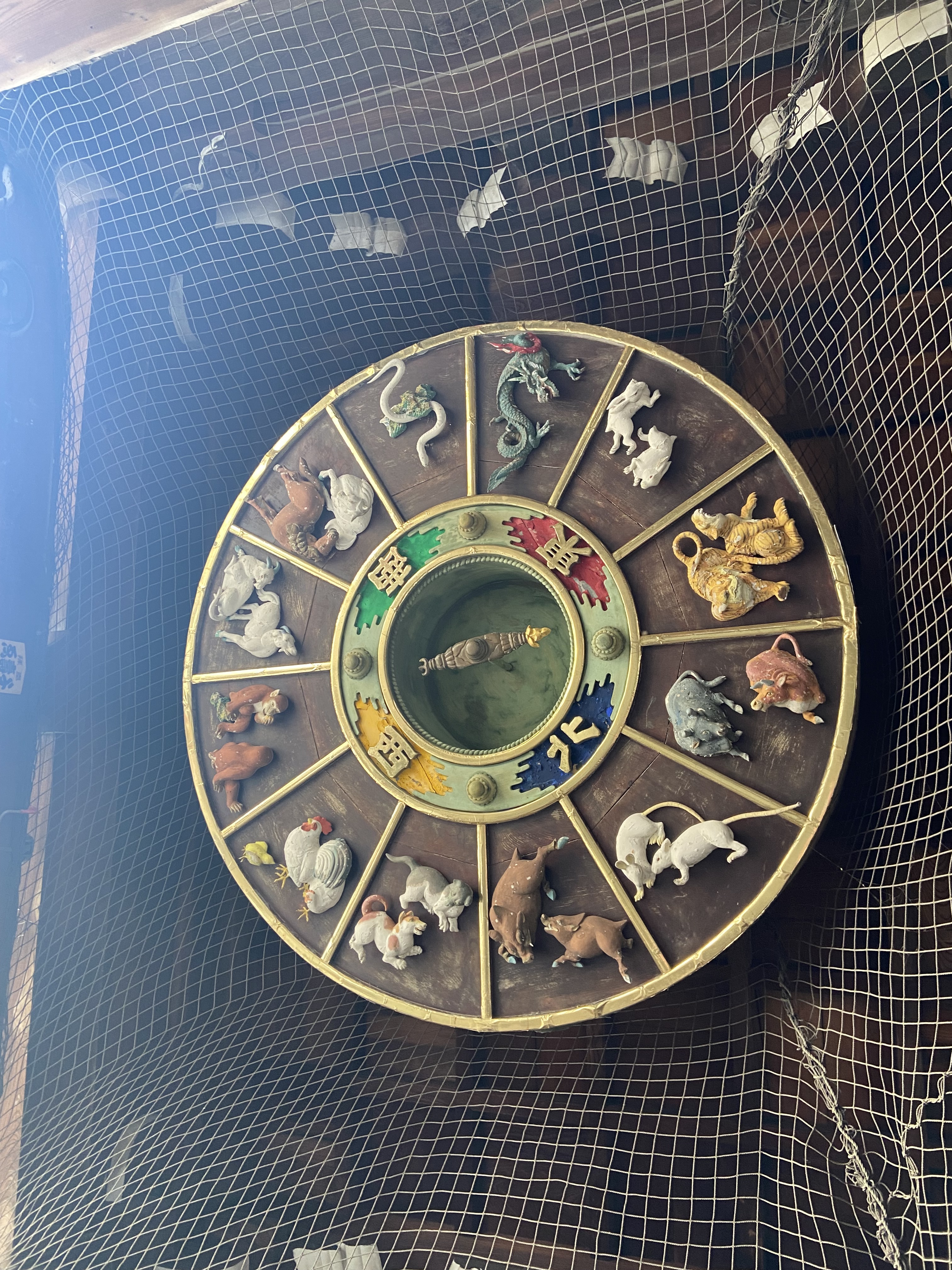
The Chinese zodiac disc beside the entrance was one feature we hadn’t seen in another shrine. Look closely to see pictures of the 12 animals of the Chinese zodiac and the four cardinal directions. The arrow in the center shows the lucky direction of the year…if you can figure that out.
A unique feature of the Kushida Shrine is that it is the starting point of a summer festival parade and houses one of the two floats that is not dismantled after the festival ends. This float is a pretty elaborate construction, I think, one that rivals those we see at Macy’s Thanksgiving Day Parade.

After the Kushida Shrine, we visited a museum across the street where we saw a film about the Hakata Gion Yamakasa festival, the summer festival which features floats such as the one kept at the Kushida Shrine.
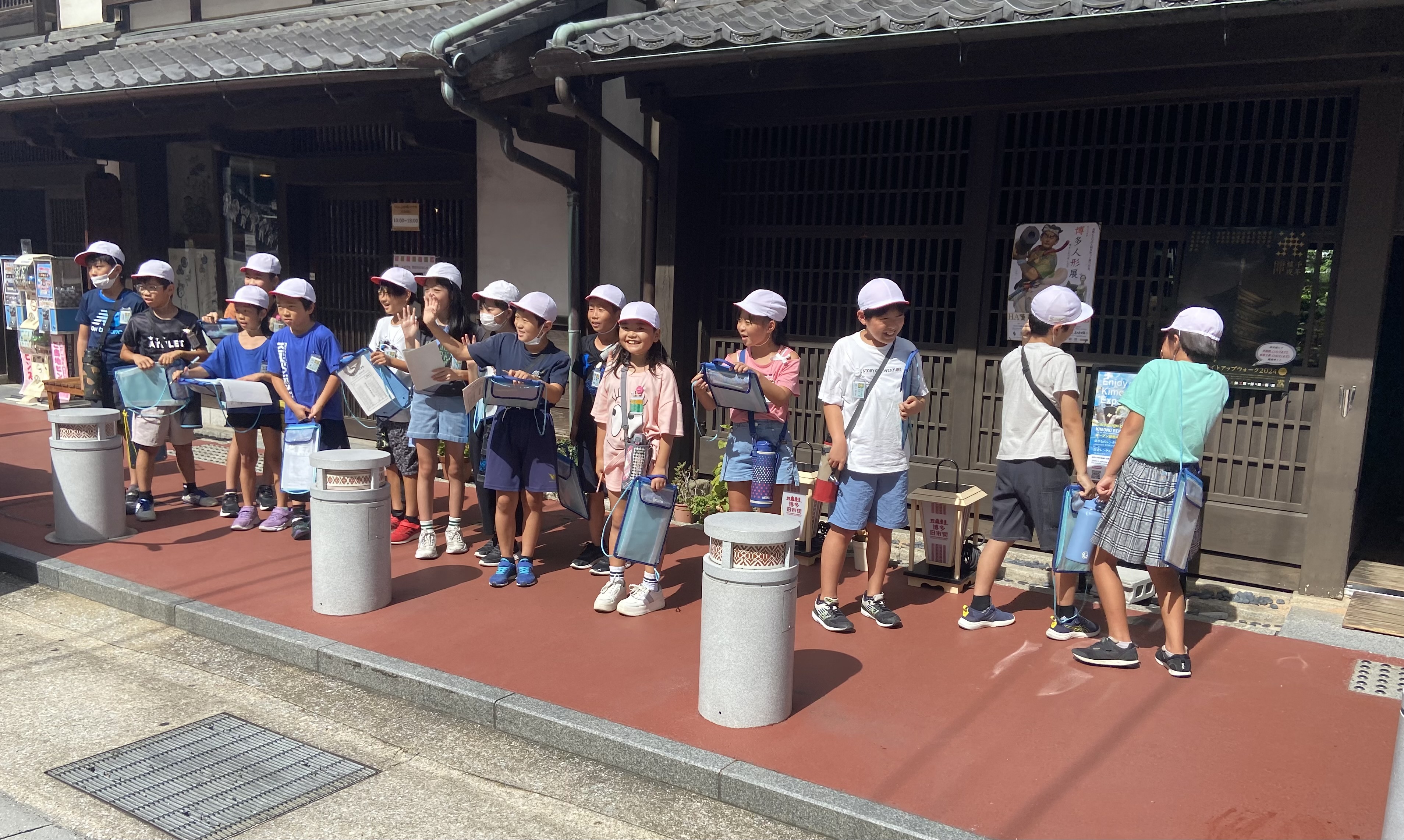
Outside the museum, Japanese schoolchildren on yet another field trip were lined up. If you’ve read my previous posts, you may remember I’ve commented on how often we bumped into groups of school kids out and about. Evidently field trips are seen as a valuable educational experience in Japan.
Some of this crowd waved at us while others practiced their English, which seemed to consist of only two words, “hello” and “goodbye” followed by giggles.
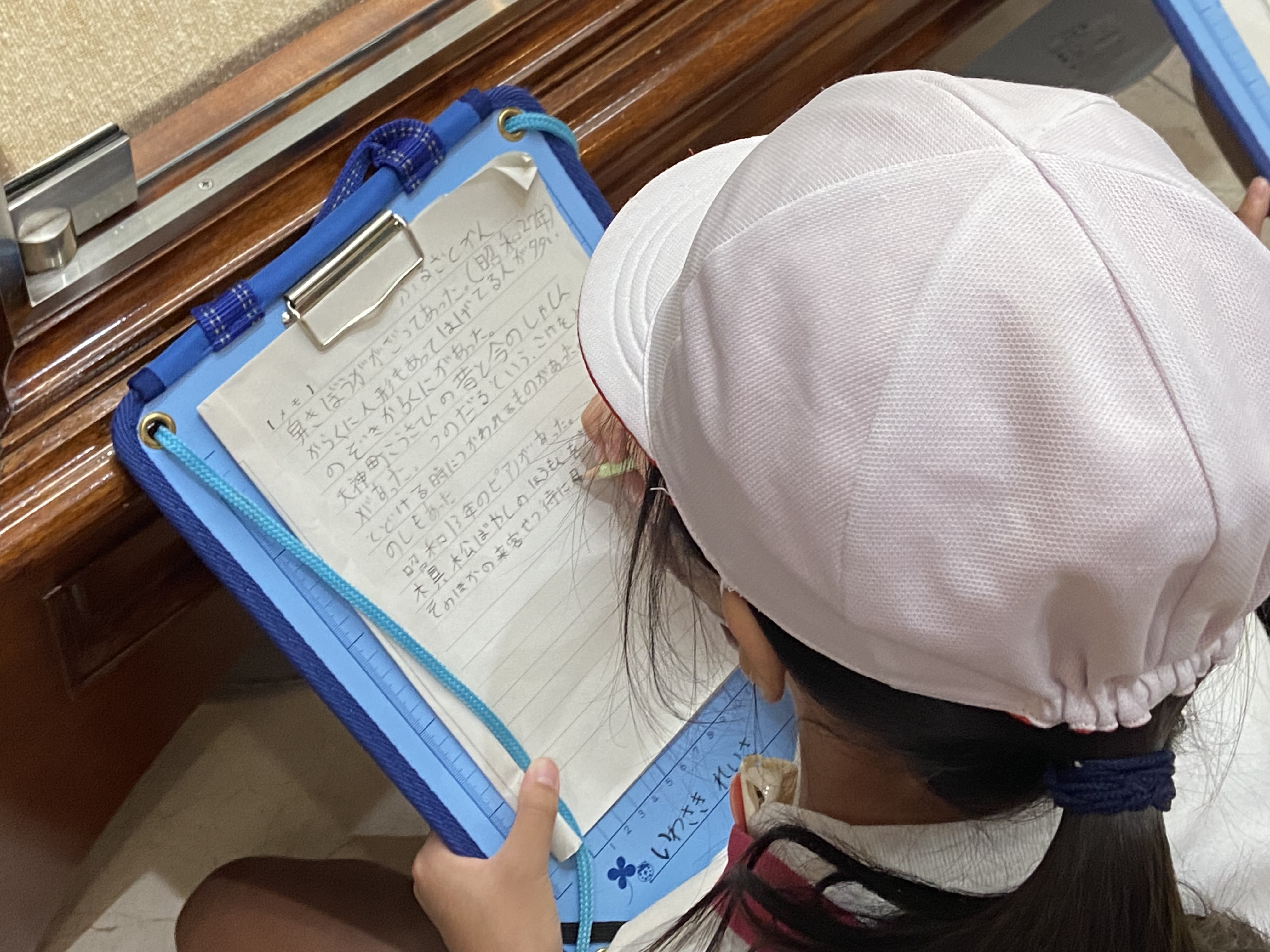
Of course, they know more English than I do Japanese. I couldn’t decipher a single letter of the assignment this child was working on in the museum.
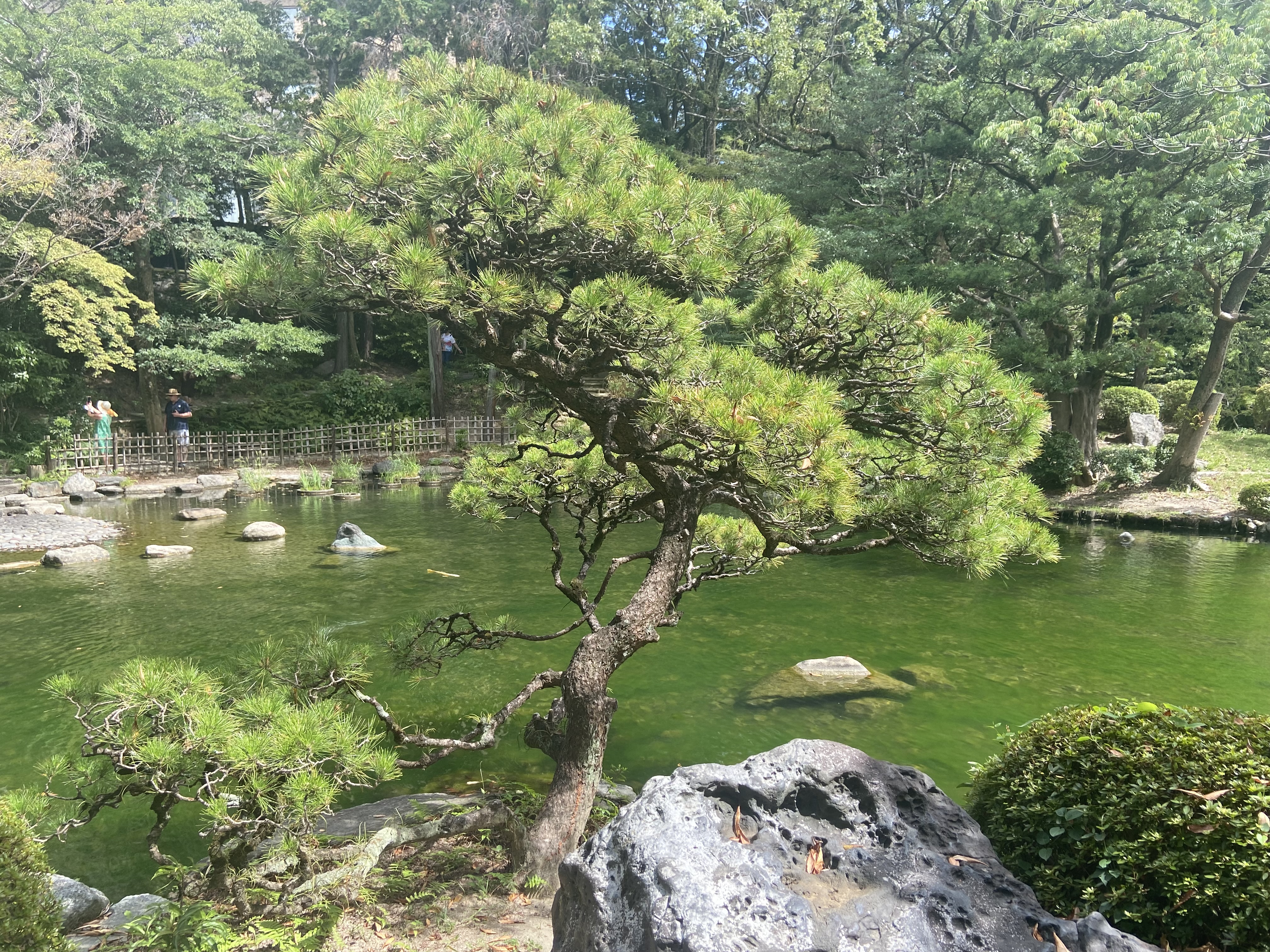
Our final stop in Fukuoka was the tranquil Yusentei Park, built in 1754 as a resort for the sixth lord of the Kuroda Clan (in case you’re a scholar of Japanese history). The park/garden was shady and easy to navigate in a half hour or so.

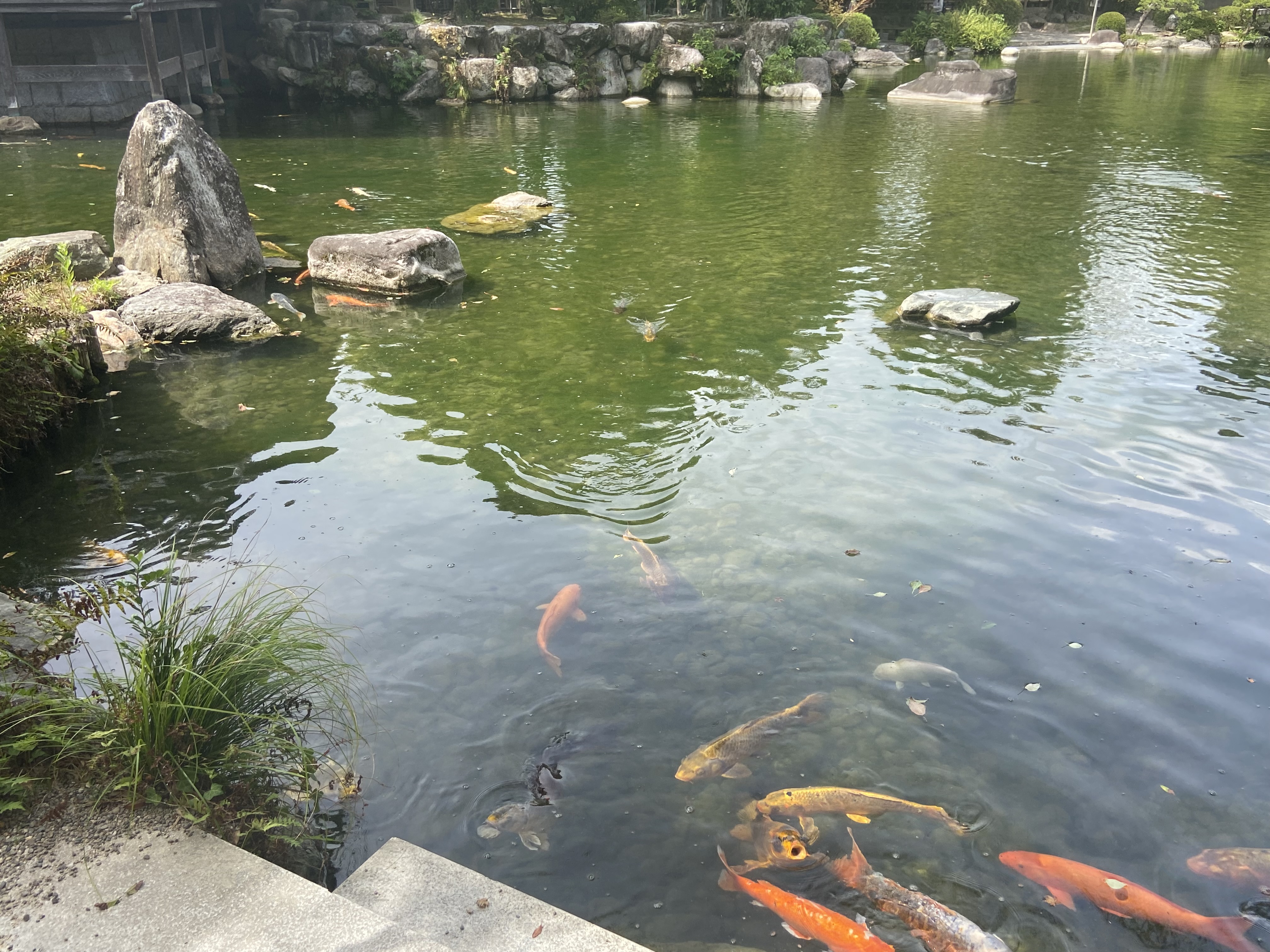
As in many other Japanese gardens, there were pine trees and koi.
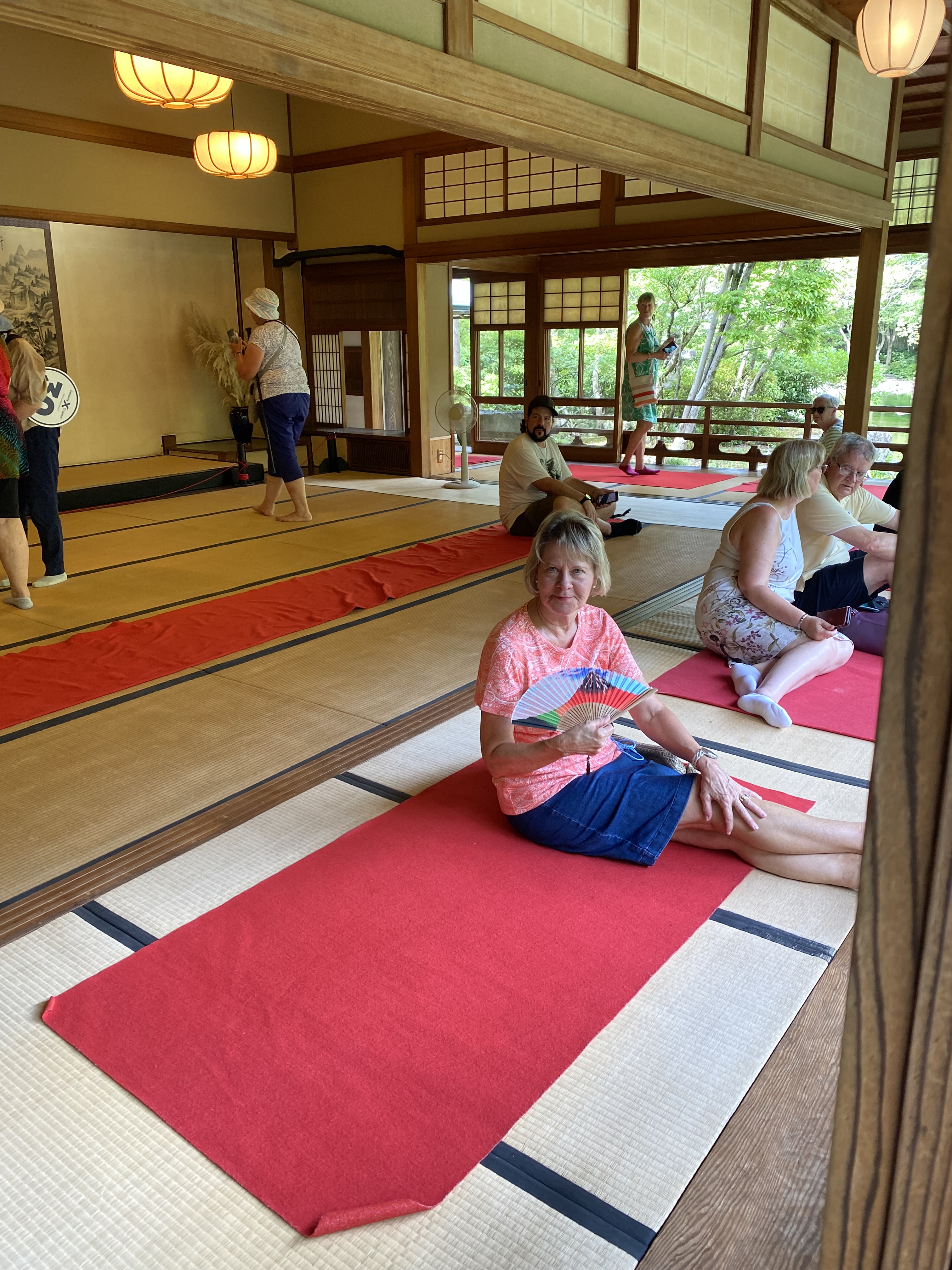
I did have a few minutes at the garden to sit on a tatami mat in the teahouse, after taking off my shoes, of course. This is only one of several pictures my husband took of me lounging here. Evidently, he thought my attempt to relax as the Japanese do was pretty funny. Incidentally, the fan I have is not just for show. It was hot, just like almost every day we were in Japan.
After visiting Fukuoka, a city I’d never heard of, our last port of call was a name that is quite familiar: Nagasaki, the location of the dropping of the second atomic bomb in World War II. My next post will cover this excursion.





 Patsy Pridgen