
I’m back from my third visit to Italy, my favorite European country. The ten-day Uniworld trip began in Milan and ended in Venice, with detours to Lake Como, Verona, and a few of the islands surrounding Venice.

Before any serious touring could begin, though, an Italian dinner was required. The fresh tomatoes and mozzarella on this salad were as delicious as they look, and no one can cook pasta like the Italians. Can you see why I love this country?

The group I travel with always likes to leave a day early to allow for possible airline snafus. This time we had no flight delays and used our extra day to visit Lake Como and a couple of surrounding towns located in the northern part of Italy near the Swiss border.
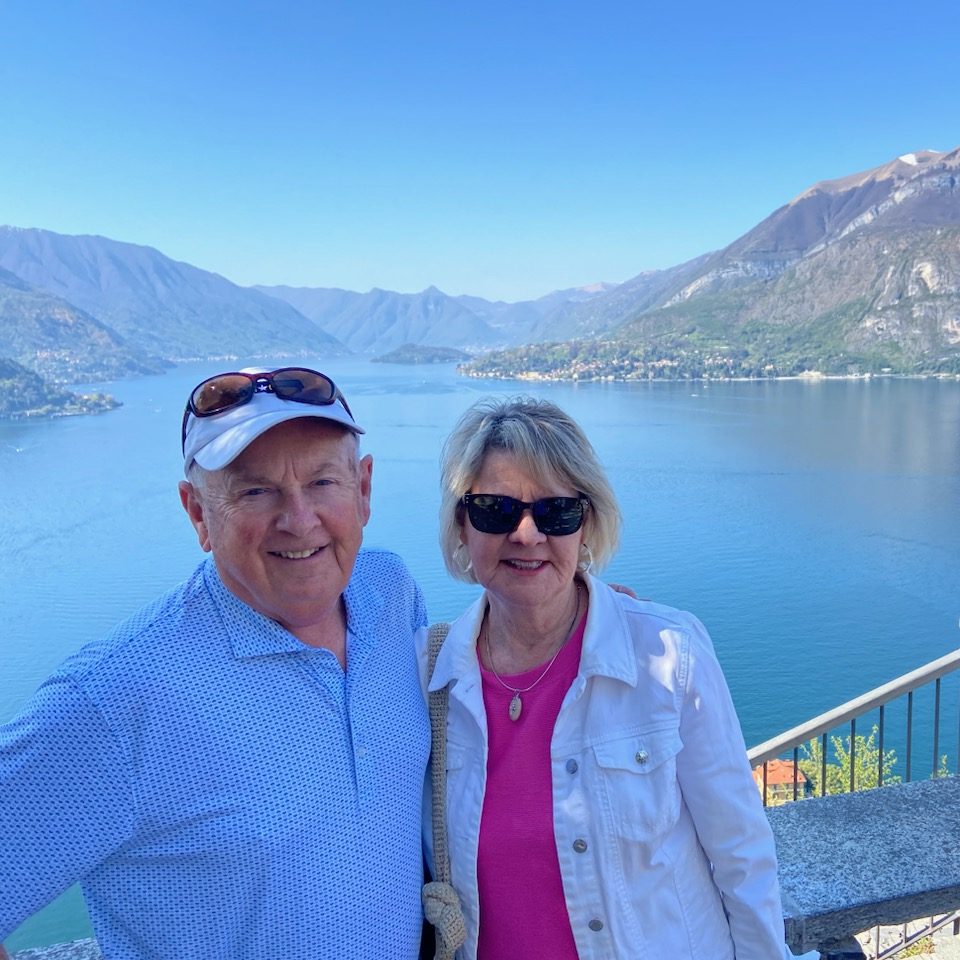
We boarded a train from Milan, and in an hour or so, we got off in a little town called Varenna on the shores of Lake Como. Here, we climbed a million steps to reach a medieval castle (Castello di Vezio), where we were rewarded for our efforts with a panoramic view of the lake. The snow-covered mountains are the Italian Alps.

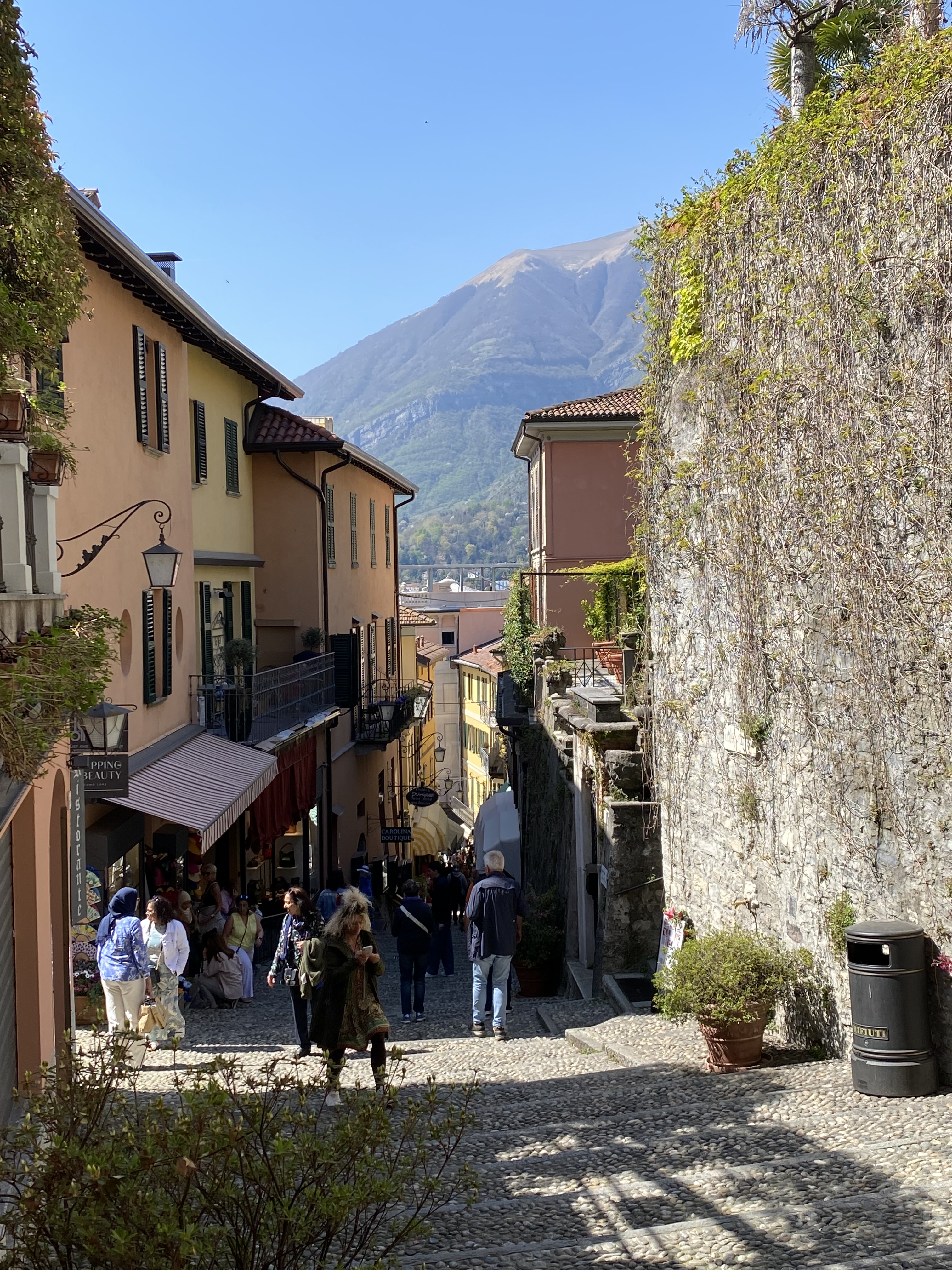
Bellagio was the second town we explored on Lake Como. With its winding, hilly streets, it’s a charming place to visit, making it possibly the most popular tourist destination on Lake Como. These crowds, here in the shoulder season of mid-April, are evidence of that. Imagine what this street must look like in summer at the height of tourist season.


My husband, a better photographer than I, did manage to capture one relatively quiet lane in this pretty town.
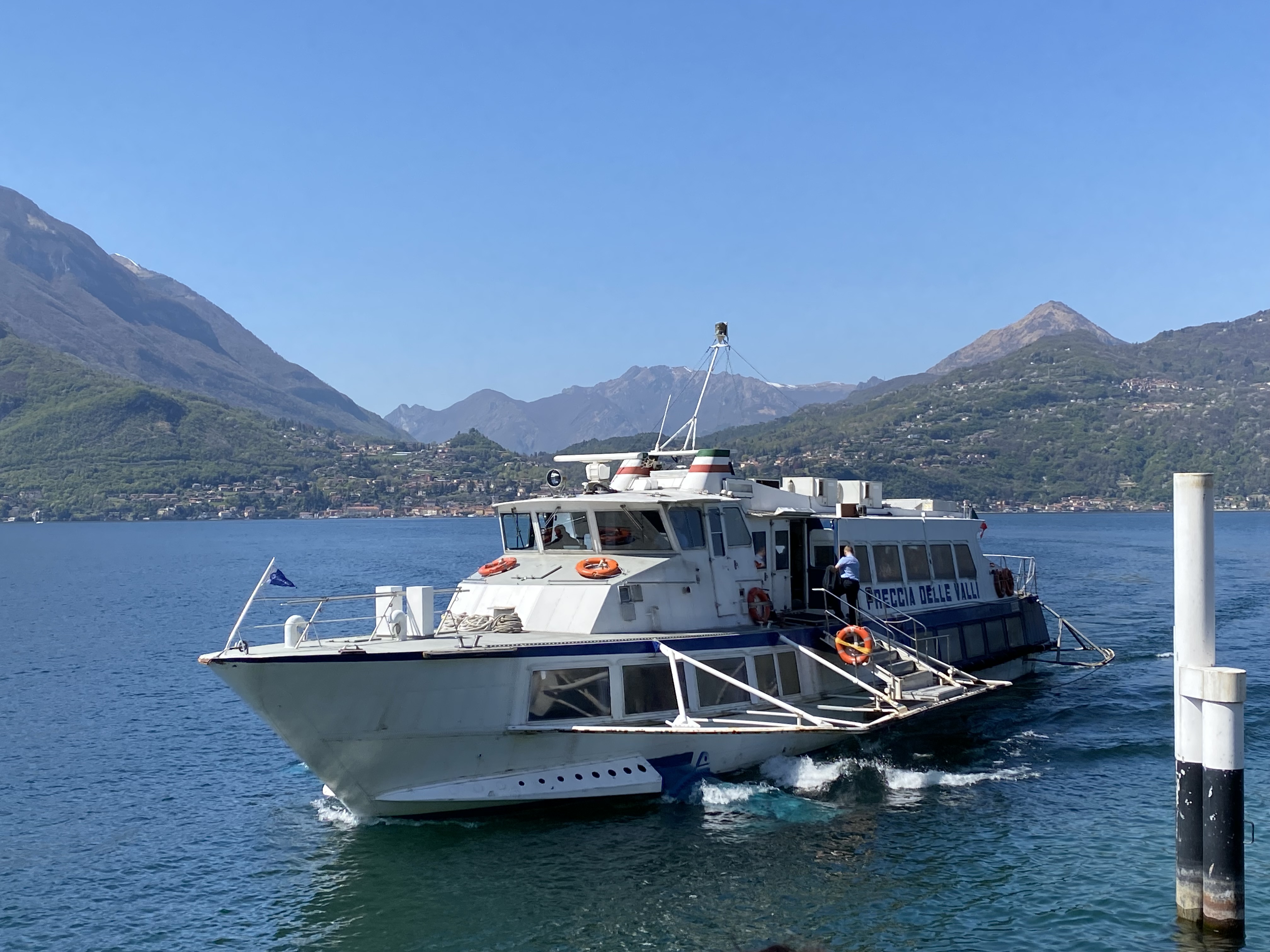
Part of the fun of visiting Lake Como, of course, was being on the lake itself. We traveled between Varenna and Bellagio on a local ferry.

After a day on our own touring the Lake Como area, we joined our Uniworld group back in Milan. Our first guided excursion was what brought me to this city: a viewing of Leonardo da Vinci’s The Last Supper.
Contrary to what I’d always thought, this work is not a framed painting but rather a mural painted on a wall in what was the dining room in the Santa Maria delle Grazie convent in Milan. It’s huge, measuring 15 feet tall and 29 feet wide.
My husband’s photo here captures the sparsity of the room. To ensure the mural is maintained at room temperature, only 25 people are allowed to enter at 15-minute intervals. We were shooed out after our allotted time.

It’s hard to believe today, but The Last Supper was not always a revered work of art. Residents of the monastery cut a new door in the wall, removing the portion of the fresco showing the feet of Jesus. Napoleon’s troops turned the area into a stable and used the wall for target practice. In 1943, during World War II, bombs tore the roof off the room, leaving the paint exposed.
Still, the power of Leonardo da Vinci’s work remains in the story he so masterfully depicts. Jesus and his disciples have gathered in the Upper Room for the Jewish Passover Feast. He has just revealed that one of the twelve will betray him. Astonishment and dismay are expressed by all, including the traitor, Judas Iscariot.

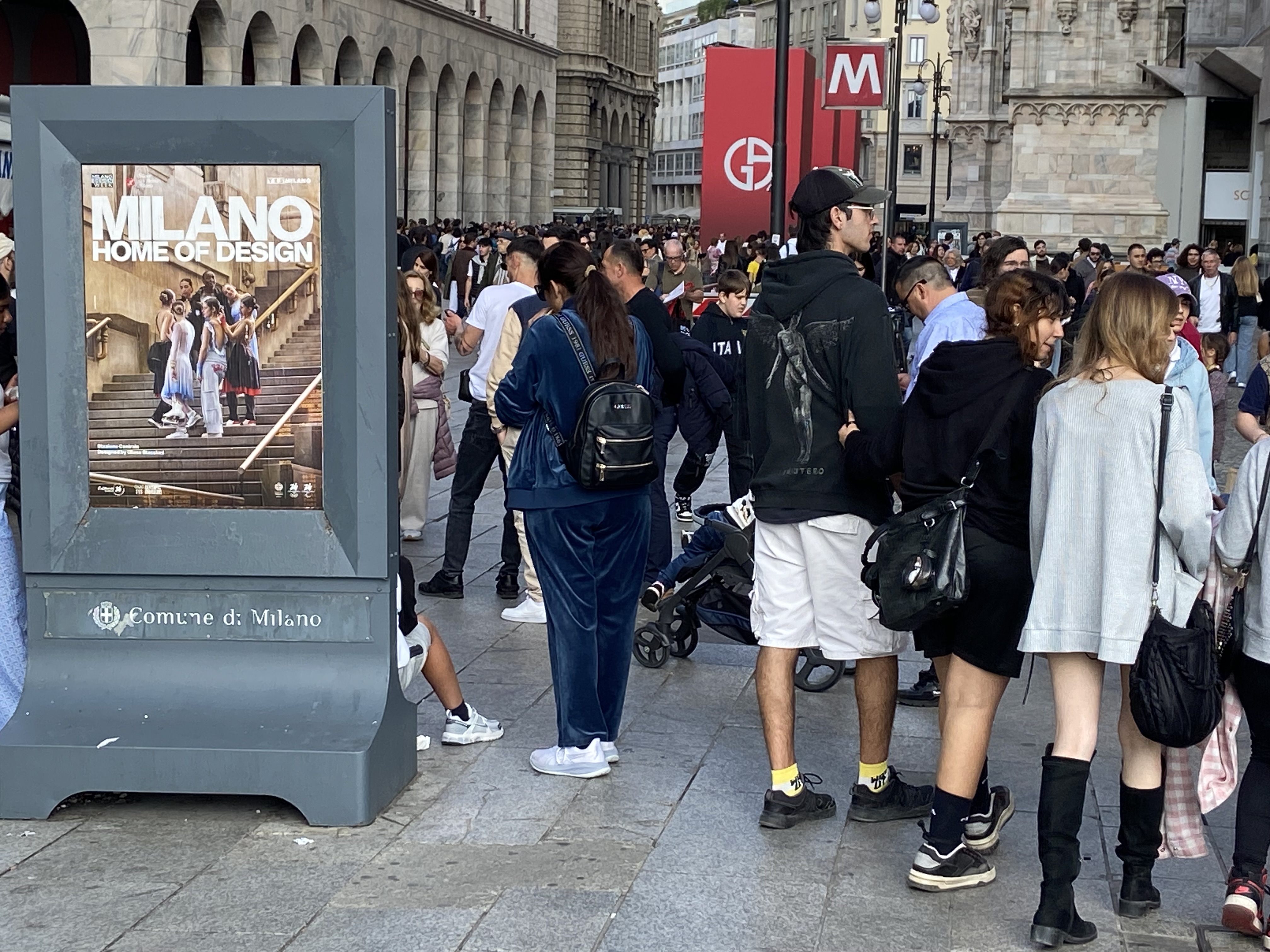
Though seeing The Last Supper was the main attraction for me in Milan, there were other interesting sights. With its intricate, pointed spires, Il Duomo, the Milan Cathedral, is the largest gothic-style church in the world. Construction began in 1386 and took nearly six centuries to complete. Judging by the scaffolding on the roof, I’m not sure the work is finished.
The cathedral has 3,400 statues, 135 gargoyles, and 700 figures.

Before going inside, our group climbed to the top for an arial view of a busy Milan street.

Inside, the stained glass windows were dazzling.


To me, the most interesting interior feature of the Milan Cathedral is a spot in the dome above the apse, marked by a red light. One of the three nails from the crucifixion of Christ is believed to be stored here. The story is that the nail was brought from Palestine by St. Helen, the mother of Emperor Constantine, around 330 AD.
I think it’s safe to say we have nothing like this in America.

Milan is known as a fashion capital and boasts what is probably the most exclusive indoor mall in Europe, the Galleria Vittorio Emanuele II. Built between 1865 and 1877, the mall is shaped like a Latin cross and is covered by a glass and iron dome.
Unlike many American malls, this one is bustling with activity, although for me, such high-end stores as Prada, Gucci, and Louis Vuitton were for window-shopping only.

After a couple of days, we said goodbye to Milan with its prevalence of motor bikes and big-city feel.

On the way to Venice, where we would board the ship for our Uniworld cruise, we stopped in Verona for a morning tour in the rain. The umbrellas match because they were supplied by our tour sponsor.
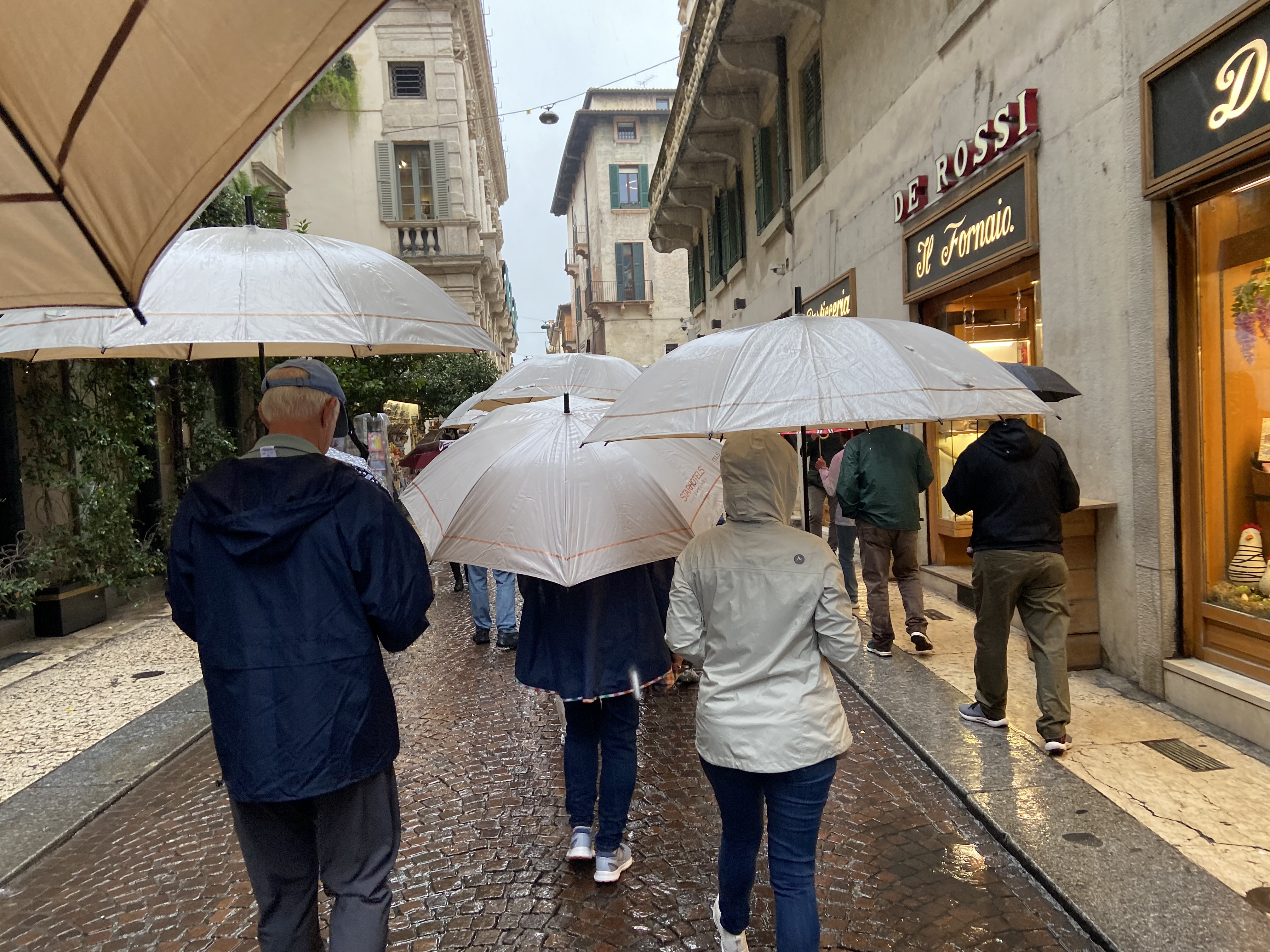
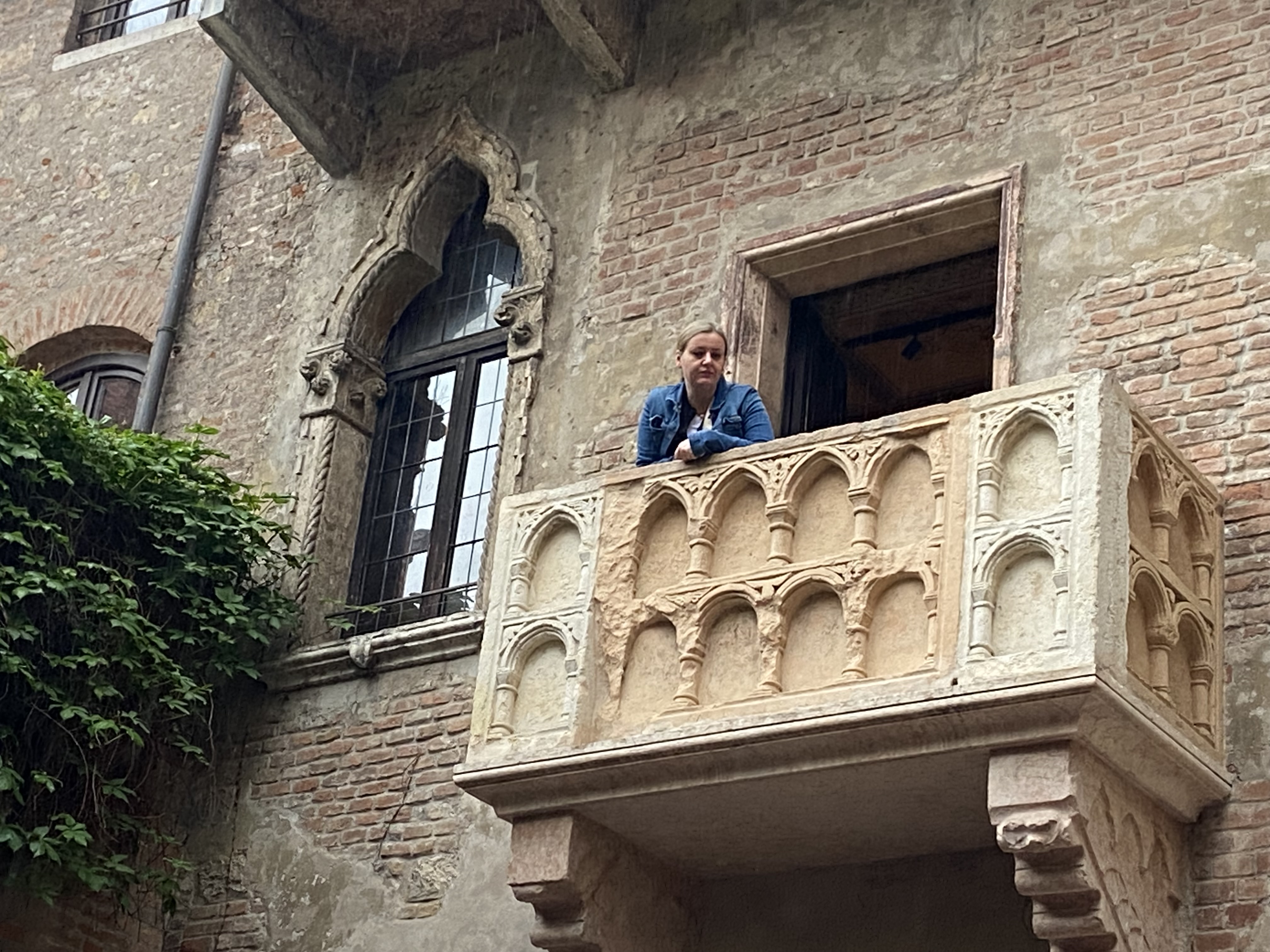
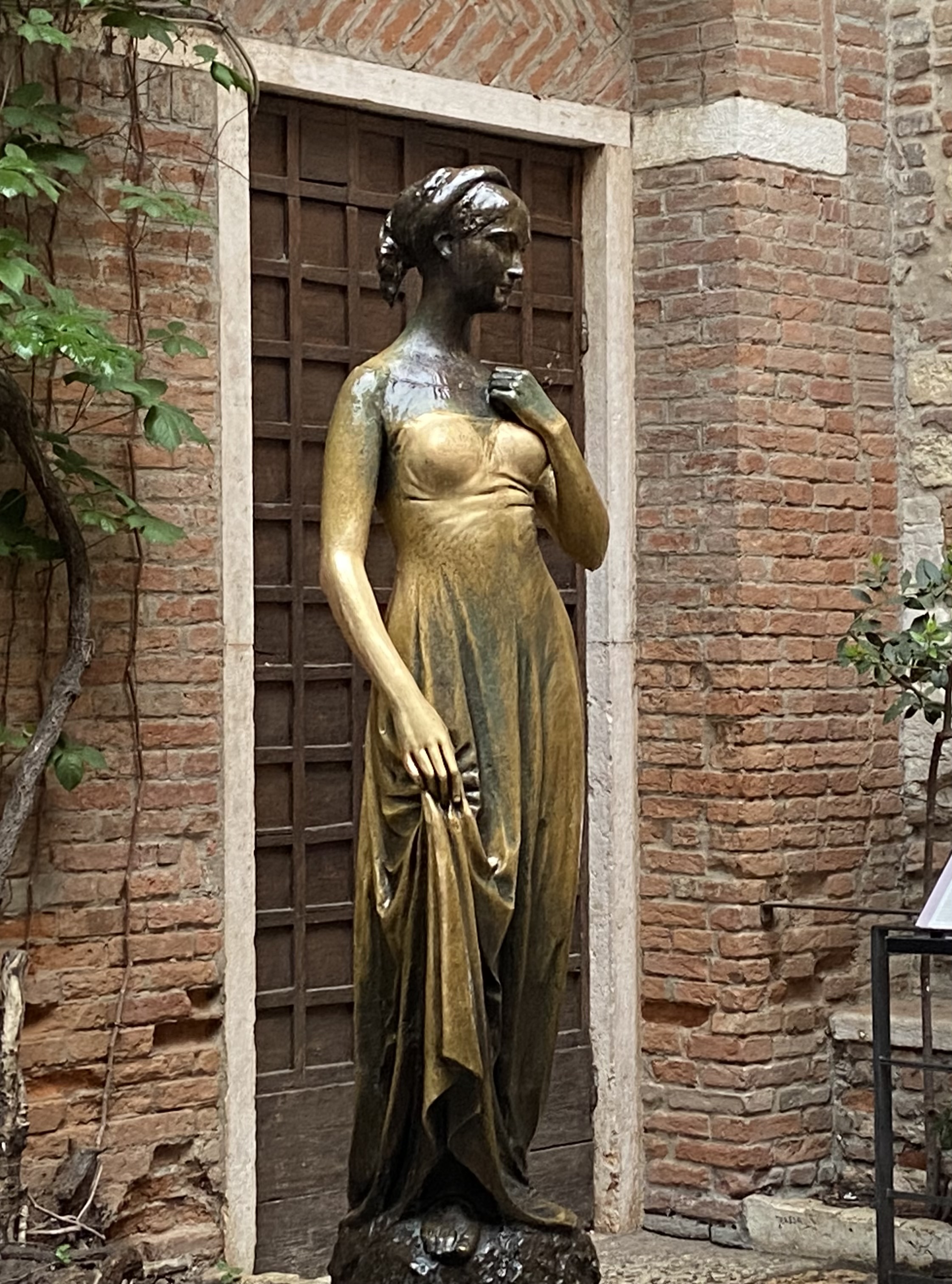
If you remember your Shakespeare, then you know that Verona is famous for being the setting of Romeo and Juliet. Despite the fact that this is a fictional play, the city has designated a Juliet balcony with a statue of the star-crossed lover nearby.
A random tourist strikes a pensive Juliet pose, don’t you think? (“O Romeo, Romeo! wherefore art thou, Romeo?”)
Verona has more to offer than just the Shakespeare bit. The Verona Arena, a Roman amphitheater built in the 1st century, is well-preserved. With a seating capacity of 30,000, this open-air amphitheater is used today for large opera performances.
Impressive. I felt as though I were back at the Colosseum in Rome.

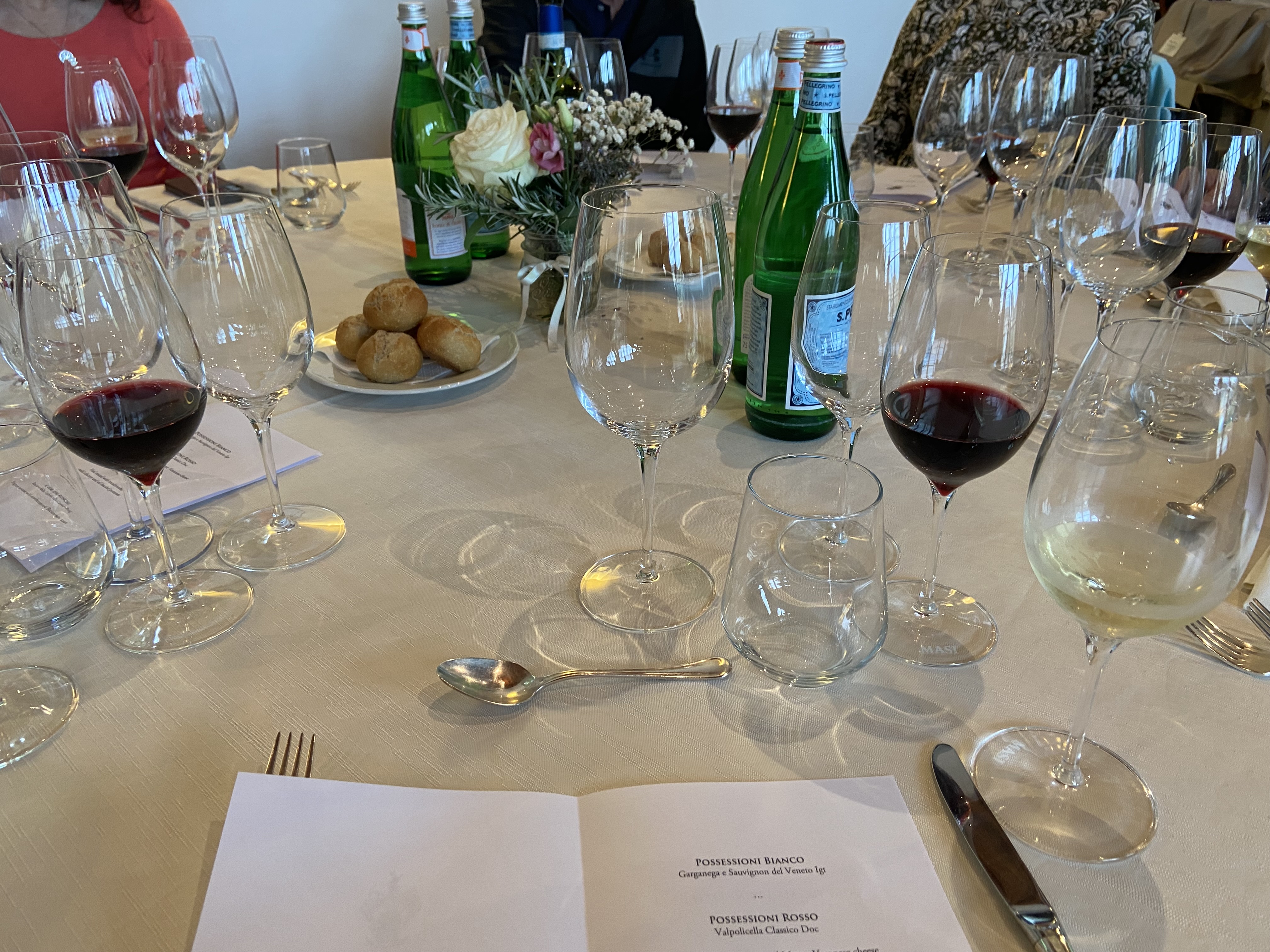
After leaving Verona, the rain stopped and we enjoyed lunch at a wine estate called Serego Alighieri in the Valpolicella wine region. Ah, the Italian lifestyle.

After lunch, it was nap time on the bus as we rode to Venice, the subject of my next post.





 Patsy Pridgen