
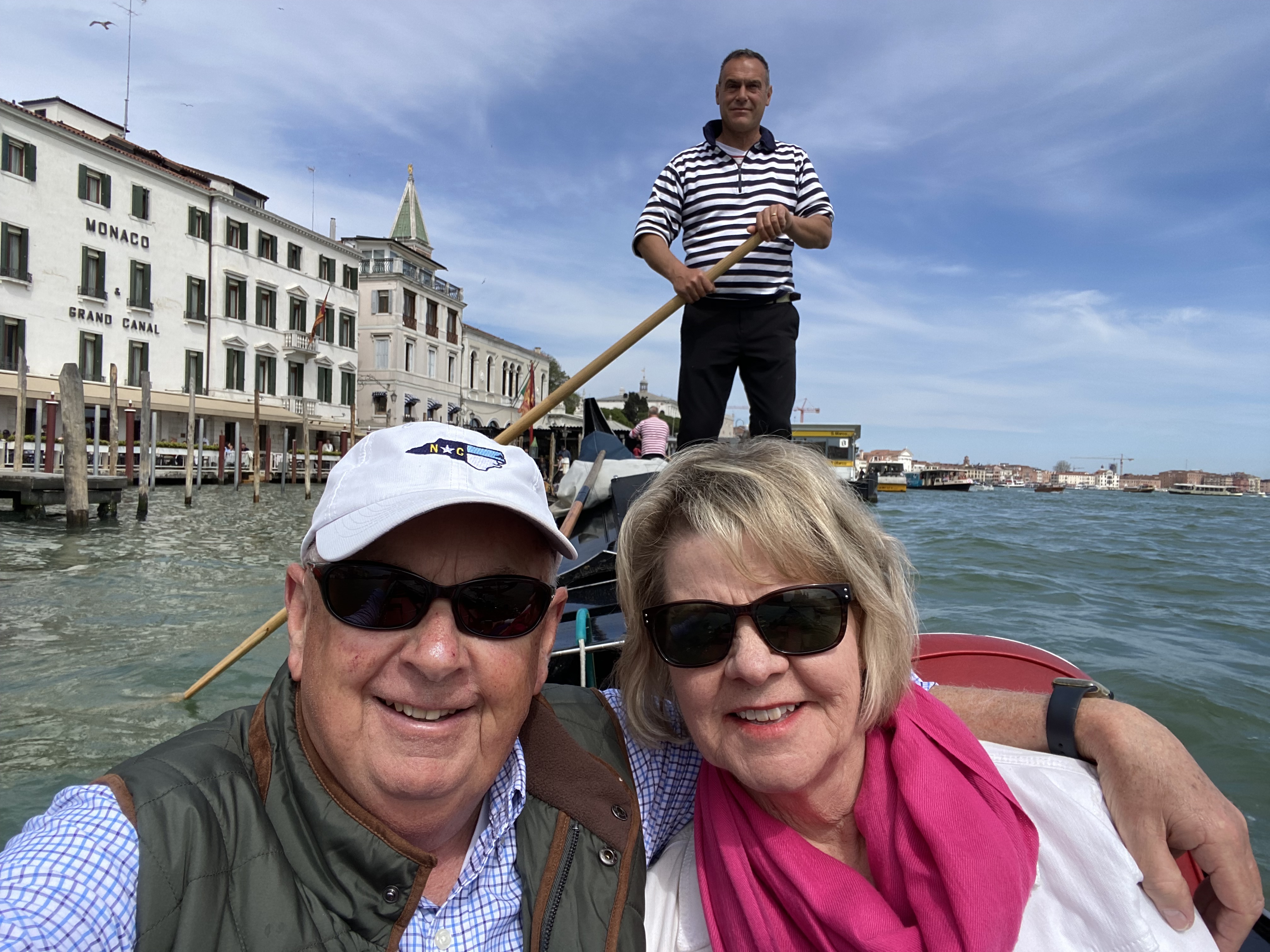
Built on 118 islands, Venice is like no other city in the world. Walking or water transportation is how you get around, although the pricey gondolas are today only a tourist attraction. The gondoliers no longer sing, but it’s still a fun ride through the Grand Canal and into the riis (the name for the smaller canals).

For a week, our Uniworld ship was basically a floating hotel in the Venice area. We spent a couple of days in Venice itself and then a few days on various islands.
We quickly learned that the winged lion, seen everywhere, is the symbol of Venice. The lion represents Saint Mark, the patron saint of the city.
This statue, the Victor Emmanuel II Monument, shows the history of Venice after its defeat by Napoleon. On one side of the statue, Venice is depicted as a fallen woman with a lion in chains. On the other side of the statue, Venice is free and united with Italy. The lion has broken its chains and is roaring. Victor Emmanuel II, the figure on top, was the king of this united Italy, beginning in 1861.
Looking at my guide’s hat, I also learned the French are not the only beret-wearing Europeans.


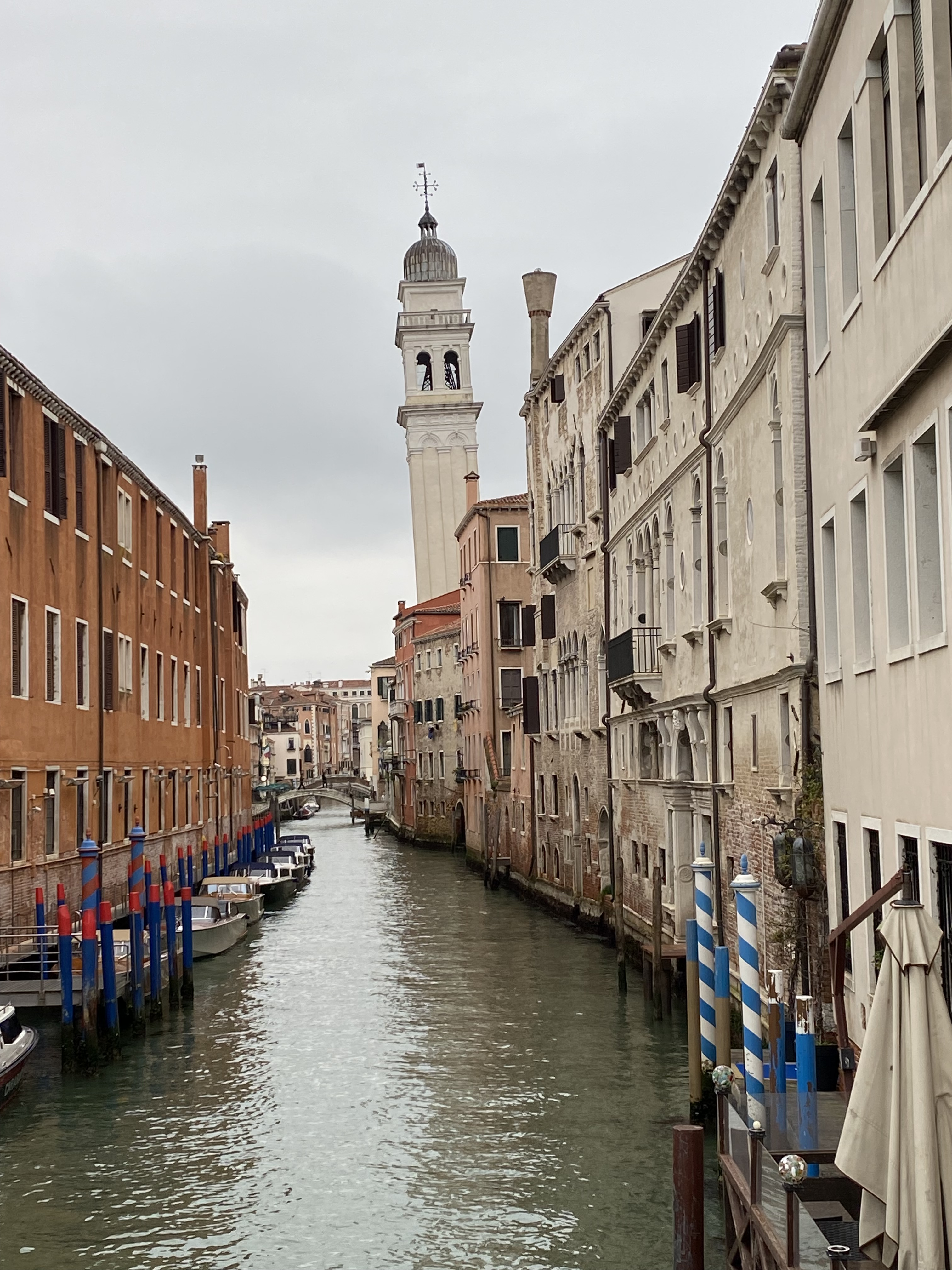
Another fun fact: Pisa is not the only Italian city with a leaning tower.
One of the benefits of traveling with a tour group is gaining access to certain famous places in pre-opening hours. Doge’s Palace, a Gothic structure which was once the seat of the Republic of Venice as well as the home of the ruler (called a doge), was more enjoyable in the early morning without the crowds that Venice is noted for.
Everything from the architecture to the paintings in this former government building is over-the-top elaborate. The entrance itself, the Giant’s Staircase, where a new doge was crowned, is flanked by two huge marble statues of Mars and Neptune, noting military and naval power. Above the entrance is the winged lion, the symbol of a free and mighty Venice.

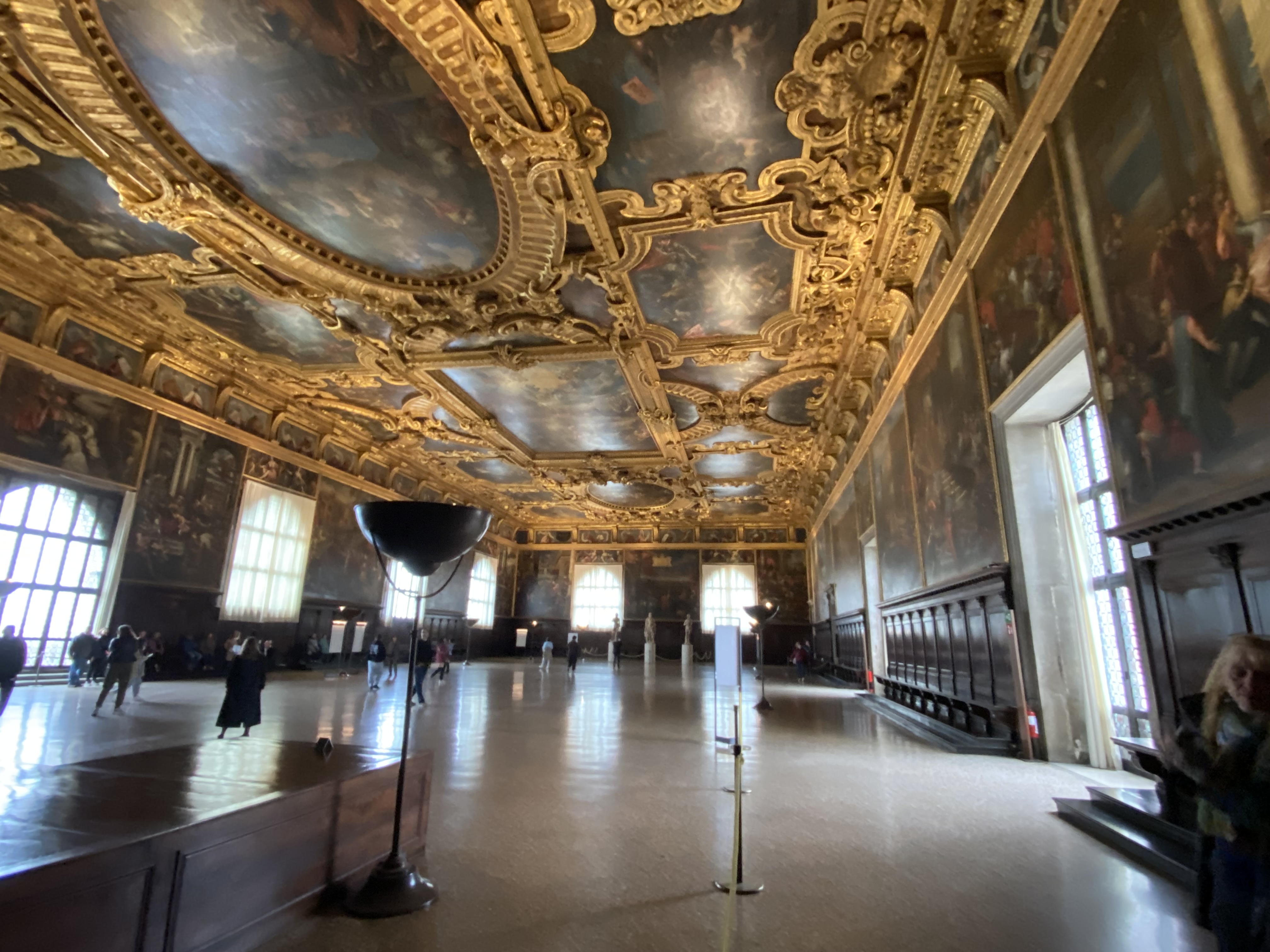
The painted ceiling in the Great Council Chamber in Doge Palace is considered one of the most beautiful in all of Italy, a country known for great art. Painted between 1575 and 1578 by Paolo Veronese, this magnificent work was commissioned to celebrate the power of the Venetian Republic. Foreign ambassadors were received in the huge room, so the painting was meant to impress all who entered with the wealth of the republic.
The Great Council Chamber was also where the Senate met to discuss government business as well as to pass sentences for criminals.
The Great Council Chamber also boasts a very famous painting, Tintoretto’s Paradise. One of the largest paintings on canvas in the world, it measures 75 feet wide and 29 feet tall. The very busy scene depicts heaven on earth.
I was unable to capture the entire painting in a photo that showed any detail, and as you can see, there are quite a few details in this enormous work.

Venice was a republic which lasted between the 8th century and 1797, a thousand years. During the Middle Ages and the Renaissance, it was a major economic and trading power and controlled territories in northern Italy. But in 1797, Napoleon’s troops stood poised to take the city. The Great Council of Venice decided to abdicate, turning control over to the French.
A painting in Doge’s Cathedral captures an elderly senator descending the Giant’s Staircase, resigned to the fate of the once powerful Venetian government.

Doge’s Palace is also known for its prison, reached from the palace itself by the famous Bridge of Sighs. The story goes that the bridge was given its name by Lord Byron, who wrote of prisoners sighing as they viewed Venice for the last time from the windows of the bridge as they were led to their cells. “I stood in Venice, on the Bridge of Sighs, A palace and a prison on each hand….”
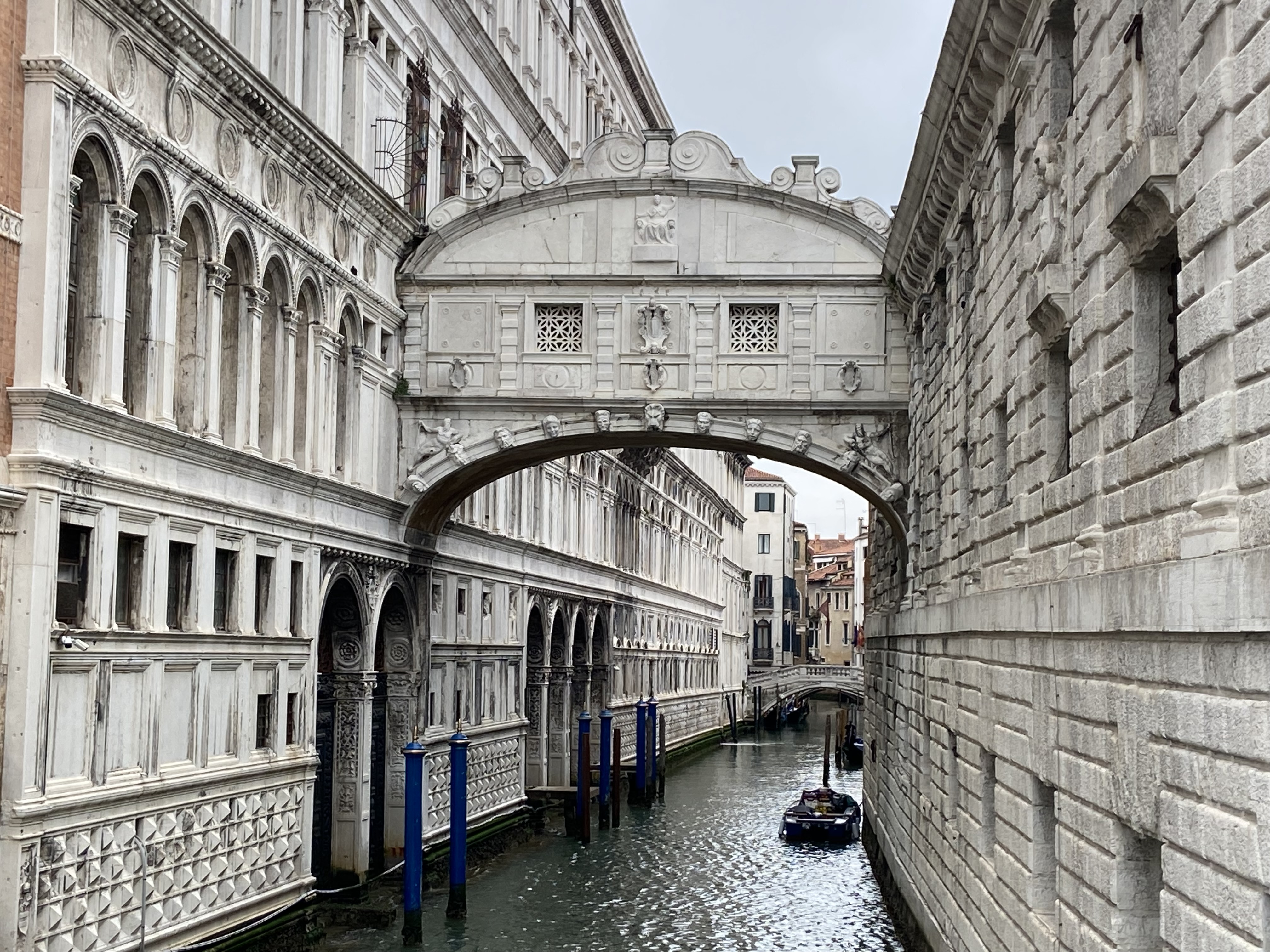
The prison was a stark contrast to the gilded rooms on the other side of this bridge.

Because it was Holy Week and there were special services, we couldn’t enter St. Mark’s Basilica, located on the same piazza as Doge’s Palace. Viewing the outside was some consolation, though.

Instead of visiting St. Mark’s Basilica, we were treated to an evening visit to the Fenice Opera House. Another elaborate, gilded interior.


An American-born opera singer performed a few arias in an informal show.

No visit to Venice would be complete without walking over the famous Rialto Bridge. Early in the morning is the best time, before it gets crowded.


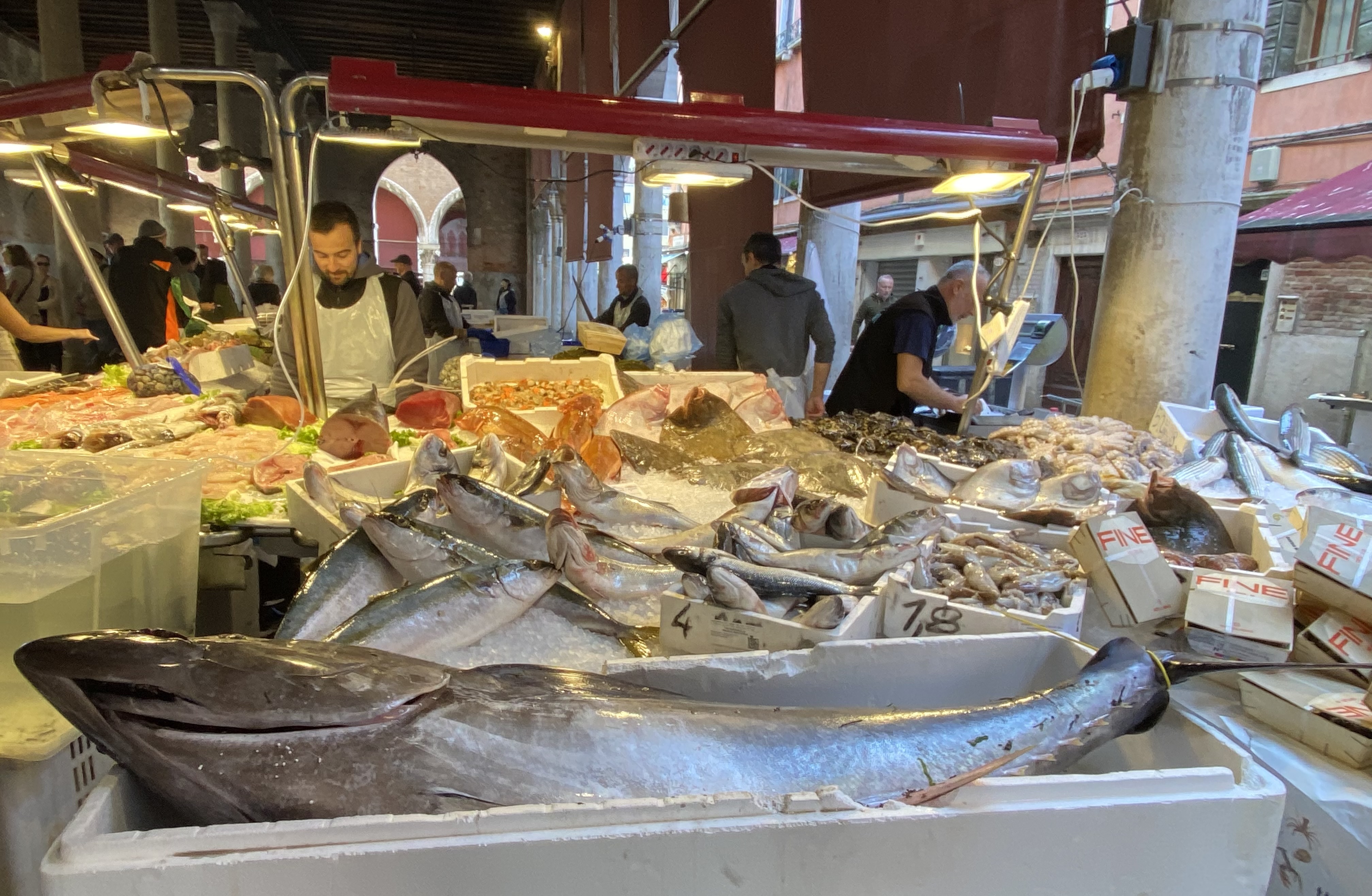
The fish market near the Rialto attracts a local market as well as sightseeing tourists.

Speaking of locals, it’s always nice to see a slice of real life in a city, especially one where the tourists can outnumber the residents. I loved stumbling upon an alley (called a calle) with a clothesline and a dog walker.

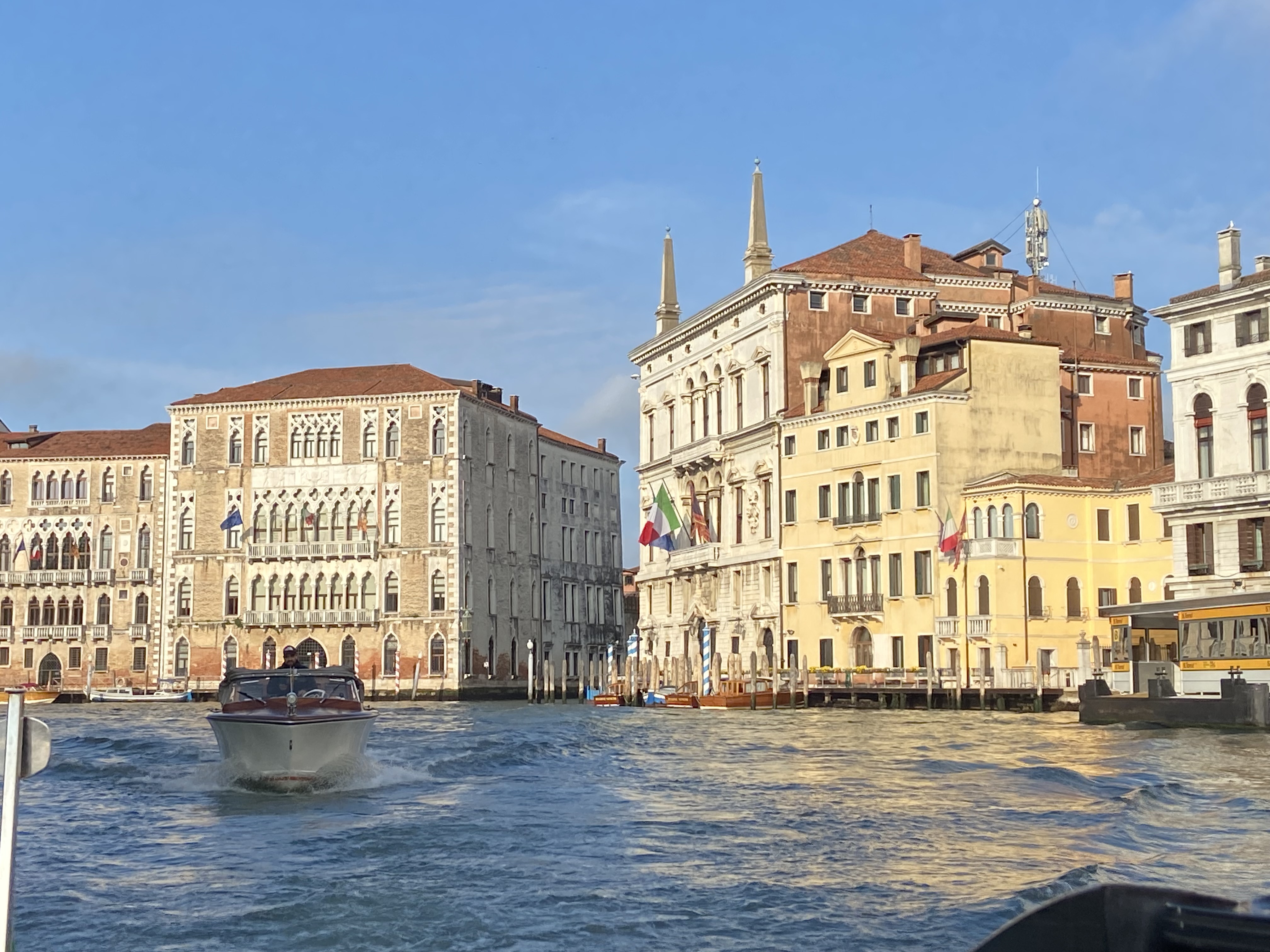
I’ll remember Venice, though, for its Grand Canal and the majestic buildings hugging the edge of the water.
In my next and last post about this trip to Italy, I’ll talk about the nearby islands we visited.





 Patsy Pridgen