
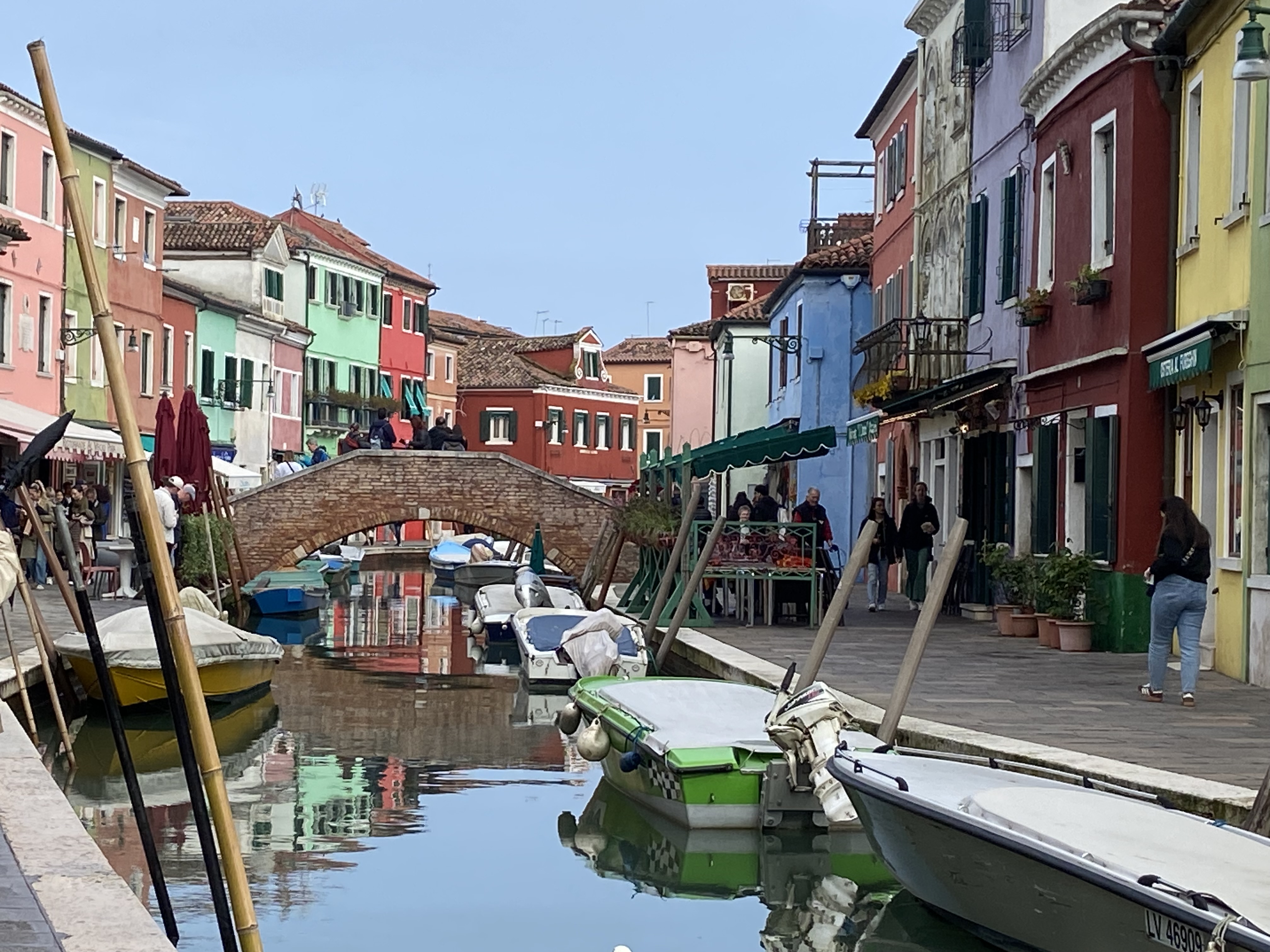
Venice might have been amazing, but the places we visited on nearby islands were absolutely charming. My favorite was Burano with its colorful houses and slower pace.

There’s not a lot going on in Burano, no great cathedrals or museums to visit, which meant we could simply relax while walking the streets and soaking up the Italian village vibe. Ever so often, we’d cross the street via one of the bridges spanning the canals, just to walk on the other side for a while.
There are a couple of stories as to why the houses here are so colorful. One is that bright colors helped residents locate their homes in thick fogs. Another theory is that fishermen who spent days on grey waters needed some color when home.
In any case, the different hues on the houses are delightful.
Burano is known for the Italian craft of making lace by hand. In the past, Italian wives occupied themselves with this activity while waiting for their fishermen husbands to return. We were taken to a demonstration while visiting the island.

It’s a dying art, though, since younger women aren’t as interested in this time-consuming occupation. Today, most of what’s sold in the shops on the island is probably manufactured somewhere else, especially if the item is relatively inexpensive.
I’m pretty sure this lace scarf I bought was not done by hand, but I still think it’s a great souvenir along with my knockoff Murano glass necklace, earrings, and bracelet.

If the jewelry in the above photo were real, hand-crafted Murano glass, I would have paid far more than my total of less than 100 euros. We were taken to a demonstration of glass blowing, a fascinating skill, on the island of Murano.
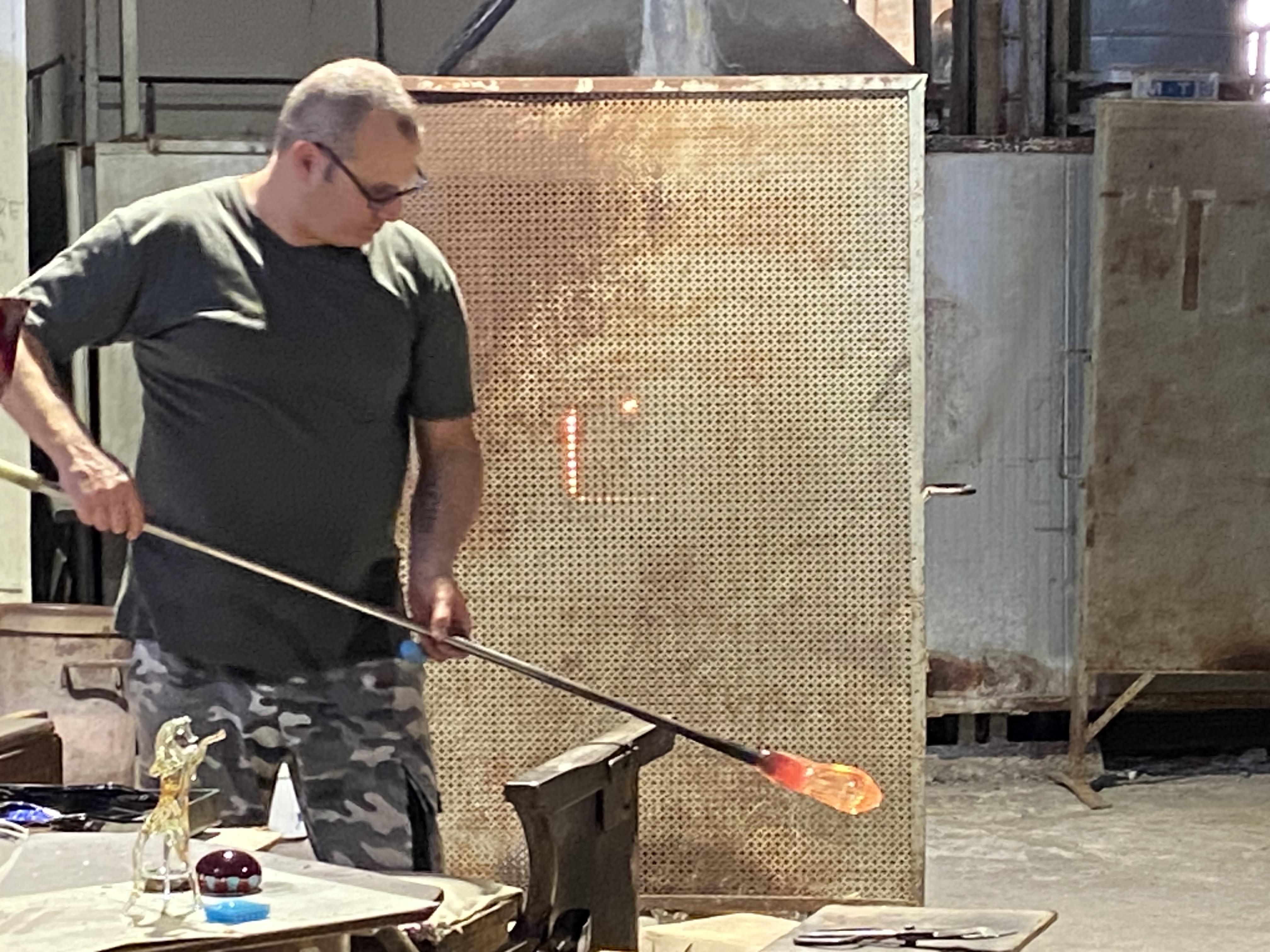
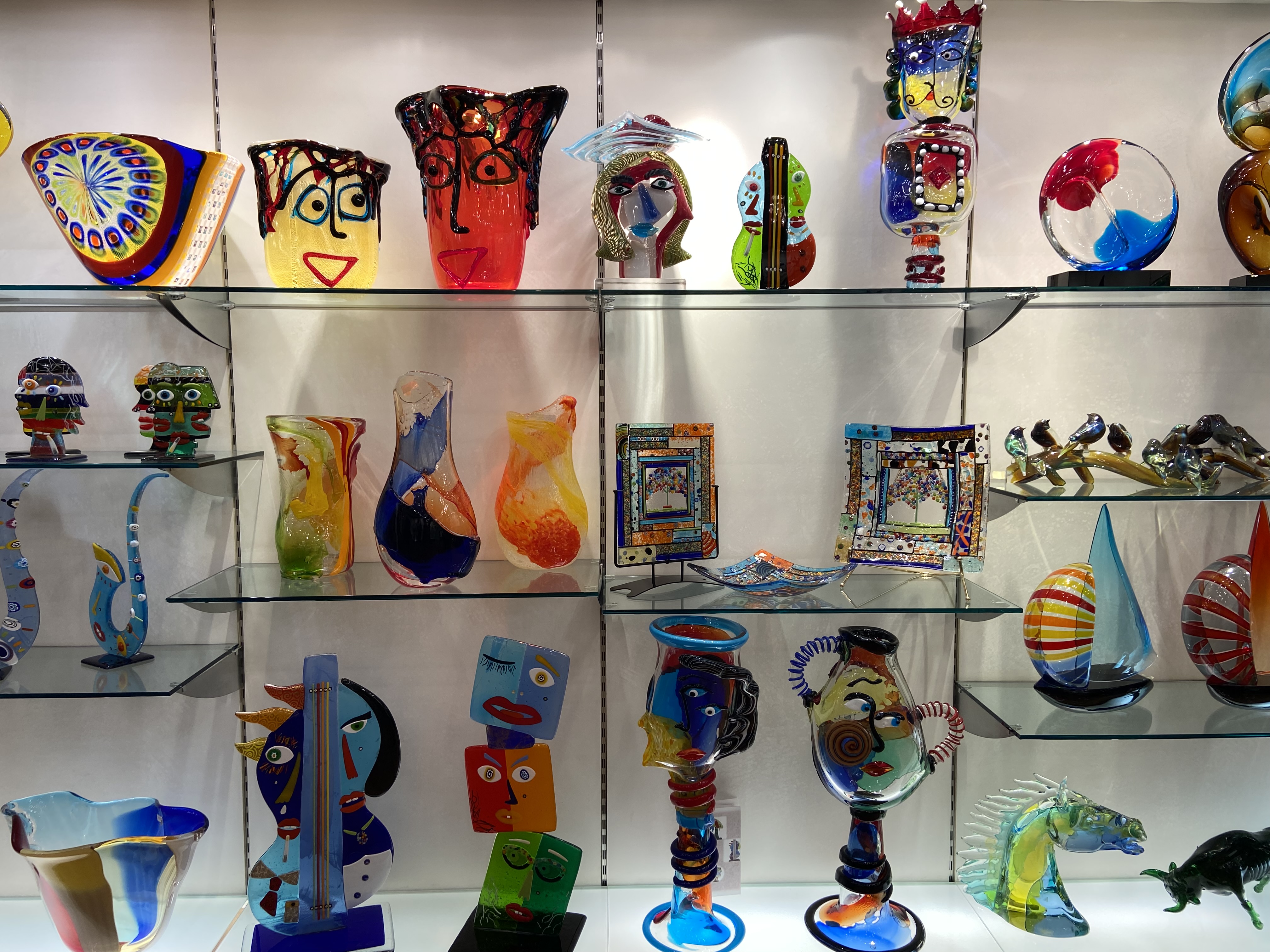
Afterwards, we were escorted to the showrooms, full of beautiful but very expensive Murano glass products. Colorful!

I’ve gone out of order so far, but the first town we visited was Vicenza. We had a few rainy days during our trip to Italy, and this was one of them. We’re still smiling, though, at least for the camera.

The lady who took this picture for us is the wife of an American serviceman stationed at a nearby US army base. She recognized we were Americans due a Tar Heel shirt worn by a member of our group (not me). She gave us the name of a good Vicenza restaurant, where I had several slices of an authentic Italian pizza (lots of prosciutto).

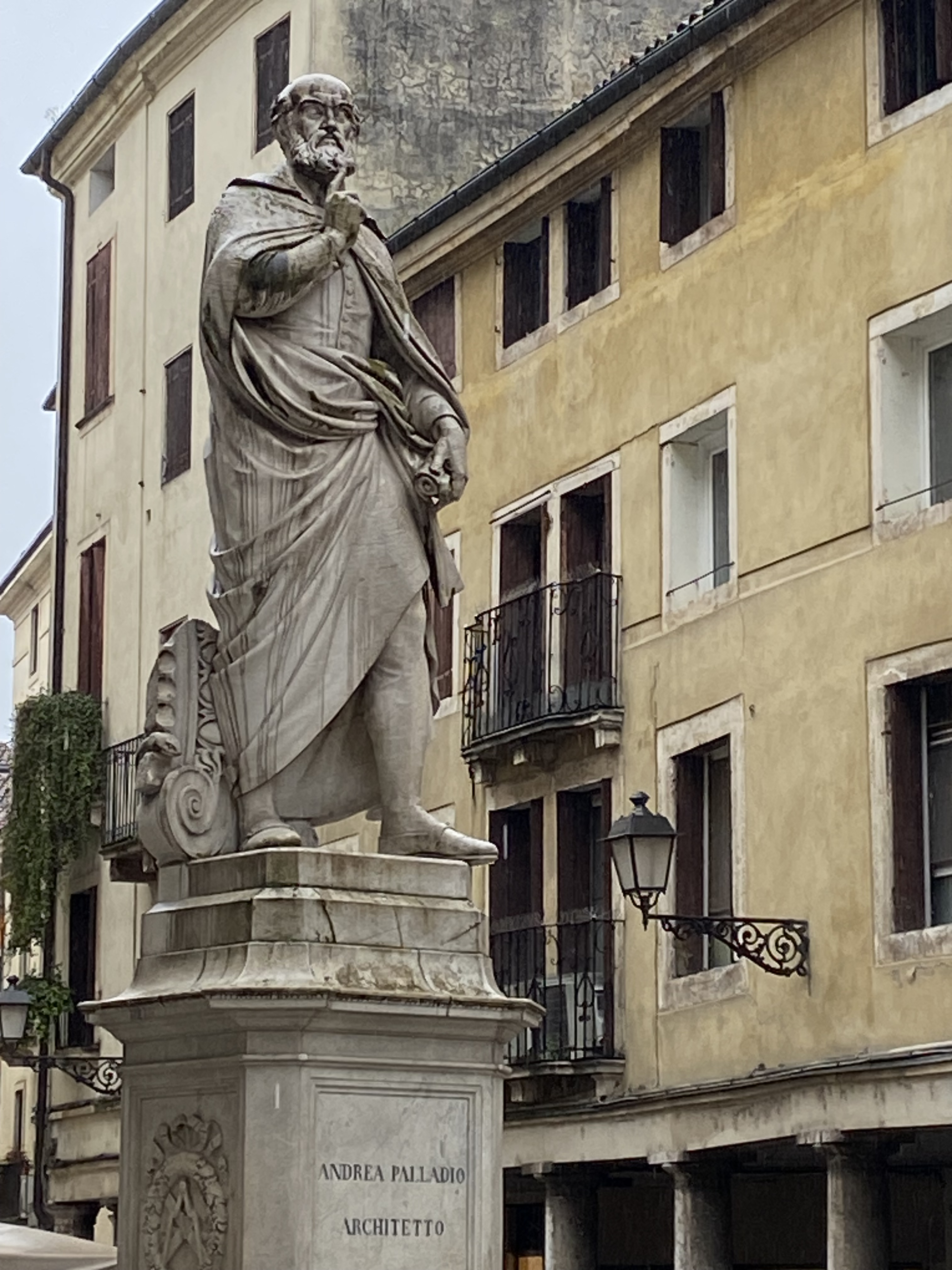
Of course, this being one of our sponsored tours, we did more than just walk around in the rain and eat pizza. Before giving us free time, our guide talked quite a bit about a man named Andrea Palladio, a famous 16th century architect who was responsible for many of the impressive buildings in town.

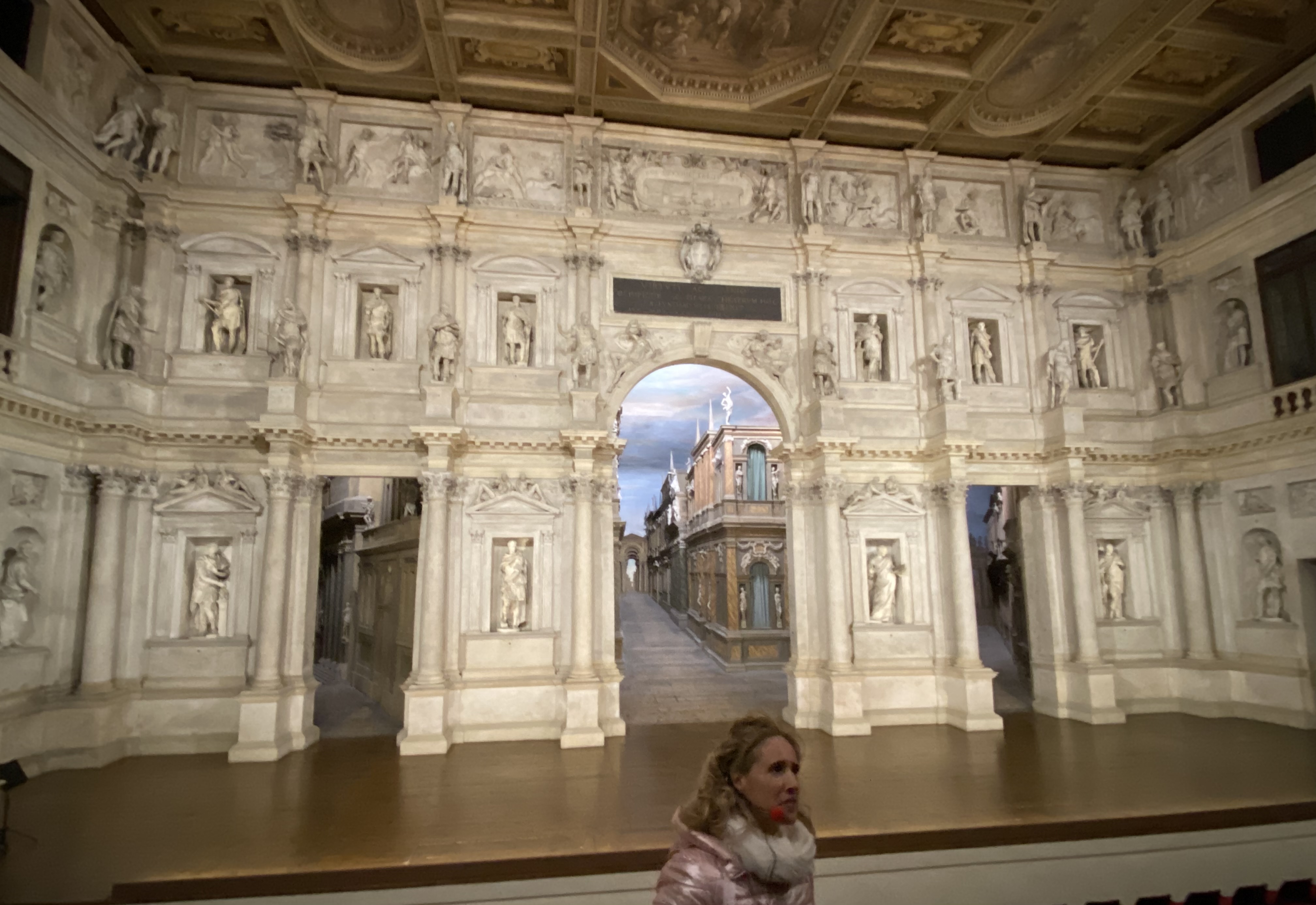
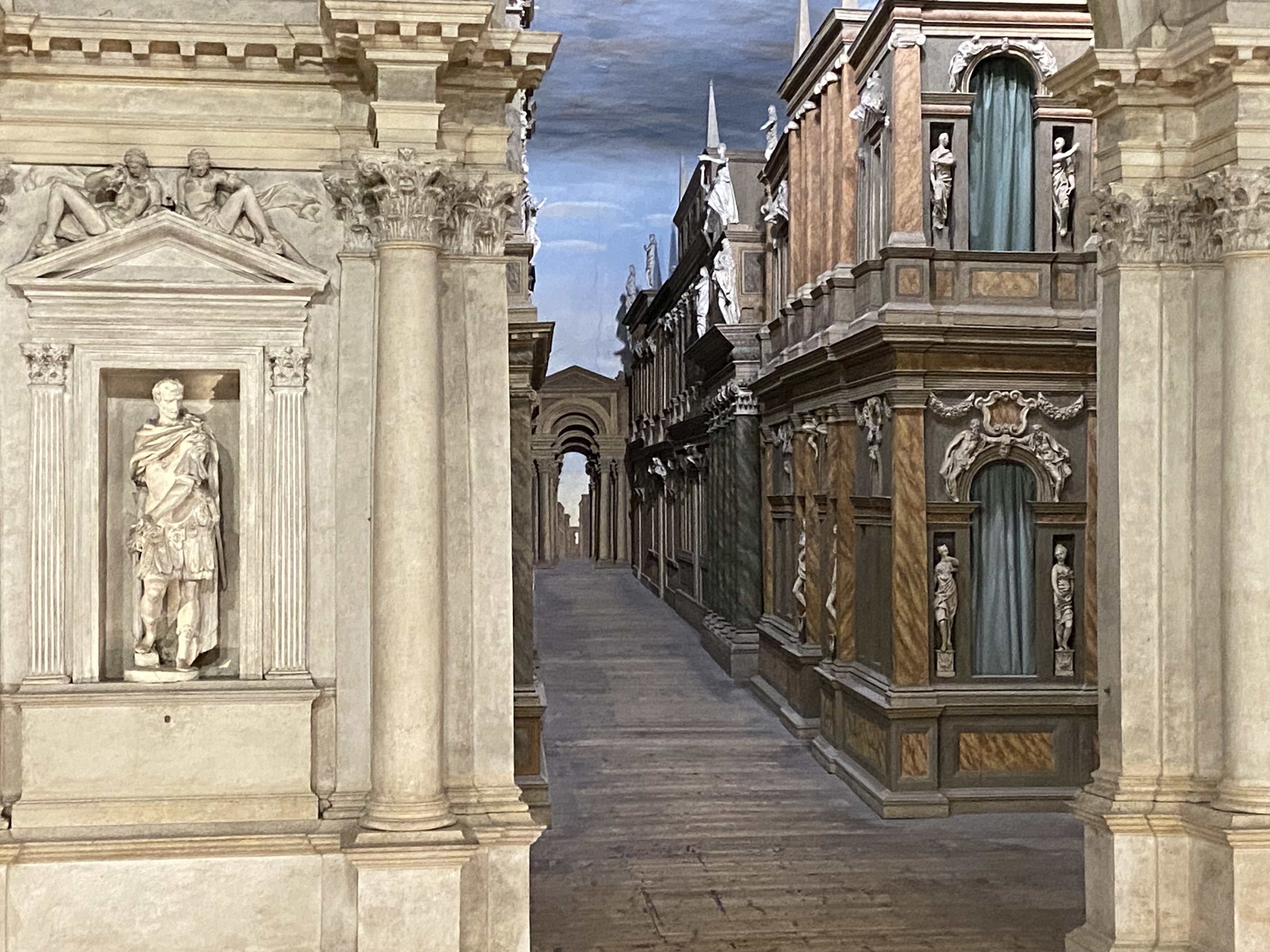
We also visited the Teatro Olimpico (Olympic Theatre), the final design by Palladio. Built in 1580-1585, the Teatro Olimpico is one of only three Renaissance theaters still in existence.
The most eye-catching feature of the theater is the stage scenery, painted to give the illusion of long streets receding to the horizon. The Teatro Olimpico, along with other Vicenza buildings designed by Palladio, are designated UNESCO World Heritage Sites.
Chiogga was another town we visited. I was initially excited that we happened to be there on the weekly street market day, thinking I would score some great Italian souvenirs. However, the market caters to what the locals need, such as socks and kitchen gadgets, stuff I could get at Wal Mart back home.

Still, Chiogga was a pretty town. I say town rather than village, because Chiogga, sometimes called Little Venice, was bigger than Burano, Murano, and Vicenza. About 50,000 people live here.

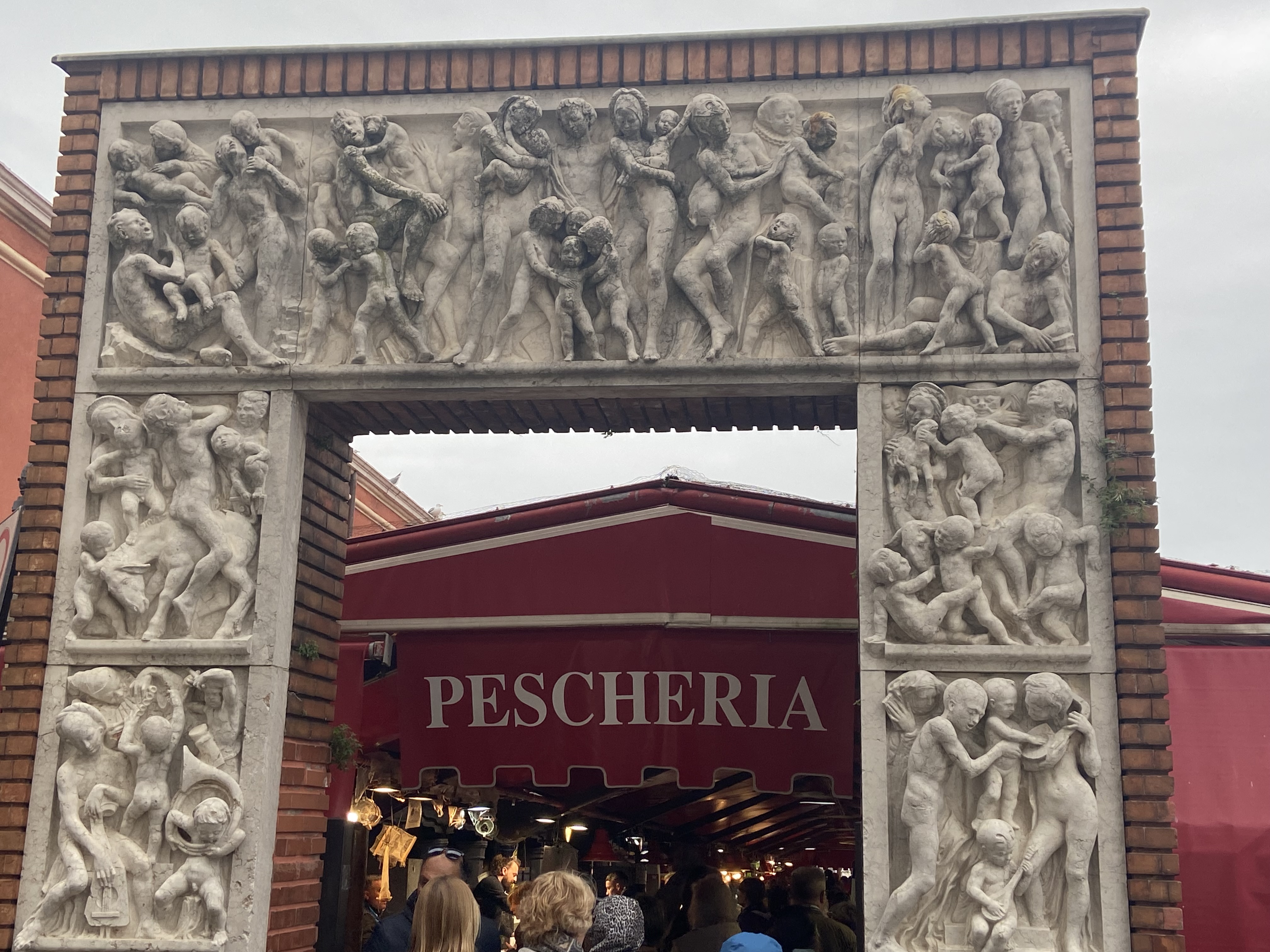
Pescheria is Italian for fish market, of which there are plenty in the Venetian area. The intricate sculptured gate of this one in Chiogga is stunning.
Twice, we rode a bus to visit Venetian villas located out in the countryside. C’Zen (House of Zen) was once a shooting lodge before being converted to a villa by the wealthy Venetian Zen family. Today, it is operated by a mother/daughter team and caters to both day and overnight guests.
The Ca’Zen Estate was a relaxing spot for a late afternoon glass of wine paired with Italian hors d’ouvres.

The Catajo Castle, located in the Euganean Hills, has a nice setting too.
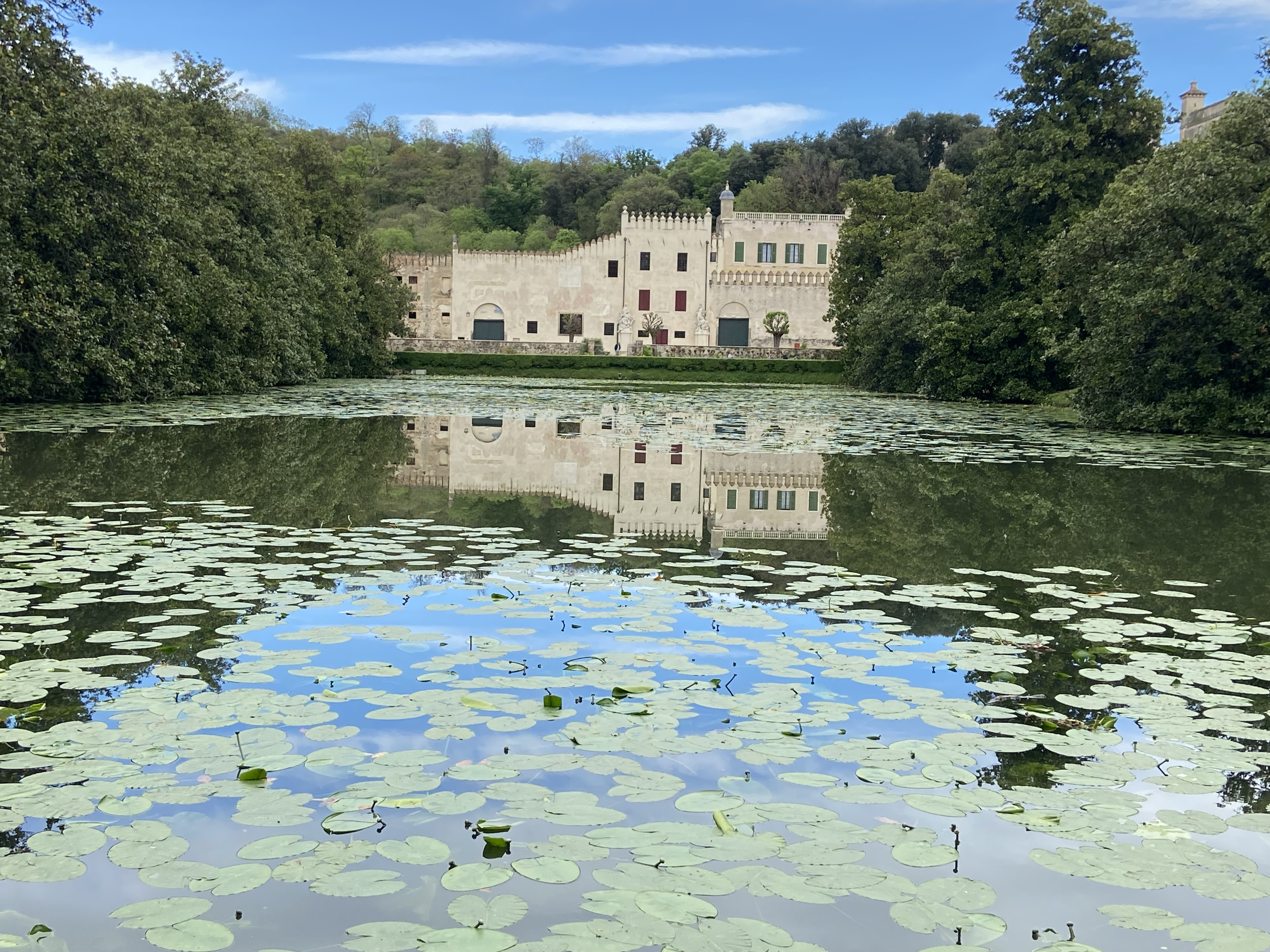
Built in 1570 by the Obizzi family, the Catajo Castle was actually a cross between a fortress and a mansion rather than a castle. According to our guide, the Obizzis were social-climbing mercenaries who liked to show off their wealth and boast about their battlefield victories. Hmm. Sounds like a family saga that could be made into a Netflix show.
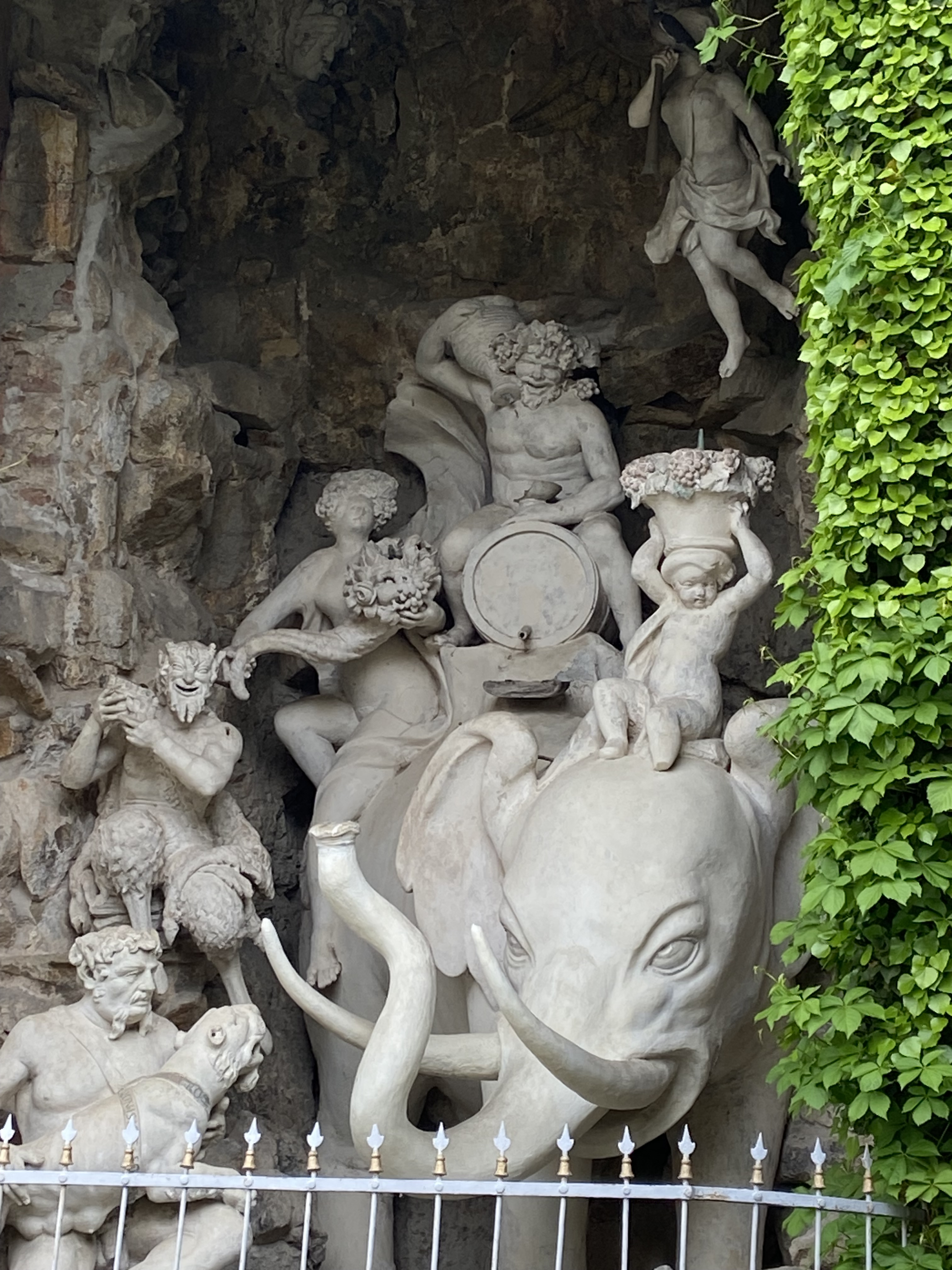
I particularly liked the sculpture of mythological figures, some astride the elephant, at the entrance to Catajo Castle. Bacchus, the god of wine (straddling the keg), is promising a good time to all who visit Catajo Castle.
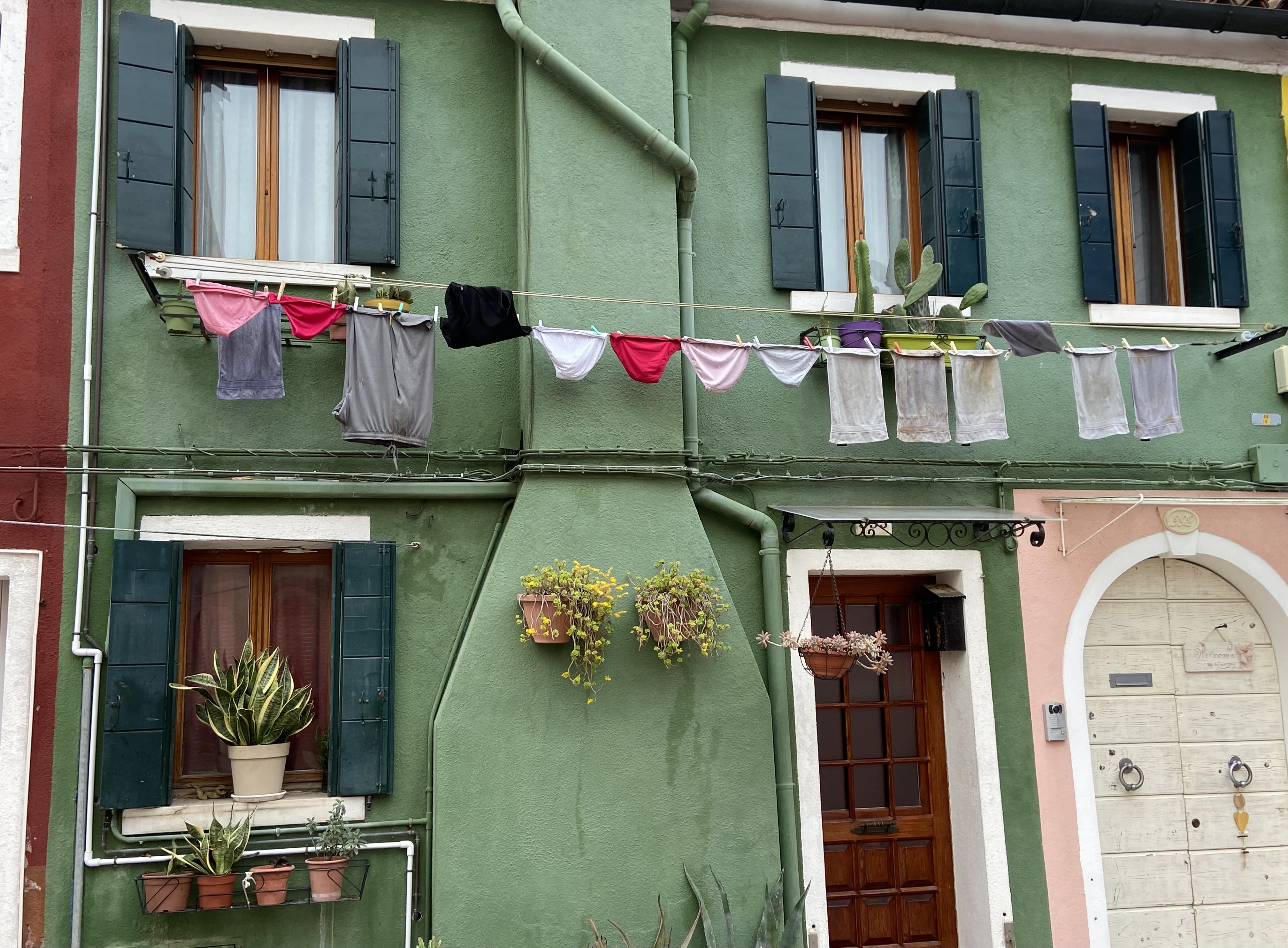
Italian sculpture, cathedrals, art, and palaces were exciting to see. But there were also the moments during my trip to Italy when ordinary life popped up, showing me that people everywhere have pets, do laundry, and display quirky lawn ornaments.


I hated to say goodbye to my favorite European country and to my Uniworld riverboat home.




 Patsy Pridgen