
From Tromso, Norway, we’d planned to fly to London to spend an extra three nights on our trip before returning home. We had two items on our agenda: a visit to the Churchill War Rooms and a guided tour of London’s famous art museum, the National Gallery. We easily made it to London, but it took an extra day to get home.
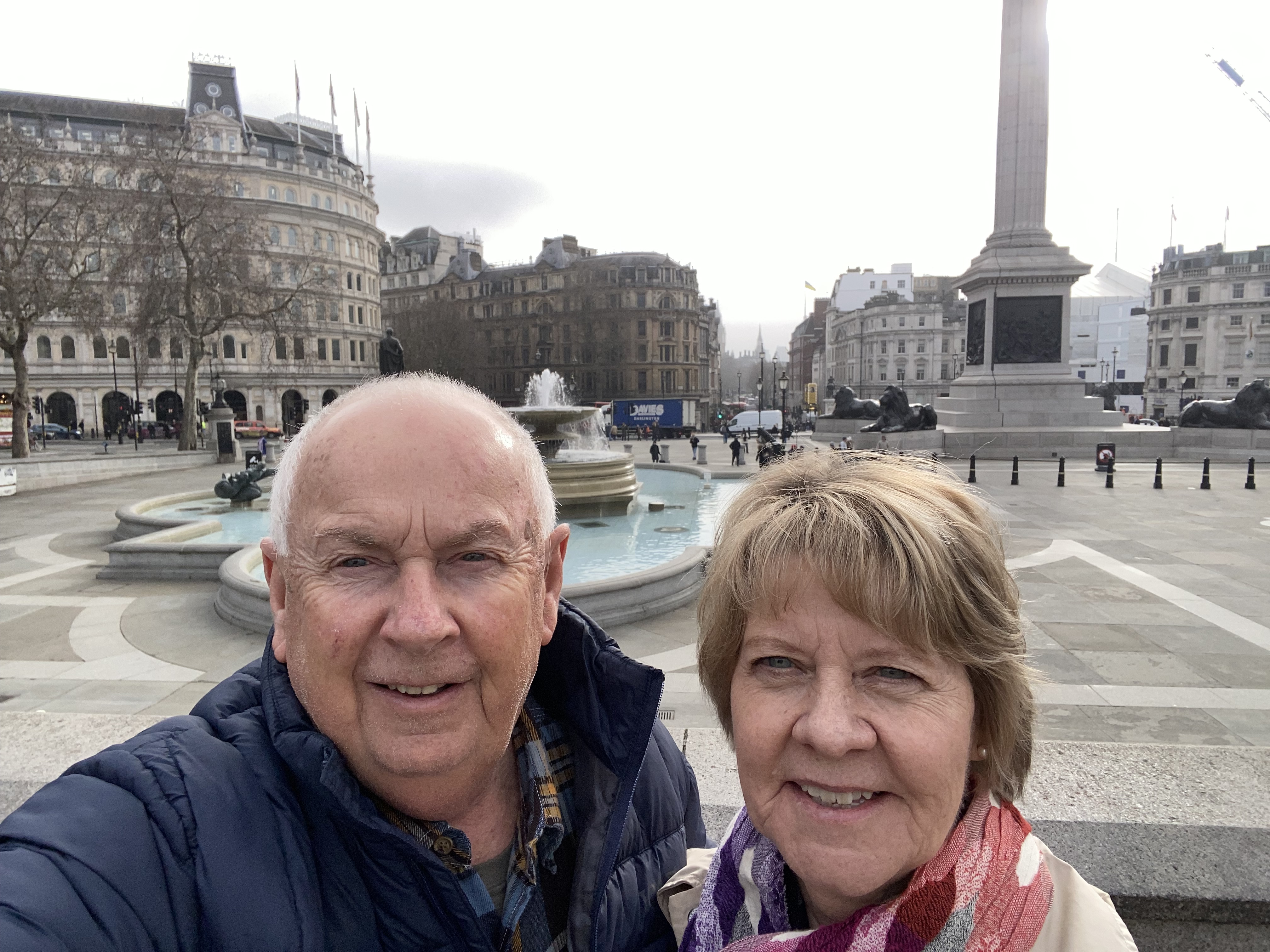
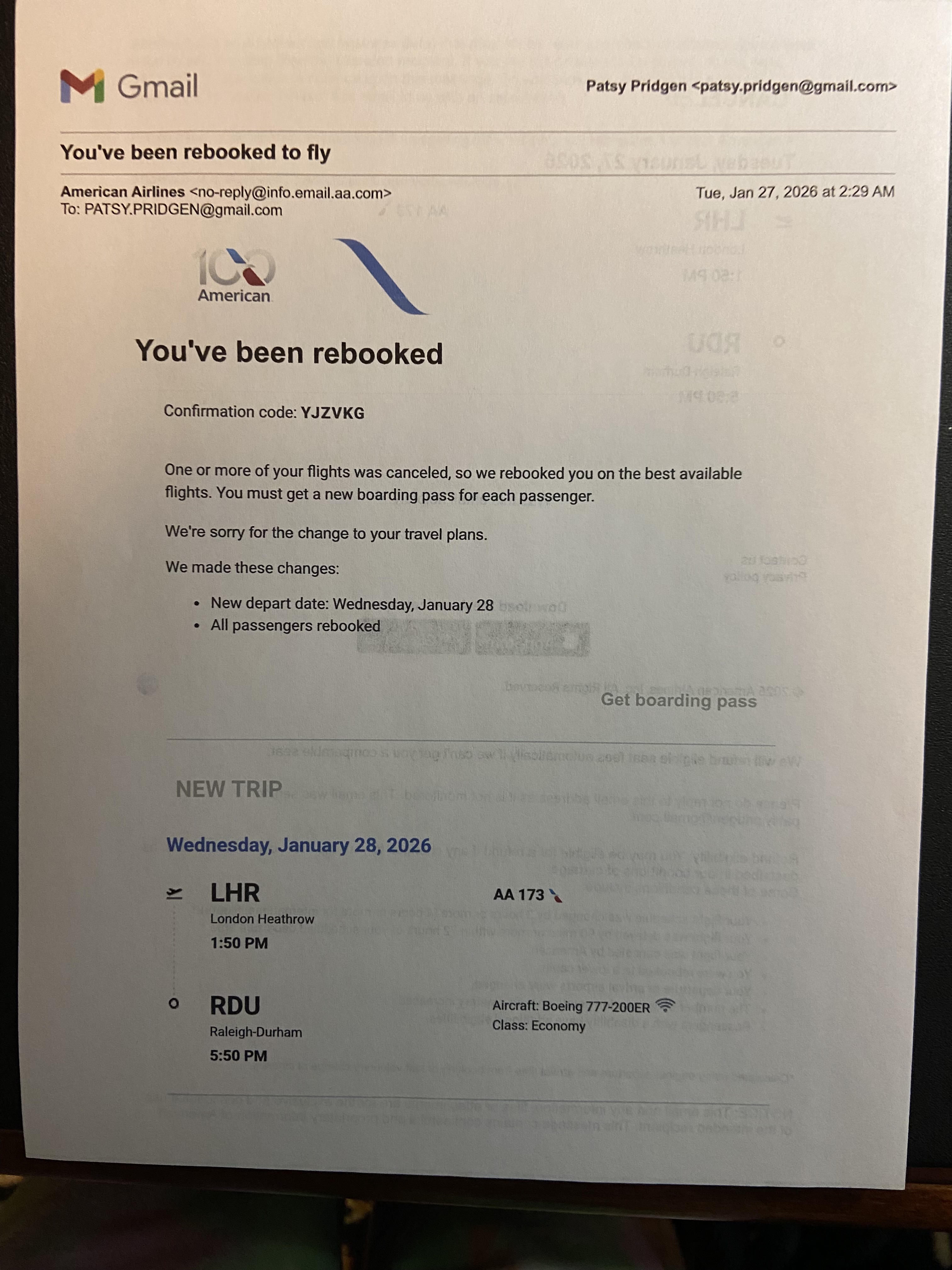
An ice storm in the States resulted in canceled flights, including one we’d scheduled to get to Raleigh-Durham Airport after three nights in London. Oh well, we decided, if we have to be stuck somewhere for an extra day, London is a good place. We had a couple of bad moments, though, when the hotel we’d been staying in for three nights was unavailable for a fourth. Really? I pictured myself homeless or sleeping at the airport.
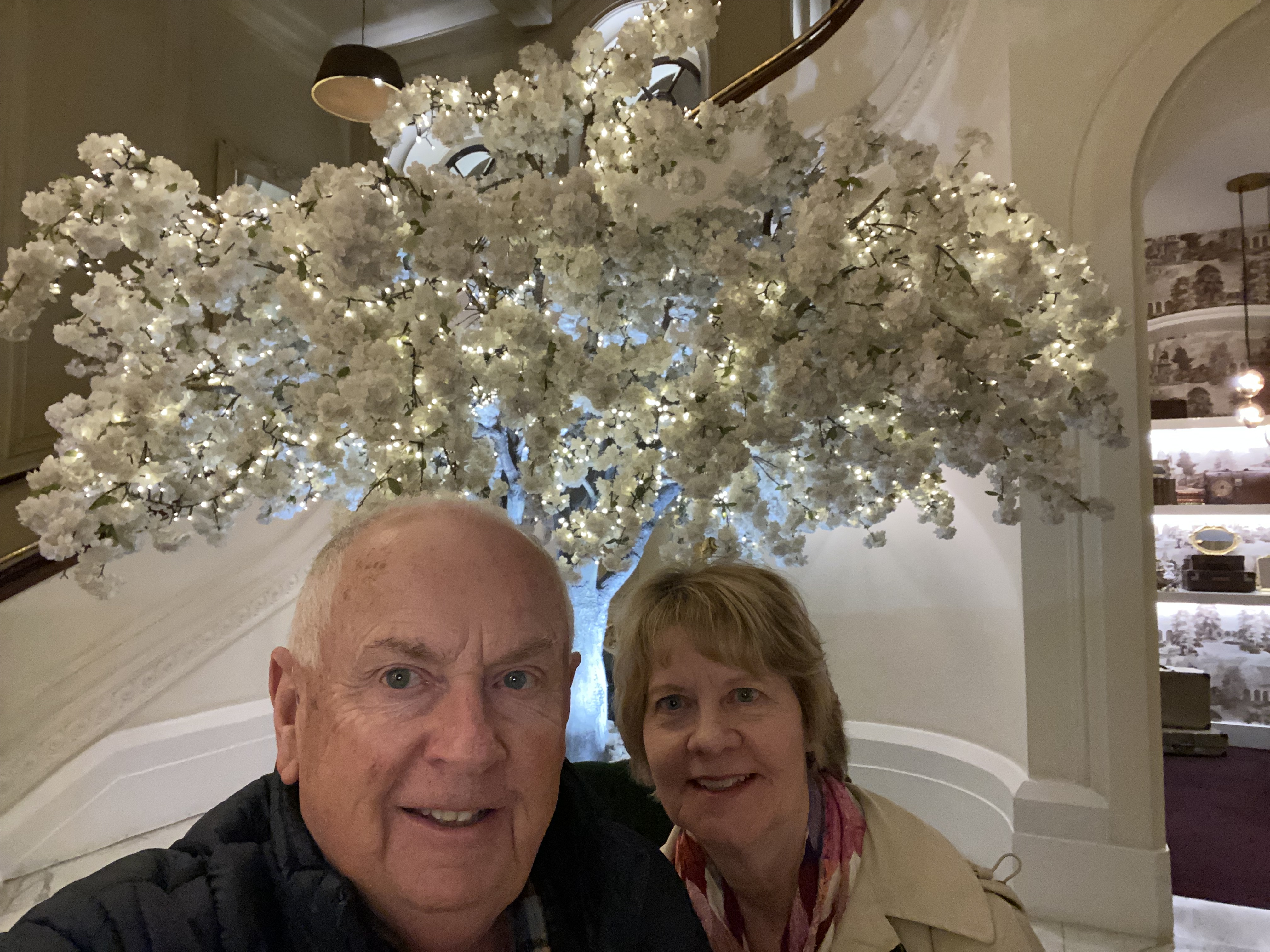
However, it was January, hardly the height of tourist season. We easily found another hotel within walking distance from the first and wheeled our suitcases down the street for a one-night stay at the Palace Strand.
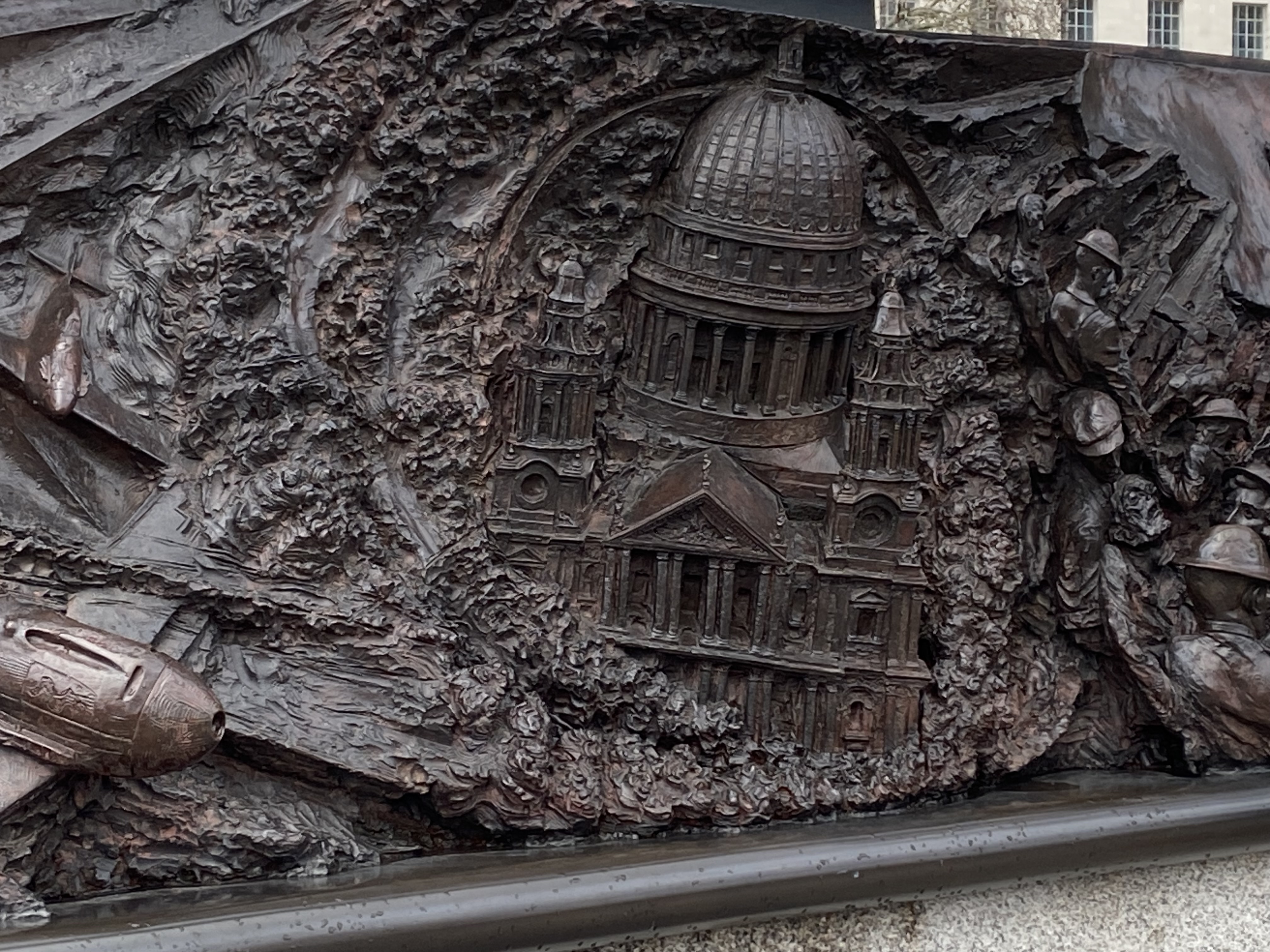
We’d signed up for a guided World War II walking tour in addition to seeing the Churchill War Rooms. Our guide explained in detail The Battle of Britain Monument, located on the Victoria Embankment overlooking the Thames. From July through September of 1940, England’s Royal Air Force defended the country against air raids by the German air force, the Luftwaffe. Their heroic effort prevented the invasion of Great Britain by the German army.
The focus of The Battle of Britain Monument is something called the “Scramble,” a depiction of airmen running towards their planes after orders to intercept the Lufwaffe.
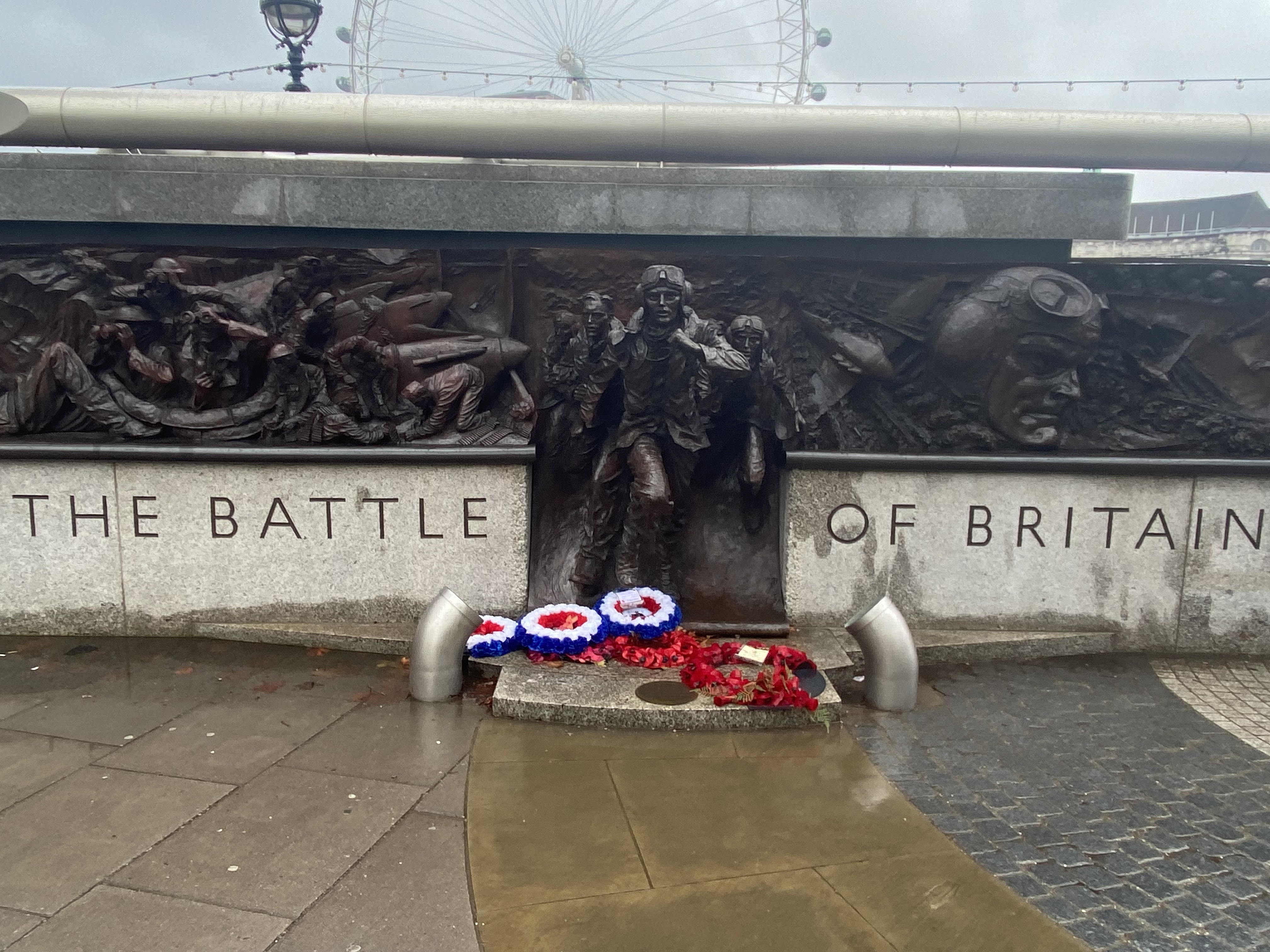
London still suffered heavy damage from German bombing during what is called the Blitz, which lasted from September 1940 through May 1941. St. Paul’s Cathedral was somehow miraculously spared although everything around it was destroyed, as depicted on The Battle of Britain Monument. Terrible times for the British.
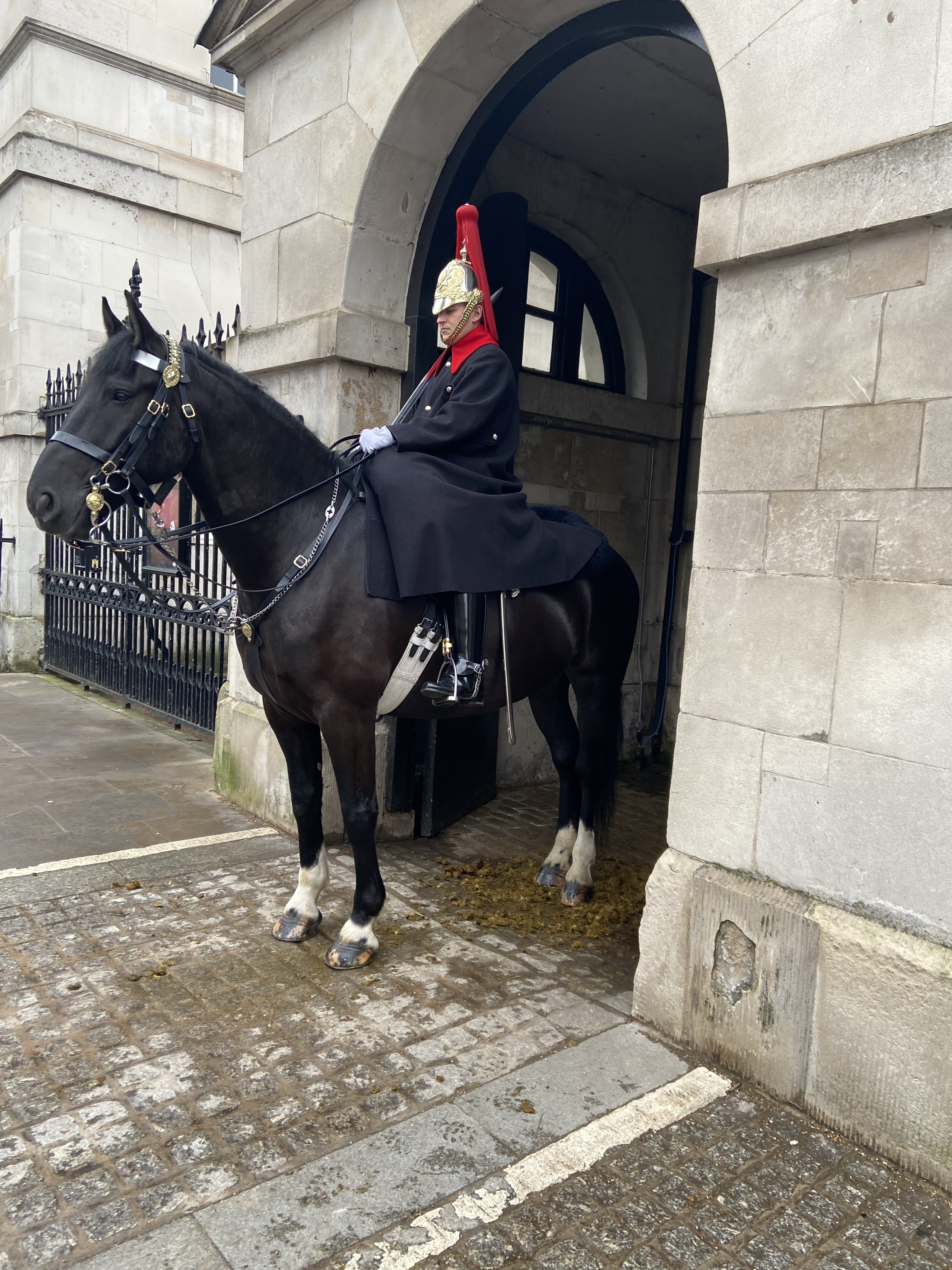
On our way to the Churchill War Rooms, we passed a Royal Guard, stationed at the entrance to a garden that would eventually lead to Buckingham Palace. So very British!
This was our third trip to London, but with seeing Buckingham Palace, the Tower of London, the British Museum, Westminster Abbey, St. Paul’s Cathedral, and other main attractions, we’d never made it to the Churchill War Rooms.
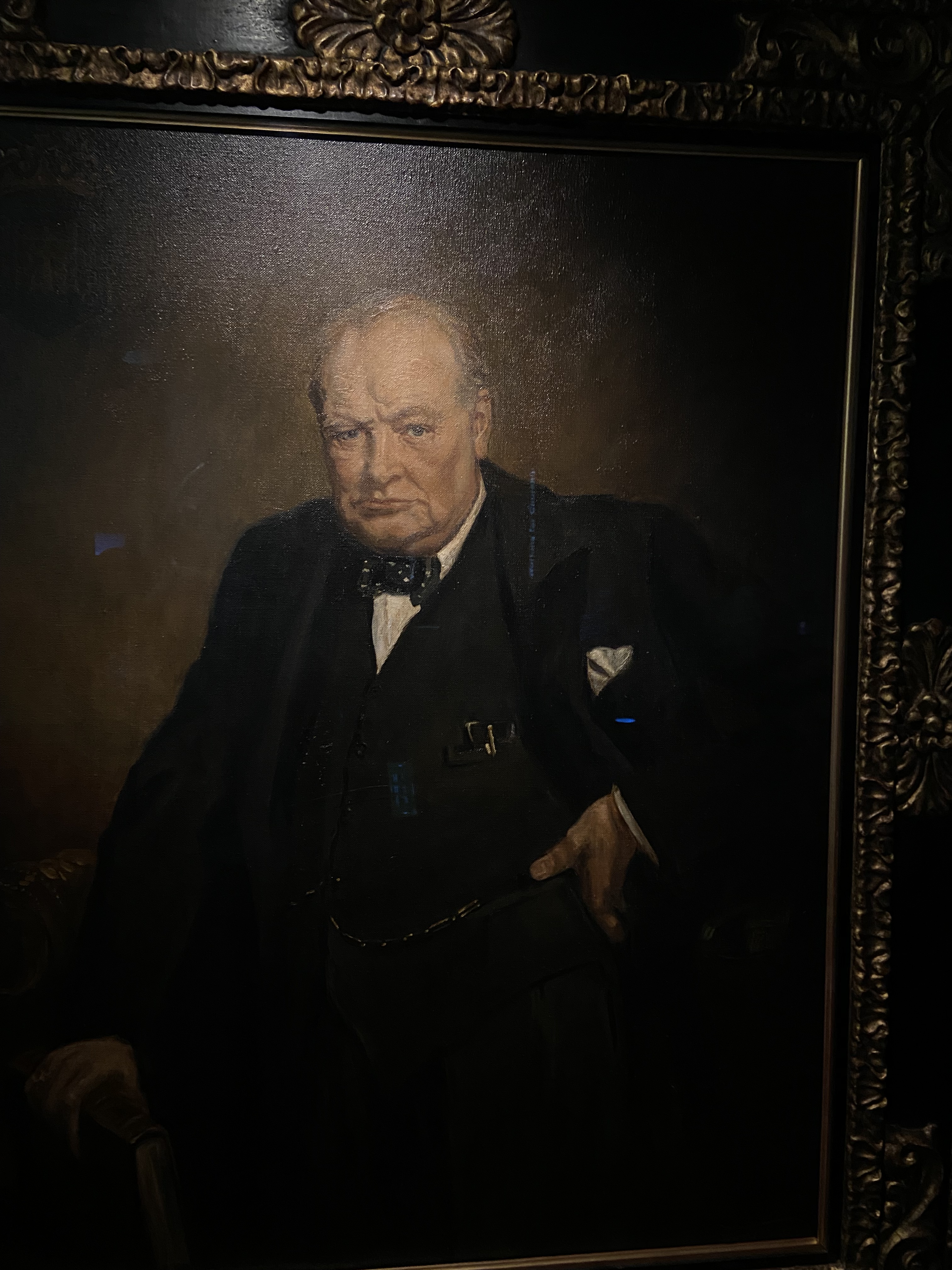
Winston Churchill, a complex and often controversial leader, served his first term as Prime Minister of the United Kingdom during the critical war years of 1940-1945.
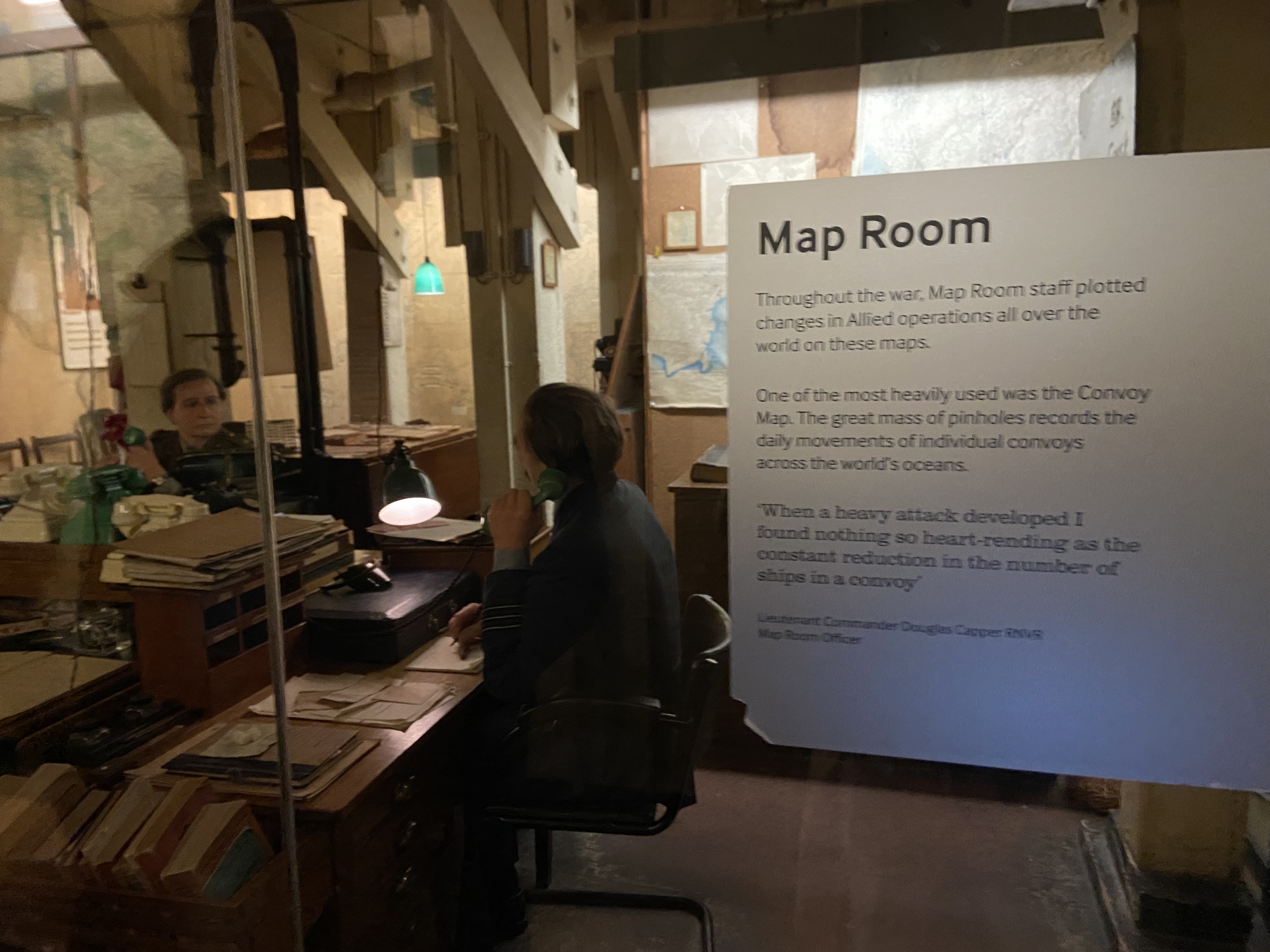
Today, the basement of a building in London that was used as a shelter for the British military command during World War II is open to the public. For six years during the war, scores of men and women worked here around the clock: the War Cabinet, Chiefs of Staff, Map Room officers, Joint Intelligence staff, and support personnel such as secretaries, orderlies, and guards.
Of course, Churchill himself camped out here, even maintaining a bedroom.
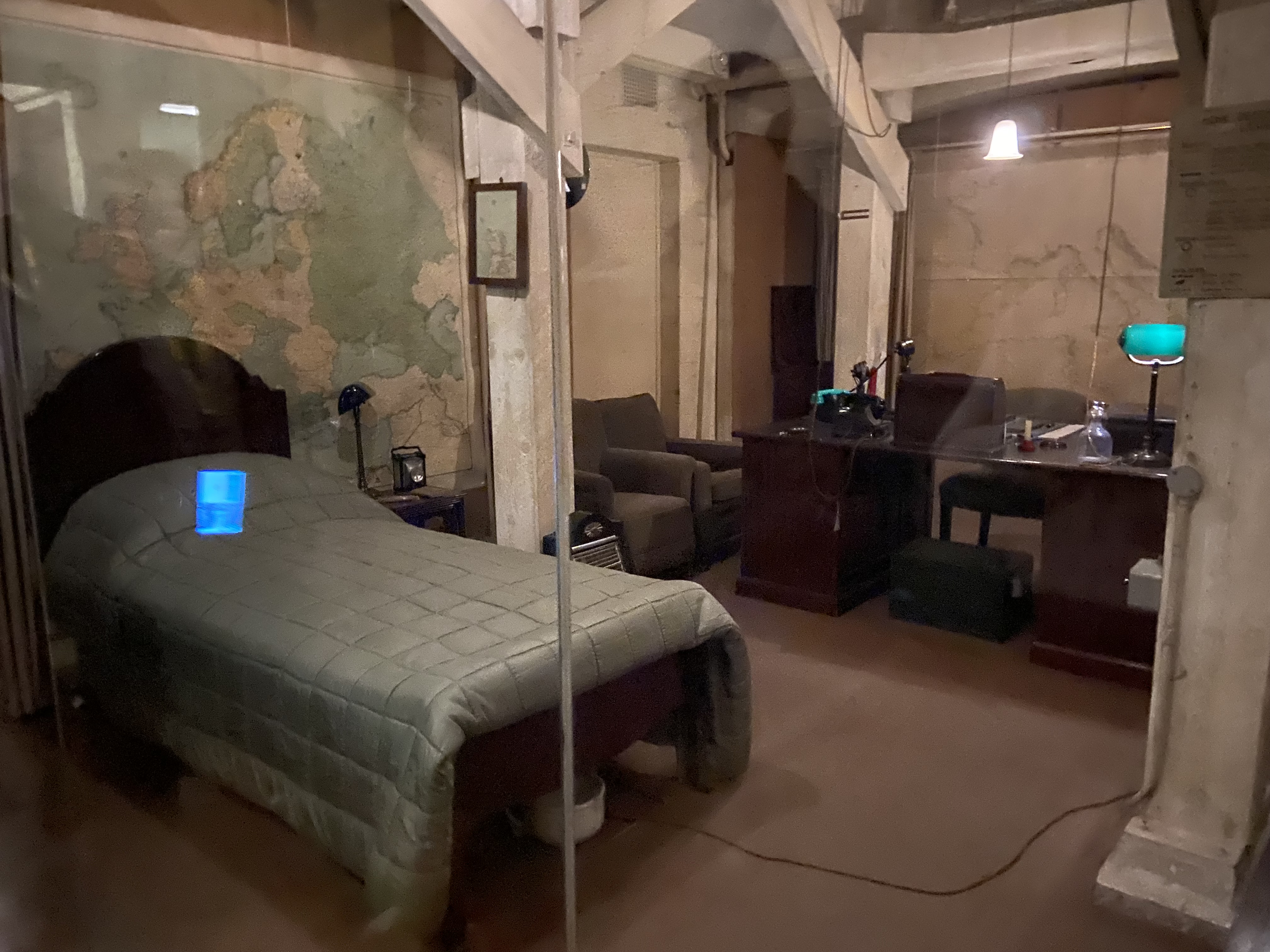
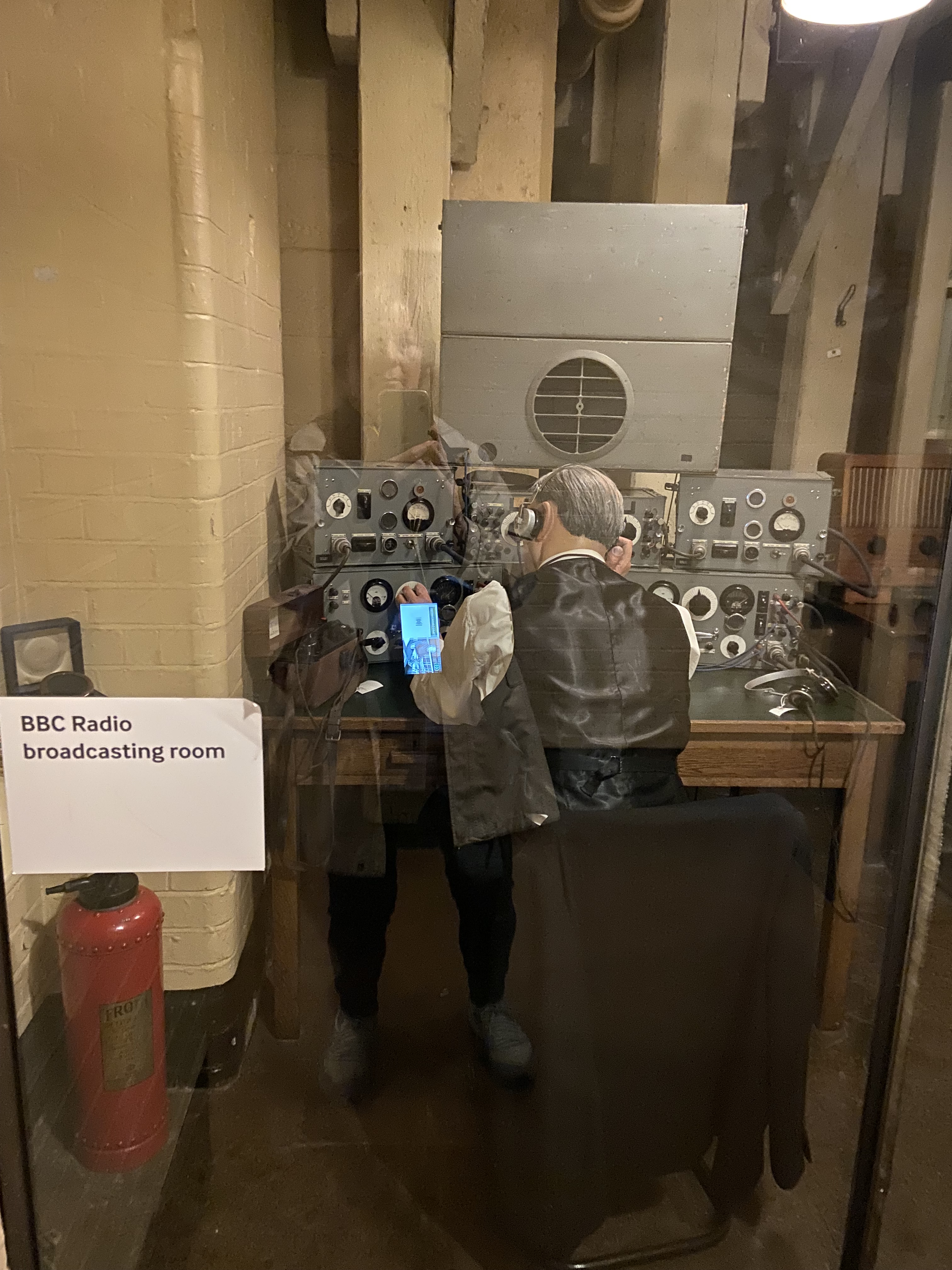
We wandered through the halls, looking into rooms preserved since 1945, now staffed by mannequins.
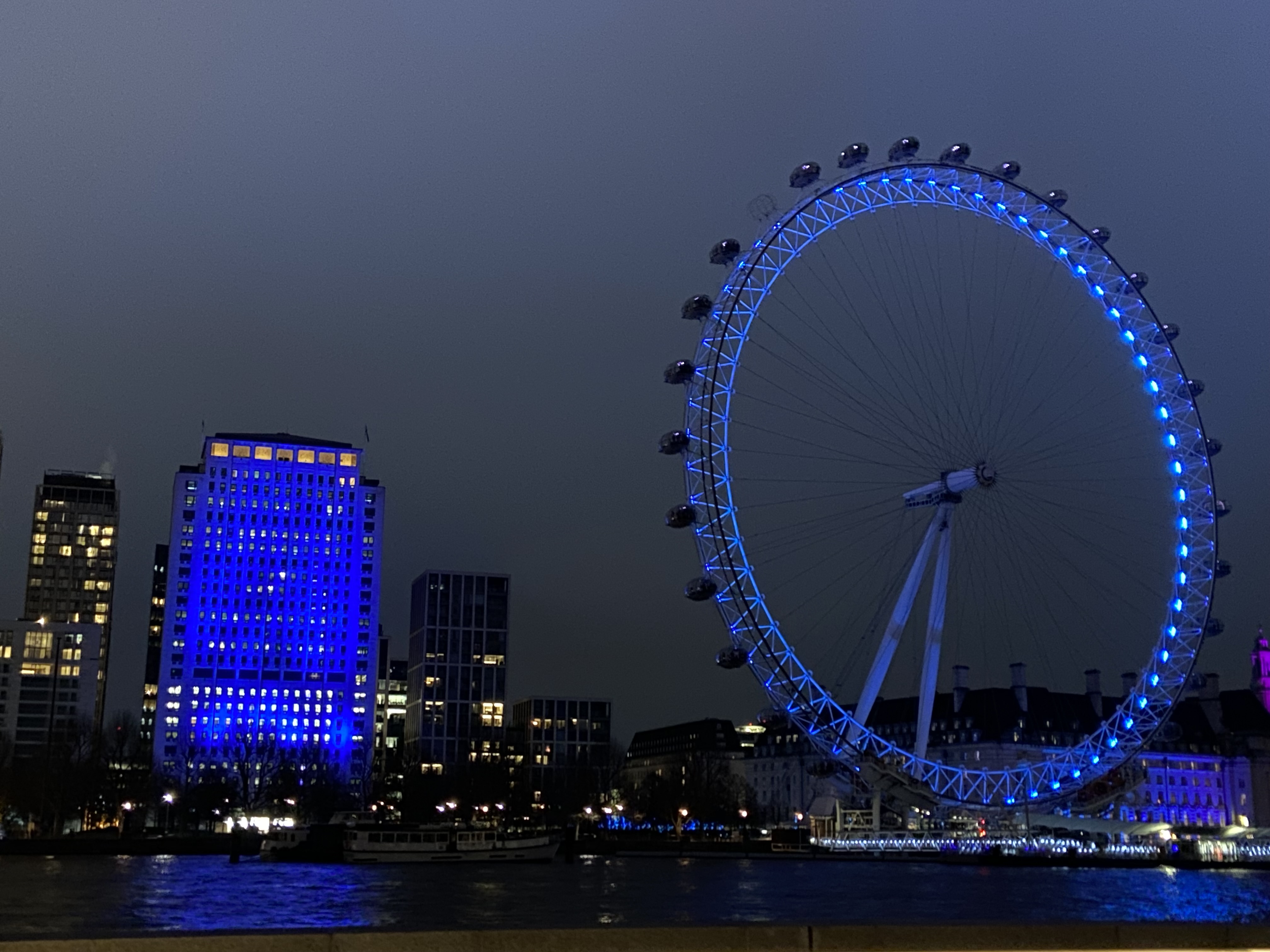
It was early evening when we left the Churchill War Rooms, and the London Eye was lit up. On our first trip to London years ago, we’d taken a ride on this giant enclosed Ferris wheel, which allows a panoramic view of London.
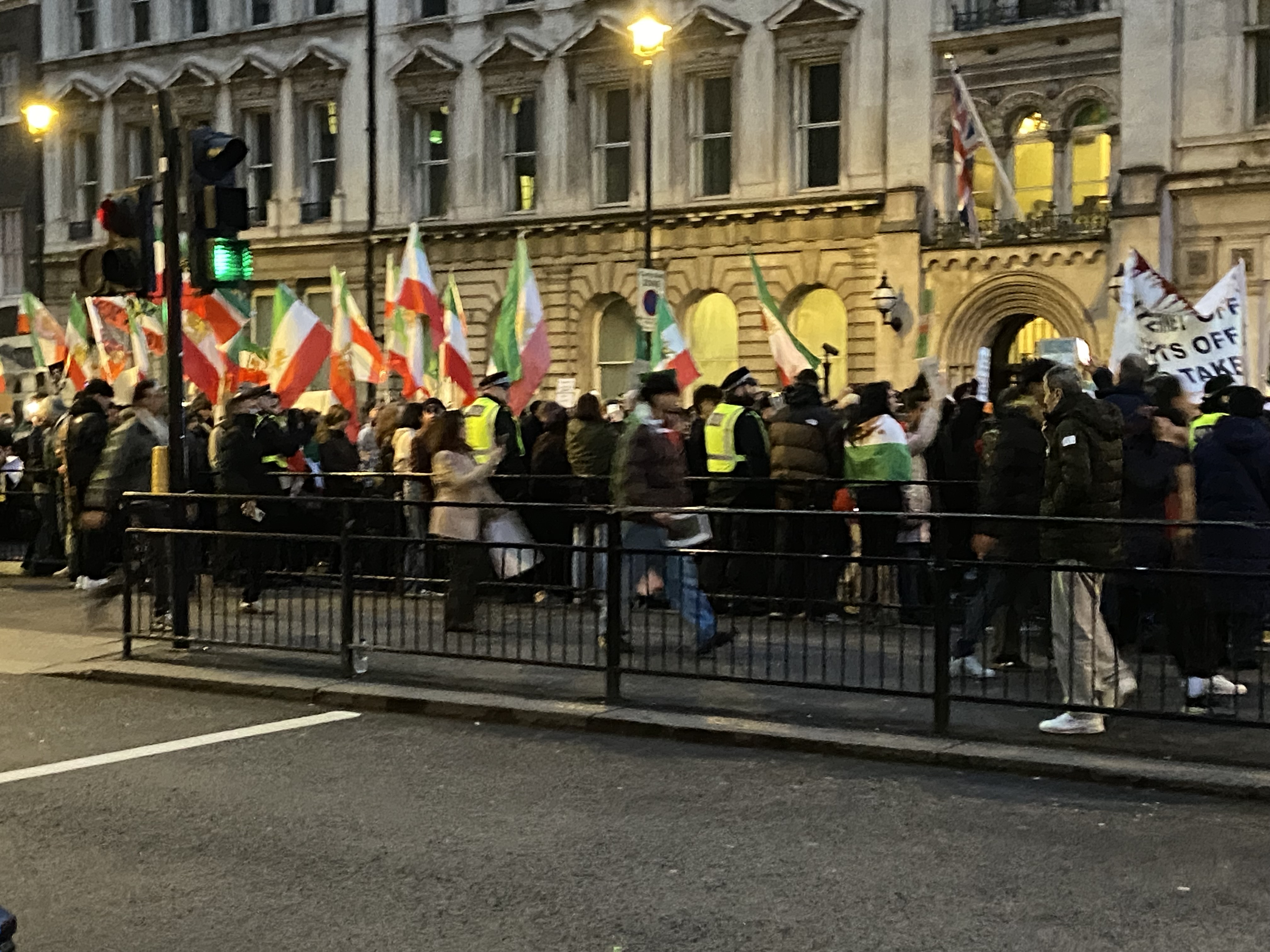
Also of interest on our way back to our hotel was a demonstration protesting the Iranian government.
The second item on our to-do list was a visit to the National Gallery, London’s huge art museum.
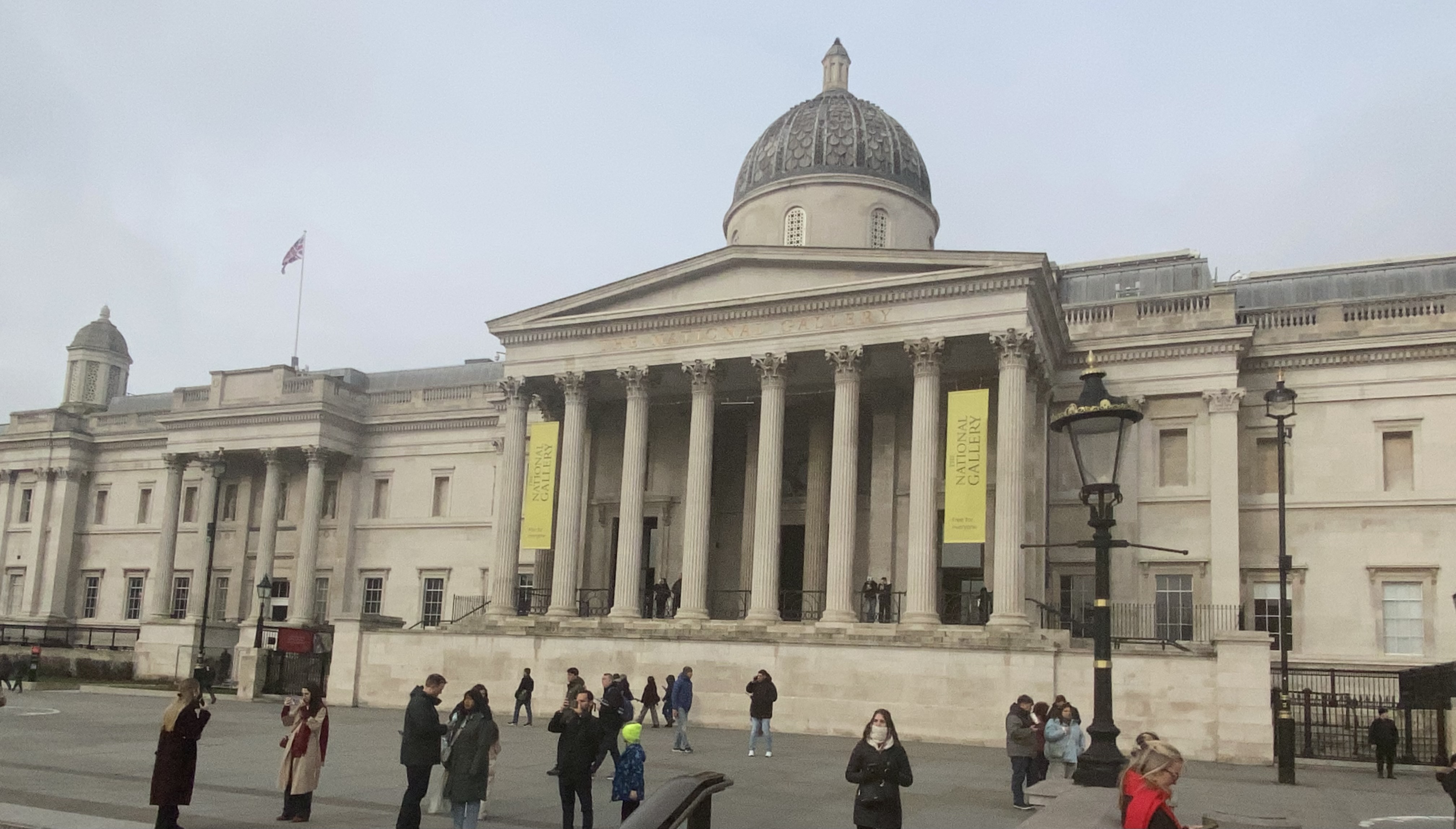
We’d signed up for a guided tour, expecting to be part of a large group. Since it was January, however, my husband and I were the only two. A private tour for the less expensive price of a group tour! We did give a generous tip to the poor guide, who said he usually has 20-plus people at a time in the summer.
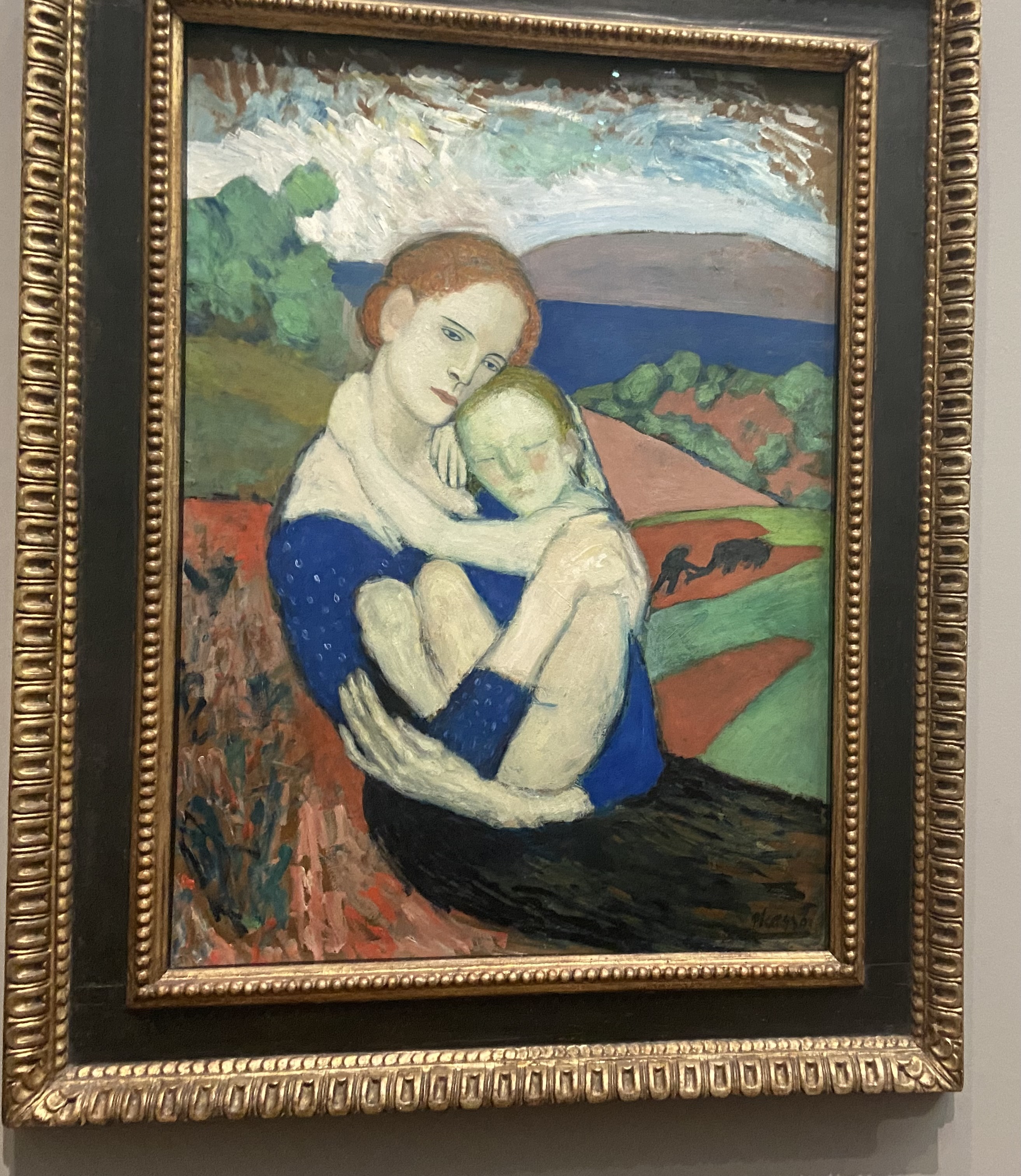
Despite the fact that he had an audience of only two, our guide skillfully led us through the museum in a chronological fashion. From Raphael, a famous Renaissance painter, to Picasso, the most modern artist in the National Gallery, we saw a lot of great art in two hours.
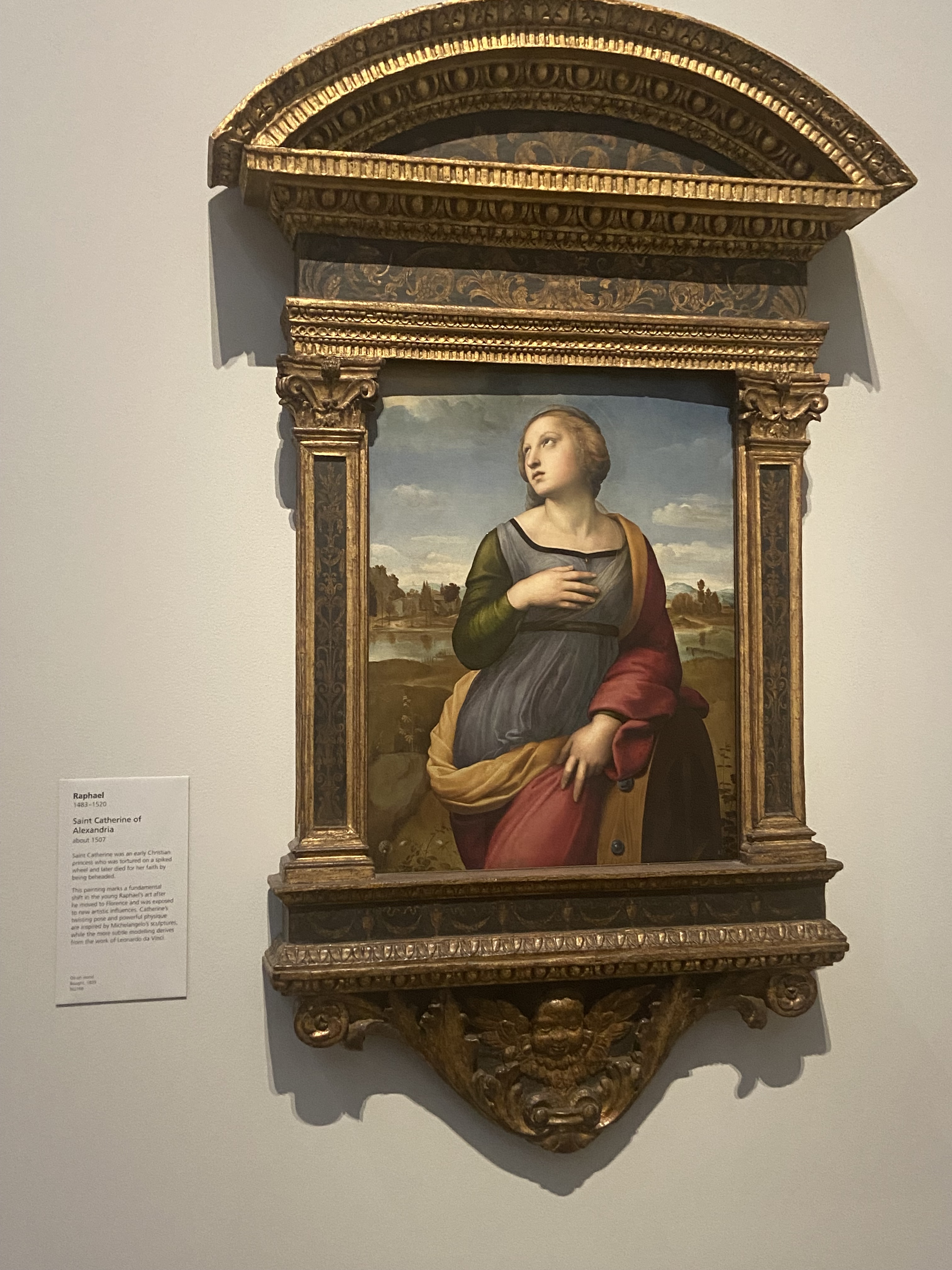
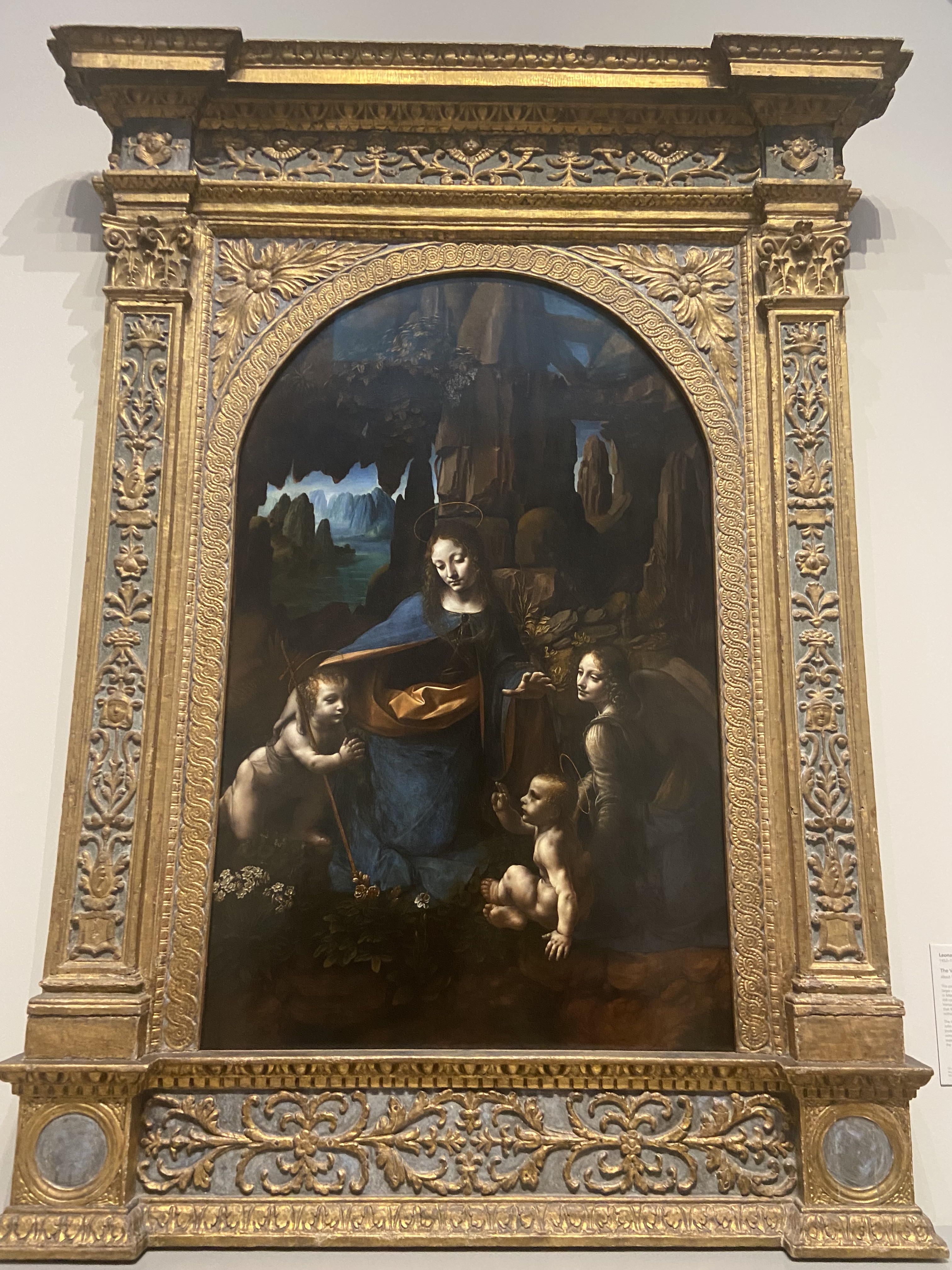
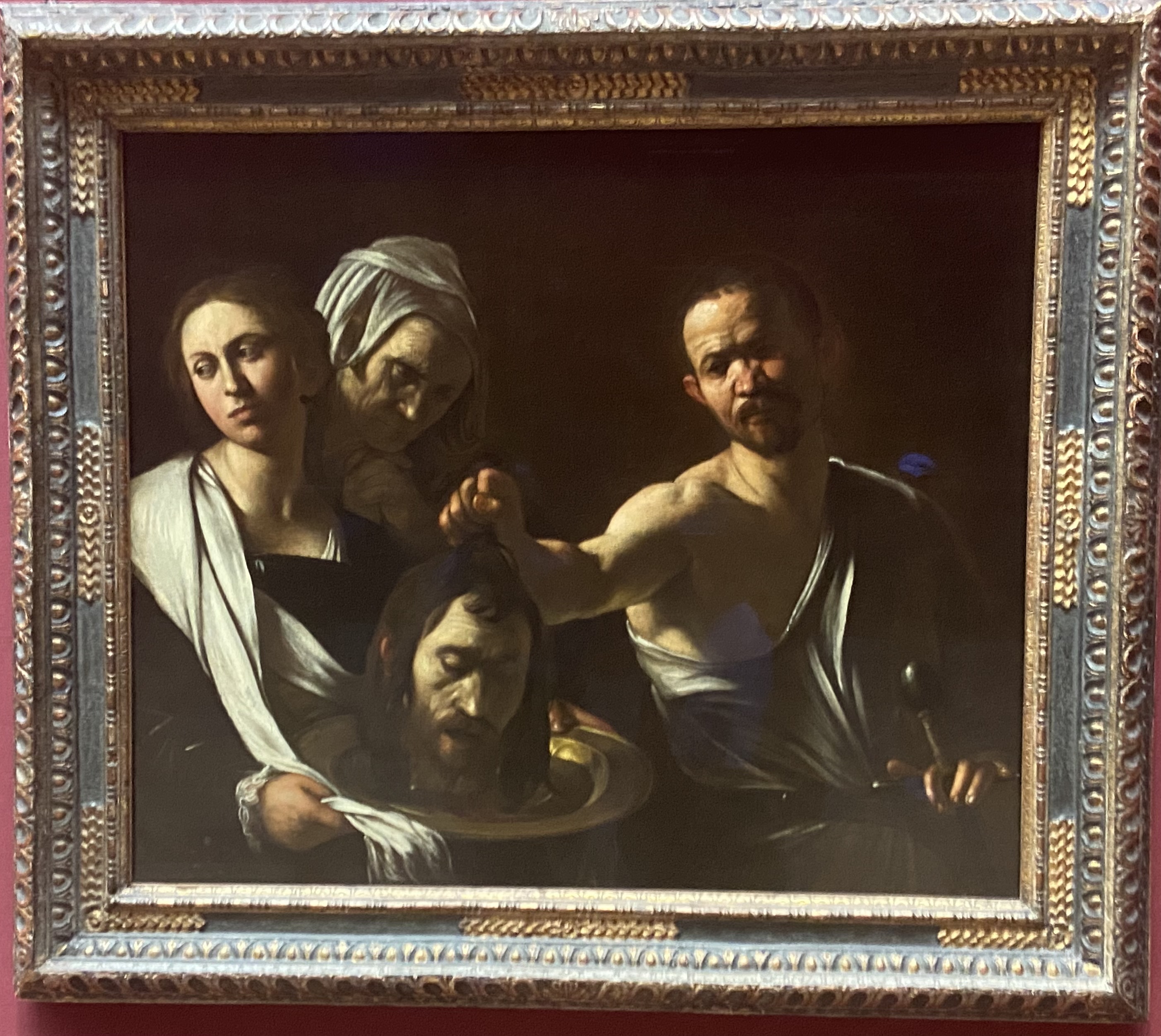
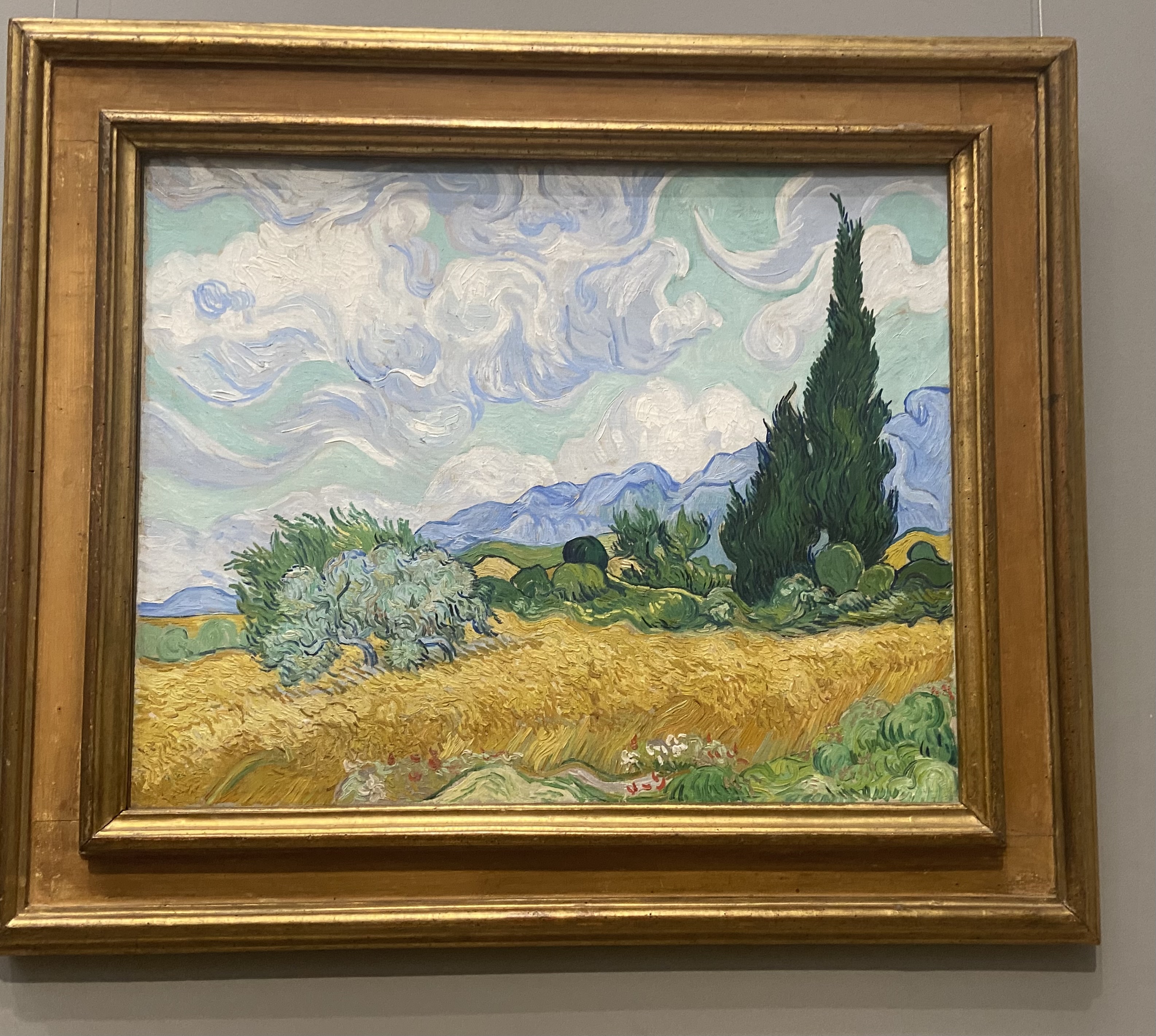
The National Gallery has several paintings by Vincent Van Gogh, a favorite artist of mine. This painting, titled A Wheatfield with Cypresses, reminds me of his more famous Starry Night.
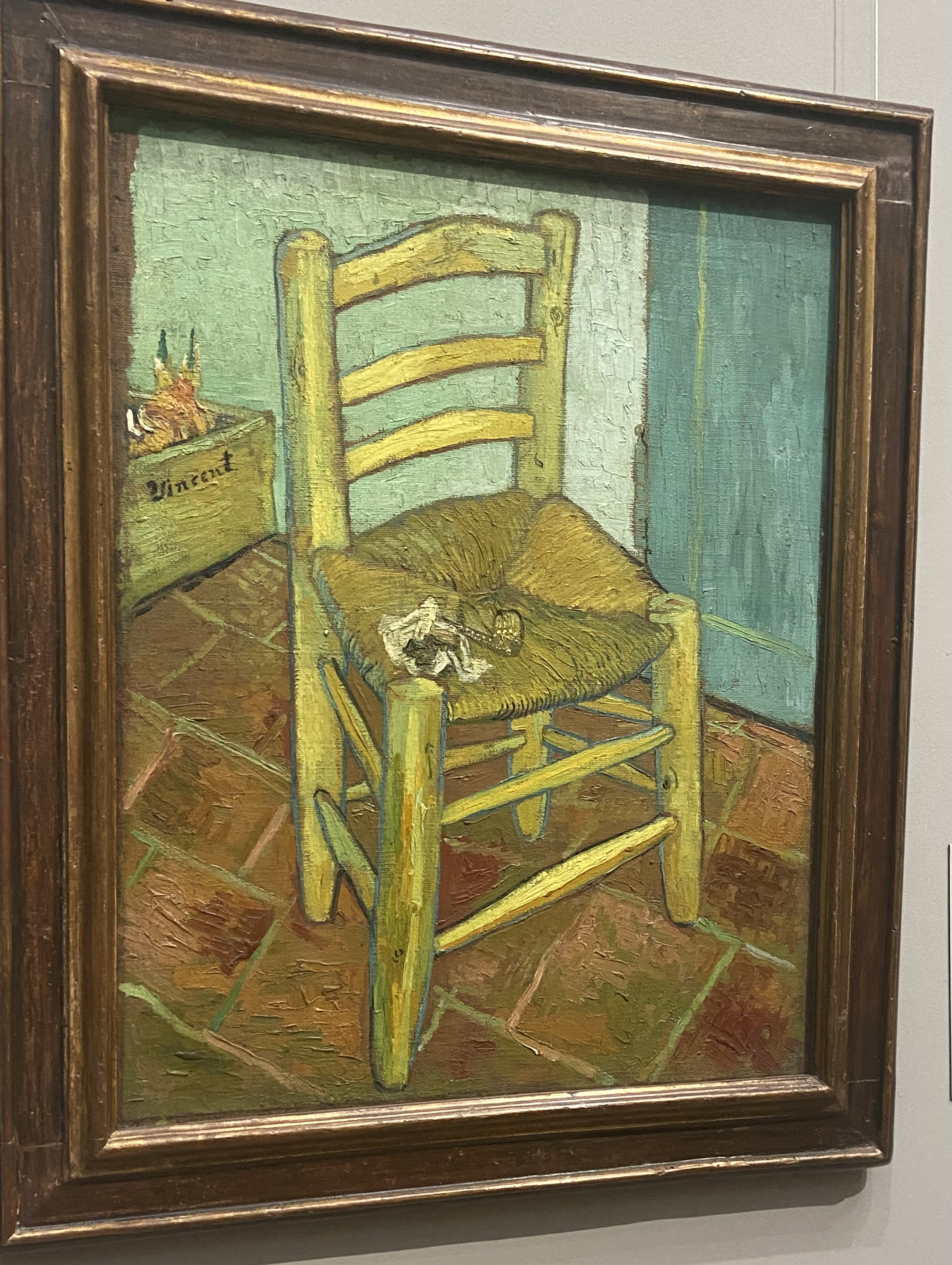
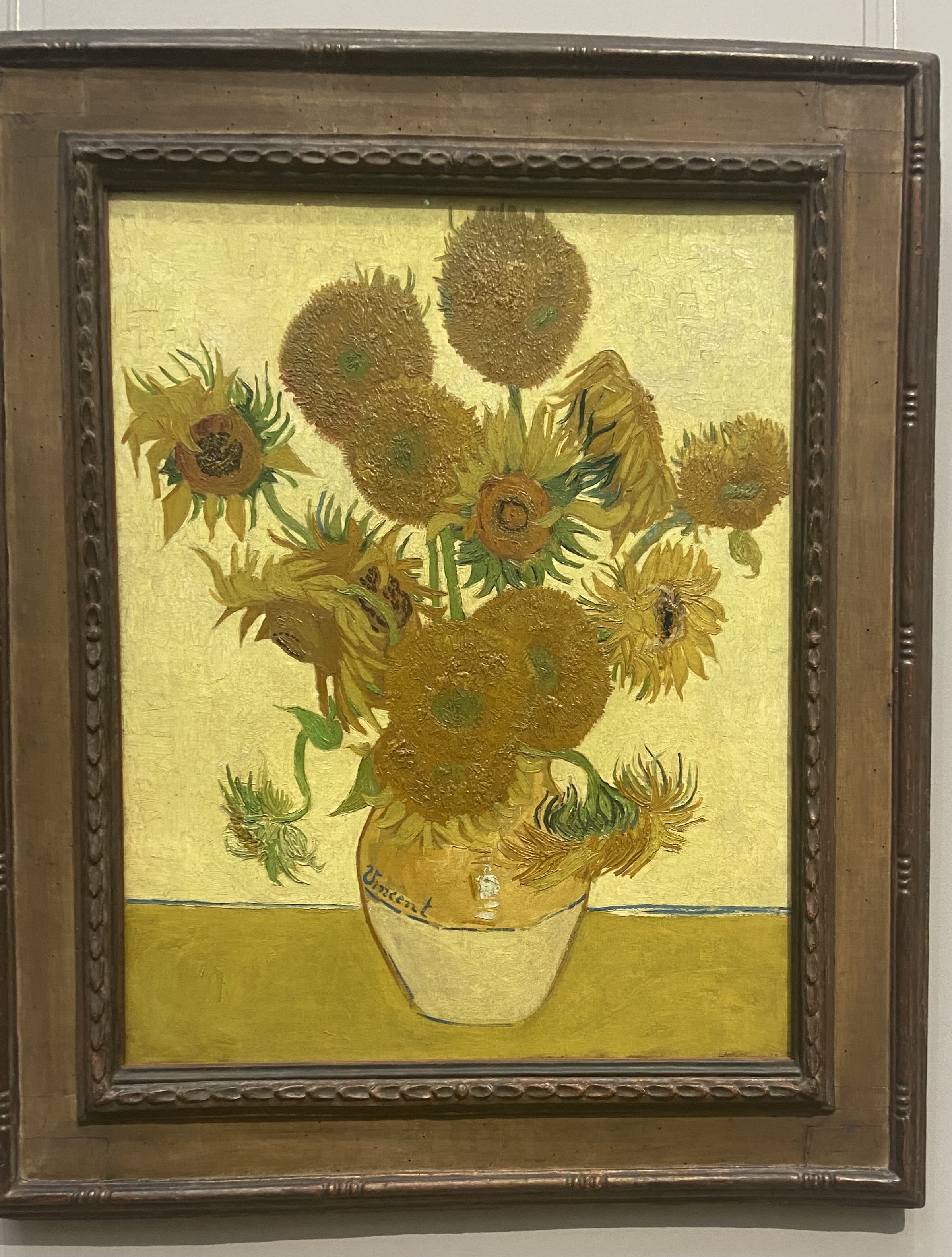
Two other famous paintings at the National Gallery are Van Gogh’s Chair and Sunflowers.
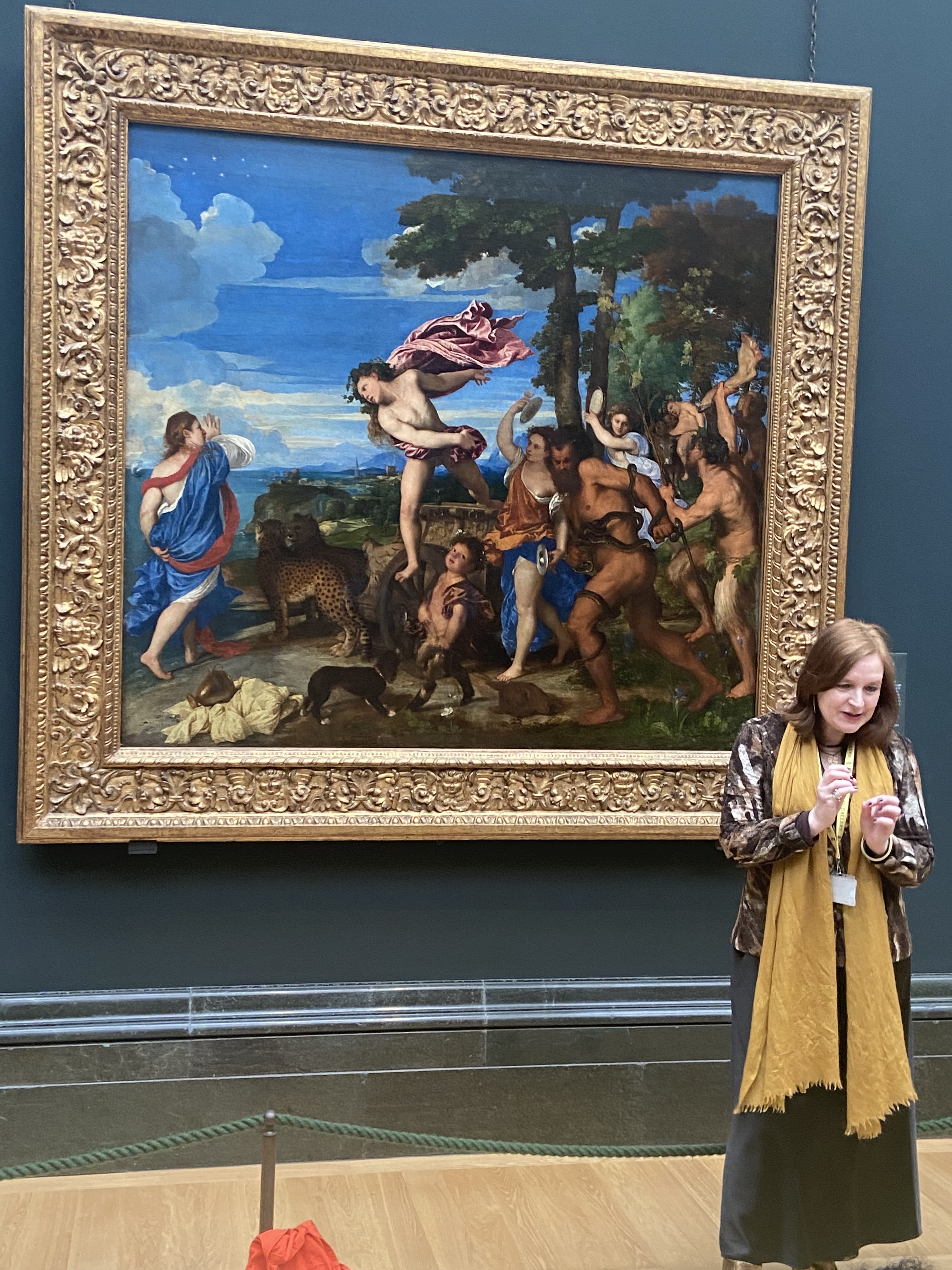
The National Gallery is free to enter so is available to all. We stumbled upon a group of schoolchildren on a field trip with their teacher, who stood in front of a painting explaining its significance. Not an experience I had growing up in Edgecombe County!
A visit to London never disappoints, even when you’re there a day longer than you planned.



 Patsy Pridgen