Highlights of Japan: Nagasaki

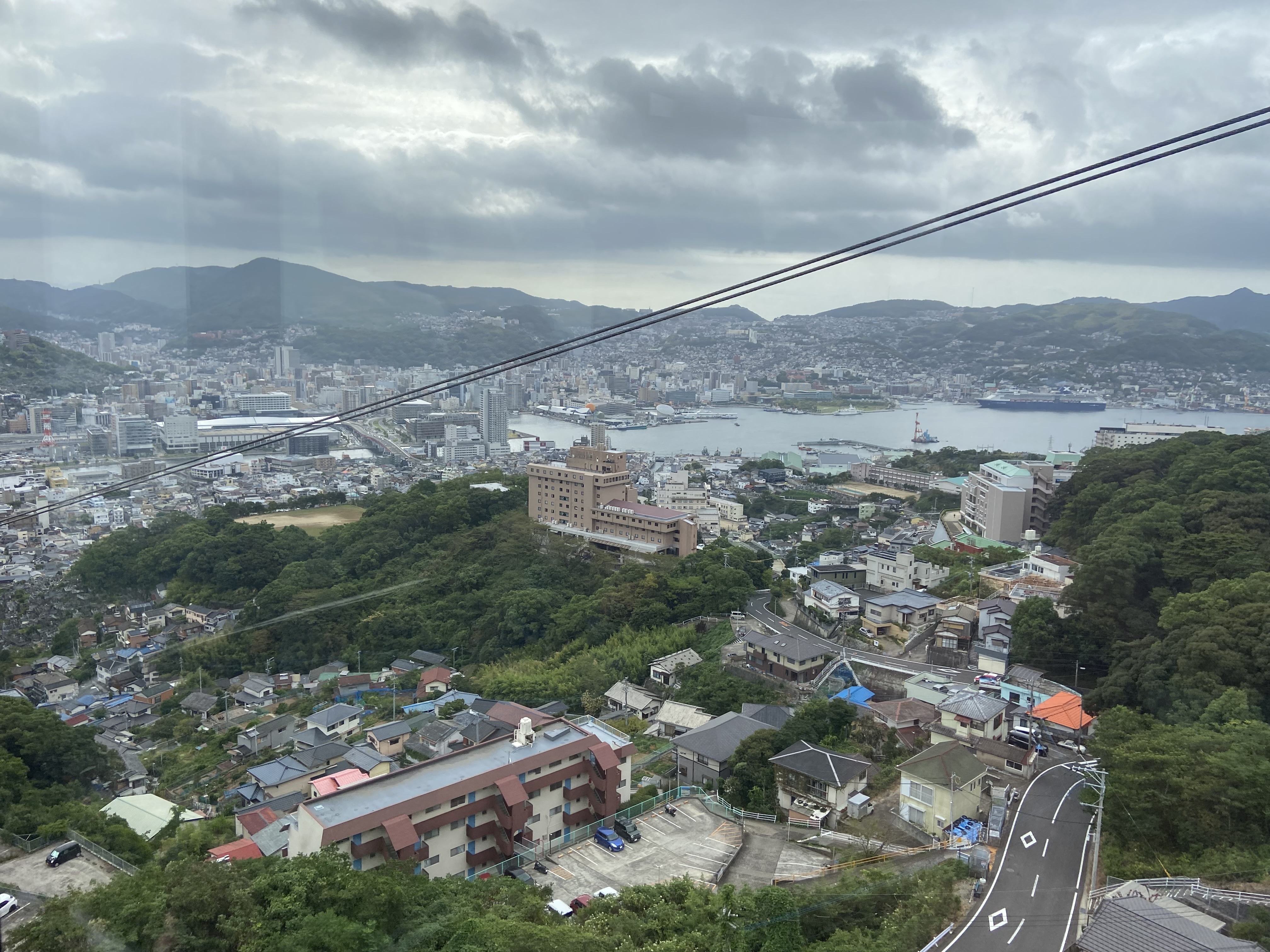
The final full day of our tour of Japan was in Nagasaki. Before we visited the somber sites of the atomic bombing of this city, we took a cable car to Mount Inasa for a panoramic view of the city.

That’s our ship in the picture (beside my husband’s shoulder) in the Port of Nagasaki. It was worth the five-minute ride on the hot, crowded ropeway (what the Japanese call a cable car) to get a view of the mountains and coastline here.

Most of our time in Nagasaki was spent touring the area where the second atomic bomb detonated near the end of World War II on August 9, 1945. The Peace Memorial Park was constructed here in 1955, ten years after the atomic explosion, and contains quite a few statues to commemorate the victims of the bomb and promote world peace.

Probably the most famous is the Prayer Monument for Peace. This large bronze statue dominates the park. The statue’s right hand pointing up symbolizes the threat of the atomic bomb. The left hand stretched horizontally is asking for peace. The closed eyes are in prayer for the victims of war.

The Nagasaki Bell was erected to mark the city as the last to be hit by an atomic bomb. A sign there says “…we pray that peace will spread throughout the world in concentric circles from our city with the ringing of the Nagasaki Bell….” The bell is also a tribute to students who perished from the blast as they worked in Nagasaki factories, taking the places of men who were away at war.

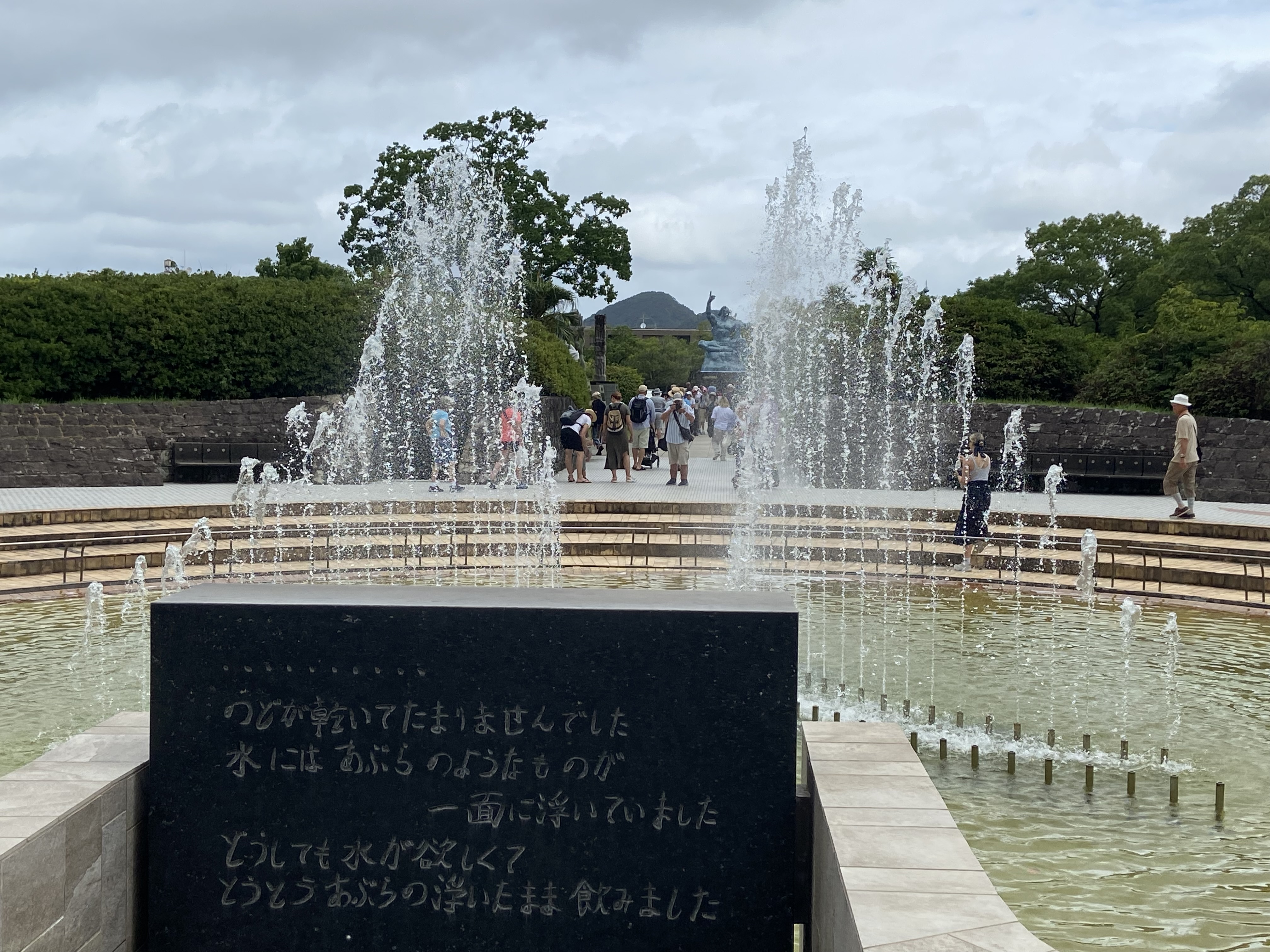
When the atomic bomb exploded, thousands of Nagasaki residents suffered horrific burns and died begging for water. The Fountain of Peace is dedicated as an offering of water to these victims. It’s interesting to see that the fountain sprays are in the shape of a pair of wings, symbolizing the dove of peace.

The bomb detonated approximately 1,600 feet above this monolith, which was constructed to mark the spot. Out of the city’s population of about 240,000 at the time, 73,884 were killed and 74,909 injured. Others died later from radiation poisoning. The black box in front of the monolith contains the names of those who perished as a result of the atomic bomb.

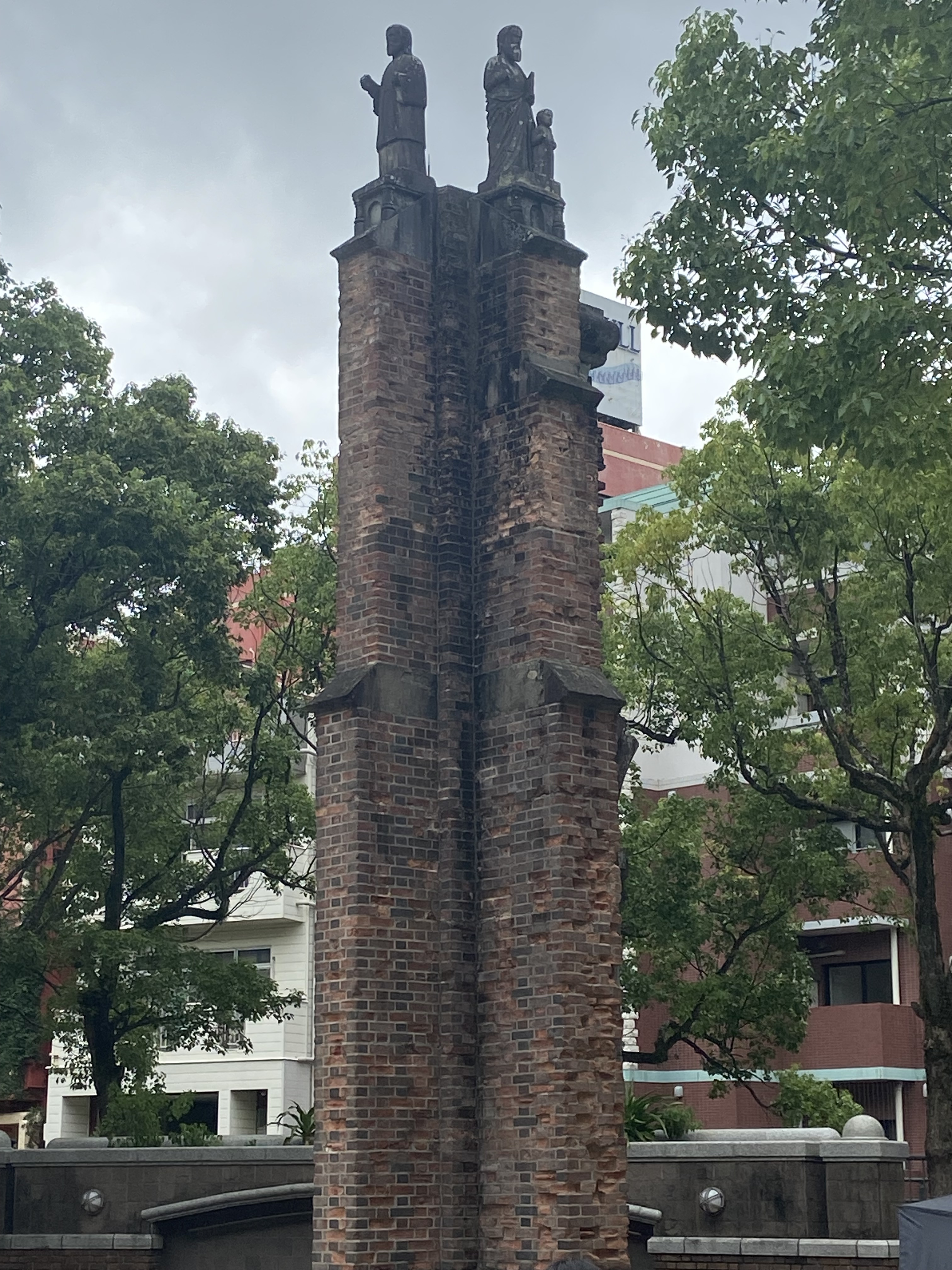
The Urakami Cathedral, the largest Christian church in East Asia at the time, was leveled by the blast. The church’s twin 85-feet high spires were blown down but reconstructed as a testimony of survival.

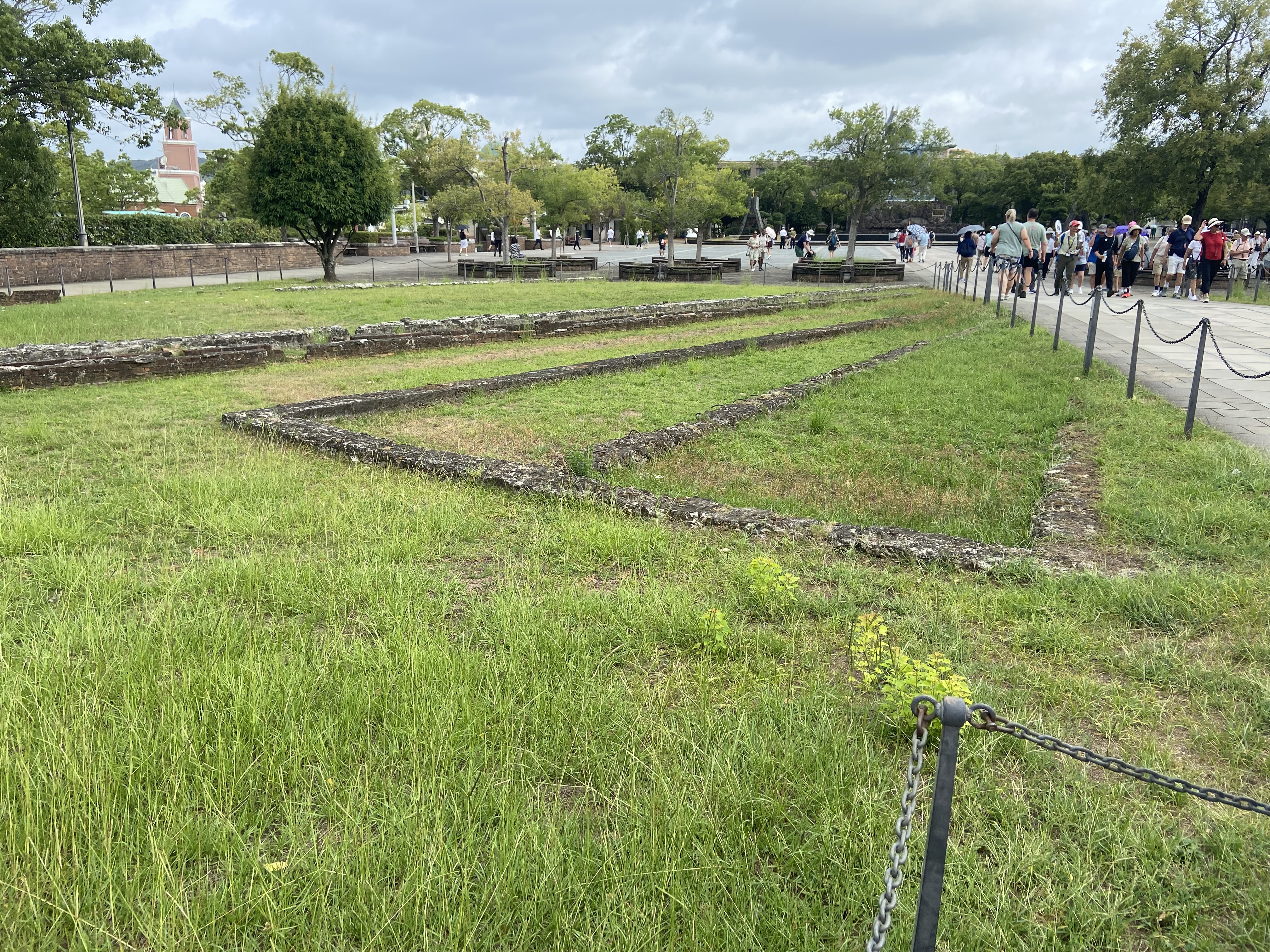
A branch of the Nagasaki Prison was the closest public building to the hypocenter. The prison was leveled and inmates and staff perished. Traces of the foundation are all that remain today.

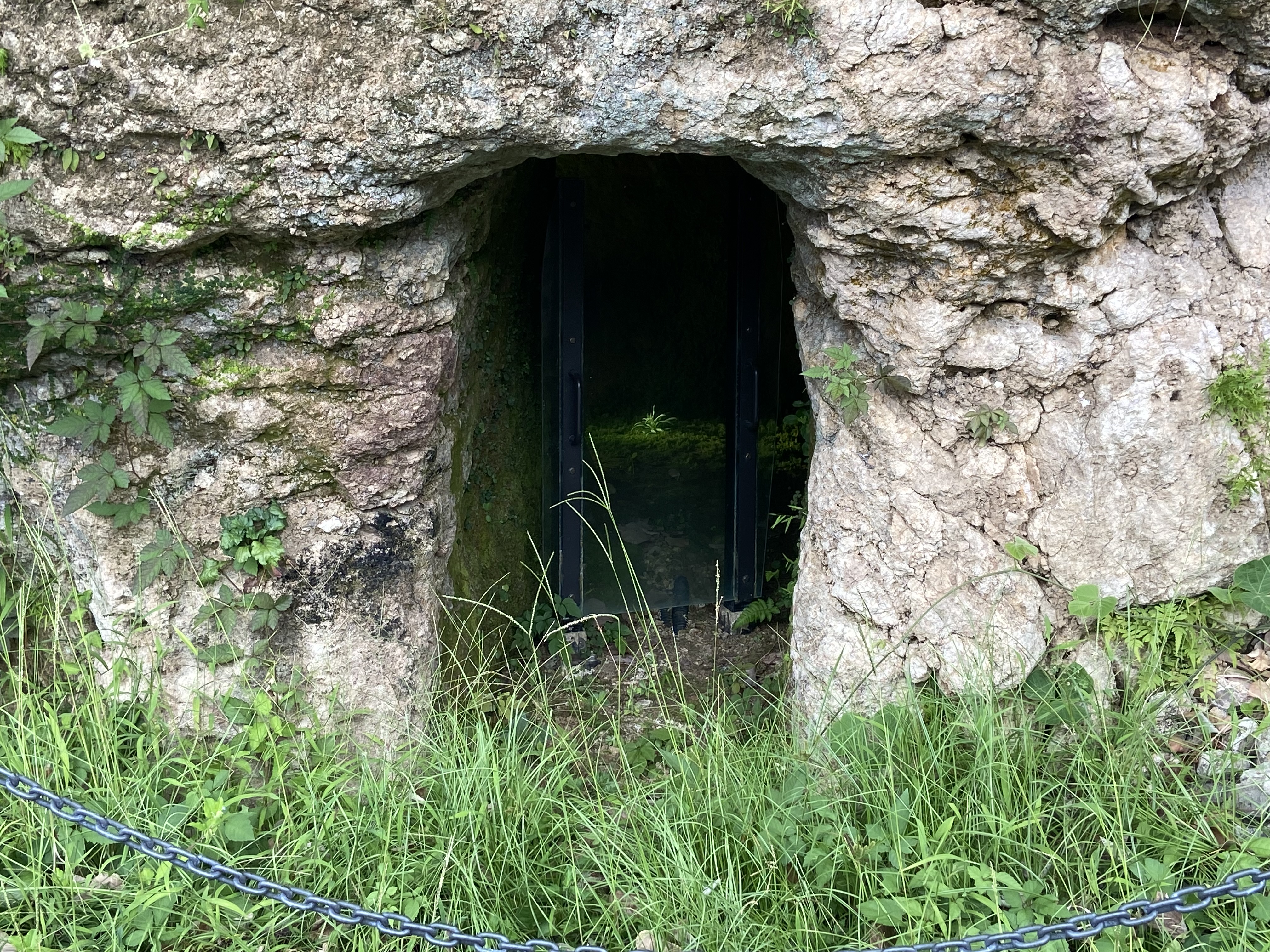
Air raid shelters near Ground Zero offered a little protection. While most people within three-tenths of a mile of the hypocenter died instantly, some of those inside these shelters survived the initial blast. After the war, the US military studied the construction of the shelters and the locations of the survivors and the dead. This information was believed to have been gathered for the possible building of nuclear shelters for future wars.

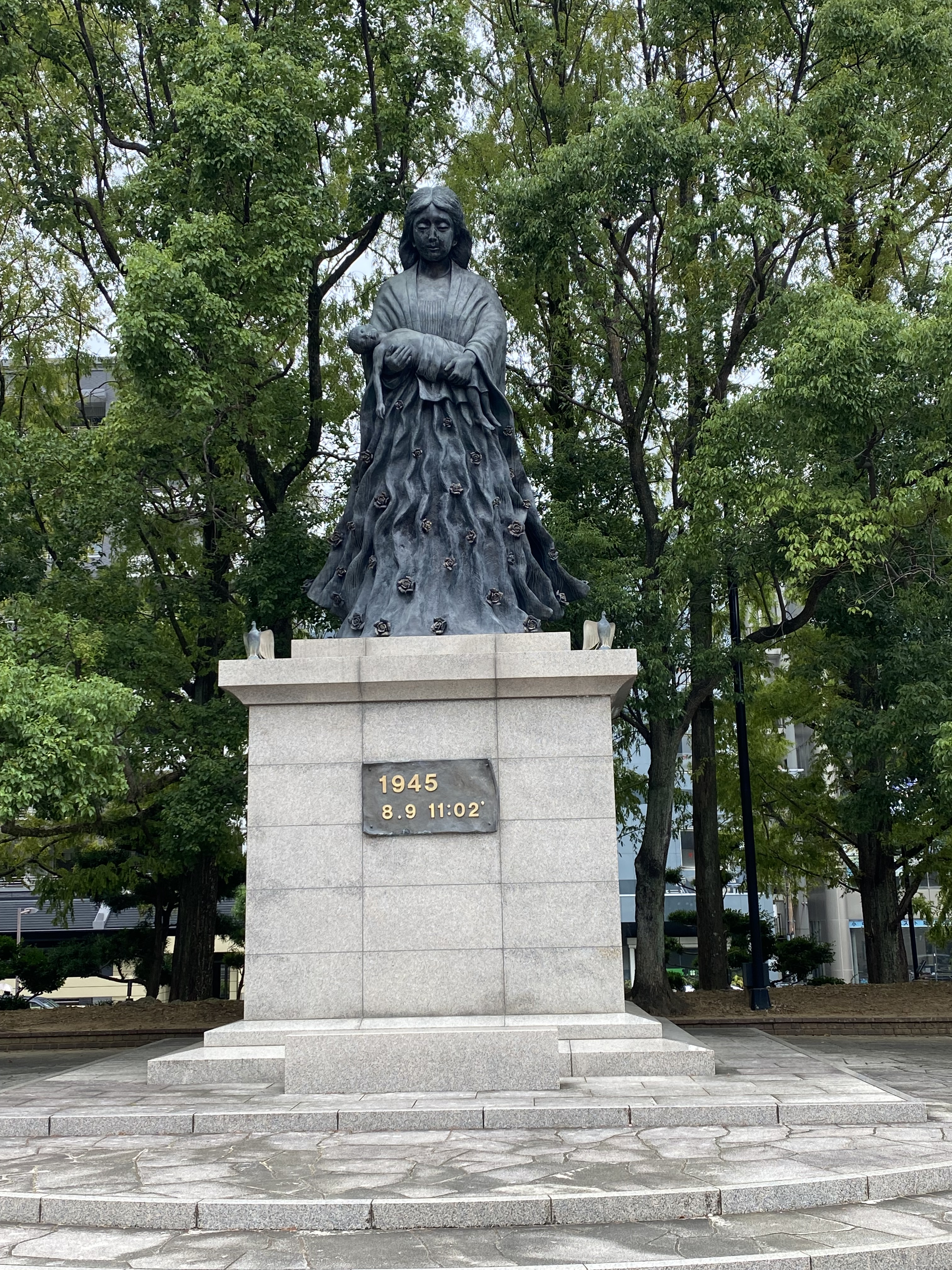
A statue of a mother and her dying baby outside the Nagasaki Museum has a plaque noting the time and date of the atomic bomb explosion.

The Nagasaki Atomic Bomb Museum was similar to the one in Hiroshima. Again, there was a clock stopped at the exact moment of the detonation of the bomb, this time 11:02.

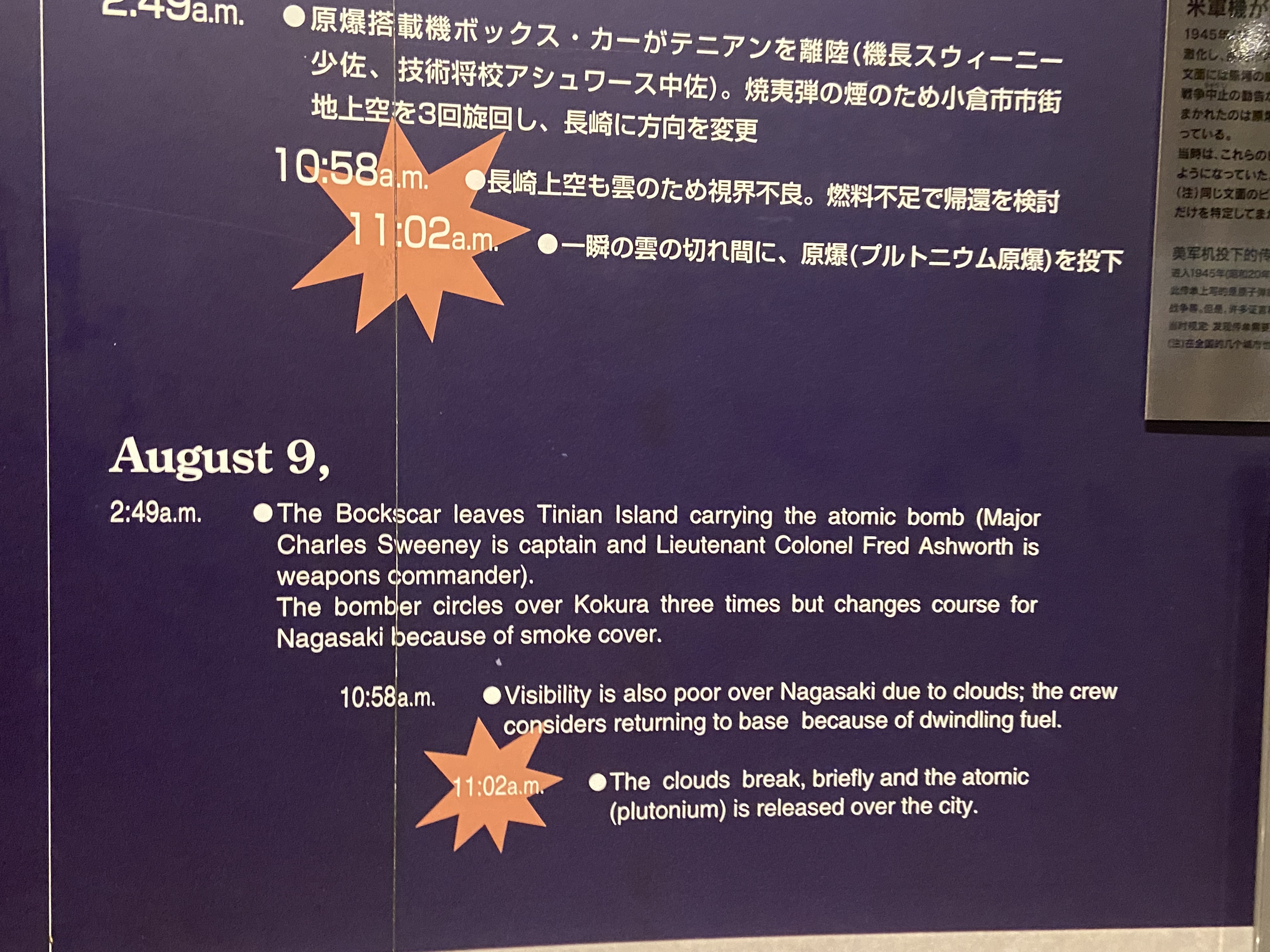
The chronology of events leading up to the use of the atomic bomb in Nagasaki is chilling. I didn’t know Nagasaki was actually the back-up target that day. If only the clouds hadn’t cleared, the city might have been spared.

I found it interesting that the Japanese give a different reason for the necessity of using atomic bombs at the end of World War II. This is part of a display in the museum:

“It is said that the atomic bombs were used to hasten the end of World War II.” (Okay, that’s what I’d always thought.) “But another purpose was to display the success of the Manhattan Project, into which two billion dollars had been invested. The atomic bombings were also the first strategic move in the Cold War between the United States and the Soviet Union.”

Wow, the US used the bombs because we’d spent so much money developing them, and we wanted to show Russia how tough we could be?

One reason we travel is to broaden our minds, and though I might not totally agree with the words posted in the Nagasaki Peace Museum, I can respect that point of view.

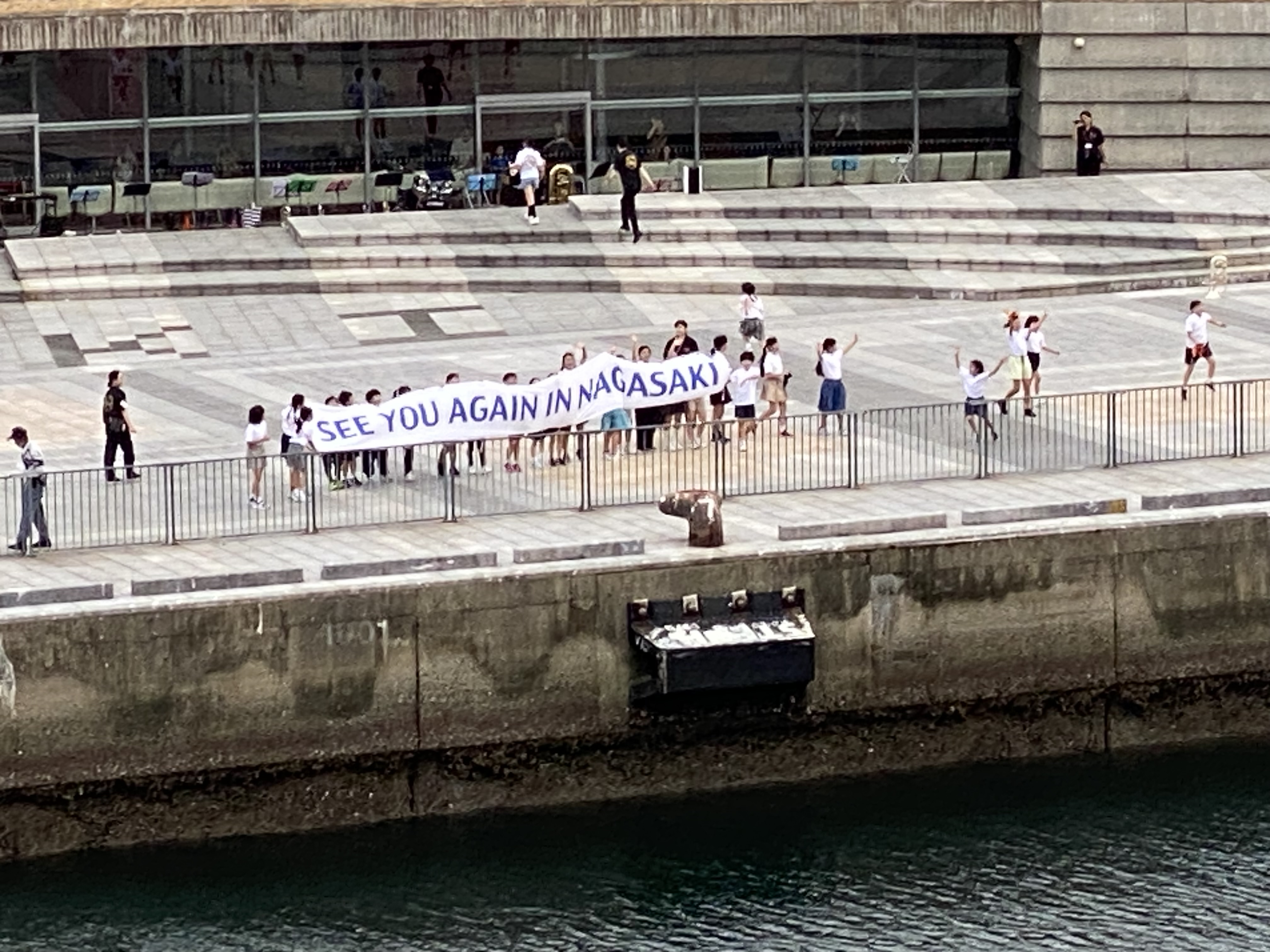
The Japanese may have once been our enemies, but there was nothing but goodwill as these youngsters gathered to bid us farewell when our boat left the harbor of Nagasaki.

Posted in Uncategorized | Tagged , , , , | Leave a comment

Highlights of Japan: Fukuoka

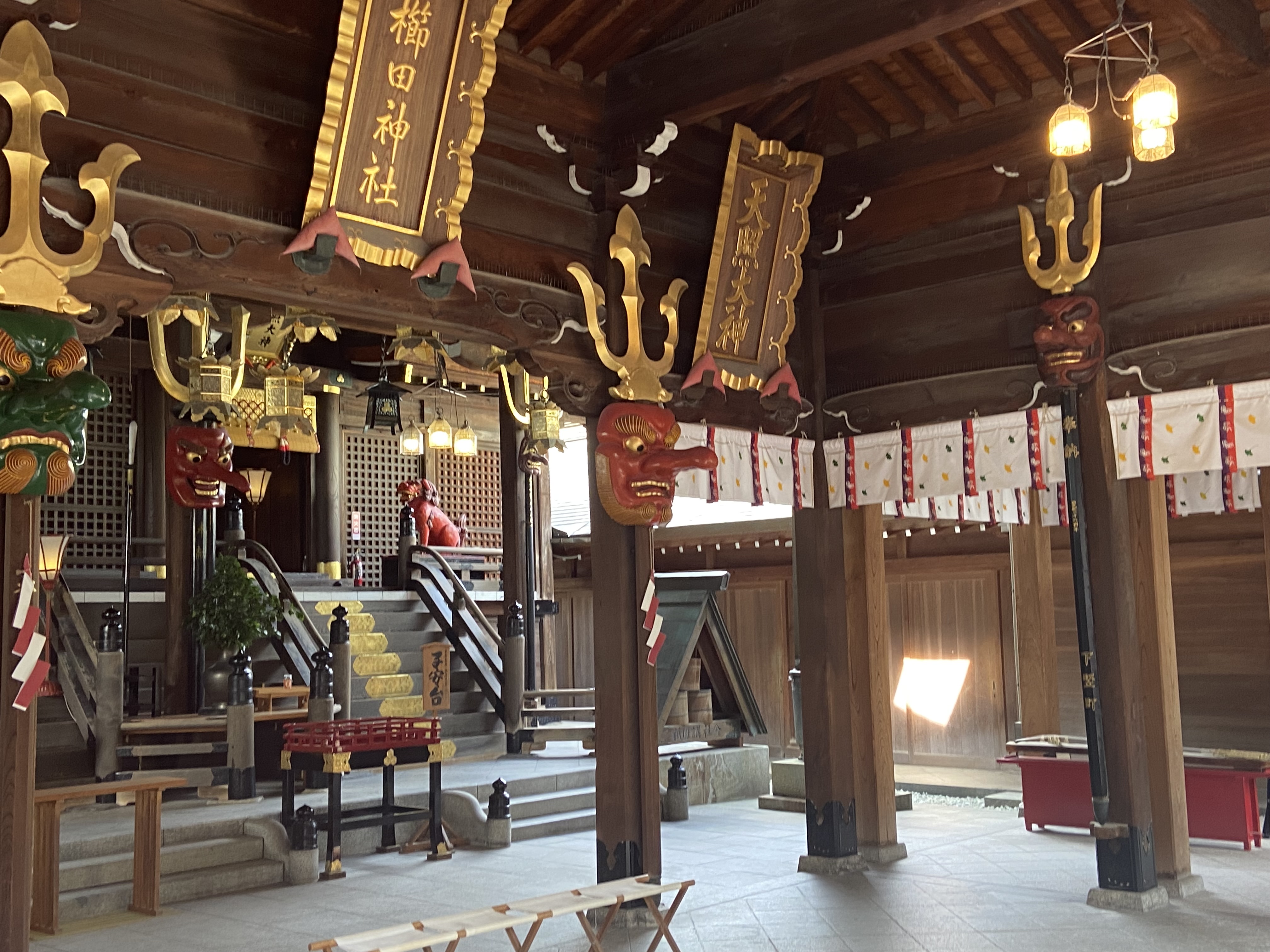
After our one stop in South Korea, it was back to Japan with its shrines and gardens. I had never heard of Fukuoka, our next port of call, but the city did feature a memorable Shinto shrine. A nice young man from Australia snapped a picture of my husband and me in the entrance of the Kushida Shrine.

Outside the entrance to the shrine is a huge ginkgo tree. Locals claim it is 1,000 years old and see it as a holy tree of longevity. The tree is over 108 feet (tall for Japan) and was designated a cultural asset of Fukuoka in 1954.

The Kushida Shrine is surrounded by a busy city center, but all is serene inside the gate. A purification station at the entrance is for those who wish to wash their hands and mouth to purify the body before venturing further into the shrine.

Many of the features of the Kushida Shrine were similar to what we’d seen at other Shinto shrines where nature, rather than Buddha, is revered.

The red torii gate, I remembered, marked the transition from the everyday world to the spiritual. There were also the wooden plaques, which I’d noticed in other shrines, containing the prayers and wishes of worshippers.

As we’d seen before, Shinto believers were bowing to pray.

The architecture and religious artifacts were more elaborate, though, at the Kushida Shrine.

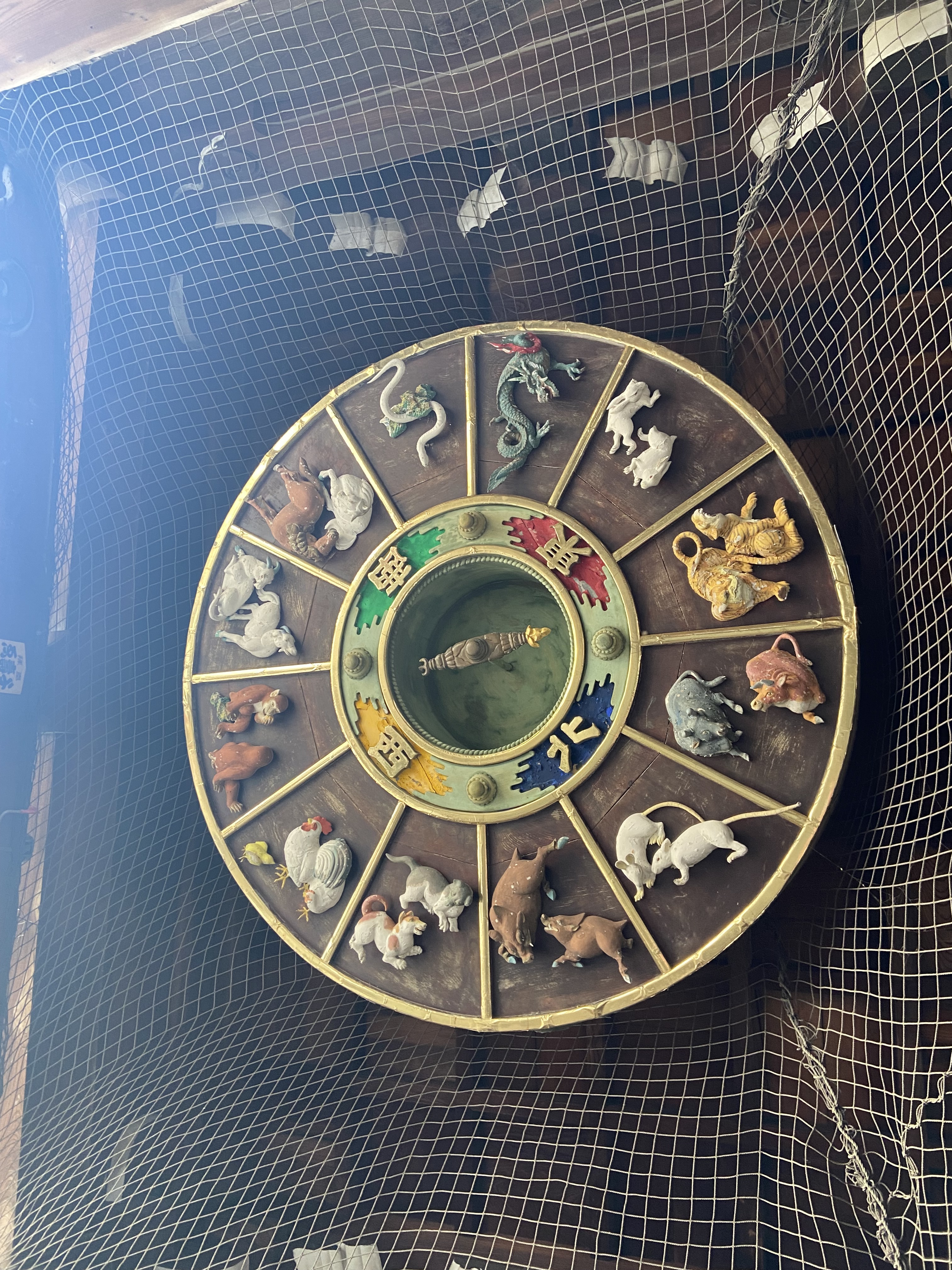
The Chinese zodiac disc beside the entrance was one feature we hadn’t seen in another shrine. Look closely to see pictures of the 12 animals of the Chinese zodiac and the four cardinal directions. The arrow in the center shows the lucky direction of the year…if you can figure that out.

A unique feature of the Kushida Shrine is that it is the starting point of a summer festival parade and houses one of the two floats that is not dismantled after the festival ends. This float is a pretty elaborate construction, I think, one that rivals those we see at Macy’s Thanksgiving Day Parade.

After the Kushida Shrine, we visited a museum across the street where we saw a film about the Hakata Gion Yamakasa festival, the summer festival which features floats such as the one kept at the Kushida Shrine.

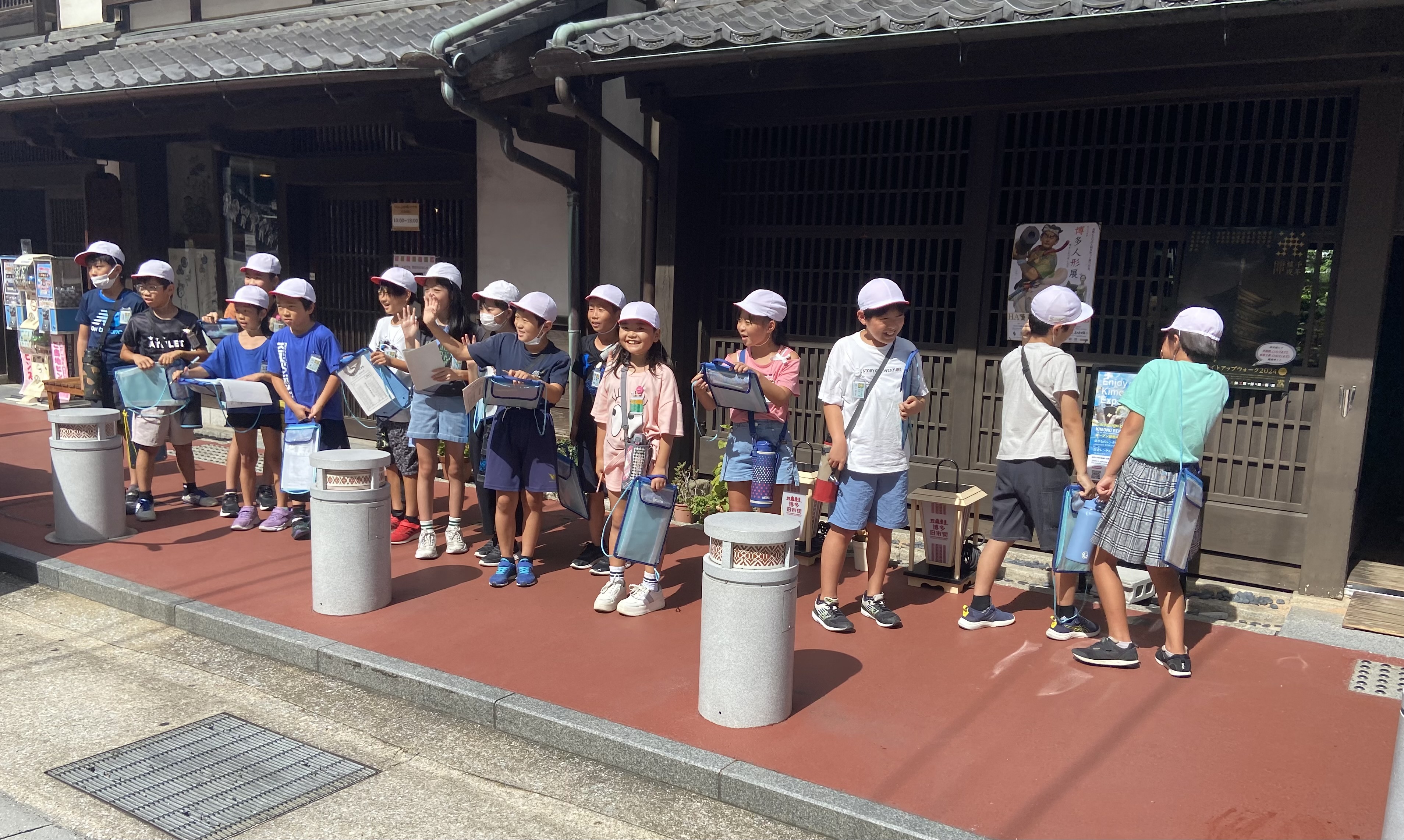
Outside the museum, Japanese schoolchildren on yet another field trip were lined up. If you’ve read my previous posts, you may remember I’ve commented on how often we bumped into groups of school kids out and about. Evidently field trips are seen as a valuable educational experience in Japan.

Some of this crowd waved at us while others practiced their English, which seemed to consist of only two words, “hello” and “goodbye” followed by giggles.

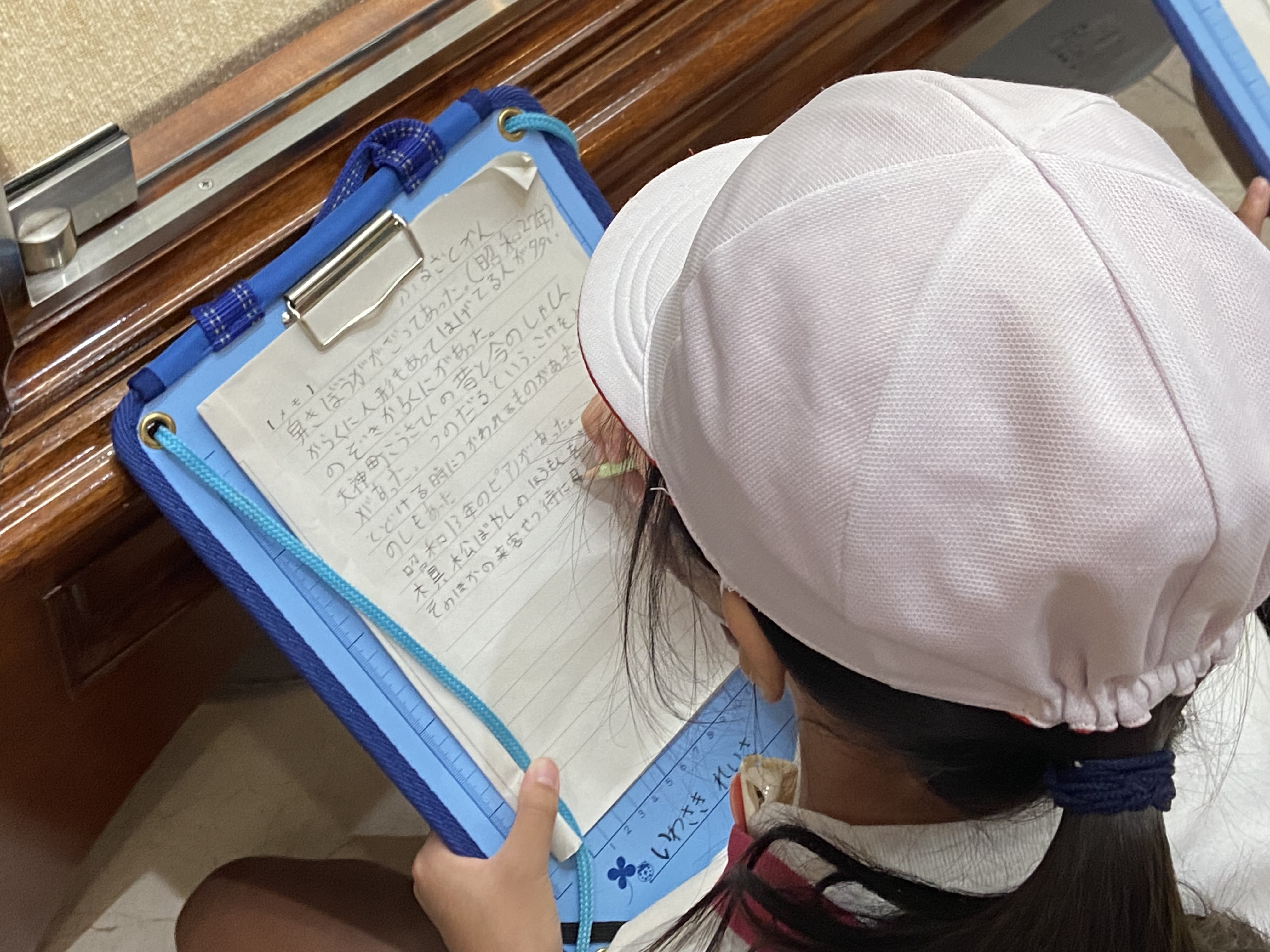
Of course, they know more English than I do Japanese. I couldn’t decipher a single letter of the assignment this child was working on in the museum.

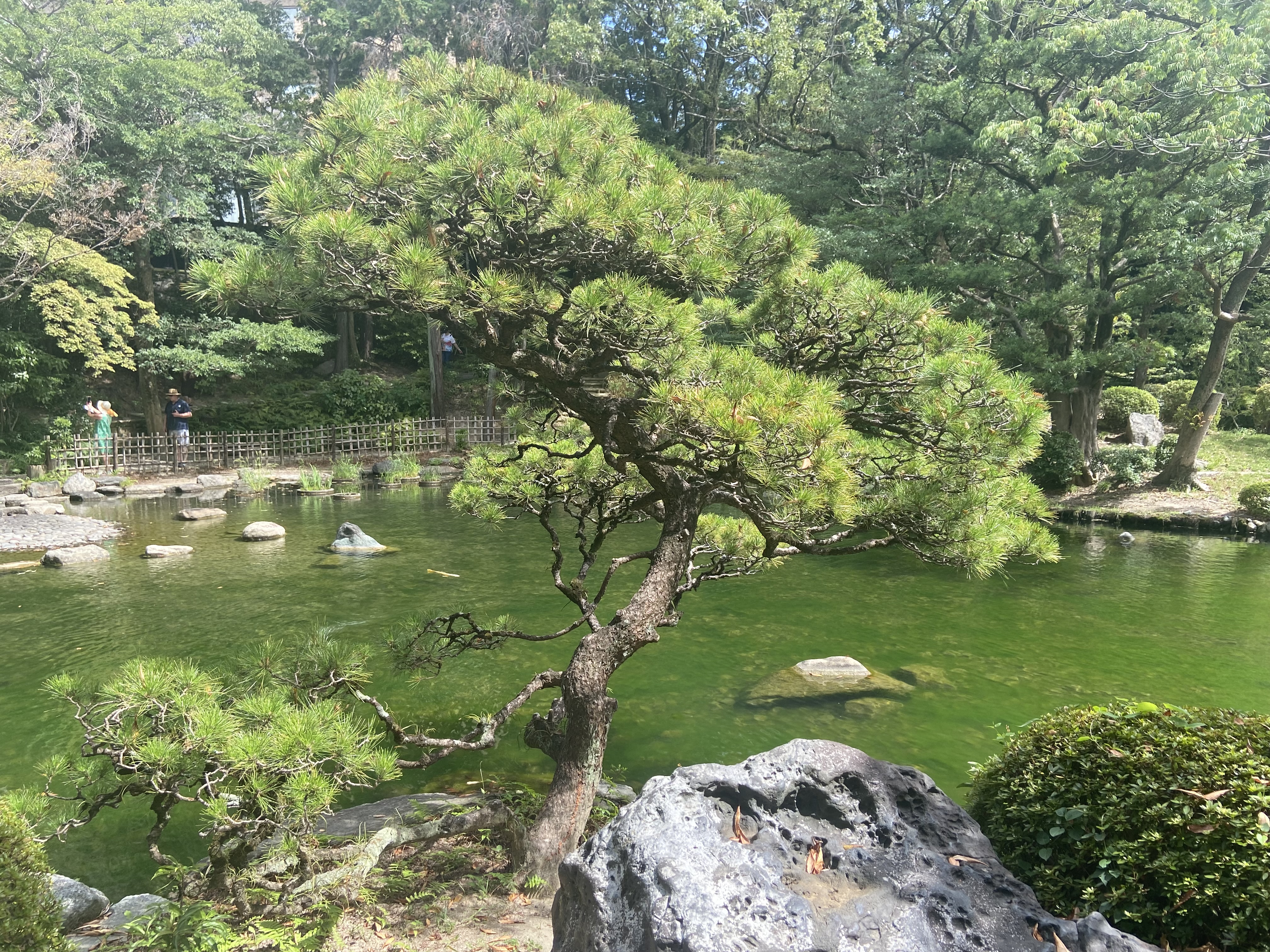
Our final stop in Fukuoka was the tranquil Yusentei Park, built in 1754 as a resort for the sixth lord of the Kuroda Clan (in case you’re a scholar of Japanese history). The park/garden was shady and easy to navigate in a half hour or so.

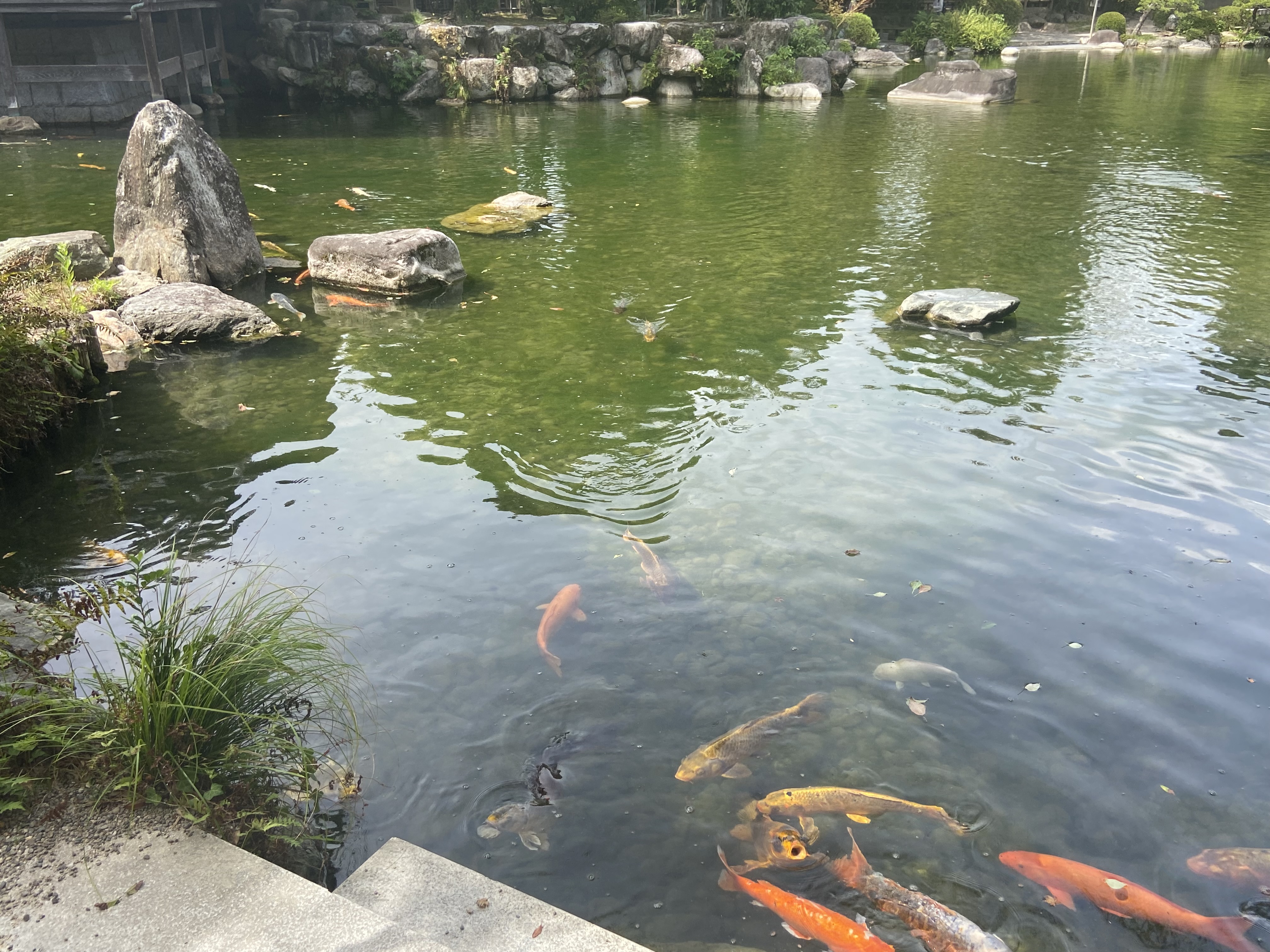
As in many other Japanese gardens, there were pine trees and koi.

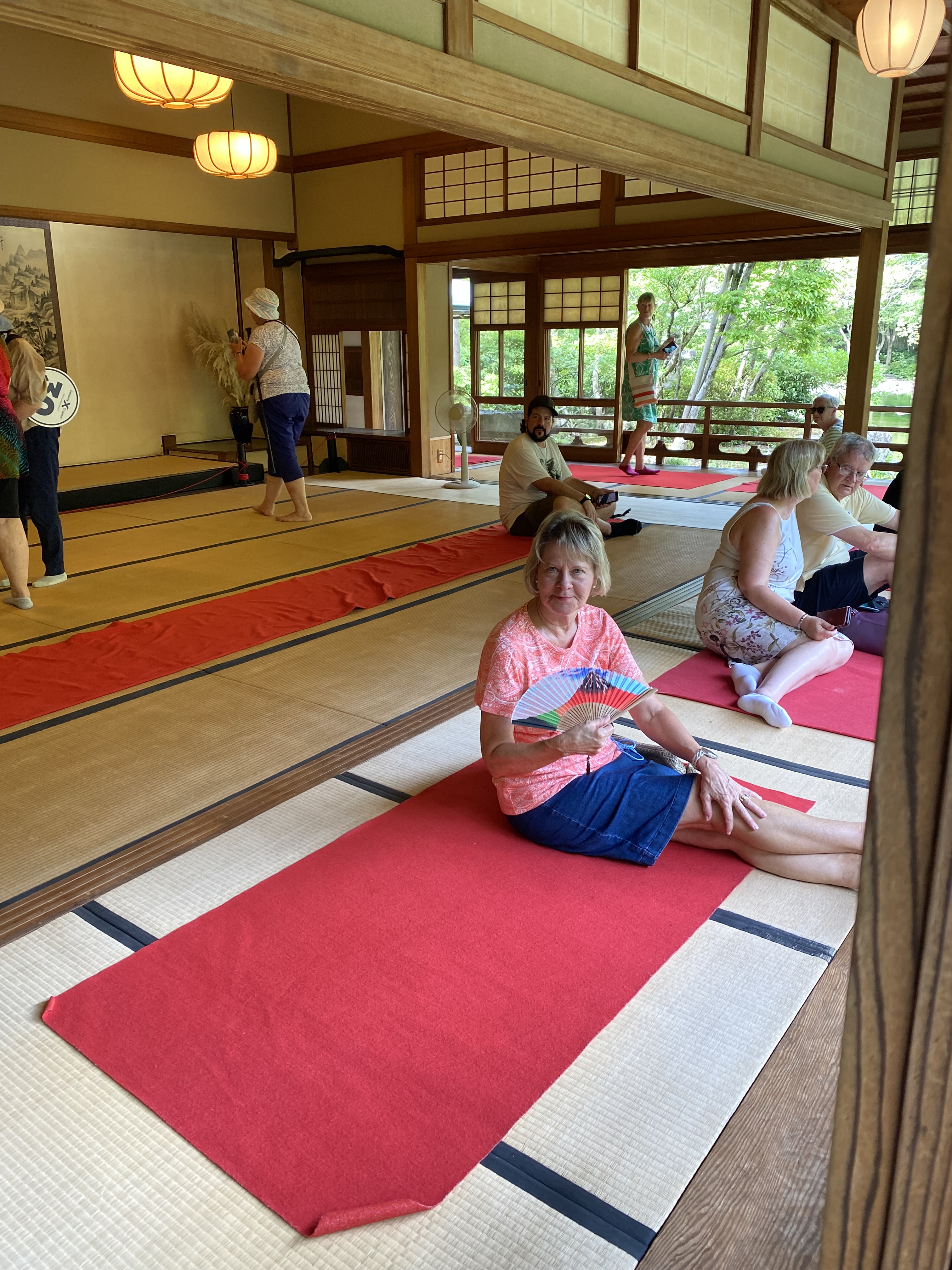
I did have a few minutes at the garden to sit on a tatami mat in the teahouse, after taking off my shoes, of course. This is only one of several pictures my husband took of me lounging here. Evidently, he thought my attempt to relax as the Japanese do was pretty funny. Incidentally, the fan I have is not just for show. It was hot, just like almost every day we were in Japan.

After visiting Fukuoka, a city I’d never heard of, our last port of call was a name that is quite familiar: Nagasaki, the location of the dropping of the second atomic bomb in World War II. My next post will cover this excursion.

Posted in Uncategorized | Tagged , , , , , | Leave a comment

Highlights of Busan, Korea

My husband and I got a break from Japanese temples, shrines, and gardens during our one-day visit to Busan, Korea, where part of the tour featured the famous Jagalchi Fish Market. Do you think the bench by the door of the market was designed for men waiting for their wives buying seafood inside?

As for us, we were strictly window shopping as we walked up and down the aisles of the fish market. After all, what would we do with fresh seafood on a cruise ship? Not that I saw anything all that tempting. In fact, I didn’t recognize a lot of what was for sale. Some type of crab in the picture below?

I did find it interesting that many stalls of the Jagalchi Fish Market, the largest in the country, are operated by women. The tradition began during the Korean War, when husbands were off fighting, requiring wives to earn a living for the family.

Near the Jagalchi Fish Market is the Gukje (International) Market, which started operating in 1950 during the Korean War as a place for war refugees to make a living. Since Busan is Korea’s largest port city, the market imported military supplies for the U.S. armies, which is why the market was named Gukje, Korean for international.

The market provided an opportunity for a little bit of souvenir shopping. (You can see how excited my husband is by shopping excursions. He’s the guy in the pink shirt gazing at the sky.)

I say a little bit of souvenir shopping because a majority of what was sold were household and everyday clothing items, not the sort of keepsake a tourist wants. I did manage to buy a souvenir magnet to add to my collection.

I passed on the food for sale in a stall at the market, though it looked to be a healthy lunch option.

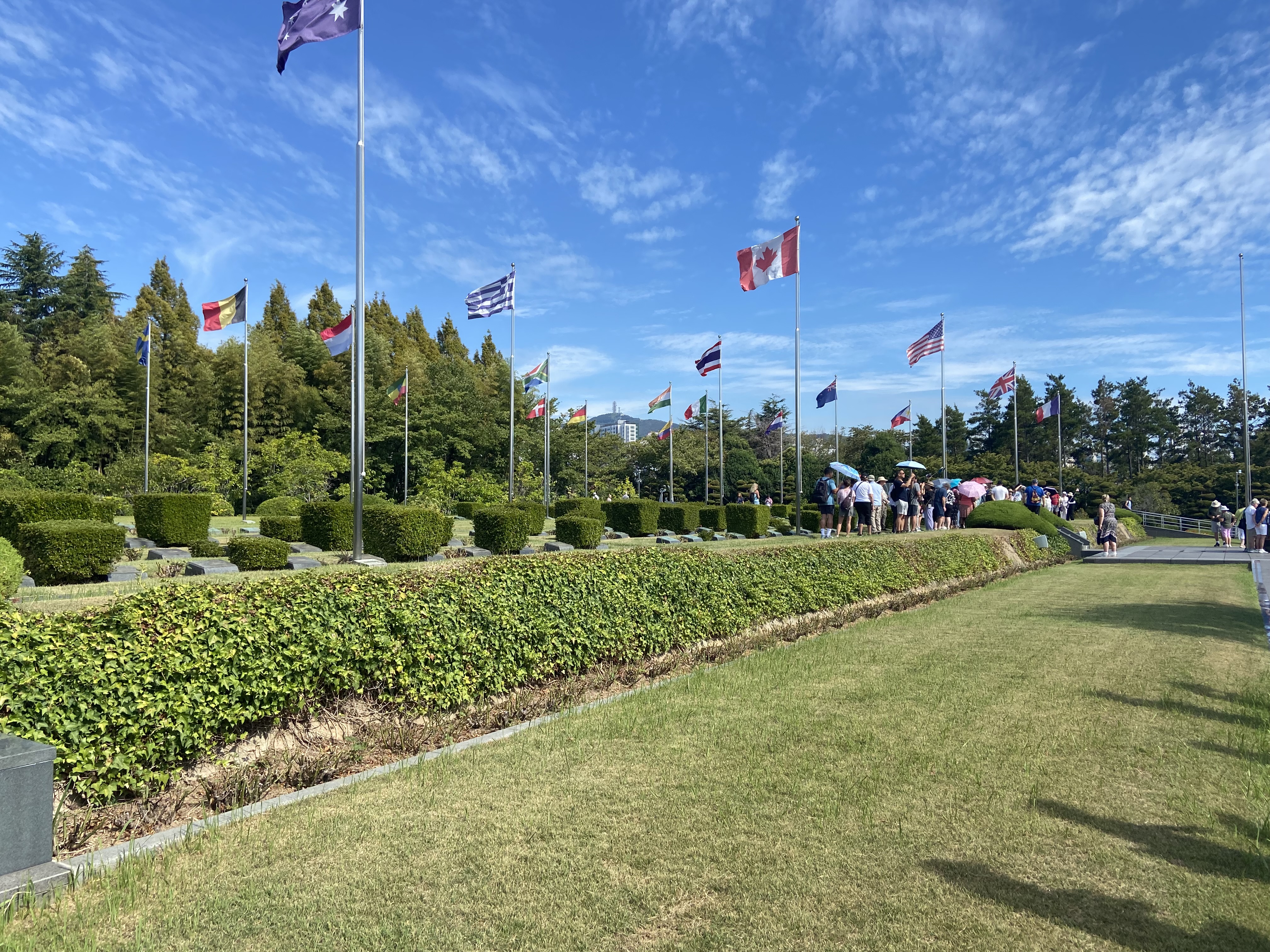
I haven’t gone in chronological order in describing our day in Busan but saved the most significant highlight of the day, actually our first stop, to talk about last. The United Nations Memorial Cemetery, the only UN memorial cemetery in the world, is the sacred, final resting place of UN Forces who served during the Korean War.

Over 2,300 casualties from thirteen countries are interred in the cemetery. Flags from all these different countries are displayed at the cemetery. I appreciated that our Korean guide for the day thanked our group, mostly made up of Americans, for coming to the aid of South Korea in the Korean War.

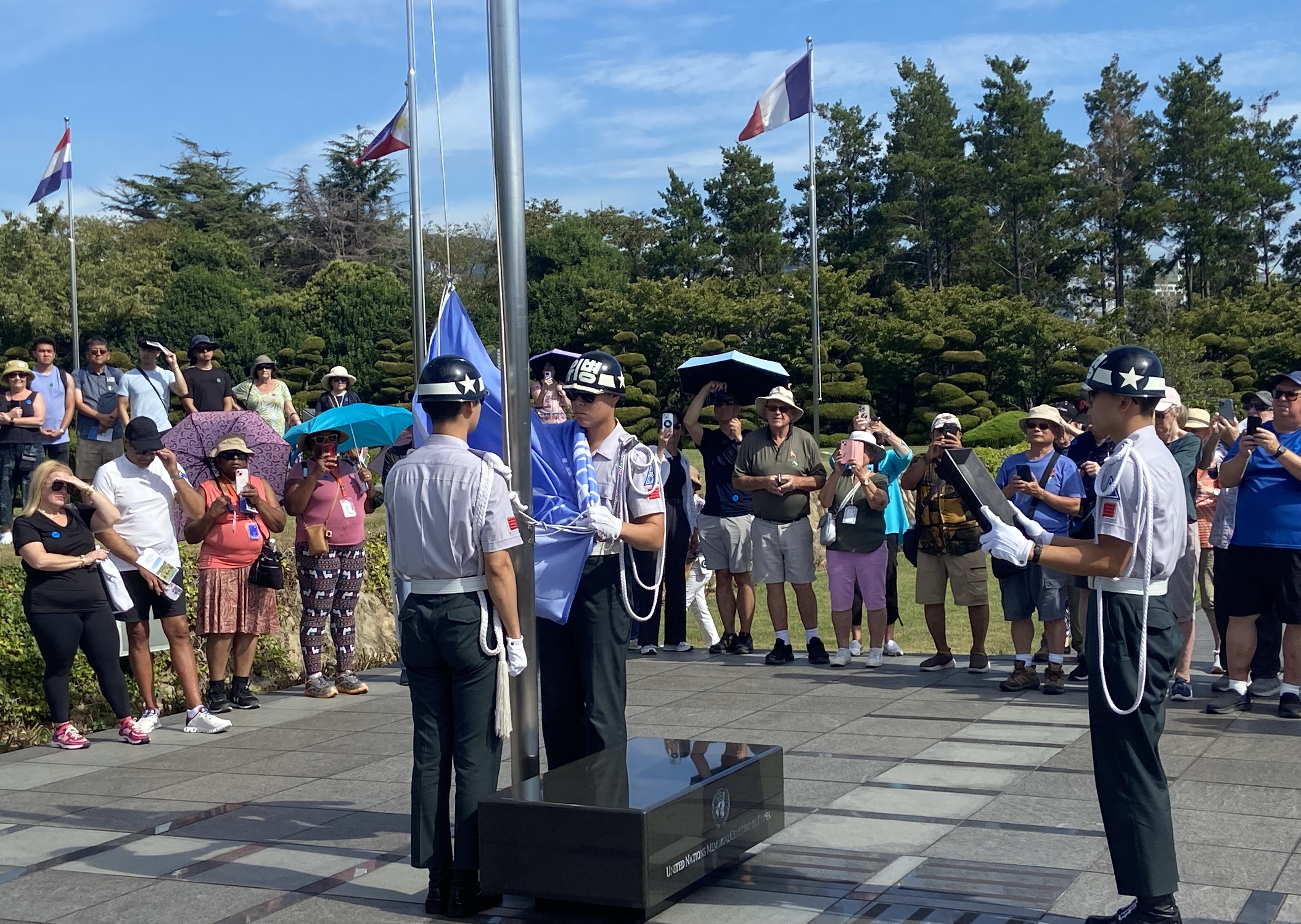
The United Nations flag is raised each day at 10 a.m. and lowered at 4 p.m. We were there to witness the solemn morning ceremony.

Our ship was docked in the harbor, waiting for us as we returned from our excursion. The Celebrity Millennium would take us back to Japan for the final days of our tour.

Posted in Uncategorized | Tagged , , , , | Leave a comment

Highlights of Japan: Hiroshima

The day we spent in Hiroshima was hot and sobering. The heat wave continued, and aside from a short visit to yet another garden, our tour was solely focused on the history for which this city will forever be remembered: the dropping of the first atomic bomb on August 6, 1945.

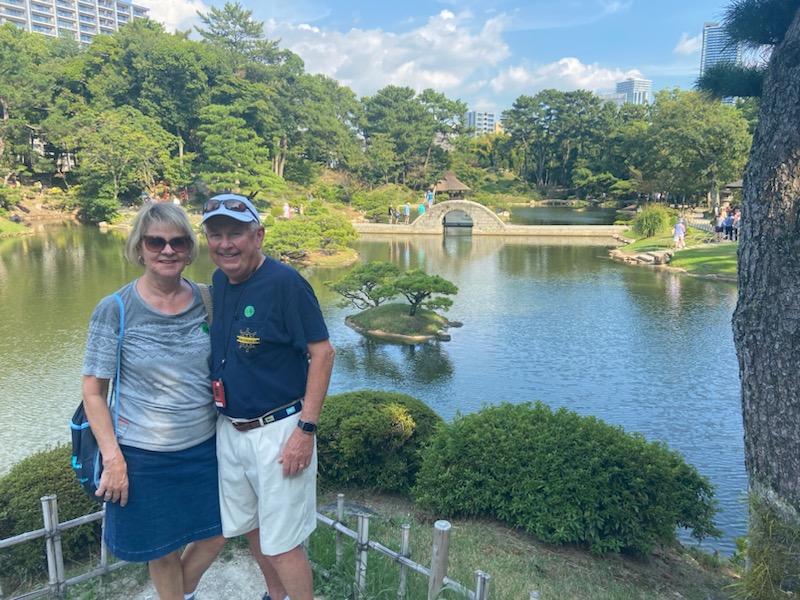
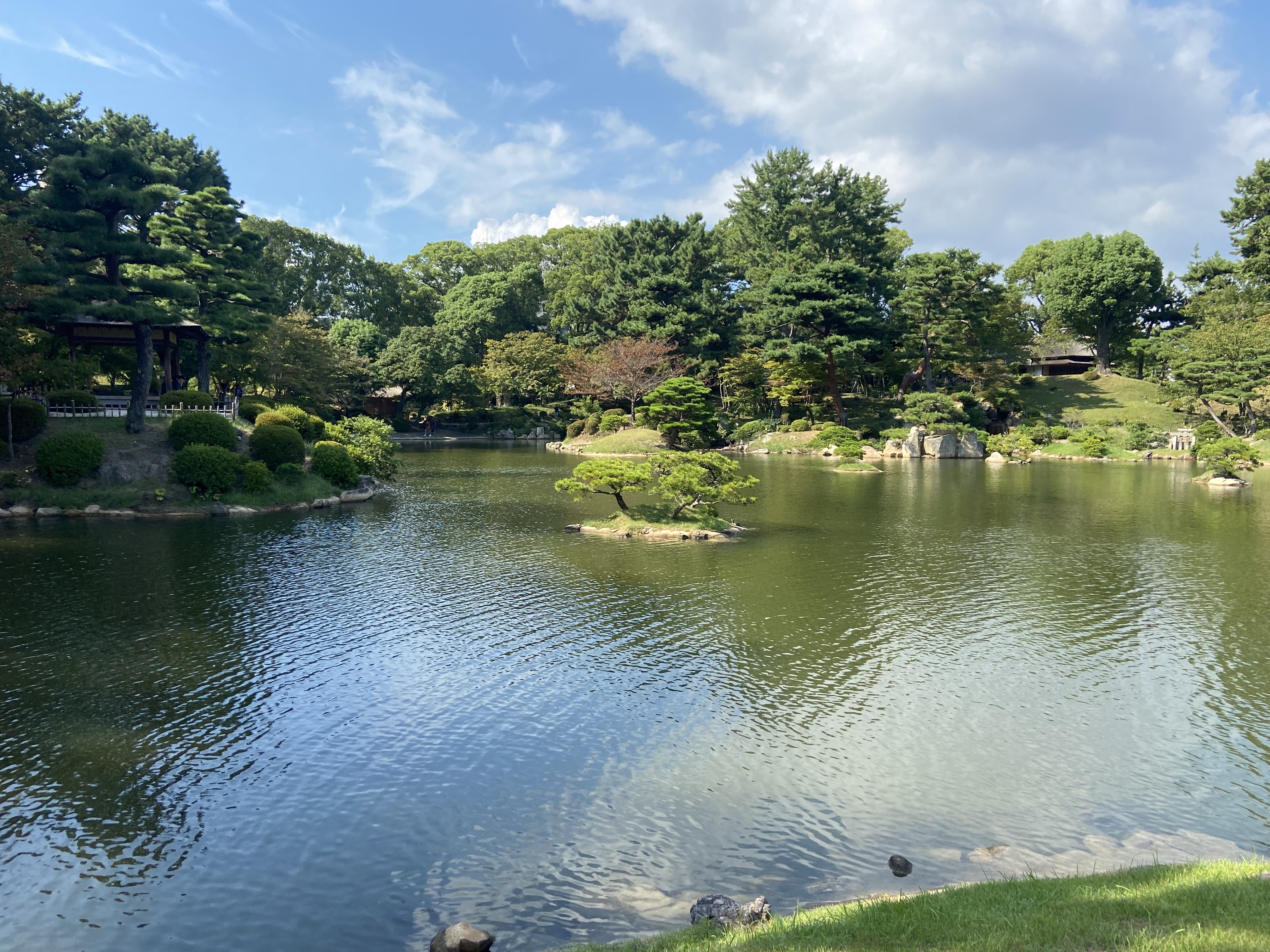
The 400-year-old Shukkeien Garden (translation: Shrunken Scenery Park) features a large pond in the center full of huge koi. This garden was about a mile away from the epicenter of the atomic bomb and thus was destroyed by the blast. Restoration began in 1949 and lasted for 30 years.

From the peaceful setting around the pond, we were taken to another part of the park to see a leaning, 200-year-old Ginko tree that was one of the very few near the epicenter to survive the bombing. Its seeds have been sent around the world to appeal for peace.

We left the tranquil Shukkeien Garden to visit Hiroshima Peace Memorial Park, completed in 1954 on an open field created by the atomic explosion. This location, near the epicenter of the blast, was once the city’s busiest downtown commercial and residential district.  

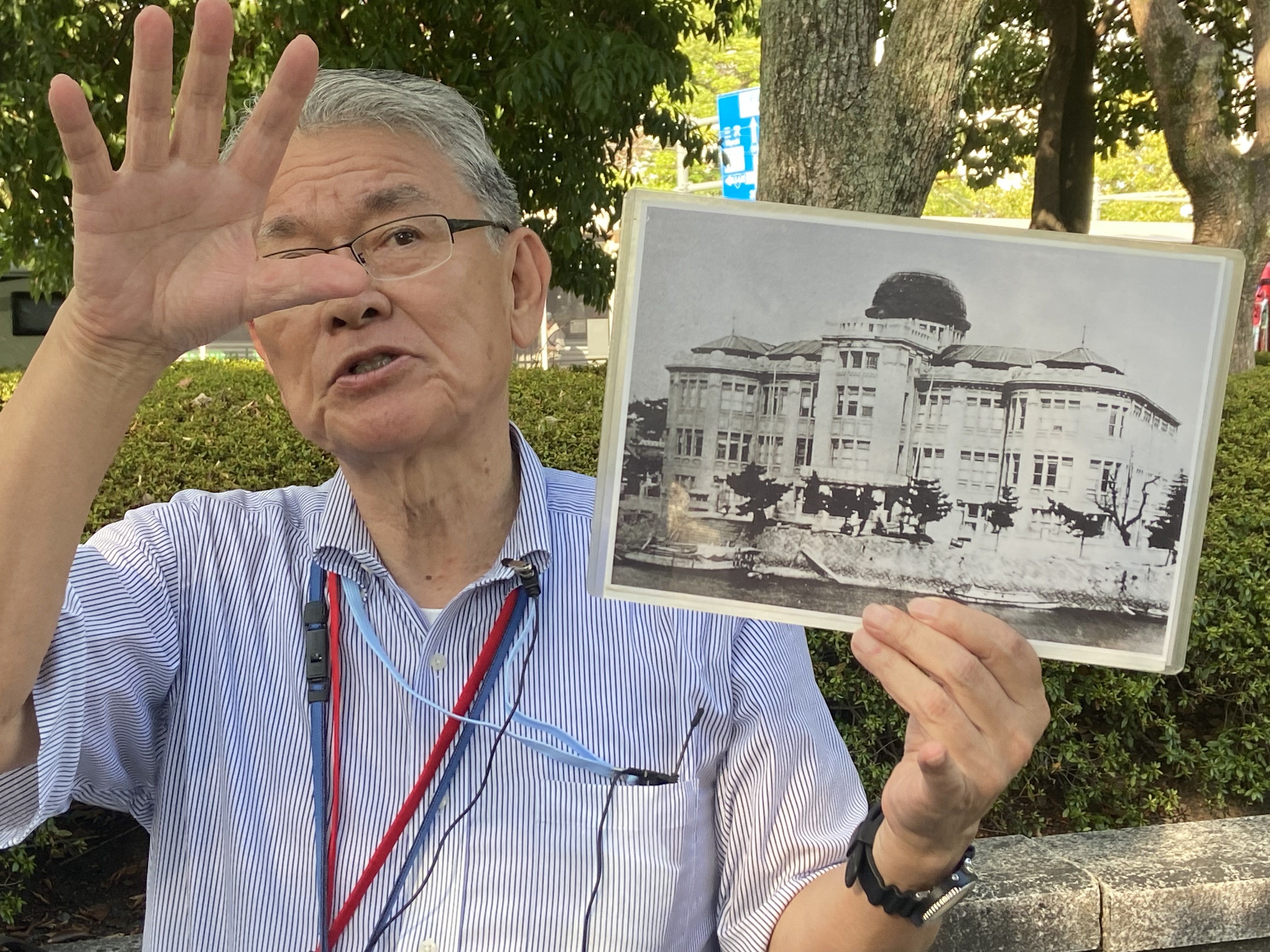
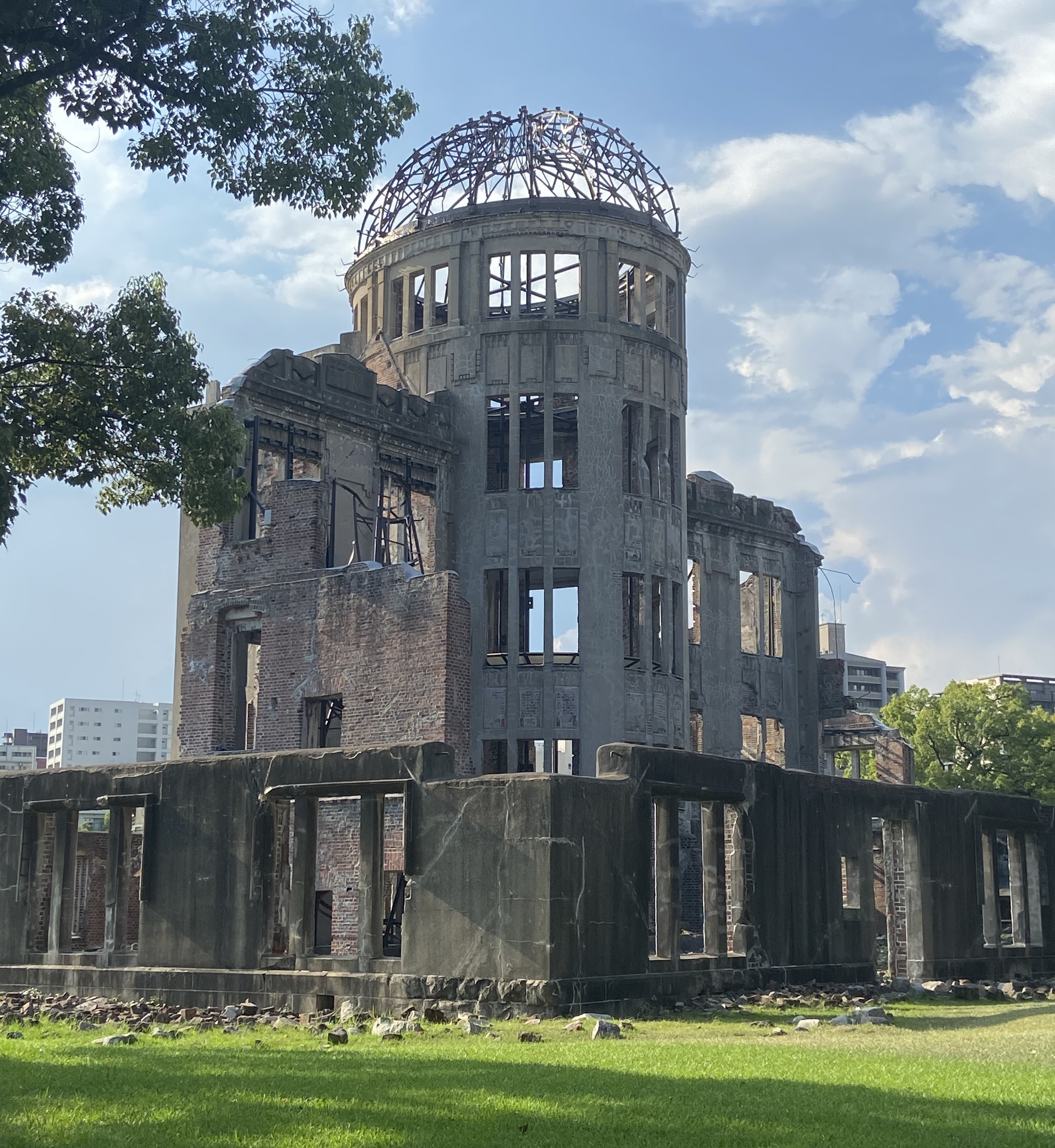
The Atomic Bomb Dome was our introduction to the park. The crumbling structure, about 500 feet away from the epicenter, survived as a skeletal ruin. It has been left that way to highlight the destructive force of the bomb.

Our guide showed us a “before” picture.

As we walked the grounds of the Peace Memorial Park, we saw several significant monuments.

The Memorial Tower to the Mobilized Students is a five-storied structure that was built to pay tribute to the over 10,000 Japanese students who died during the war. Many of these students, some as young as upper elementary school and junior high age, were “mobilized” to help tear down buildings to create firebreaks to prevent the spread of fire after air raids.

On the day of the atomic bombing, a massive building demolition project was underway in central Hiroshima. Thousands working outside that day were killed, including 6,907 students.

The Children’s Peace Monument is a statue of a girl with outstretched arms. A folded paper crane rises above her.

This statue was inspired by the true story of Sadako Sasaki, a young girl who survived the blast at age two but died ten years later of leukemia caused by radiation from the bomb. Before dying, Sadako folded over 1,000 paper cranes, believing the Japanese legend that doing so would grant her wish to recover from her illness.

To this day, colorful, folded paper cranes from all over the world are sent to this site in her memory. Many are displayed near the monument.

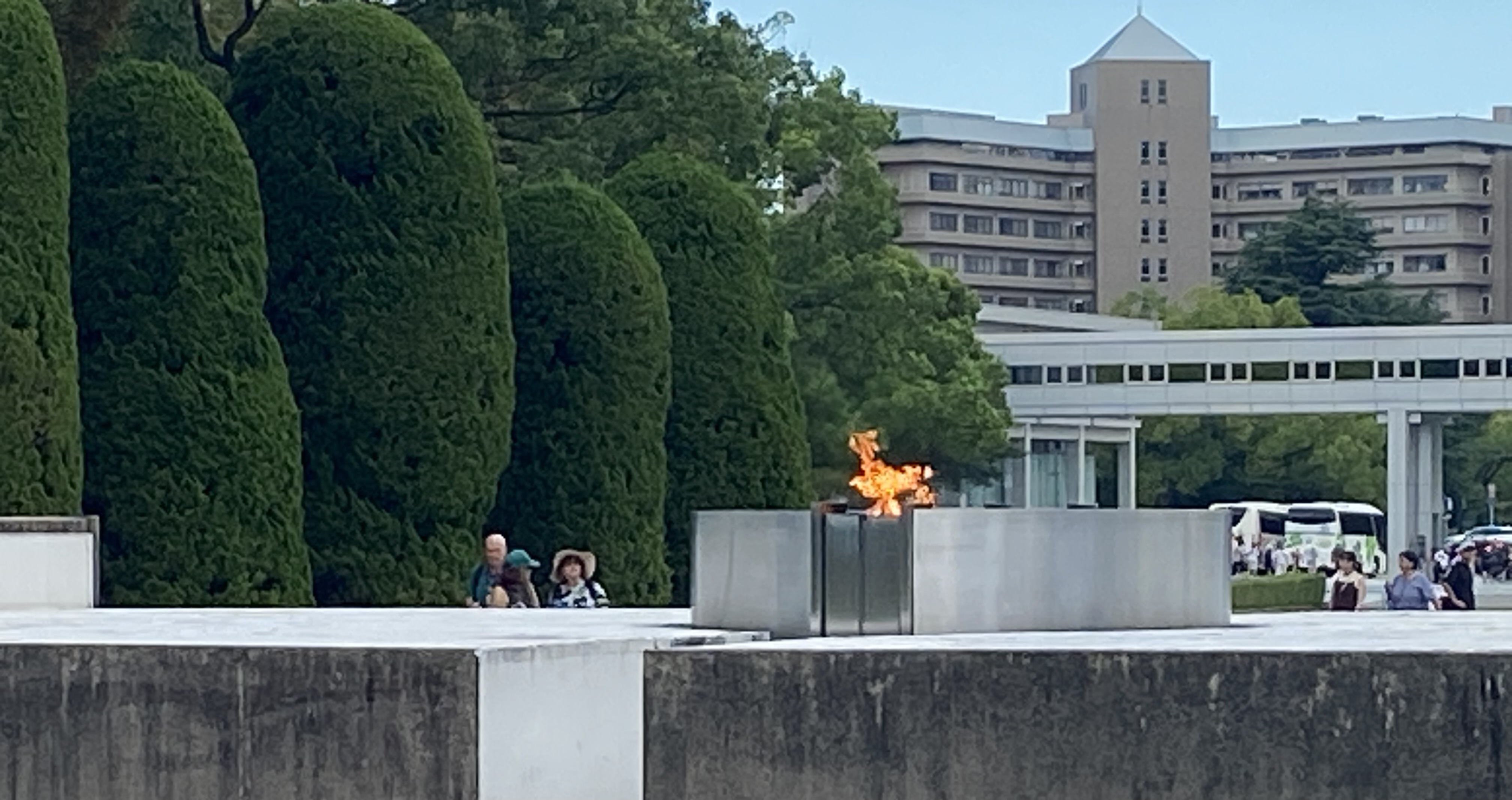
The Peace Flame has burned continuously since it was lit in 1964 and will remain so until all nuclear bombs are destroyed.

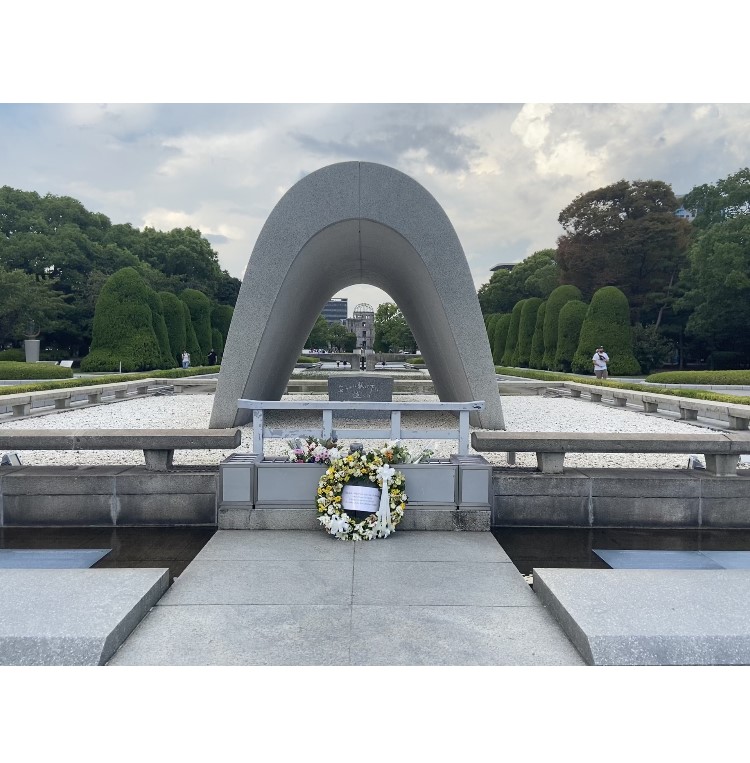
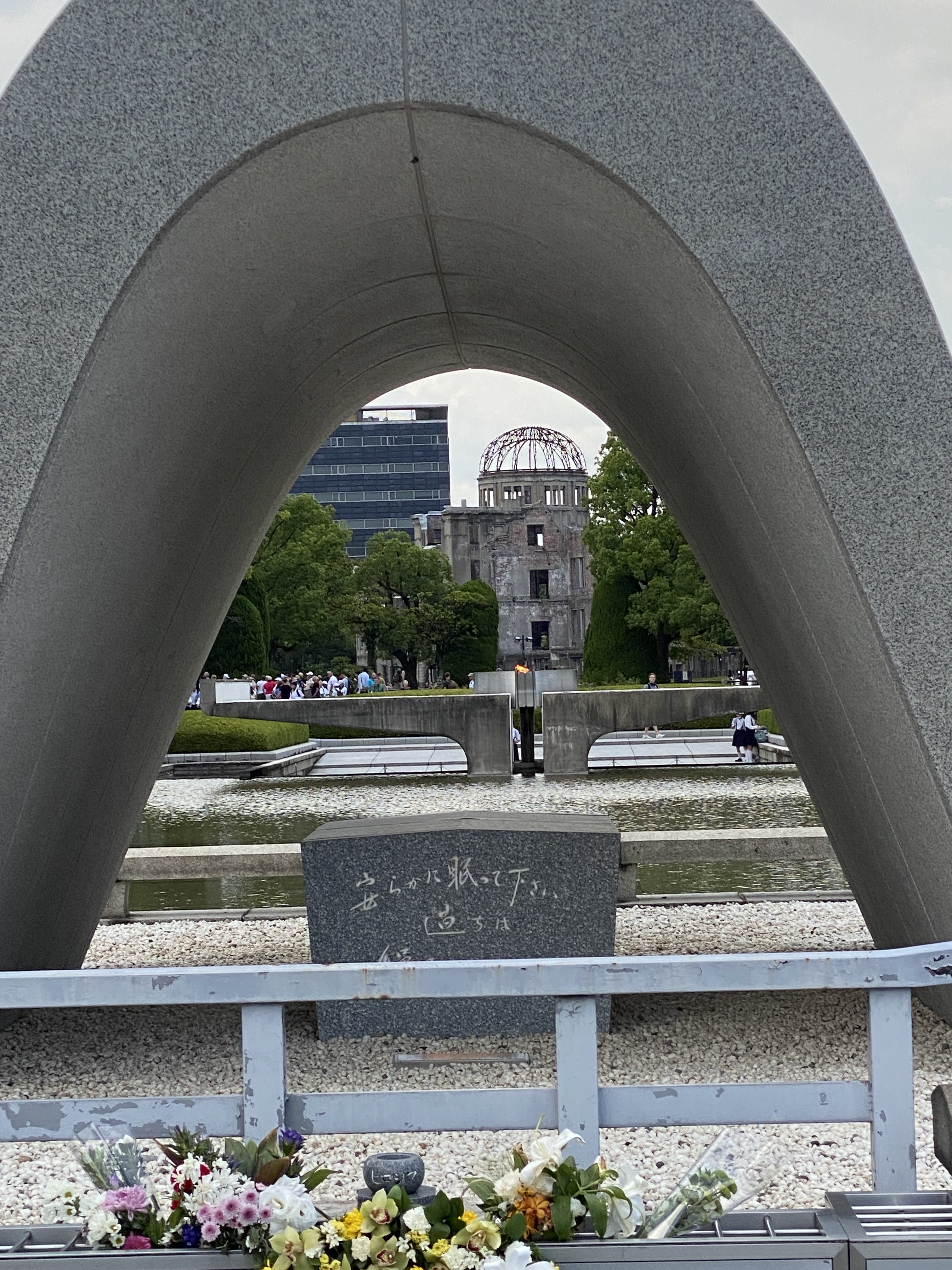
A cenotaph is a monument in honor of someone whose remains are in another location. The Memorial Cenotaph here is a concrete structure with a saddle shape that represents a shelter for the souls of the victims of the bomb. Note that it is aligned to frame the Peace Flame, and in the background, the Atomic Bomb Dome.

The stone chest in the middle holds the names of all those who died as a result of the atomic bomb. An estimated 70,000 people perished immediately in Hiroshima. More than 200,000 died due to radiation sickness in the years that followed the blast.

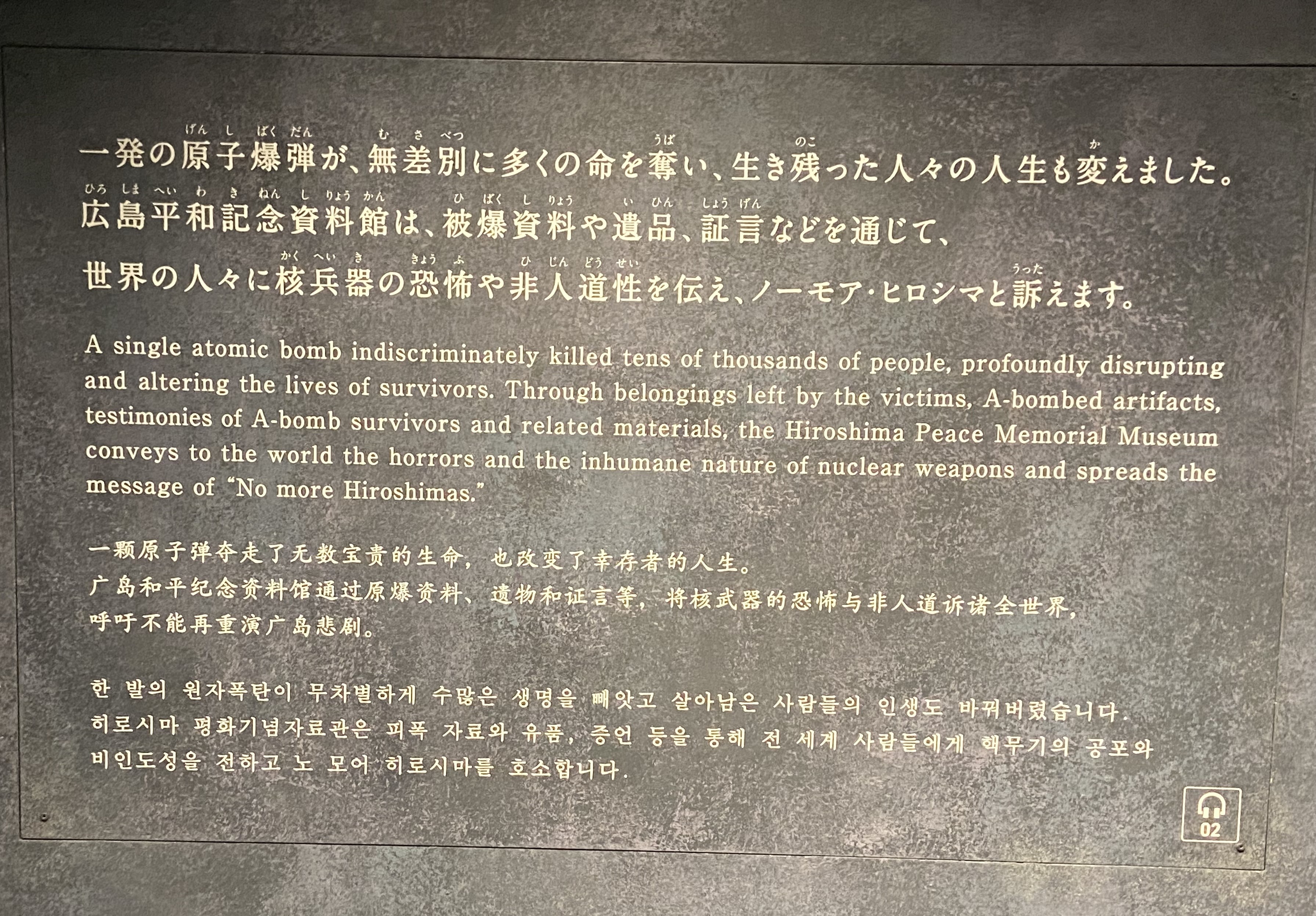
A visit to the Hiroshima Peace Memorial Museum completed our tour for the day. I found this Japanese commentary on the dropping of the atomic bomb thought-provoking. The museum featured examples of “belongings left by the victims, A-bombed artifacts, and testimonies of A-bomb survivors.” It was a pretty grim place.

After viewing such somber monuments in the Peace Memorial Park and visiting the museum, I was somewhat cheered by the sight of these Japanese schoolboys on yet another field trip, a reminder that the phoenix rises from the ashes.

In my next post, I’ll talk about our one stop in South Korea: Busan.

Posted in Uncategorized | Tagged , , , | Leave a comment

Highlights of Japan: Nara

Sacred Sika deer greeted us on our next excursion in Japan. Still docked in Osaka, we visited the city of Nara, the first capital of Japan. These totally tame deer in the park near the Todai-ji Temple in Nara were a novelty at first but became a nuisance when one went after my green tea ice cream. Sacred to the Japanese maybe, but not to me.

The Todai-ji Temple is historic and big. When completed in 752, it was the largest building ever constructed in Japan.

That’s me with the umbrella. With the oppressive heat, I adopted the Japanese custom of seeking relief from the sun under a “parasol.”

The Todai-ji Temple has to be massive to hold this giant bronze Buddha statue. The hand gestures of Buddha statues, called mudras, are meaningful. Here, the extended, cupped hand means do not worry, and the raised hand represents a shield to help believers overcome fear.

Being the largest bronze Buddha in the world, the Todai-ji Buddha statue needs a pair of golden matching guards, one flanking the left, the other on the right.

Children visiting the Todai-ji Temple enjoy climbing through this wooden structure, cut the size of the nostril of the massive bronze Buddha. Passing through is believed to bring good health and luck. I guess adults who can fit could try this too!

There are 1,223 World Heritage Sites, and I sometimes think the recognition is handed out a little too easily. The Todai-ji Temple is a World Heritage site, however, that certainly earns the title. It was my favorite Buddhist temple in Japan, and believe me, I saw quite a few.

What makes this temple special, of course, is the giant bronze Buddha and the golden guards. But there were other impressive statues as well, designated by the Japanese as National Treasures or Important Cultural Properties.

One temple down for the day, one shrine to go. The Kasuga-taisha Shrine is famous for the thousand bronze and stone lanterns marking the way to the entrance.

I’m honestly not sure where this picture of a torii gate was taken. (So may shrines, so many gates….) But it’s interesting to note the significance of the Torii. These gates mark the border between the human realm and the realm of the Shinto deities. Believers pause and bow before walking through.

With a population of a little over 367,000, Nara was one of the smaller Japanese cities we visited and lent itself to a short walking tour through a preserved historic neighborhood. Though no longer inhabited, this Japanese house gave us an idea of what a Japanese home in a city looked like before the advent of high rises.

It’s hard to see, but this garland of red cloth balls depicts rolled-up monkeys. They can be worn as good luck charms (I guess in a smaller form) or hung near the doorway of a house, as you see here, with wishes written on their curled backs. Maybe no stranger a custom than the luck associated with a four-leaf clover?

Nara, a city I’d never heard of, proved to be an interesting place to visit, a reminder to me that sometimes what’s not on the must-see list in a country can be an unexpected treat.

Our next stop, which I’ll post about soon, was a city with a name we all recognize: Hiroshima.

Posted in Uncategorized | Tagged , , , , | Leave a comment

Highlights of Japan: Kyoto

Our next port of call in Japan was Osaka, which we used as a base to visit nearby Kyoto, a city considered to be the cultural center of the country. The Temple of the Golden Pavilion, one of Japan’s biggest tourist attractions, is located there. You can see how this temple, covered in gold leaf, got its name–even its reflection in the pond is golden.

Of course, this being Japan, there was a lovely, serene garden surrounding the Golden Pavilion.

Next, it was on to the Nijo Castle, built in 1603 on orders of the first Shogun of the Edo Shogunate. It was here that Shogunate rule began and also ended, when in 1867, imperial rule was restored, ending 700 years of samurai reign. Today the castle is a World Heritage Site.

Another tranquil Japanese garden, of course, this one at the Nijo Castle. Looking at this photo of the shady trees and cool water, I find it hard to believe how hot I was that day as I strolled around.

The final destination of our day in Kyoto was another temple. The Kiyomizu-Dera Temple, a favorite tourist site, was first built in 780. Remember if it’s a temple, it’s all about Buddha.

Our guide for the day hadn’t done her homework, so she was unable to tell us anything about the dragon parade that was going on during our visit to the Kiyomizu-Dera Temple. One thing for sure: this event drew a crowd!

Shops nearby sold or rented kimonos for those who wished to dress for their visit to the temple. I would have died in the 90-degree heat wearing such an outfit.

I snapped a picture of this grove of bamboo I passed on my walk to lunch. Farther along, I saw one of the uses of this pervasive Japanese plant. Kyoto, especially, is known for its bamboo forests.

The next two paragraphs are for history buffs.

Kyoto was on the initial list of possible target cities for the atomic bomb. The US Secretary of War at the time, Henry L. Stimson, is credited for saving the city. He noted that Kyoto was Japan’s ancient capital and the center of Japanese culture. Destroying the city, he argued, would not play well for the United States on the world stage. Also, he’d spent his honeymoon there and had fond memories of the city. (This second, personal reason is mentioned in the movie Oppenheimer.)

Thus, Kyoto was spared, and as we all know, Hiroshima and Nagasaki were not. More about these two cities, which we also visited, in a future blog.

Posted in Uncategorized | Tagged , , , , | Leave a comment

Highlights of Japan: Shimizu

If I could use only three words to sum up what I toured most often on my recent trip to Japan, it would be temples, shrines, and gardens. But I can’t say these sites are what I’ll remember most about the country.

Skyscrapers, sushi, green tea, pine trees, tame deer, giant koi, ground zero at both Hiroshima and Nagasaki, the Tokyo Tower, Mount Fuji, cable car rides, and the gentle, polite Japanese themselves–these will be among my most vivid memories.

Skyscrapers in Tokyo

My husband and I were sailing with a group of friends aboard a Celebrity cruise ship. We had six ports of call in Japan: Shimizu (Mt. Fuji), Osaka (Kyoto), Hiroshima, Fukuoka, Nagasaki, and Tokyo. One day we ventured to Busan, South Korea.

Our cruise ship, Celebrity Millennium, in the harbor of Busan, South Korea

In this post, I’ll cover our first port of call, Shimizu.

In the description of excursions, Shimizu was given the headline-grabber title Mount Fuji. As it turned out, though, the best view of this famous volcanic mountain was from the balcony outside the cabin of our cruise ship in early morning. Later in the day, Mount Fuji was under cloud coverage.

Mount Fuji rising above the white clouds in early morning

Instead of Mount Fuji, then, the city of Shimizu was our focus of the day. Here we visited the Sengen Shrine, the first of several shrines that we saw during our two weeks in Japan. I learned that the two most prominent religions in Japan are Buddhism and something called Shintoism, considered a unique Japanese religion. Shintos believe every object – from humans to trees to rivers – possesses a kind of spirit or soul.

It’s my understanding that in Japan, if it’s called a shrine, then it’s a Shinto place of worship. If it’s a temple, it’s Buddhist. Shinto shrines often feature animal figures whereas Buddhist temples will showcase–you guessed it–Buddha.

After this visit to our first shrine, our next stop in Shimizu was a Japanese garden in Sumpu Castle Park. The features in a Japanese garden represent bigger physical formations. Here, the terraced grassy area leads to a peak that is supposed to resemble Mount Fuji. The pond in front is symbolic of the large lakes surrounding Mount Fuji.

A highlight of the day, at least for me, was an authentic Japanese lunch. Not everyone is a fan of sushi, miso soup, and tempura, but I found the meal tasty. A bit of ginger (the orange flakes at the bottom of the picture) gave the sushi an extra zing! I tried using the chopsticks, but it was a slow go, so I resorted to the fork.

After lunch, we rode a cable car, which for some reason the Japanese refer to as a “ropeway,” up to the Miho Shrine. The path was lined with colorful parasols, which are commonly used in Japan, especially by women, to shield from the sun. The carved bamboo poles contained tiny lights.

Schoolchildren were at several sites in Japan. It must have been National Field Trip Week. These at the Miho Shrine came armed with backpacks and matching hats. Notice the fan? I haven’t mentioned it yet, but land sakes alive, it was hot in Japan in September! I had googled the temps being going and saw a prediction of upper 70’s to low 80’s. Nope. More like mid-90’s almost every day. And the humidity was off the chart! Think of Disney World in Florida in July.

The last stop of our day in the Shimizu area was the Nihondaira Park, where we walked through a designated World Heritage pine-tree lined lane leading to the beach. This 300-year-old pine tree stands at the end of the path. It is believed that Shinto spirits flying in from the sea use this pine as their landmark for descent.

One of my favorite activities any time I travel is people watching. Not the other tourists, mind you, but the natives. Here are two lovely Japanese ladies I saw on this trip to Shimizu, one posing in traditional dress for a wedding portrait, and the other sporting heels at the beach. Fascinating!

In my next post, I’ll talk about what we saw in Kyoto, which we reached from our port in Osaka.

Posted in Uncategorized | Tagged , , , , | Leave a comment

Back to School and More

It’s been twenty years since I sent a child off to school and more than ten since I went myself to teach. Still, when I see those orange buses at the beginning of a new academic year, I get that familiar feeling of excitement coupled with anxiety.

I bought the miniature toy school bus pictured above, thinking I’d use it in a seasonal flower arrangement. So far, though, it sits on my kitchen windowsill, reminding me of days gone by when I’d get my elementary school-aged girls up and out the door to catch the bus.

Going back even further, I’m reminded of my own school days. Unlike my daughters, who insisted on car-pooling once they reached middle school, I rode the bus until my senior year, when for some reason I don’t remember, my parents agreed to let me drive a family car to school as long as I took my siblings with me.

These days, I get nostalgic thinking about not only my grown-up daughters but also my grandchildren who seem to be racing through childhood. It’s hard for me to wrap my head around a nineteen-year-old granddaughter who’s at the same university I attended over fifty years ago.

Incidentally, the Greek clubs I belonged to were academic. No fun sorority for me.
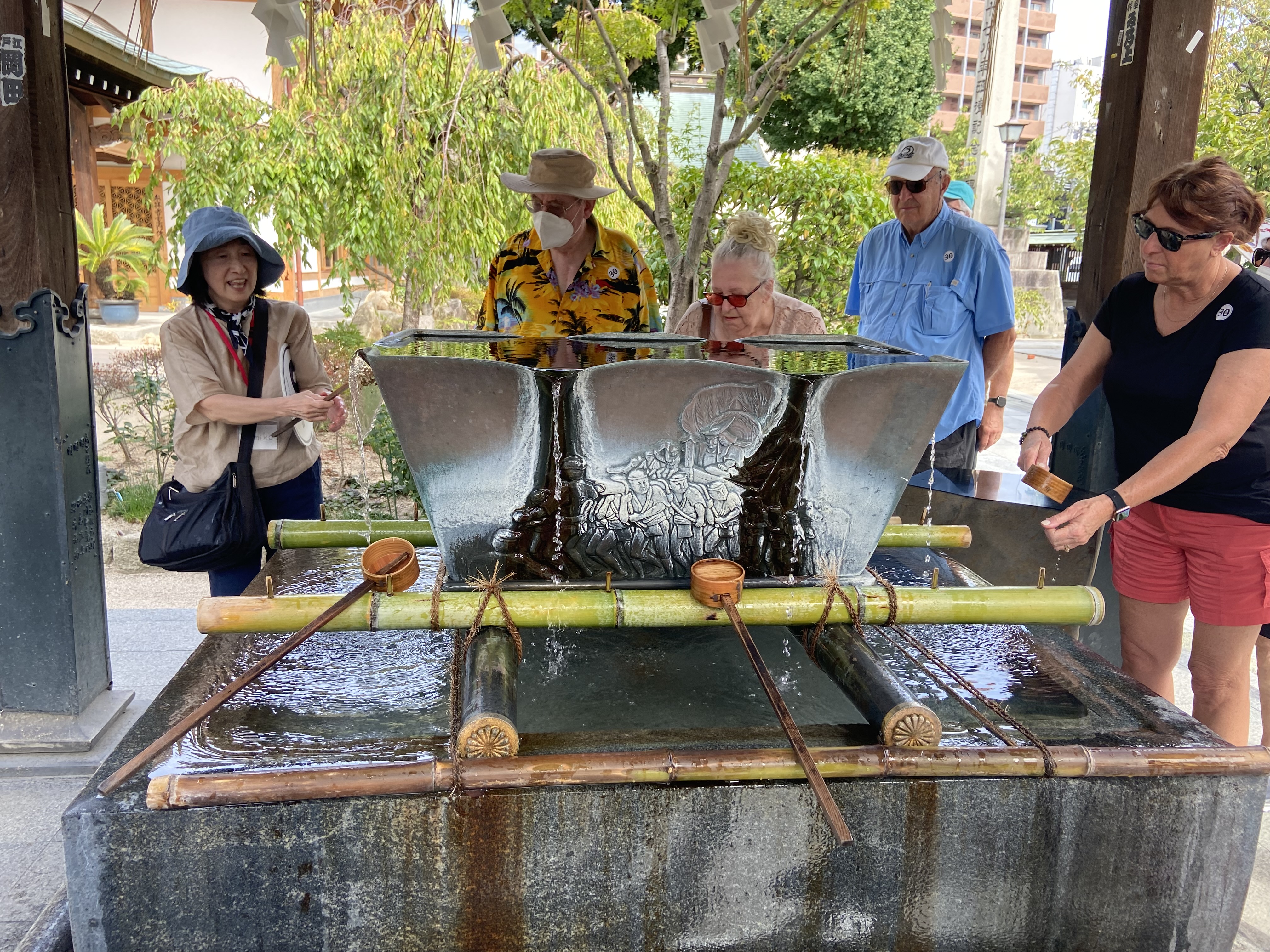
I have had some fun this month, though. Recently, while the husbands were playing golf in a member-guest tournament in Greenville, the ladies went to a sip and paint event, one of those parties where you’re given a glass of wine, a paper plate filled with squirts of paint, an artist’s brush, and a small canvas.

I have very little artistic ability–hey, I know my weaknesses–but I was halfway proud of this pumpkin I painted. Full disclosure: the pumpkin was already outlined on the canvas and we ladies worked under the step-by-step instruction of an art teacher. Still, I felt I channeled my inner Van Gogh. Or maybe Bob Ross. Grandma Moses?

In fact, right now, I have my pumpkin painting displayed on my old upright piano. I’ll probably mix it in with some tacky Halloween decorations in another month or so and then after Thanksgiving, stick it in the attic with the fall decor until next year.

What’s Happening in the Garden

I can’t leave an August post without talking about what’s happening in the yard, or for the British, the garden.

Zinnias have been my most prolific crop this year. They’re so easy to grow: just toss out a Dollar Store package of seeds on slightly loosened soil, lightly cover with dirt, sprinkle with water, and then watch them sprout. Voila: you soon have cut flowers all summer for arrangements.

The butterflies love them, too.

Sedum is not a particularly exciting plant, but it’s hardy if kept away from the deer and blooms in mid-to-late summer. Other pluses: it’s a drought tolerant succulent and comes back each year. I’ve had a nice planter of sedum on my back porch (away from the deer) this year, and I’ve enjoyed looking at it out my kitchen window.

As excited as I’ve been about my zinnias this summer, I have one other flower I want to brag about: pentas. How did I not know about this plant until I saw some one-quart containers of it back in the spring at Lowe’s for only a dollar each.

I picked up a dozen or so in different colors–pink, lavender, red–and planted them around my yard. I put some in my pollinator bed in the side yard, some to form a short border of sorts in the backyard, and a couple in pots. Almost all have flourished. A bonus: the butterflies and bees love them.

It’s a flower I’ll buy again, if it doesn’t reseed itself.

Hope your summer has been filled with flowers and you’ve had the bittersweet pleasure of sending someone, maybe yourself, back to school.

Posted in Uncategorized | Leave a comment

Linville Gorge: The “Grand Canyon of the East”

It’s called the “Grand Canyon of the East.” Linville Gorge, located in the North Carolina mountains just an hour or so from Banner Elk, is indeed a sight to behold. Getting to Wiseman’s View to behold this sight, though, proved to be quite an adventure for us.

One day during our recent high country vacation, my husband and I left Beech Mountain, drove through Banner Elk, and hit Highway 181 south, heading to Linville Gorge.

The one-hour paved drive of this trip was the usual scenic trek through a lush landscape of green summer mountains. We’d heard there was a heat wave back home in eastern North Carolina with daily temperatures in the nineties. Not so for us as we looked forward to an outdoor adventure with mild mountain temperatures.

Our destination at the Gorge was Wiseman’s View, the overlook that would provide stunning vistas…once we traveled four miles down a very bumpy dirt road.

I cannot emphasize enough how difficult this part of the journey was. Two miles in, my husband stopped at a particularly rutted section and declared it impassable, even with a four-wheel drive SUV.

We decided to walk the last two miles to get to Wiseman’s View. We turned around and drove to a spot where we could leave the SUV. Mind you, this would be two miles to get to the viewing platform at the Gorge, and then two miles back to get to the car. Four miles of walking total. Mountain miles, that is, which are often uphill.

We started our trek, got as far as the “impassable” rut again, and noticed there were tire tracks there. Exactly two vehicles, one a truck and another an SUV smaller than ours, had passed us while we were walking. We started to re-think our four-mile round-trip hike idea. If others had driven through this treacherous part of the dirt road, maybe we could too. We walked back to get our vehicle, and again approached what had seemed an impassable section of the road. This time, I got out and directed my husband, pointing to the tire tracks of those who had gone before us.

It was a harrowing experience, with the SUV on only three wheels at one point, but my husband plowed through. Fortunately, this one stretch turned out to be the worst spot.

A couple of miles later, the Wiseman’s View sign was a welcome sight although we still had to navigate even more dirt road to find the parking lot.

There was one other car there when we arrived, the smaller SUV that had passed us while we were walking. By the time we left, though, we were the only folks in town. Given what we’d gone through to get down that four-mile dirt road, I wasn’t surprised. The trip is not for the faint of heart–or those without a four-wheel-drive vehicle.

The short walk from the parking lot to Wiseman’s View was also deserted. After that long dirt road, a paved walkway was a nice surprise.

I was glad my husband and I had come without rambunctious grandchildren when I saw this sign.

After that sign, I was somewhat relieved to see the sturdy stone fences surrounding portions of the cliffs.

And, oh, the views. These sights were why we’d endured that four-mile stretch of the highway from hell. In the picture below, Hawksbill Mountain is to the left and Table Rock is the peak to the right.

The depth of the Gorge does remind me of the Grand Canyon. Far, far below is the Linville River, which created this chasm, carving into bedrock since time immemorial. I can only imagine how beautiful this view must be at the peak of the fall foliage season.

The granite cliffs are impressive, too.

We found civilization again when we stopped at the popular and far easier to access Linville Falls on our way back to the paved highway.

While pretty, Linville Falls seemed tame to us after the magnificence of the Gorge. But then, it’s hard to beat the splendid views provided by the “Grand Canyon of the East.” Once you get there, that is.

Posted in Uncategorized | Tagged , , , , | Leave a comment

Celebrating a Mural…and a City (Rocky Mount, NC)

It’s been a month now since I attended the celebration of Rocky Mount’s mural depicting a “Hall of Fame” line-up of prominent musicians with local ties. Though a bit rainy, it was a wonderful late afternoon/early evening event that I’m glad I made the effort to attend. Keep reading for a mostly feel-good story about a city that doesn’t always get the best publicity, especially concerning its downtown.

“Ma’am, please take my seat,” the well-dressed gentleman said with a smile. Due to the rain, I was standing as close as possible behind the last row of chairs under the tent at the May 23 downtown celebration of the latest Rocky Mount mural.

“I’m fine, thanks,” I replied, although I was getting slightly sprinkled on my backside.  It was a small price to pay for the evening’s entertainment at the corner of Marigold Street and Southeast Main.

Blues, jazz, rock, gospel—the evening covered the music of the people depicted on the mural designed by local artist Marion Clark Weathers. The show didn’t last long, just a little over an hour. But every single performance, mostly by the musicians pictured in the mural, was a delight.

Walking up, I was greeted by the guitar playing of Lightnin’ Wells, who was rendering the blues of the late George Higgs. The Tar River Swing Band featured jazz with a solo trumpet performance by Dan Crocker. Patsy Gilliland’s rendition of the Platters “Only You,” showed why she was once a talent award winner in the Miss America Pageant.

The music wasn’t all that was delightful about the night. As the rain picked up, the audience, without being told to do so, scooted their chairs forward, making room under the tent for those outside seeking shelter. A community spirit, a sense of goodwill, prevailed over the crowd.

Of course, all is not rosy downtown. My husband and I parked on Southwest Main Street and walked past scores of empty storefronts as we made our way to the pedestrian railroad crossing. “I remember when this used to be a Belk Tyler’s,” my husband said, stopping to peer in the windows at the long- deserted department store. I couldn’t help but wonder what visitors to the Rocky Mount Event Center must think if they venture across the tracks looking for shops or restaurants. Yikes.

But on this magical evening, I decided to focus on the positive. This celebration on one corner of downtown Rocky Mount was perhaps a glimpse of what our city can be, people from all walks of life coming together with mutual respect and civic pride.

I finally got that seat offered by the well-dressed gentleman. I took it when he got up to perform the last act. Turns out I had been standing behind Luther Barnes, the famous gospel singer. It hadn’t occurred to me to match this dapper man to his picture on the mural. He finished the show in fine style, belting out a stirring gospel tune, accompanied by members of a local congregation he invited on stage.

Luther Barnes, Gospel Singer, As Depicted in the Mural

As the show ended, the rain had stopped, but the train was slowly rolling through downtown Rocky Mount. My husband and I would have to wait to cross the tracks to get to our car. Nothing new: growing up in Edgecombe County, I spent a lot of time idling here, waiting to cross to the Nash County side.

And I love the sound of a train. Its song was actually the perfect ending to a perfect musical celebration.    

Posted in Uncategorized | Tagged , , , , | Leave a comment