
The dawn of a new year reminds me that I’ve taken another trip around the sun. However, help for this old lady is on the way. Like Ponce de Leon, I went searching for the Fountain of Youth. What the explorer stumbled upon in 1513 is today Florida’s oldest tourist attraction.
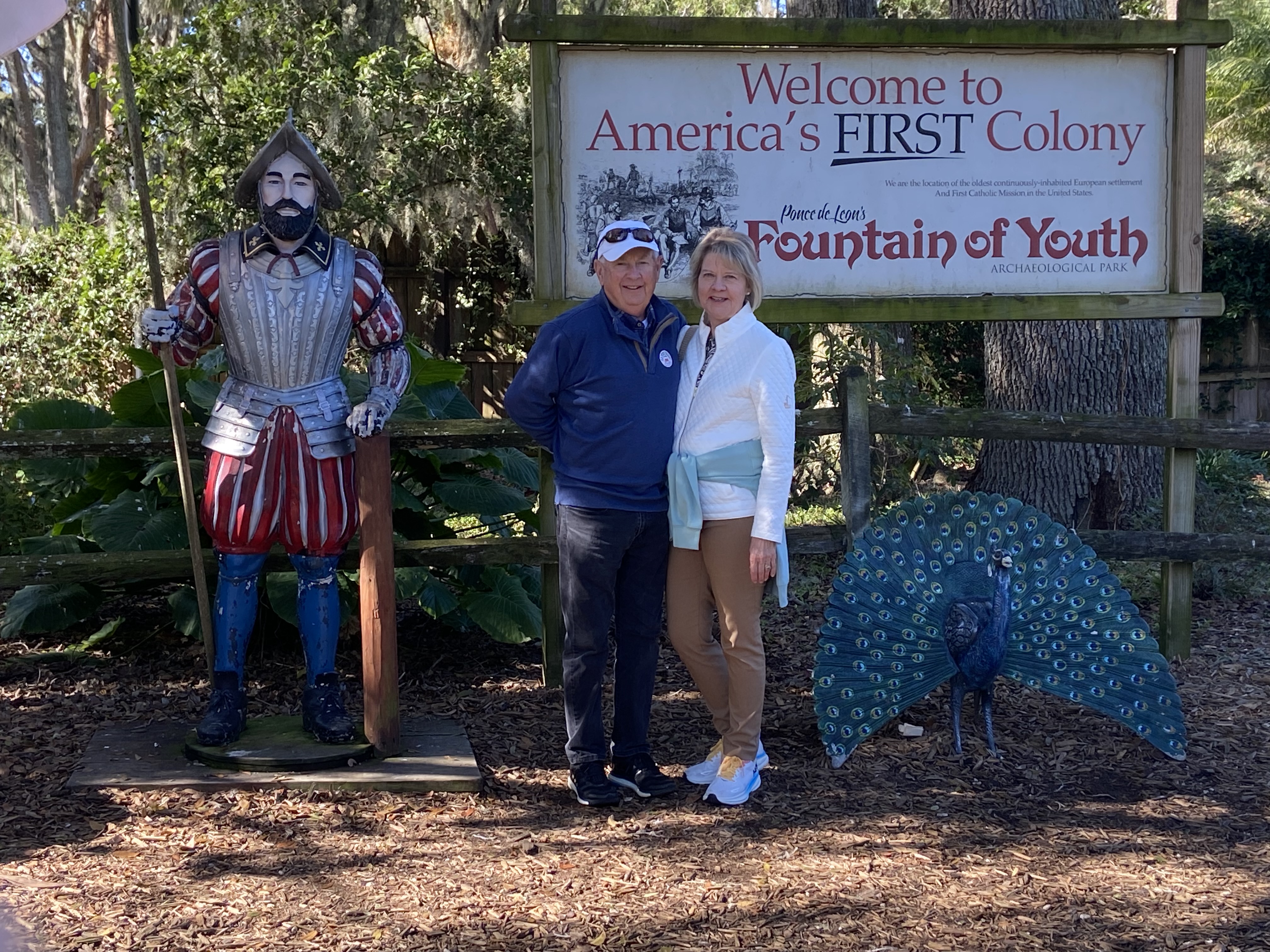
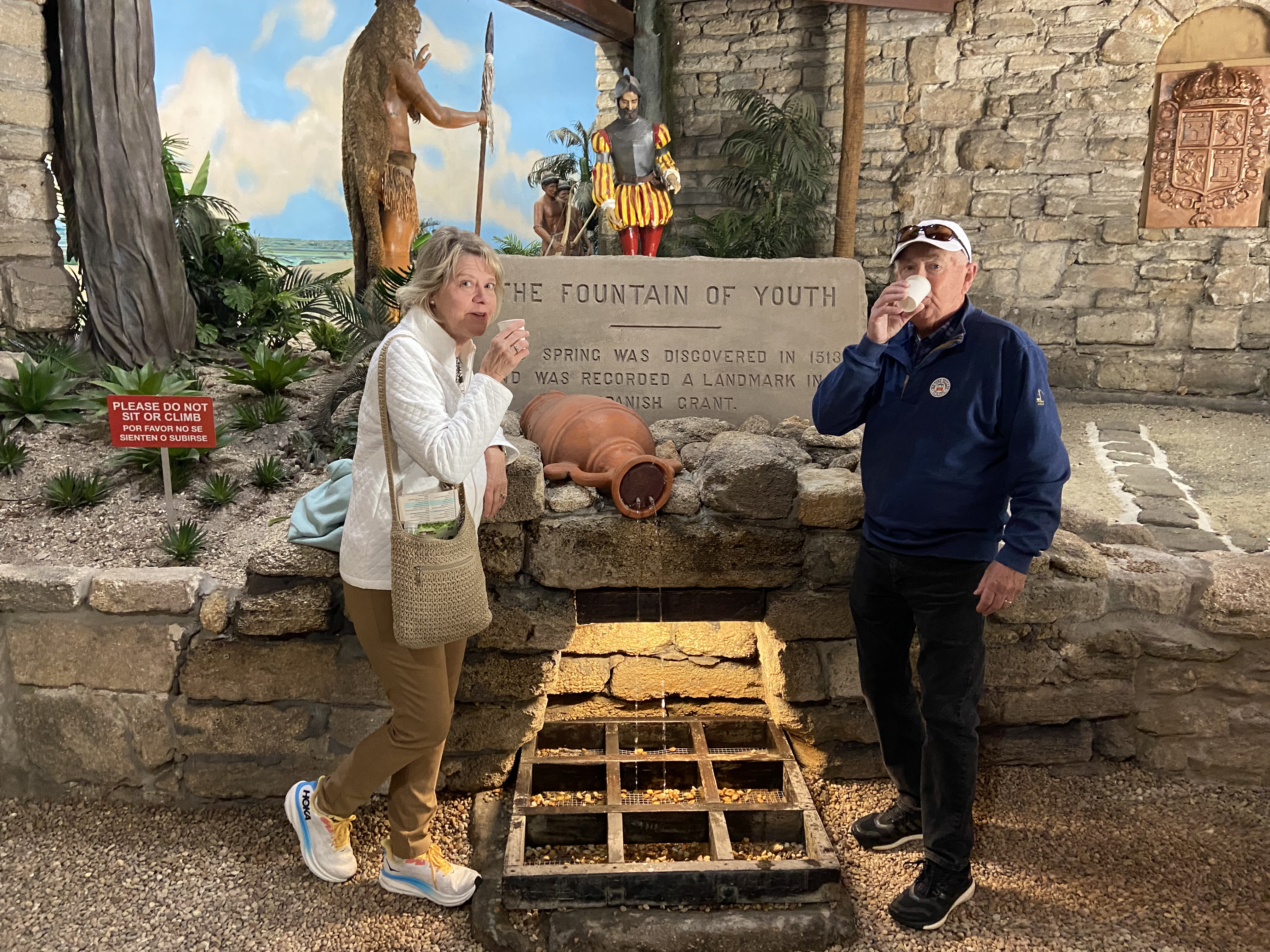
Legend has it that drinking the water here restores youth and vitality. I took a sip or two of the not very tasty, sulphur-flavored liquid. It’s now been several days and, unfortunately, I can’t say I feel younger or more energetic, but if anything significant occurs, I’ll be sure to let everyone know.
St. Augustine was a fun New Year’s getaway location. There’s lots to see and do. Besides the Fountain of Youth, the crowd I was with visited the St. Augustine Pirate and Treasure Museum. Here, Blackbeard’s “head” is appropriately featured, the cause of his death being decapitation during a battle with the Royal Navy in Ocracoke Inlet, North Carolina.

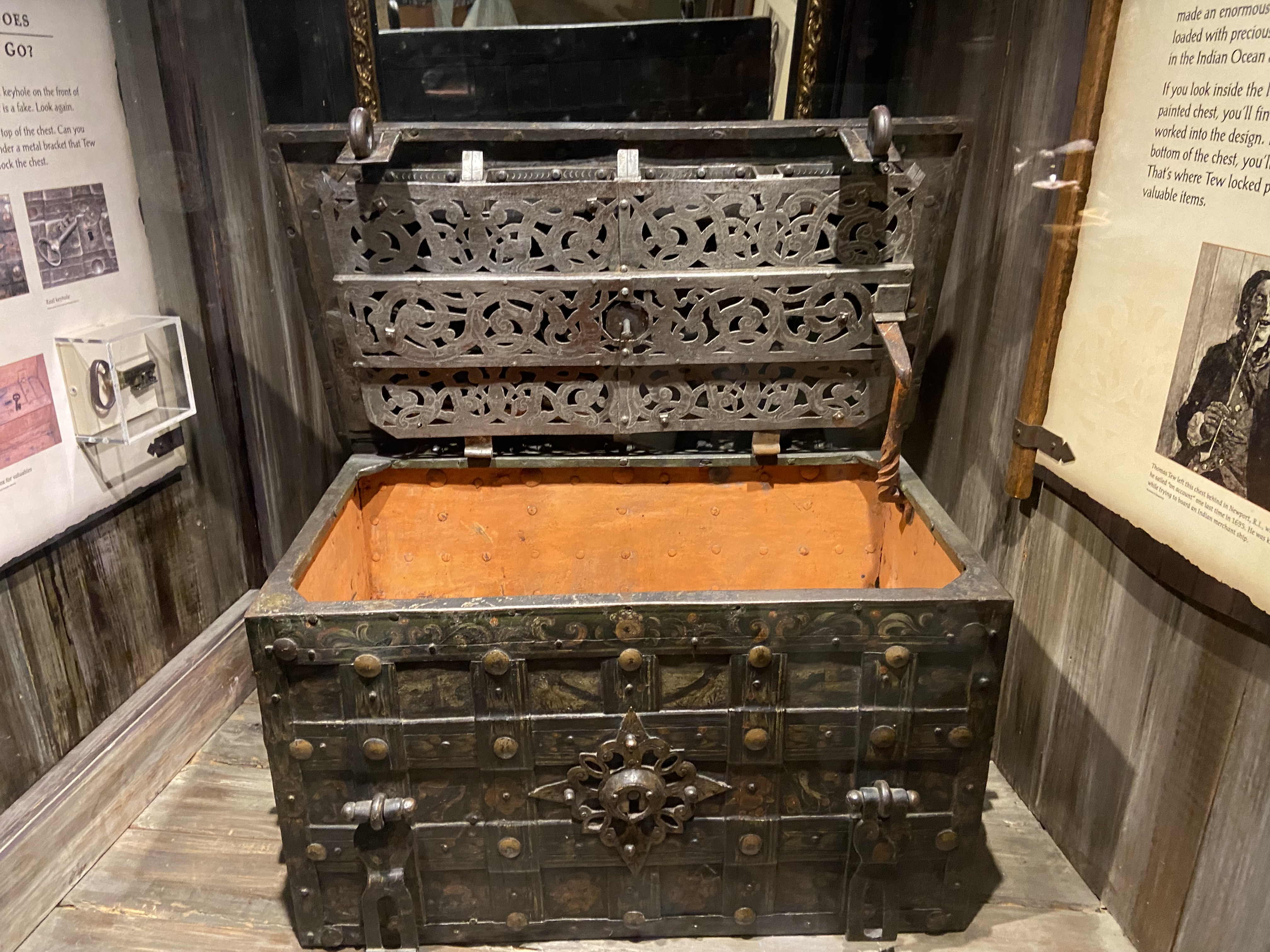
Another item of interest in the Pirate Museum is the “World’s Only Surviving Pirate Treasure Chest.” It once belonged to Thomas Tew, who made a name for himself plundering ships loaded with jewels, ivory, and silk.
In keeping with a criminal theme, my fellow travelers and I also visited the Old Jail in St. Augustine. The road gang concrete statues along the highway beside the museum are a reminder of how prisoners were expected to earn their keep in the overcrowded, primitive jail.

The St. Augustine trolley carried our group from one attraction to another, with a driver narrating the history of the city. With a two-day pass, we rode one entire 90-minute loop the first time to get an overview of what there is to see in the city.
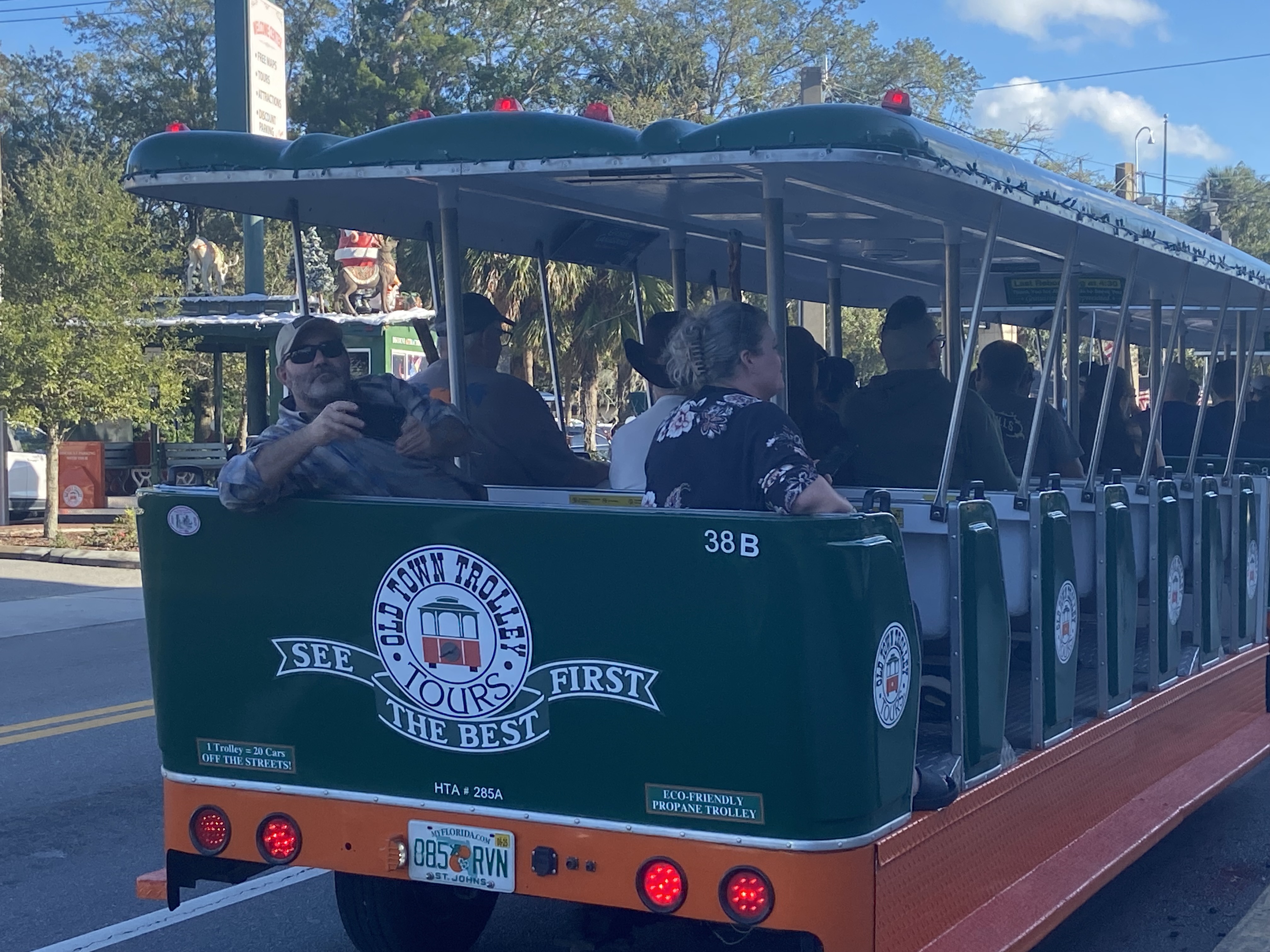
Our trolley took us down Magnolia Street. With its huge oak trees draped in Spanish moss, this street is considered one of the most beautiful in America.

The Cathedral of St. Augustine, completed in 1793, is another lovely attraction. The intricate murals here reminded me of those in grand European cathedrals.

A bonus for us was to see the cathedral decorated for Christmas, complete with a creche.


St. Augustine celebrates the holiday season with a festival that runs from late November through most of January called the Nights of Lights. Approximately three million white lights are strung on old buildings and landmarks. This tree in the Plaza de la Constitucion, the oldest public space in America, is just one example of the white lights we saw twinkling along several streets.

St. Augustine promotes itself as the oldest city in America. What about Jamestown, I wondered, or Plymouth Rock? Well, it seems the Spanish put down roots in what is today the United States before the English. This marker designates the vicinity where Ponce de Leon landed in 1513, searching for that fountain of youth among other things. He named the land Florida, which in Spanish means “flowery.”

It was actually a few more years, though, in 1565, when the town of St. Augustine was founded by a Spaniard named Pedro Menendez. On this same date, a Catholic priest held up a cross and celebrated the first parish Mass.
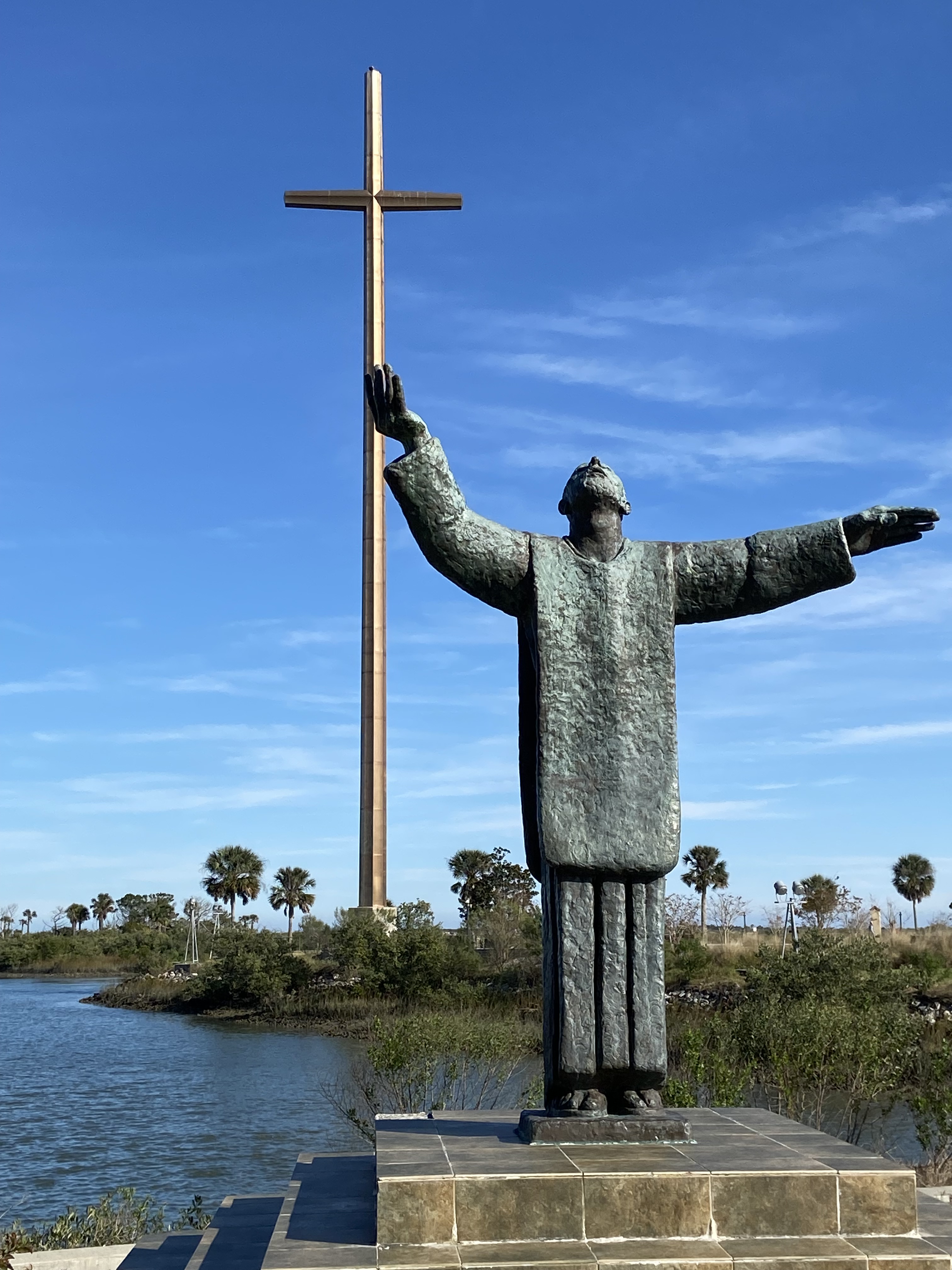
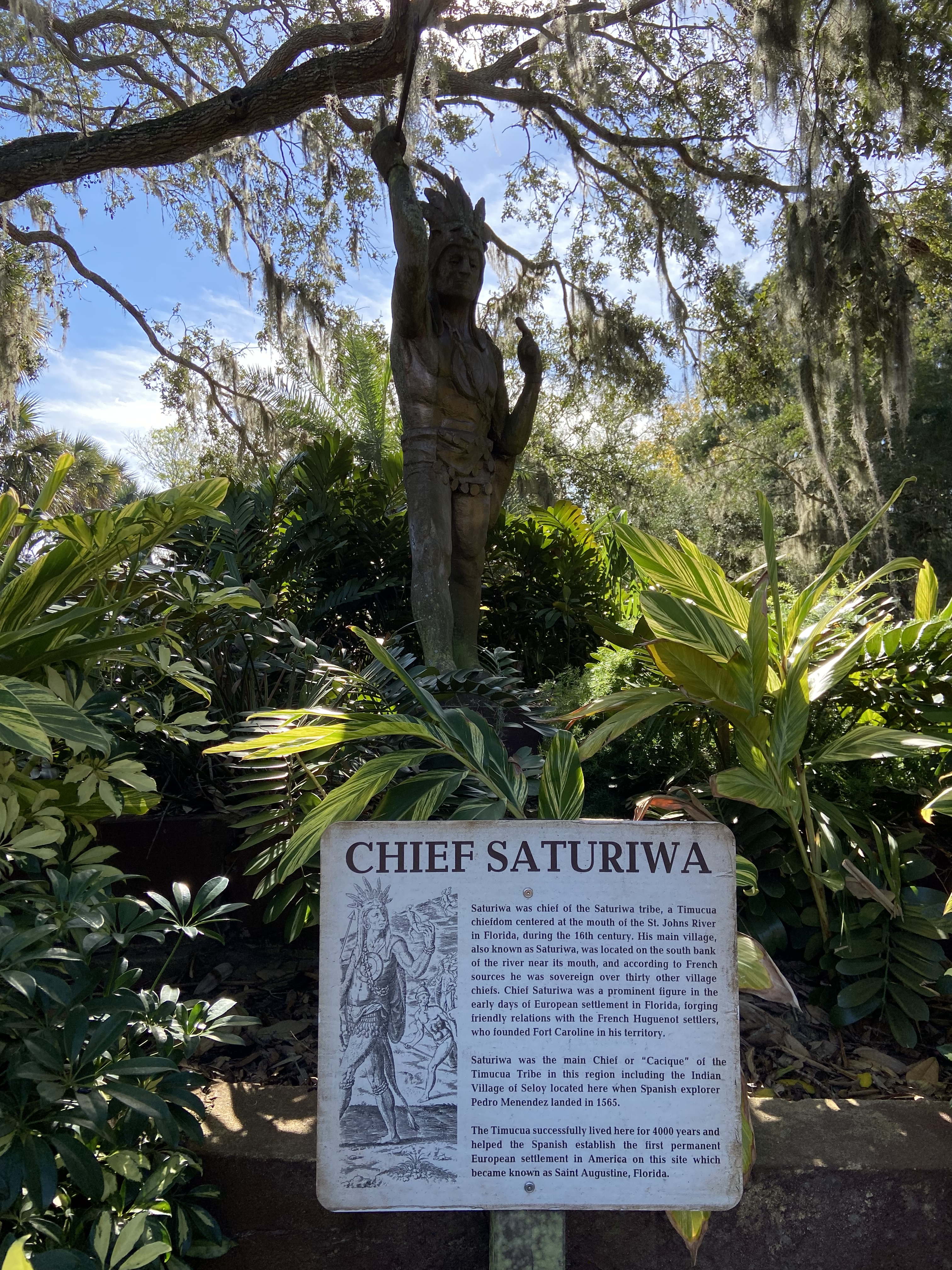
Afterwards, the Spanish settlers and the native tribe, the Timucuans, held a thanksgiving meal together. St. Augustine citizens, proud of their city’s history, like to note this first Thanksgiving was 55 years before the Pilgrims arrived in Plymouth Rock.
The Seminoles are the Native American tribe I think of connected to Florida. I’d never heard of the Timucuans until this trip to St. Augustine. Our trolley driver told us there are still businesses in town that are owned by proud descendants of this native tribe. Their influence in helping the early settlers establish St. Augustine is acknowledged at various sites.
It was a quick, five-day excursion to St. Augustine, which isn’t too hard to drive from eastern North Carolina if the traffic behaves on I-95. Combining a celebration of the new year with a tour of such a historical city was both fun and educational, my favorite kind of trip.





 Patsy Pridgen
A great spot, and post/ photos!
LikeLike