Must I Kill This Darling?

“Kill your darlings.” I’m not talking here about the 2013 movie starring Daniel Radcliff (forever Harry Potter in my mind), but rather a piece of writing advice.

Sometimes for the greater good of a manuscript, it’s necessary to let go off—heck, let’s just say it, to delete—a favorite scene.  Something you as a writer have slaved over, fallen in love with, and think the world would be better for reading.

Except it doesn’t fit with the rest of your book. It doesn’t propel the action forward.  It doesn’t relate to the plot.  It’s off the subject.  It’s wandering around in your novel, just hanging out.  No matter how well-worded or clever this scene is, it doesn’t pull its weight.

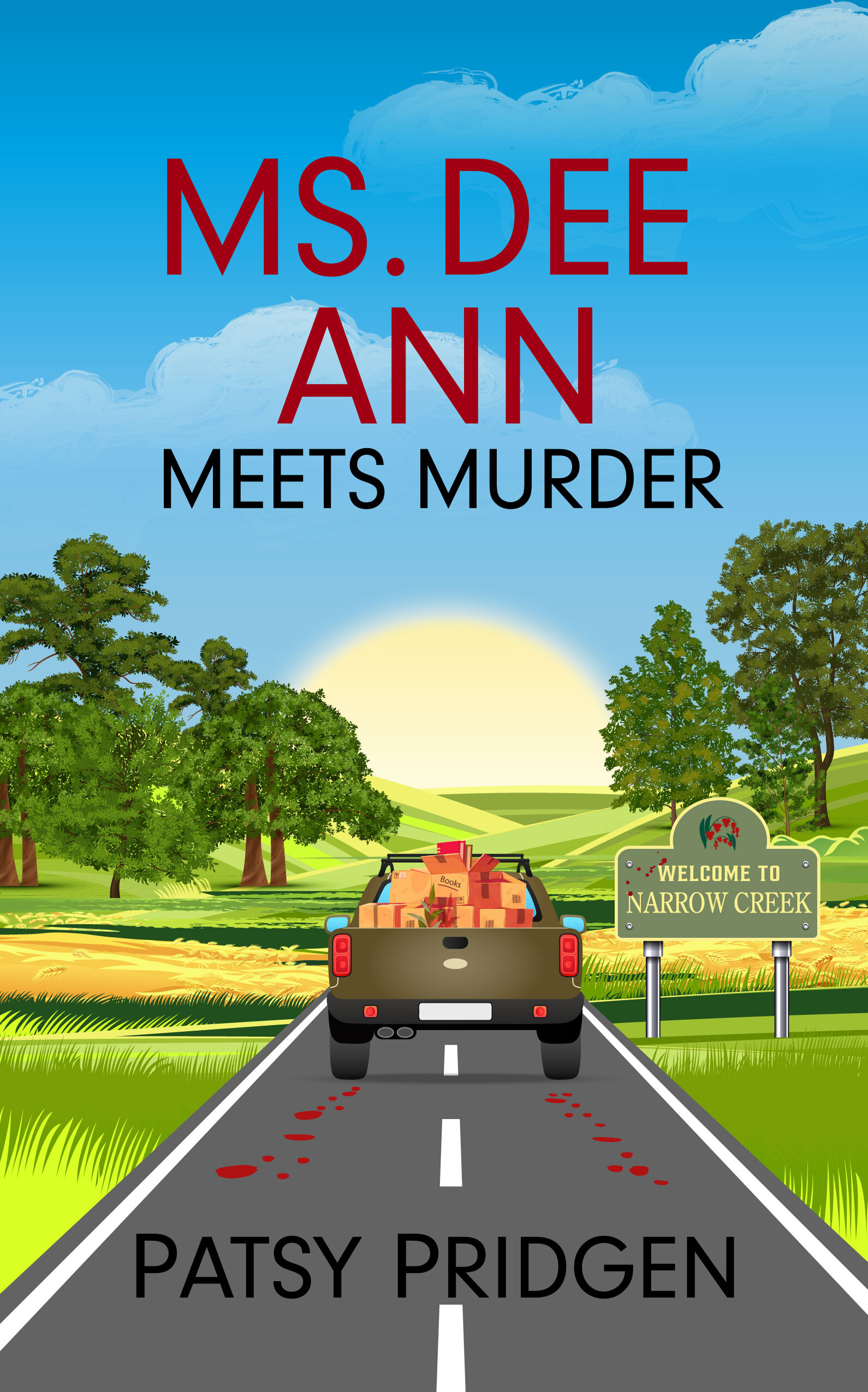
Okay, all these vague “you” references should be in first person because I’m talking to myself here as I endeavor to delete a scene I only recently added to the original Ms. Dee Ann. Here’s what’s happening:

Image result for pictures of hospitals

Baby Heather has been sick with a cold all week and now seems to be struggling for breath. As first-time parents, Dee Ann and Joe rush her to the emergency room, where the attending physician is a female of Indian descent who speaks English with a British accent.


It’s 1979, so female doctors are still rare, as are physicians of foreign birth. Dr. Patel diagnoses the croup: “It scares the parents, but it sounds much worse than it really is.  When you took her outside to get in the car to come to hospital and she breathed cool air, then the coughing stopped, no?”

Joe has no faith in this female Indian doctor and is somewhat rude in asking for a second opinion.  Once Dr. Patel leaves the room, Dee Ann calls him out on his prejudices.

“Joe Bulluck, what is the matter with you?” I hissed the minute the door closed. “What’s this business about a second opinion? …”

“Dee Ann, we just had a medical emergency with Heather,” said Joe. “In case you haven’t noticed, we are at THE hospital.  Where this woman, who speaks a very funy version of English, sashays in and tells us, no big deal, this baby has the croup.  Just stick her in the shower….

“Maybe that’s how the croup, if that’s what Heather has, is treated in a third-world country, but here in the USA, I’m sure there’s some antibiotic that can be prescribed.”

There’s more, and I think it’s good stuff, before Joe is grudgingly made to see that Dr. Patel, although a woman and of foreign birth, is fully qualified.

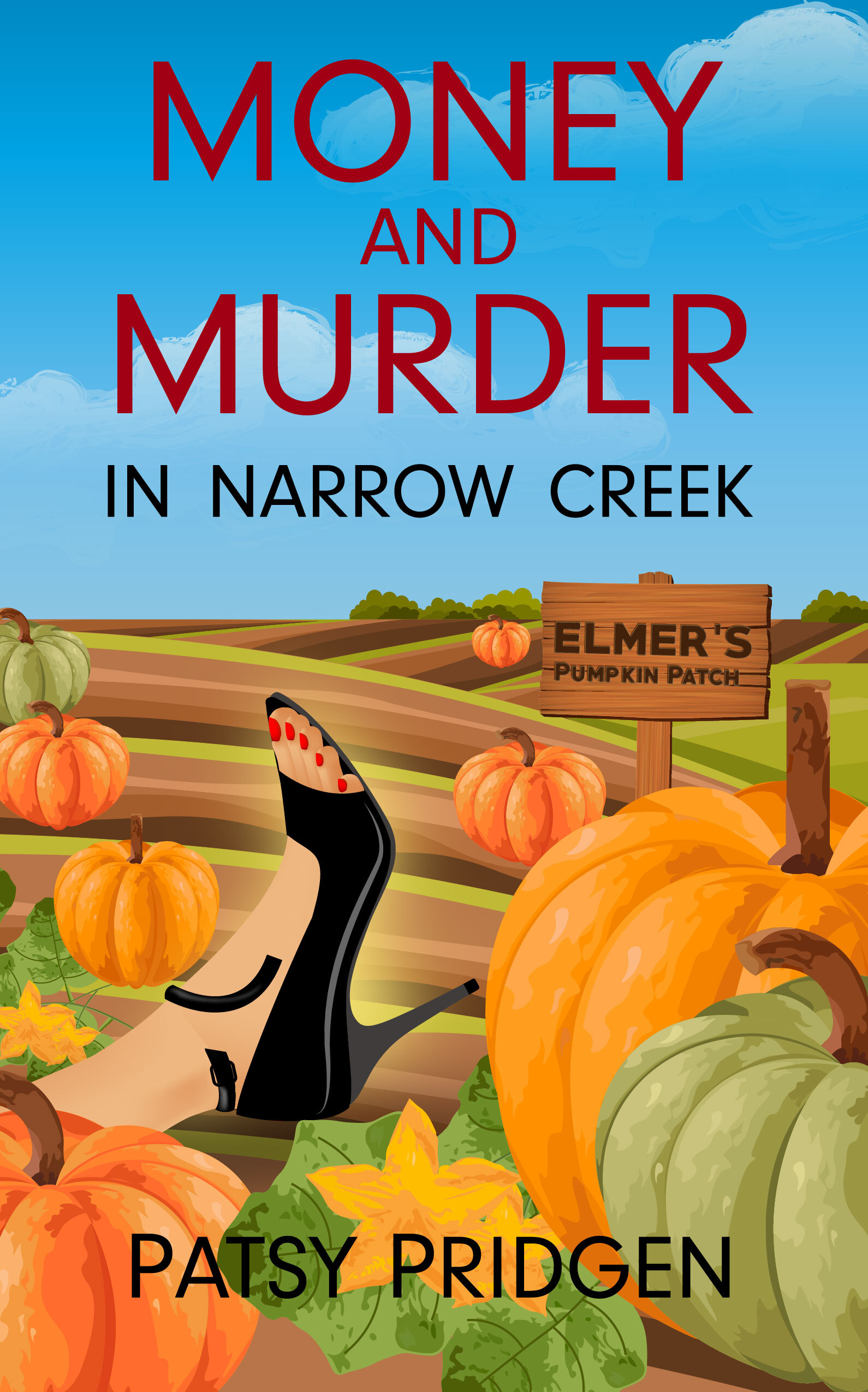
But does this scene do anything to advance the plot of Murder in Narrow Creek, my revision of Ms. Dee Ann? Sadly, no.  Unless I can recast it somehow to drop in a clue or reference to the crime, I must kill this darling.

Posted in Uncategorized | 1 Comment

Red Herrings or Real Clues?

Red herrings, I’ve learned, are a required element in a cozy mystery (see previous posts for more information about “cozies”). The author has to keep the reader guessing, and hopefully guessing wrong, as to whodunit.  Where would the fun be if readers figured out the culprit(s) from the first chapter?

Image result for pictures of the board game clue

In rewriting Ms. Dee Annnow titled Murder in Narrow Creek—I’m having a really good time planting my red herrings mixed in with actual clues.  Right away in Chapter 3, after telling Dee Ann of the murder of ? (I can’t give away too many secrets here), Miss Josie, Dee Ann’s landlady, speculates about the murderer(s):

“Clarabelle Joyner said she heard he [the victim] was involved in drugs although I never saw any sign of that when he was working for me. Clarabelle said drug people will kill each other over their marijuana deals. 

June Hill thinks it was probably just a robbery gone bad. …Someone might have thought [the victim] wouldn’t be home on a Saturday night, broke in to steal his television set and whatnot, and found him there. Then the robber had to kill [the victim] so [the victim] couldn’t identify him.”

Sorry about all [the victim] stuff, but one day you’ll just have to read the book to find out who got killed.

The red herrings (or are they?) continue. A woman in the Narrow Creek Ladies’ Society thinks the murderer might have been a former jilted girlfriend since the victim was a reputed skirt chaser who loved ‘em and left ‘em.  Dee Ann’s hairdresser reiterates the drug theory, relating a story involving her husband.  What’s solid evidence and what’s not?  I hope to keep the reader guessing.

I’m only about a third of the way in my revision, so more red herrings or actual clues are to come. Once I’m finished, I’ll test Murder in Narrow Creek on an alert reader to see whether I’ve succeeded in keeping the identity of the guilty party (or parties) a secret until the very end.

Posted in Uncategorized | 1 Comment

Murder in Narrow Creek

This week, I’ve been rejuvenated as a writer. I’ve decided to revise Ms. Dee Ann, making it into a cozy mystery (see previous post if you’re not sure what this term means), and I’m having a really fun time doing so.

Reading up on “cozies,” I saw that my novel already had many of the elements of this genre. For example, cozy mysteries are gentle books, with little if any violence, profanity, or sex.  That’s my style. Ms. Dee Ann has no bloodshed, the worst swearing is “hell’s bells,” and Heather, the baby, must have arrived via the stork.

Of course, there has to be some violence if a murder occurs, which I’ve decided will, but this crime takes place offstage. No torture, no gore, just a somewhat humorous reporting of the crime by Dee Ann’s landlady.  As should happen in a cozy, the victim is an unlikeable character who has treated others badly and maybe deserves to die.

Image result for clip art of jessica fletcher


The protagonist in a cozy mystery is often a bright, resourceful woman (think television’s Jessica Fletcher here) who is keenly interested in the crime and maybe works to solve it. Bingo! I have Dee Ann, who will keep up with all the latest developments in the investigation of this shocking murder that has occurred in her new hometown, Narrow Creek, and will be on the scene when the crime is finally solved.

Speaking of Narrow Creek, I’ve learned a cozy mystery often takes place in a small town, making it easier for all the characters, suspects and sleuths alike, to interact. As more than one character remarks in my novel, in Narrow Creek everybody knows everybody’s business.  People love to gossip and in doing so, clues could possibly be revealed.

Or what seem to be clues. More in my next post on the importance of red herrings in cozies and how I plan to plant them in my novel.  Which, incidentally, has now been renamed Murder in Narrow Creek.


Posted in Uncategorized | Leave a comment

Cozying Up to a Cozy Mystery

I had never heard the literary term cozy mystery (or cozies) until I started marketing my novel Dee Ann. From the number of agents I saw requesting cozies, I decided this genre must be a popular one. Exactly what is a cozy mystery, I wanted to know.

Here’s the definition I found on Wikipedia: “Cozy mysteries, also referred to as ‘cozies,’ are a subgenre of crime fiction in which sex and violence are downplayed or treated humorously, and the crime and detection take place in a small, socially intimate community.”

In fact, now that I know what they’re called, I realize I myself have enjoyed several cozy mysteries.

The Cat Who Knew Shakespeare by Lilian Jackson Braun

For example, I recall becoming positively addicted to the “Cat Who” books by Lilian Jackson Braun: The Cat Who Could Read Backwards, The Cat Who Saw Red, The Cat Who Knew Shakespeare, The Cat Who Lived High…etcetera, etcetera.  I read as many of the twenty-nine in the series as I could get my hands on.

Today, I couldn’t tell you how a single mystery was solved in any of the books, but I remember the eccentric main character, Jim Qwilleran (Qwill) and his clue-sniffing Siamese cats, Koko and Yum Yum. I loved reading about their lives in Moose County, “400 miles north of everywhere.”

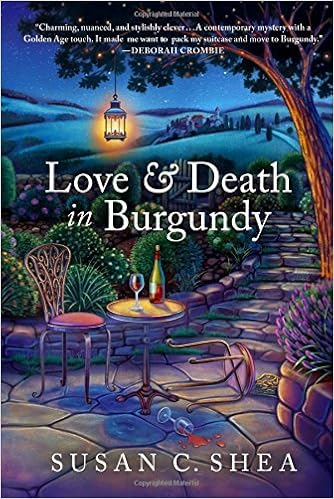
Recently, I finished a new release, Love & Death in Burgundy by Susan C. Shea.  Set in a small village in France, this cozy mystery is as much about the problems of a transplanted American wanting to be accepted by the natives as it is about discovering how Monsieur Bellegarde actually died.

Image result for love & death in burgundy

But that’s the hook of cozy mysteries. The reader gets so immersed in the life of the main character, a.k.a. the amateur detective, that usually the whodunnit becomes secondary.

Hmm, maybe I should revise my novel. I could kill someone off, and Dee Ann could become an amateur sleuth.  Readers do like a page-turner.

Posted in Uncategorized | Leave a comment

Somebody Named Willie

One of the themes explored in Ms. Dee Ann is that of race relations in the South at the end of the 1970s.  The landmark Civil Rights Act of 1964 outlawing discrimination based on race, color, religion, sex, or national origin had been the law of the land for fifteen years when the novel takes place, but as Dee Ann witnesses in Chapter 2, it’s hard to legislate attitudes.

Here’s the scene where Dee Ann and her husband Joe meet Floyd and Josephine (Miss Josie) Vaughan, their sixty-something landlords, on moving day. Dee Ann, Joe, and baby Heather will be living in a modest apartment built just a stone’s throw behind the Vaughans’ stately brick Colonial.  After sending Floyd to find “somebody named Willie” (Dee Ann’s words) to help Joe unload, Miss Josie is gushing over baby Heather.

“Heather. What a precious name for such a precious baby.”   Suddenly she straightened up from leaning over Heather, and her expression, which had been all soft and sweet when she was cooing over Heather, soured.

“Where is Willie? I declare, that colored man gets lost every time I turn my back.”

Joe and I both flinched a little. Who in the world said “colored” anymore?

“It’s Floyd’s idea to keep him around the house all day to do odd jobs. But of course all he ever does is eat me out of house and home.  Floyd ought to be the one taking out the trash and working in the yard anyway. But no, he says.  He has to have his free time. 

He goes to eat breakfast at Ernie’s Grill every morning with a bunch of his cronies and then sits there and gabs away half the day.   I tell everybody we don’t need Jimmy Carter in Washington when we got Floyd and his crowd in the corner booth at Ernie’s.  But while Floyd’s putting in his two cents’ worth about inflation, I’m left here trying to think up work for Willie.”

About this time, Mr. Vaughan ambled around the far corner of the big house followed by an old stooped black man wearing overalls and a ball cap.


Image result for segregation signs

Miss Josie’s outdated labeling of Willie as “colored” and her accusation that he tries to avoid work while wolfing down her food show that old racial stereotypes are still alive in Narrow Creek, North Carolina, in 1979.

Posted in Uncategorized | Leave a comment

Choosing Not to Add Add-a-Beads

Remember my last post about anachronisms, those careless references in fiction to things that belong to another time? Writing Ms. Dee Ann, a novel set in 1979, was fun—I could refer to Jimmy Carter being in the White House, for example—but tricky—I had to watch out for those anachronisms.

In one scene, I have Dee Ann confronting her friend Marilyn about her marital infidelity. Dee Ann demands to know “the whole truth” about Marilyn’s long evening out with a book salesman at an educators’ conference the two had attended.  Marilyn, while denying any wrongdoing, nervously begins to twist the chain of her long gold necklace.

“Marilyn,” exclaims Dee Ann, “you got in that night at three a.m.! I didn’t just fall off the turnip truck….  You couldn’t have been sitting in the Beef Master Inn eating dinner half the night.  I’m sure the place closes by midnight or so.  Or at least the restaurant does.  I don’t know about the inn part.”

The chain Marilyn is twirling gets tighter and tighter around her neck. I love the image here of the necklace becoming a noose, the truth choking Marilyn as Dee Ann confronts her.

While writing this scene, I got an idea. Why not make that necklace an add-a-bead? I had one of those long chains with the gold beads myself back in the day.

Image result for picture of 1980s add a bead necklace

But exactly when back in the day? Time to google.  Alas, all the sources agreed:  those preppy gold add-a-bead necklaces were popular in the early 1980s, a couple of years after the time of the novel.

I could probably get away with it, but somewhere out there, an alert reader might pick up on the anachronism. Not important enough to use it—or change the year of the novel to accurately accommodate a reference to the old add-a-bead necklace.

Marilyn’s necklace remains simply a long gold chain.

Posted in Uncategorized | Leave a comment

Grease Is the Word

In college, while other students were learning skills that would help them earn a living one day, we English majors would sit around in our classes looking for anachronisms in literature.

An anachronism is something that appears in a time where it does not belong. For example, we would find a passage in Shakespeare’s Julius Caesar, set in 44 BC, where Cassius says, “Brutus: Peace! Count the clock,” and Cassius replies, “The clock has stricken three.”

The anachronism here? Mechanical clocks had not been invented in 44 BC but were common in Shakespeare’s time. Gotcha, Shakespeare! We lit nerds felt so clever.

Recently, an editor of Ms. Dee Ann, my novel in progress, got me. I wrote a scene where Dee Ann goes to the Kut and Kurl for a new hairstyle and tells her beautician, “Veronica, I want to look like Olivia Newton-John in the final scene of Grease.”

Image result for Olivia newton john in final scene of grease

“Honey, I seen that movie and I know that hairdo,” Veronica replies. “I think we can do it. You know, you kinda look like her in the face too. This is gonna be fun.”

The problem here, my alert editor pointed out, is that the novel was set in 1977, a year before the movie Grease came out. She suggested either I set the entire story a year later so Dee Ann could use this reference, or choose another hairstyle.

I was fond of the Grease reference. I liked not only the hairdo part but Veronica’s comment that Dee Ann resembled Olivia Newton-John. I felt with that reference I got a lot of descriptive bang for my buck.

I moved the date of the novel ahead two years, 1979, figuring Grease probably took a while to come to the one movie theater in the little town of Narrow Creek.

Posted in Uncategorized | Leave a comment

My Luck in Finding Kindred Spirits

Happy St. Patrick’s Day. The luck of the Irish was certainly with me the day I joined the Rocky Mount Writers’ Guild.  We’re a diverse group of people with one thing in common:  we like to write.

Image result for picture of a shamrock on a book

There are usually eight to ten of us who gather the second Thursday night of each month. Each meeting begins with a prompt (more about that in a minute), and then anyone who has brought something for critiquing reads it to the group.

If you like to write and don’t mind sharing with a group, come join us. Click on my contact page (Contact Patsy) and send me a message, and I’ll give you the specifics of our next meeting.

Let me finish with what I wrote at one meeting in response to this prompt: you’re sitting in the street waiting for a man to come out a door.

Bet my Daddy never thought I’d track his sorry ass all the way to New York City. But here I am, big as life, in the back seat of this yellow taxicab waiting for him to come out the door of that café across the street, where his landlady told me he eats breakfast every morning. 

“The Pancake Palace, corner of 57th and 9th,” she said.  “Can’t miss it, hon.  You must be Sarah Jane.  Your father talks about you all the time.  Tell your mother to come in and meet me.  What? Oh, she’s waiting in the cab for you?  Maybe later then.”

Yeah, I told her, Mama’s in the cab. But she ain’t.  She’s back home, six feet under, where my daddy put her.  And now I’ve come to see about some justice.


Posted in Uncategorized | 1 Comment

The Einstein Question

Wow, talk about debunking a hero. I have always admired Albert Einstein—who hasn’t—but after reading The Other Einstein by Marie Benedict, I’ve taken a second look at the scientist most often credited with E=MC2.

The book is fiction, but it is based on the very real Albert Einstein and his first wife, Mileva Maric, a gifted Serbian mathematician and physicist. Einstein met Mileva Maric in 1897 while they were both students at the prestigious Swiss Federal Institute of Technology, an elite school for the study of science and mathematics in Zurich.  Mileva Maric was the only female student in the class.

As the story is told in The Other Einstein, Mileva unintentionally sacrifices her own ambitious dreams when she marries Albert.  Thinking theirs would be a union of intellect as well as love, she aids him in his early studies, significantly contributing to the theory of relativity.

Related image

Albert Einstein uses her brain but not her name, giving her no credit on his famous reports that built his reputation and eventually earned him a Nobel Prize. He treats Mileva as a traditional early 1900s wife, relegating her to cook, housekeeper, and childcare.

And he is unfaithful to her as well, eventually causing their divorce when he consorts with his cousin Elsa Lowenthal, who eventually became the second Mrs. Einstein.

A most interesting read, but how much of this is true? Articles I found on the Internet acknowledge there has been debate as to Mileva Maric’s role in Einstein’s work, especially in the question of whether she co-authored his 1905 paper on special relativity.

But many of the sources I read go on to say there is no hard evidence that Mileva Maric was instrumental in her husband’s work. These critics say that letters Einstein wrote to Mileva speaking of “our work on relative motion” are just the babblings of a young man in love.

Who knows for sure the extent of scientific contribution by the other Einstein, Mileva Maric? No one, it seems.  Still, The Other Einstein is an entertaining and thought-provImage resultoking read.


Posted in Uncategorized | Leave a comment

Give Me Mr. Darcy

Thirteen years ago, when my newly formed book club was mapping out its first year of reading, one of our original members declared, “Okay, ladies, just let it be known:  I’ll read anything except throbbing thighs and heaving bosoms.”  We all got a good laugh, but I was glad she spoke up.  I don’t like modern romance novels either. 

By the number of such books on the market, however, it seems somebody does.  Sales of romantic and its naughty cousin erotic fiction for 2016 were estimated at $1.5 billion—yes, that’s billion with a “b.”  It’s the top-selling sector of the book market, beating science fiction, mystery, and literary novels.

Wow.  If only I could bring myself to write such stuff.  But I can’t write what I don’t want to read.  I barely got through the first Fifty Shades of Grey, which I felt compelled to check out of the library to see what all the hoopla was about.  I don’t know what happened to Anastasia and Christian after book one, and I don’t care–unlike lots and lots of other people, who bought the second and third volumes of the trilogy and went to see the movie.

I’m afraid Jane Austen has ruined me.  My romance novels have to be gentle, full of intrigue and social commentary.  I sigh over Mr. Darcy, now forever imagining him as Colin Firth portrayed him.  Ever so much more refined than that kinky Christian Grey.  And I’ve yet to see a modern-day romance with anything close to the great line that begins Pride and Prejudice.

Image result for colin firth as mr. darcy

“It is a truth universally acknowledged, that a single man in possession of a good fortune must be in want of a wife.” 

Oh, my.  I think I just felt my bosom heave. 


Posted in Uncategorized | Leave a comment