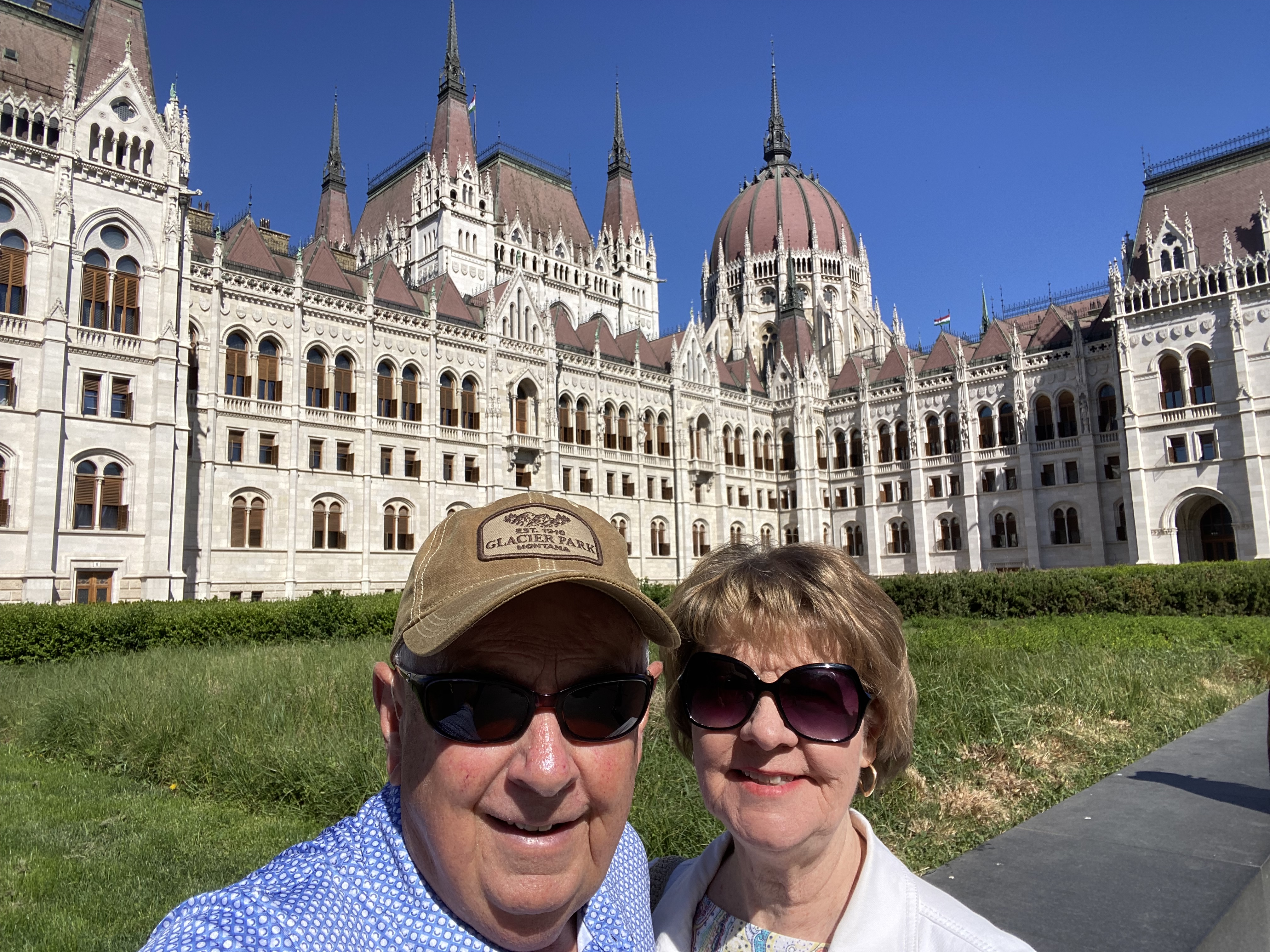
My husband and I saw the Hungarian Parliament Building up close this time on our recent trip to Budapest. Hurray! Almost five years ago in the aftermath of Covid, we were denied entrance to Budapest and had only an across-the-Danube view from our riverboat.
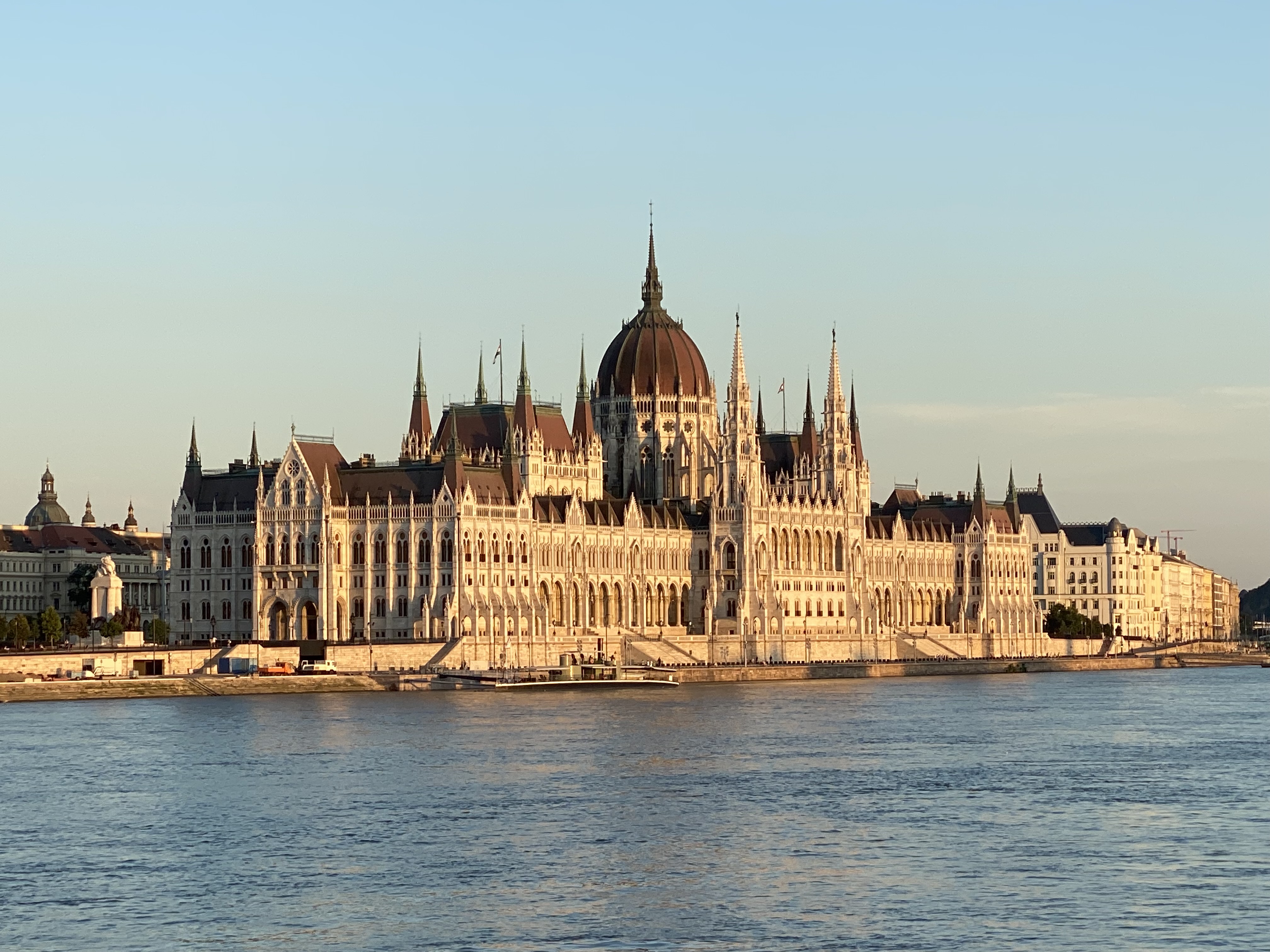
The ornate Parliament Building, seat of Hungary’s National Assembly, is the largest building in the country and one of the top tourist attractions in Budapest. I particularly like this picture I took near sunset on our first day in the city.
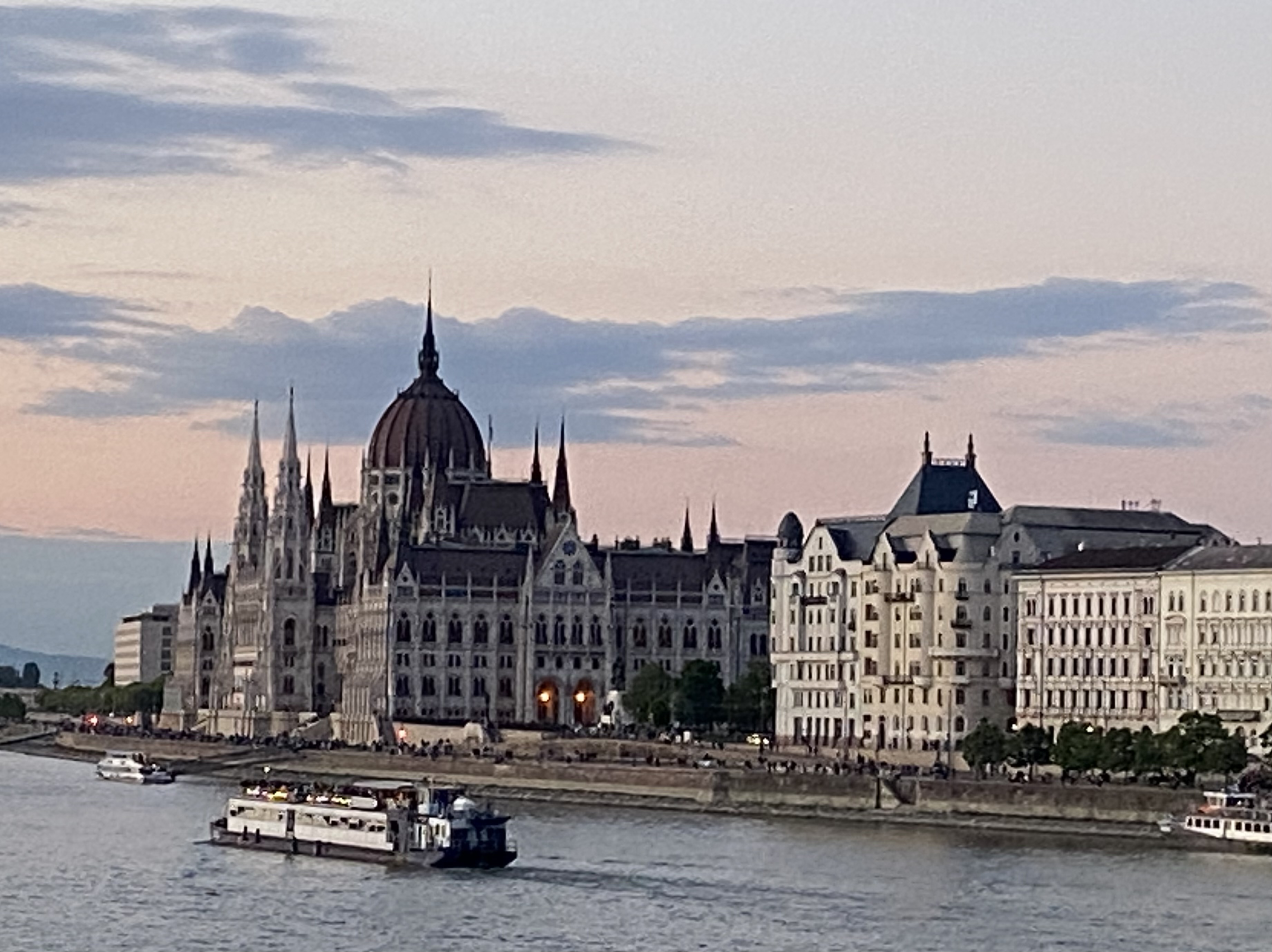
Touring the Parliament Building is so popular, in fact, there were no tickets available for the three days we were in Budapest. We found plenty to see on the grounds, though, including this statue of President George H. W. Bush, honoring him for his role in supporting Hungary’s transition to democracy from communism.
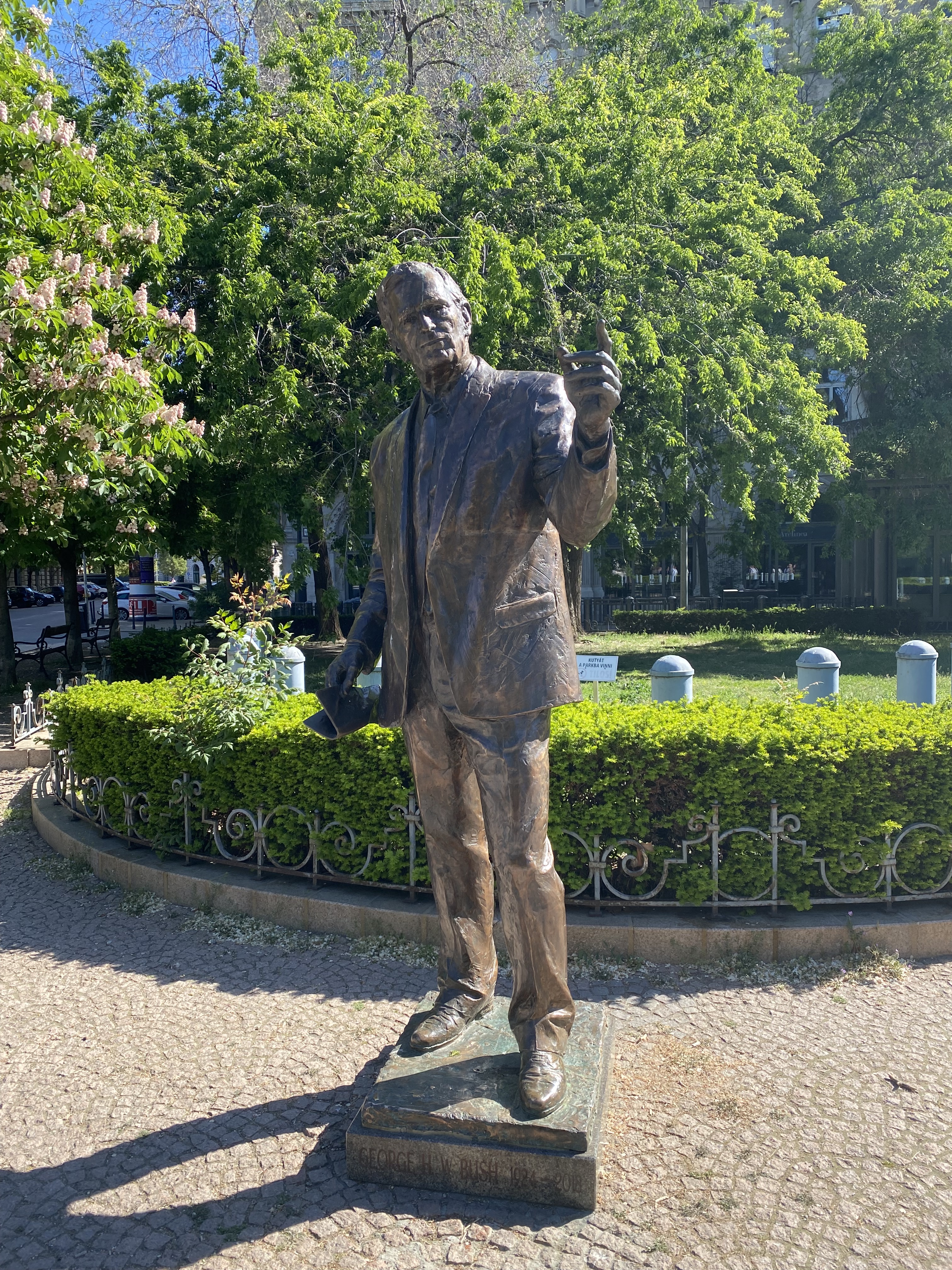
Especially interesting to us was the story of the unsuccessful Hungarian Revolution of 1956, led by university students who wanted the Soviets out of their country. Buildings near Parliament still show bullet holes from shots fired by the authorities as Hungarians protested in Kossuth Square.
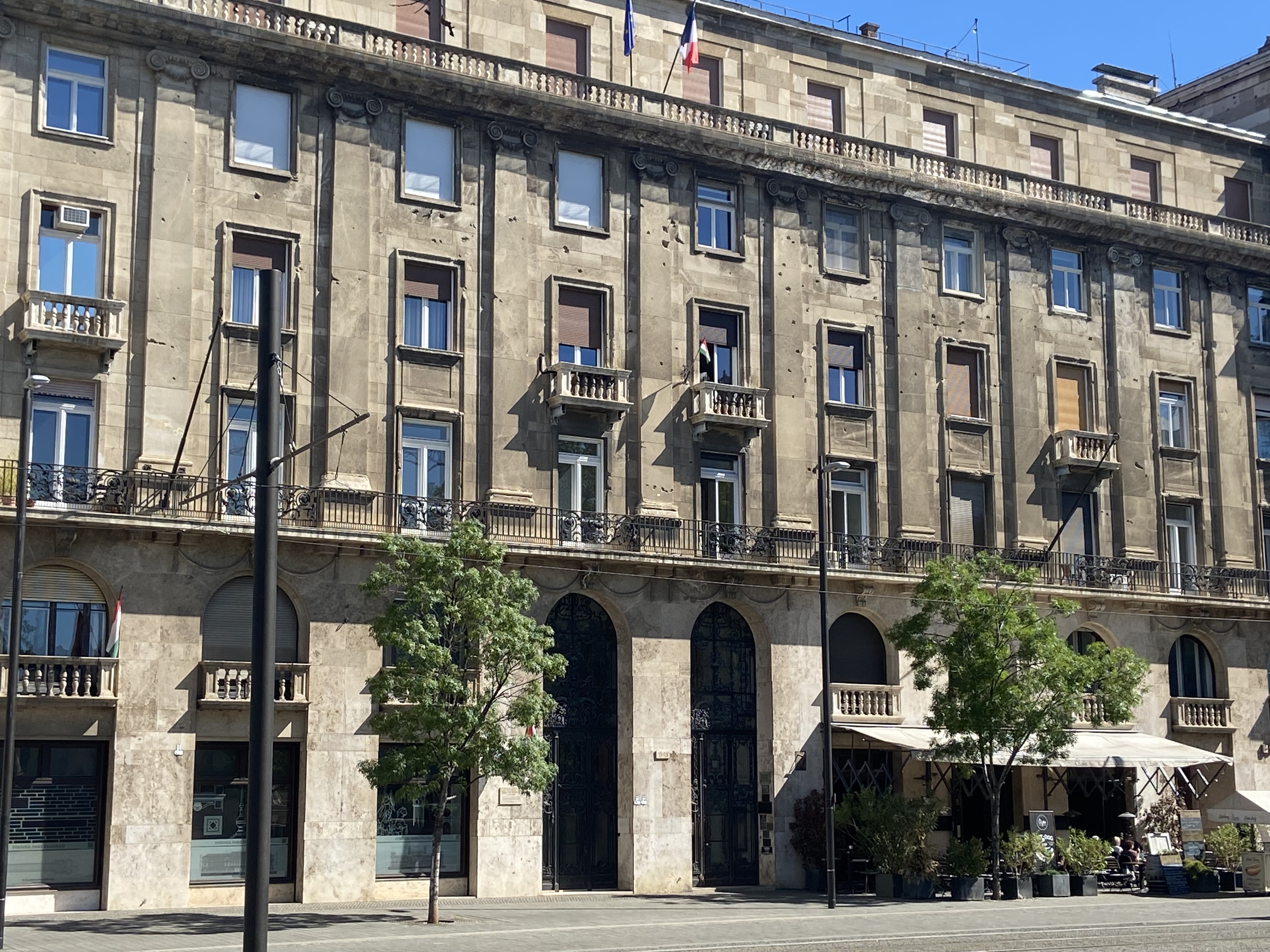
An underground museum on the square tells the story of the brief, ill-fated attempt to throw off Soviet rule.
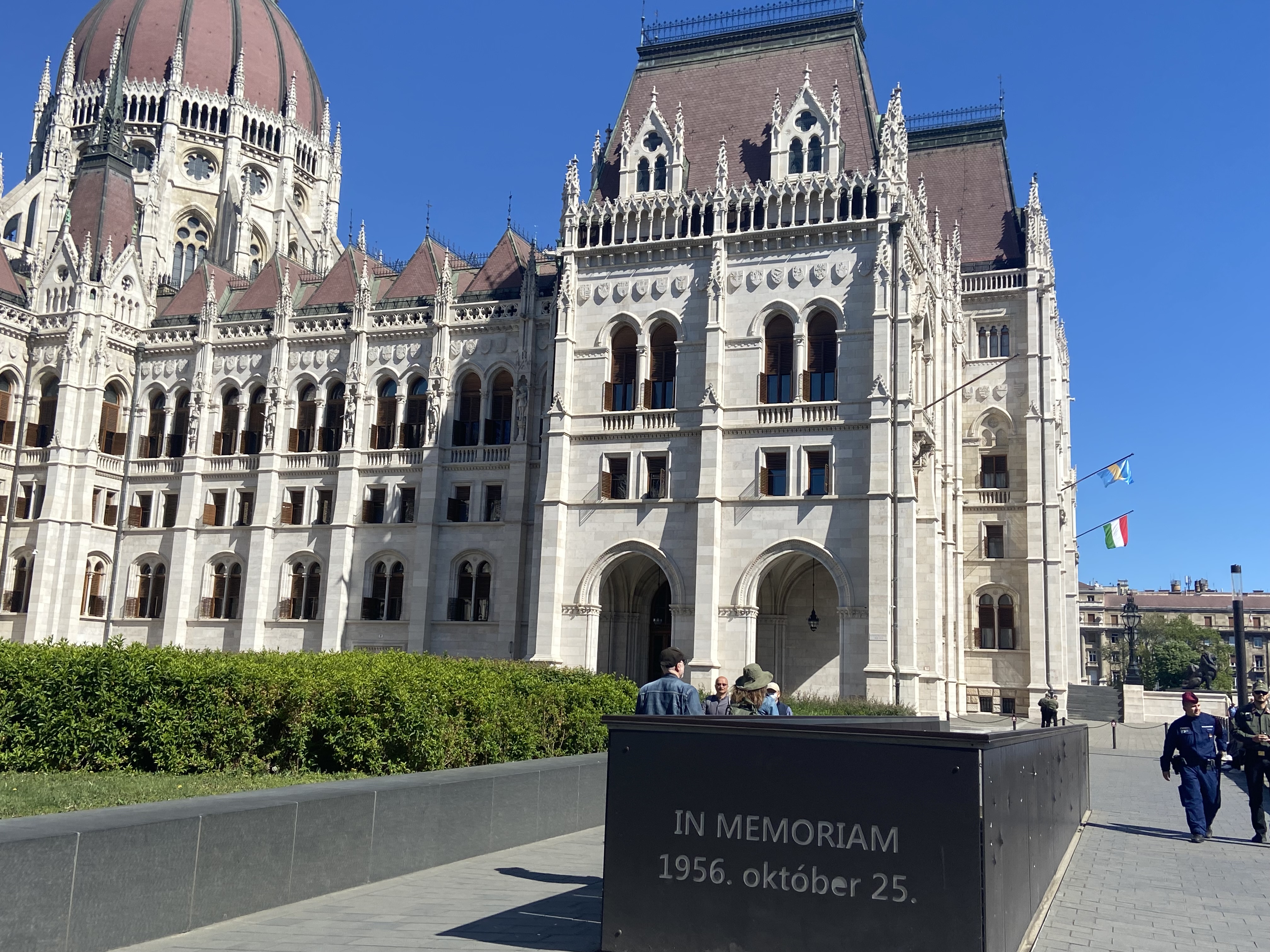
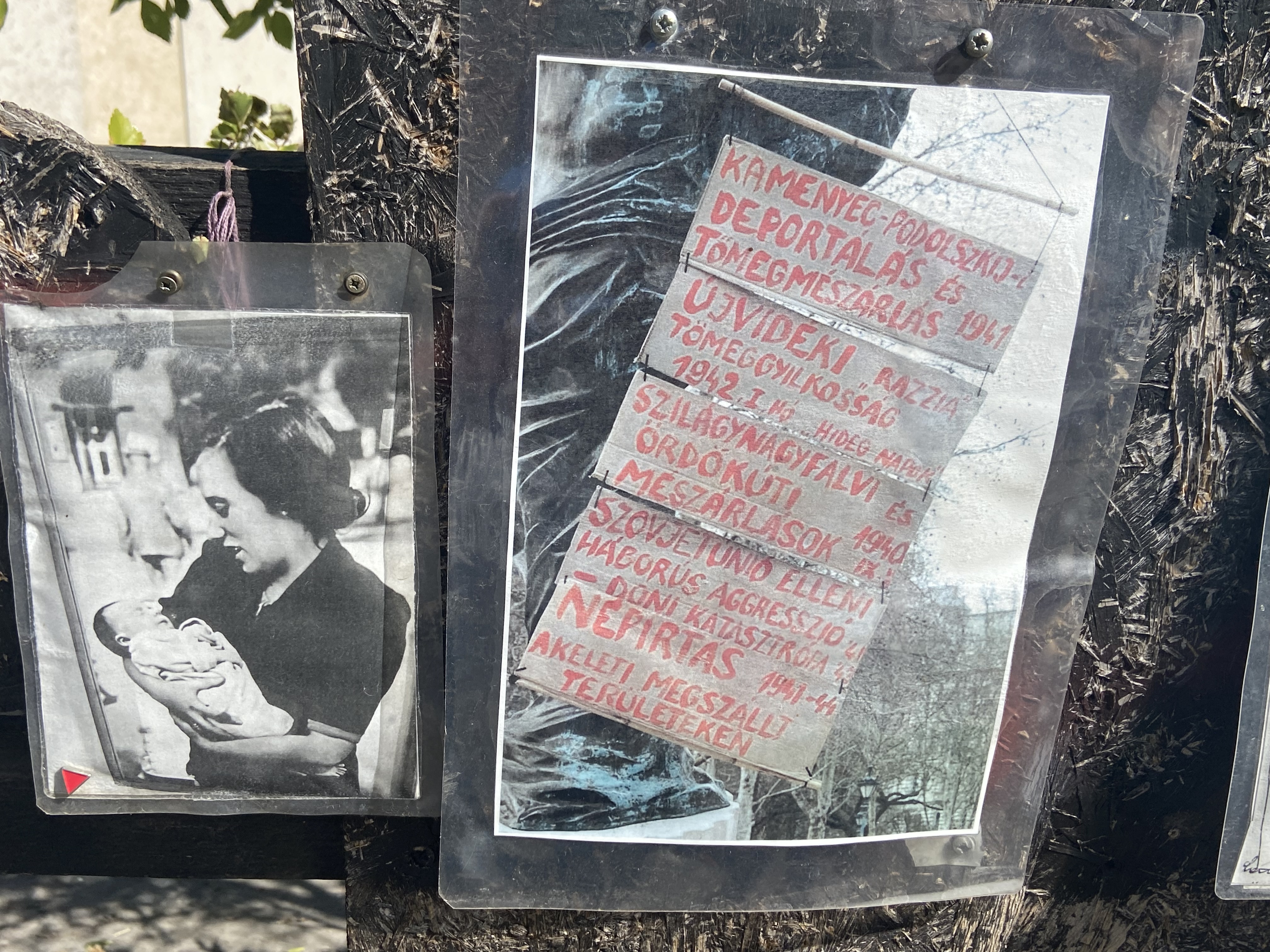
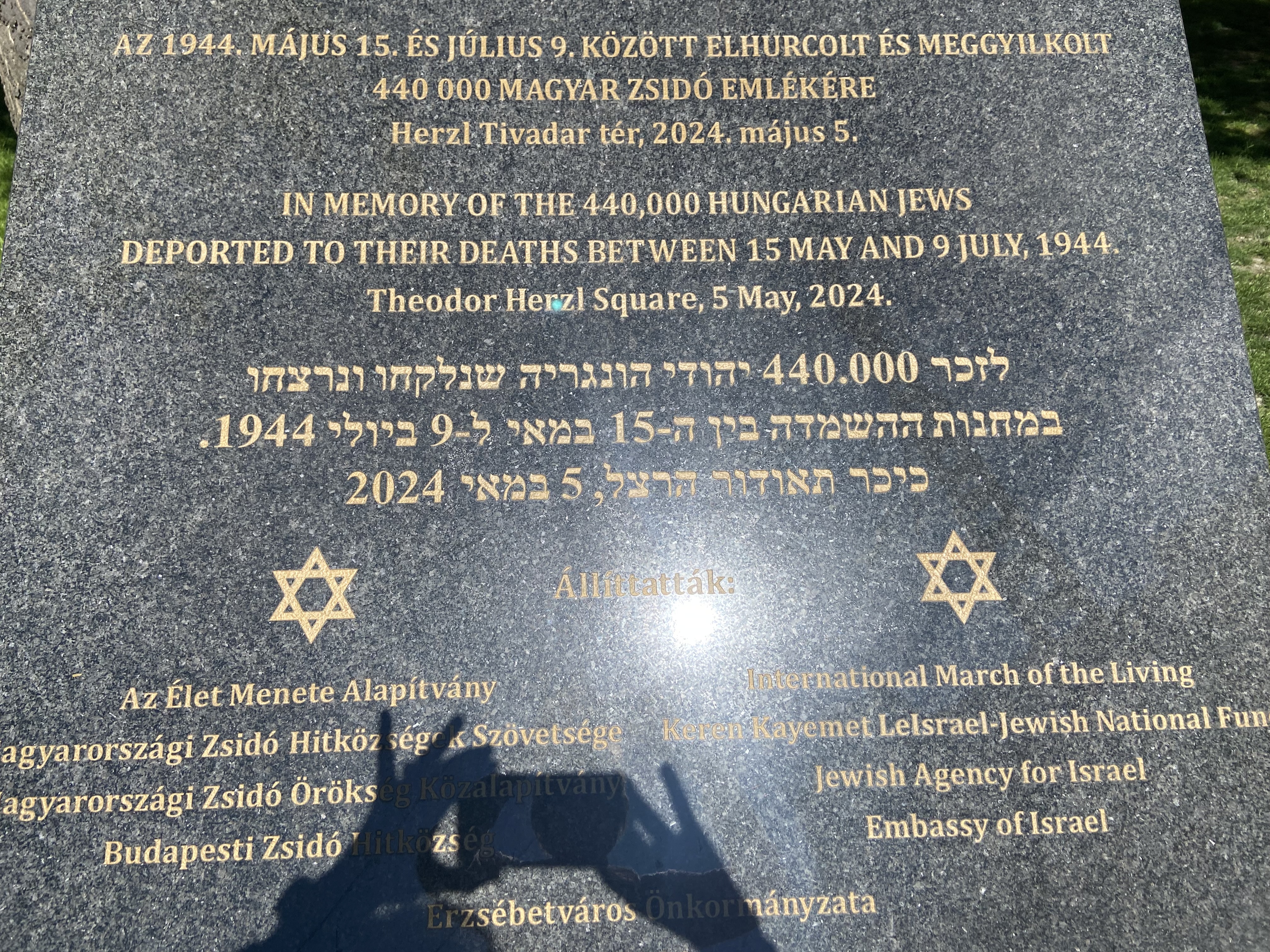
We also saw a memorial for Holocaust victims on the grounds. (Note: This sign was entirely in Hungarian; AI translated it into English for me.) It’s interesting to note that World War II is called the “War Aggression Against The Soviet Union.” I think it’s fair to say Hungary has a traumatic past.
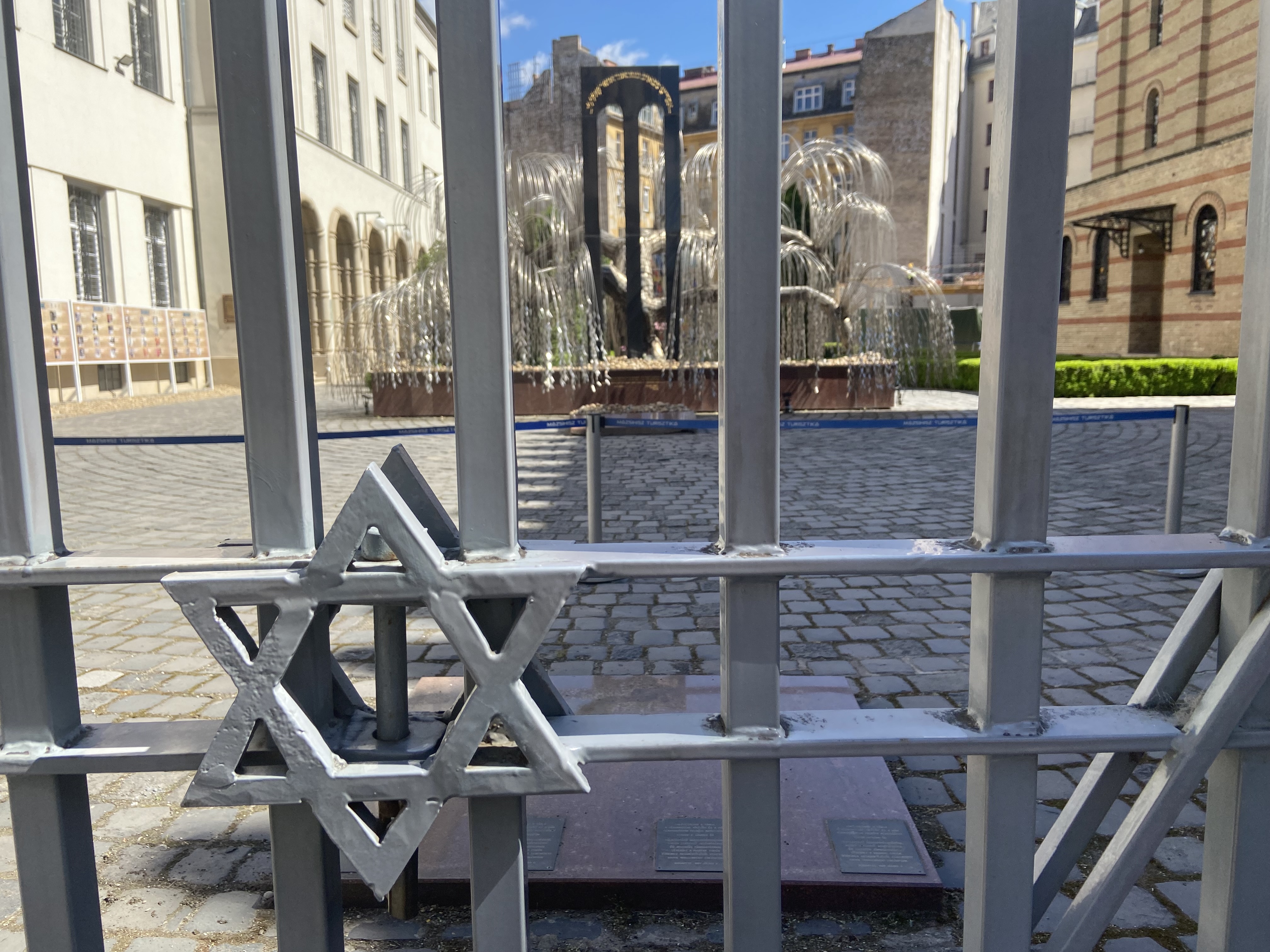
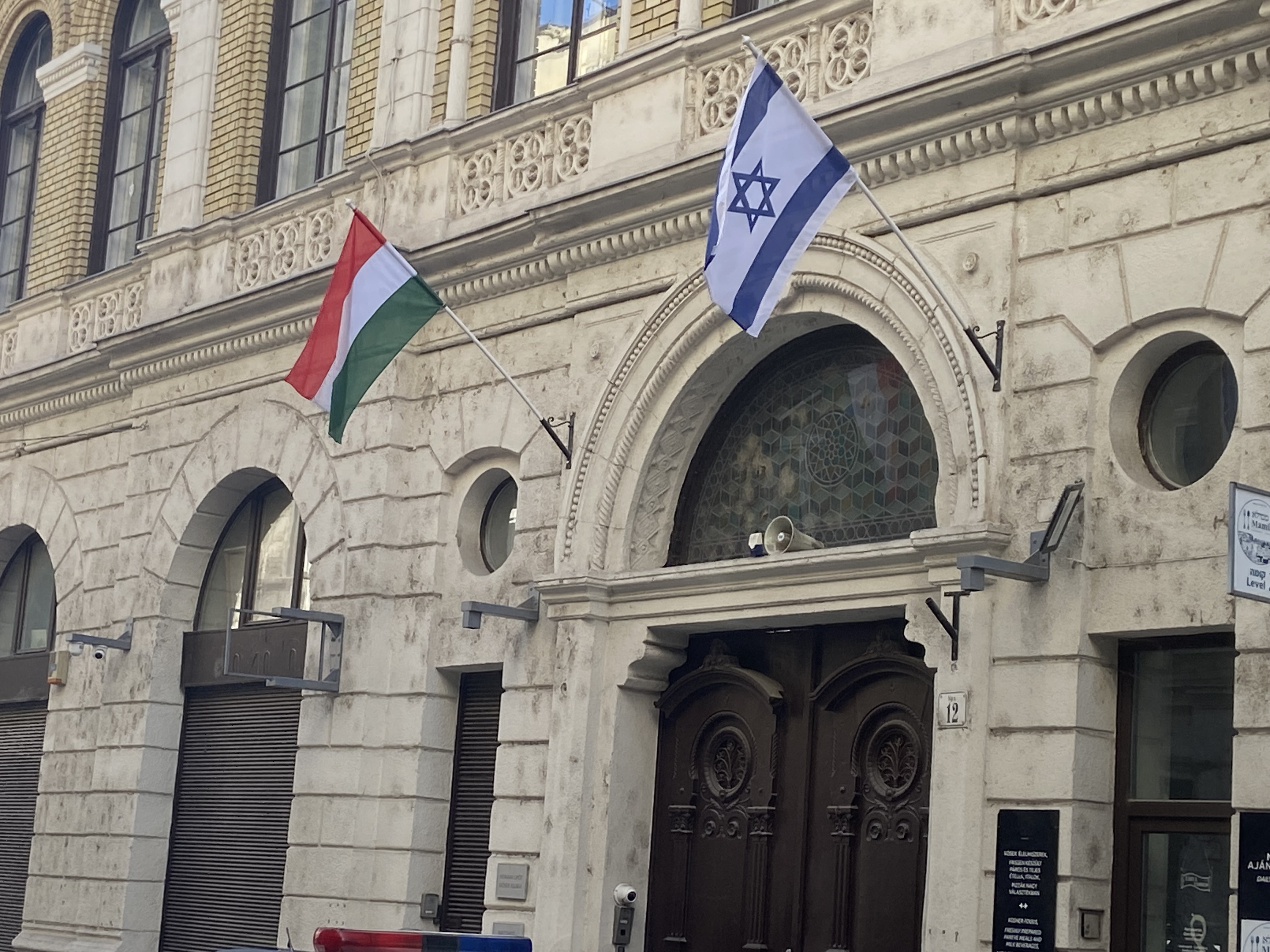
This sad history was reinforced when we walked around what’s called the Jewish Quarter of Budapest.
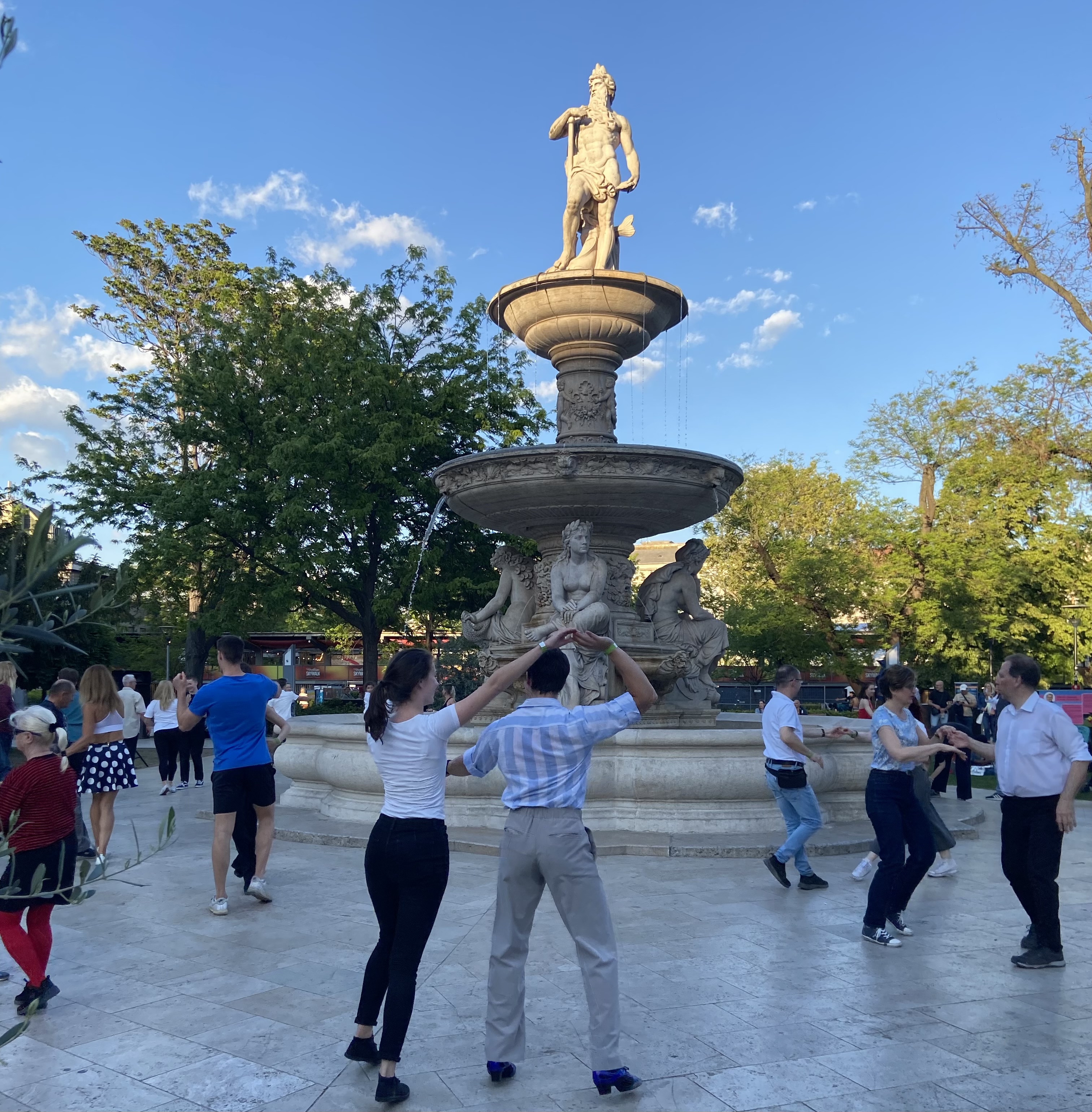
In contrast to the tragic history of Budapest, however, was the upbeat spirit we felt strolling along the streets near our hotel in the Pest part of the city. For example, we stumbled upon these Saturday night dancers taking advantage of the paved Erzsebeth (Elizabeth) Square surrounding the Danibus Fountain.
Those shoes (circled) worn by a male dancer were a bright blue with a little heel on them. European fashion? I loved it.
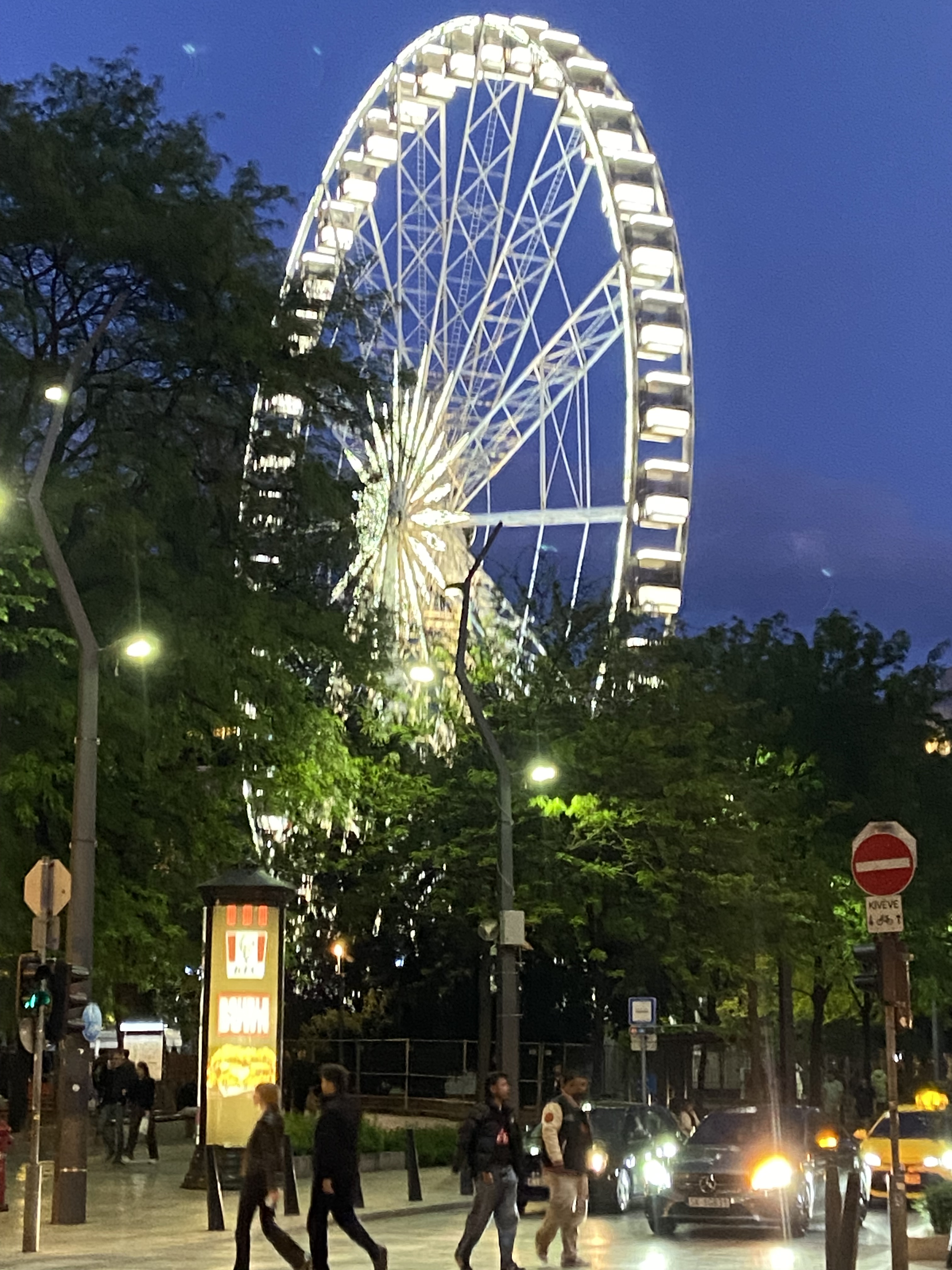
Of course we took a spin on the Budapest Eye, the giant enclosed Ferris wheel which we could see from our hotel.
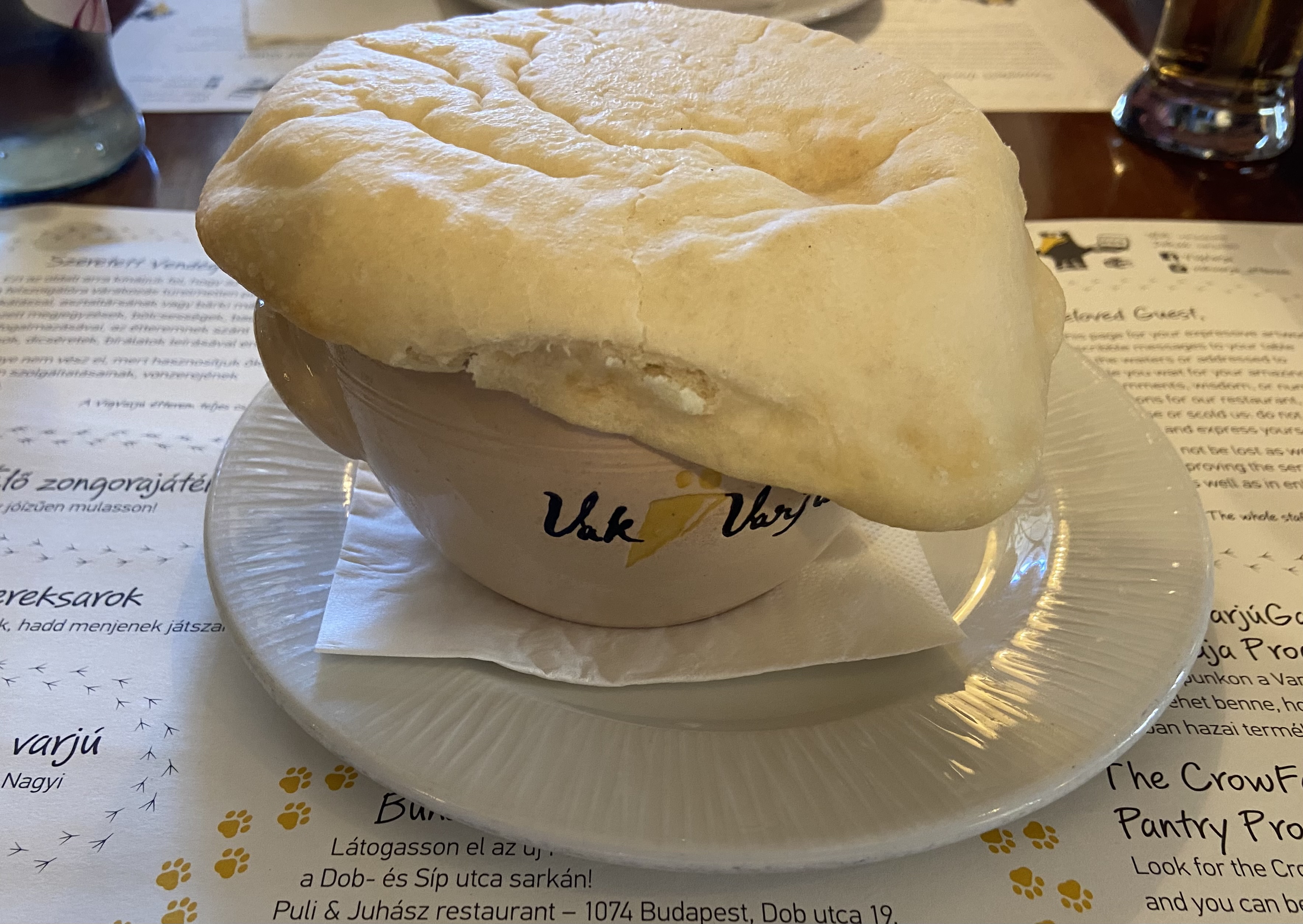
We were told to try goulash and chicken paprika, two popular Hungarian dishes. We didn’t expect the goulash to come sporting a cap of bread! The goulash itself was like a thick beef soup. I dug in and forgot to take a picture.
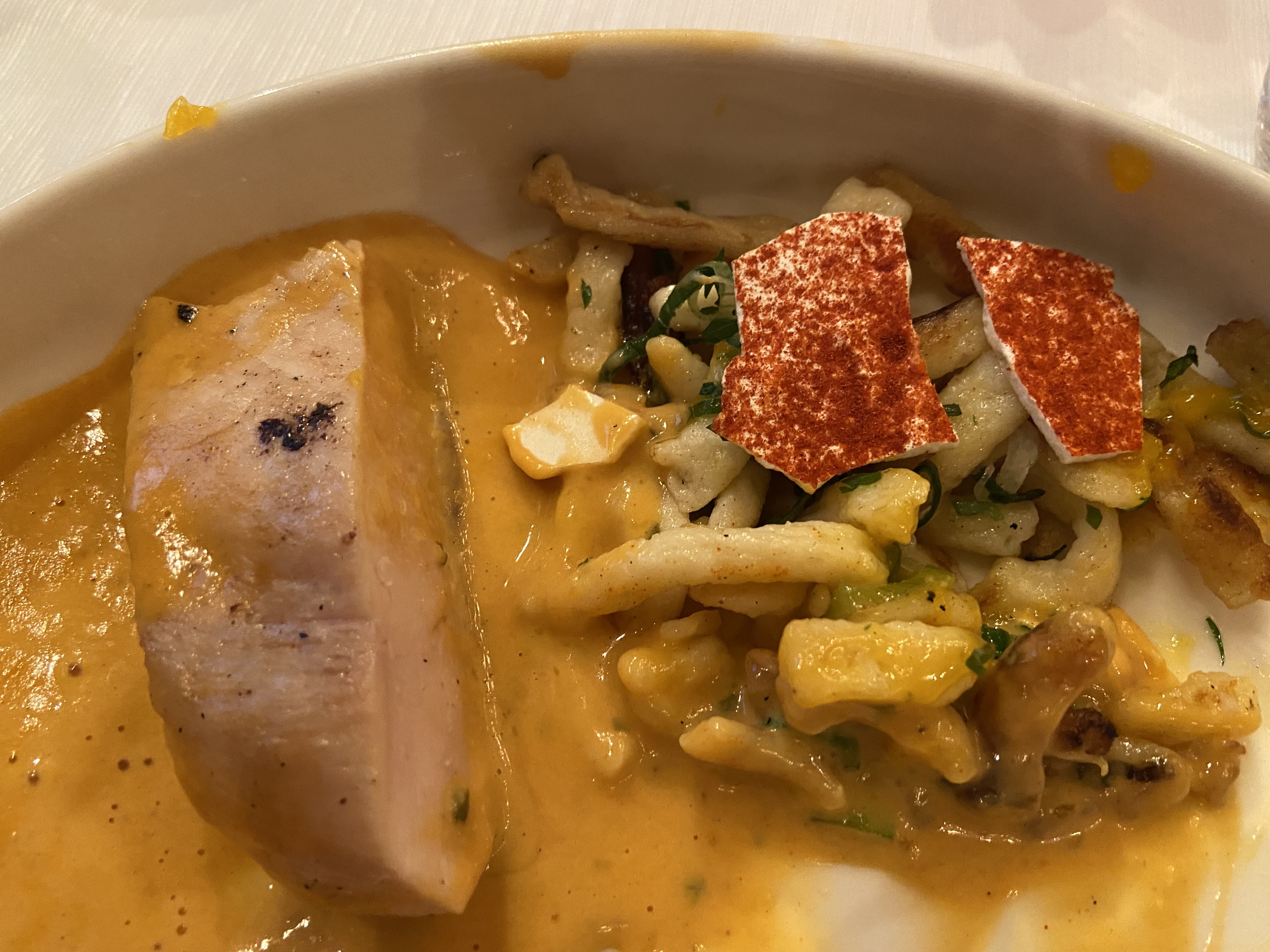
I’d eaten half my chicken paprika before I remembered to snap a shot. The paprika wasn’t as spicy as I thought it might be. We ate the goulash for lunch and the chicken paprika for dinner. Both were delicious.
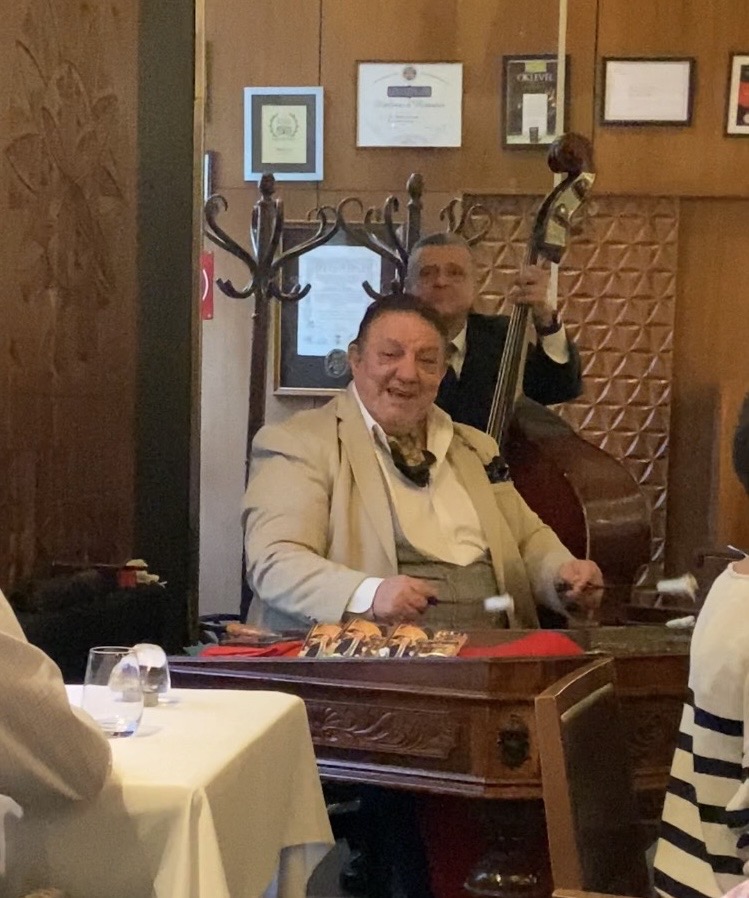
At our chicken paprika dinner, we were serenaded by a couple of Hungarian musicians, who played a combination of folk music and American show tunes.
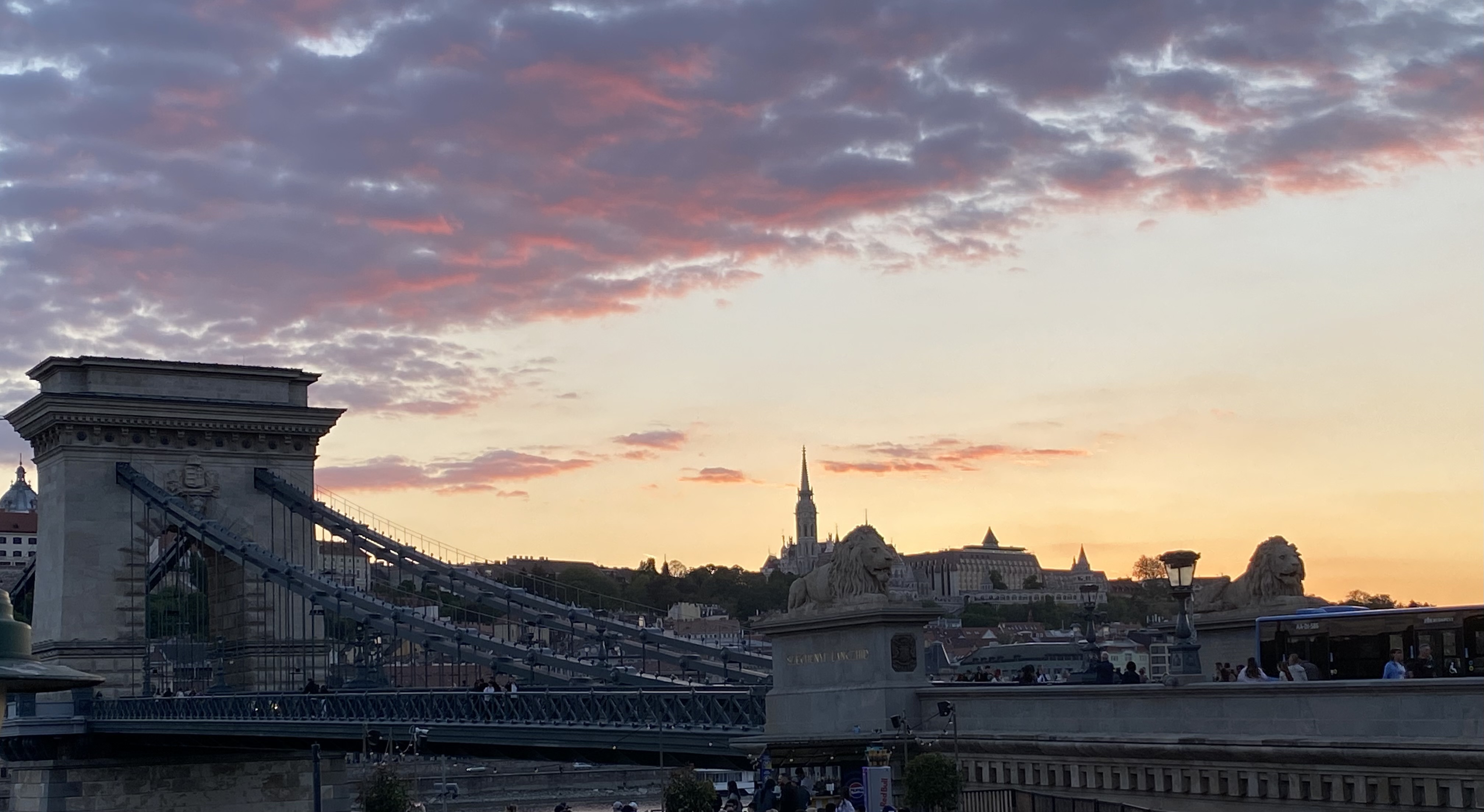
Budapest is split by the Danube River, with Buda on the west side and Pest on the east. Several bridges join the two, the most famous being the Chain Bridge. Late in the afternoon on our first day in the city, we fought our jet lag by walking this bridge from one side of the city to the other.
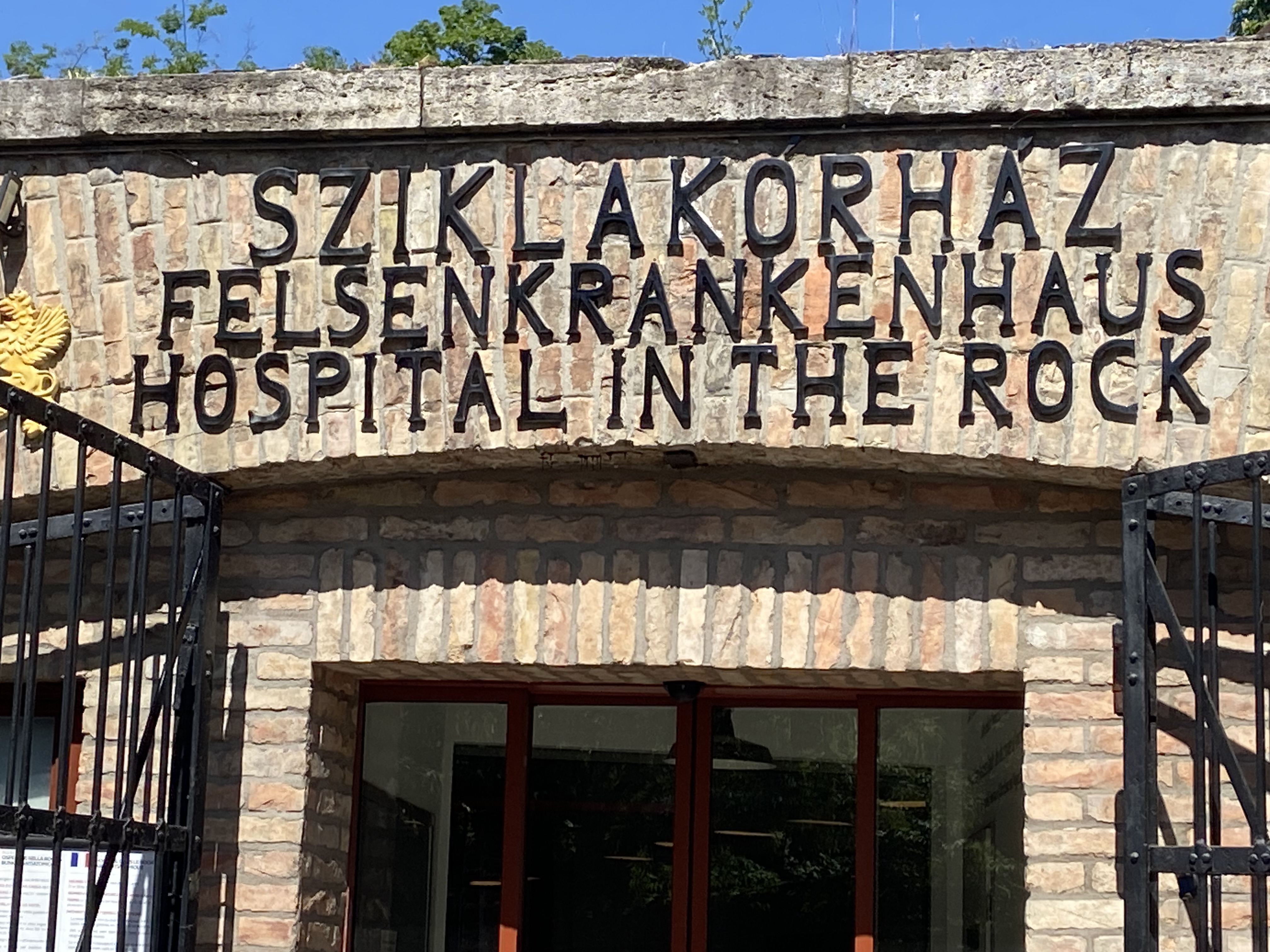
Parliament is the attraction on the Pest side of the city, but the Castle District on the Buda side is quite popular too. Here, we toured Hospital in the Rock, a complex underground maze of rooms carved from caves. These rooms served as a hospital in World War II and then again briefly in the Hungarian Revolution of 1956. Hospital in the Rock was last used as an elaborate nuclear bomb bunker during the Cold War.
No photography was allowed in the facility, so a picture of the entrance sign is all I have. Let me just say there were lots of mannequins inside illustrating the crowded, often unsanitary conditions endured by patients.
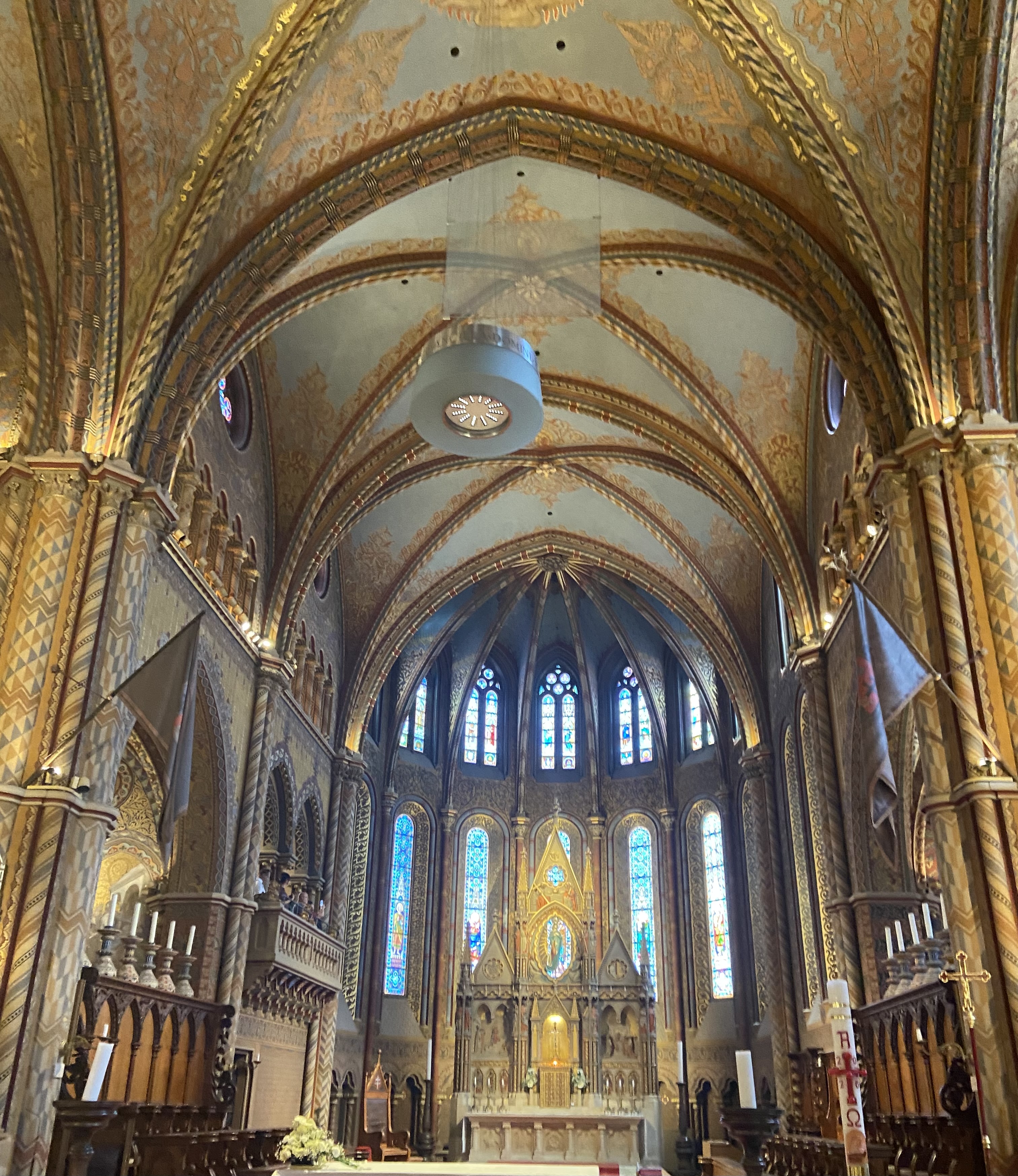
Matthias Church is also located in the Castle District. This Catholic church was originally built in 1015, rebuilt in the second half of the 14th century (what’s seen today), and restored in the late 19th century. The last two kings of Hungary were crowned here.
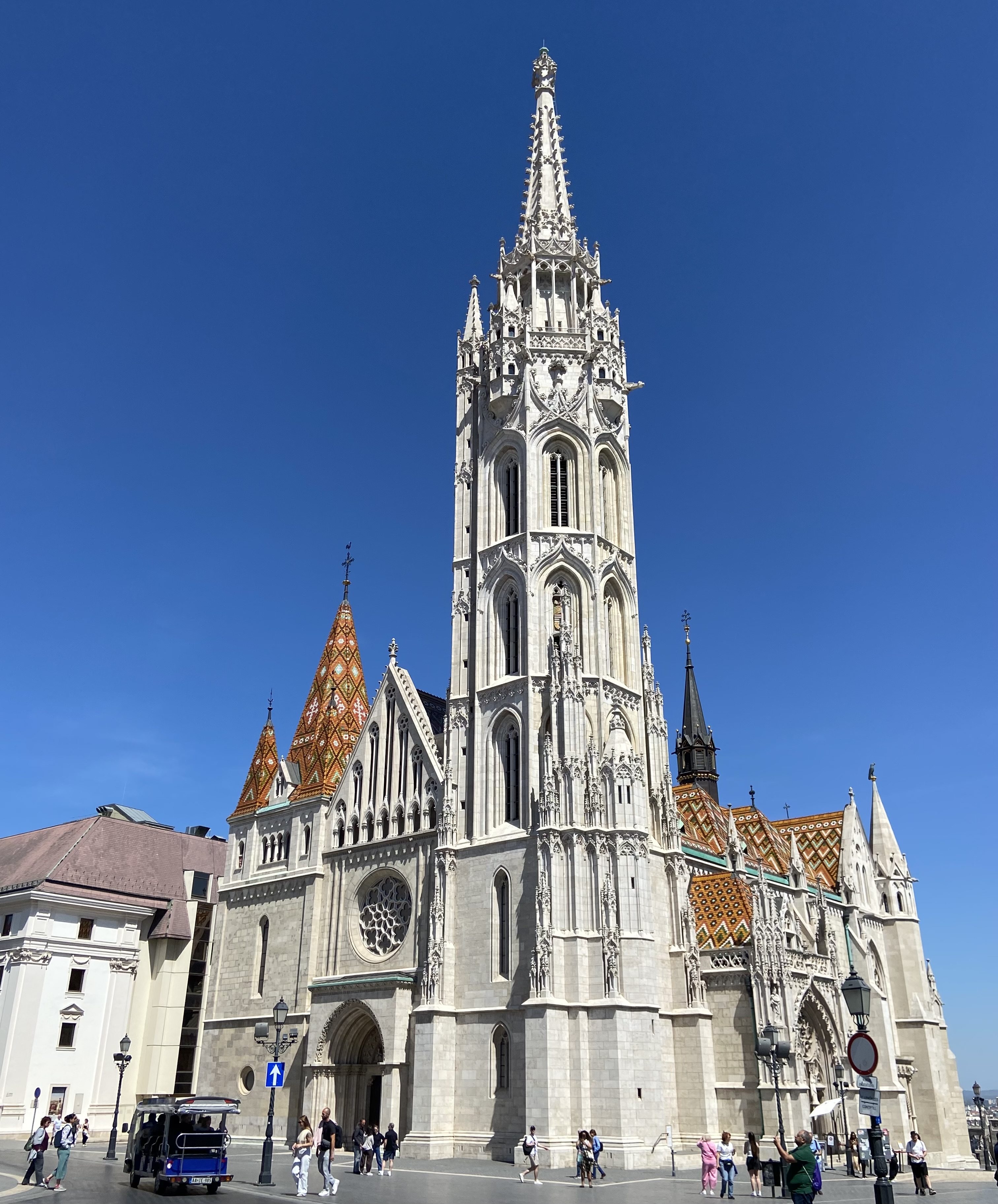
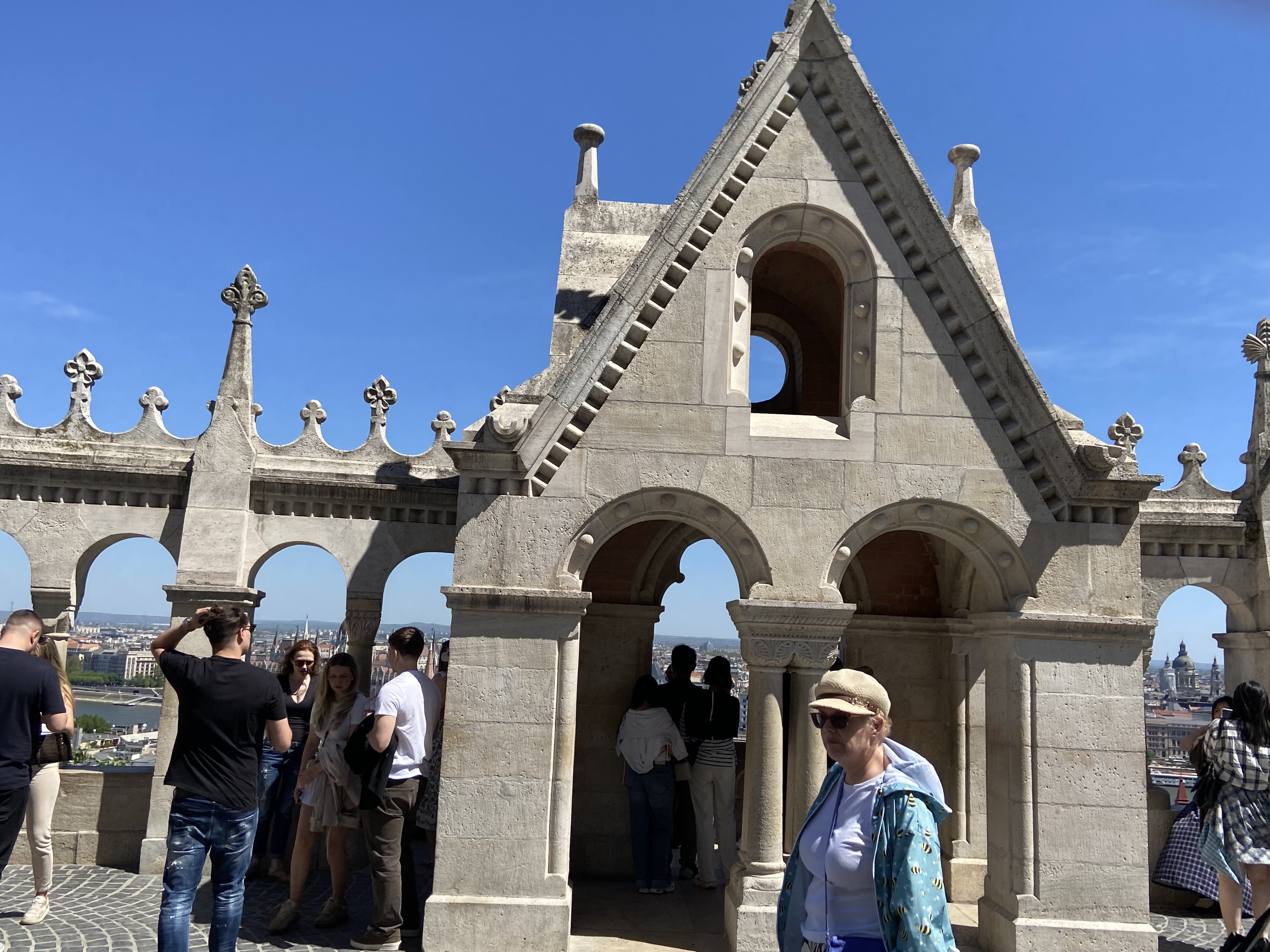
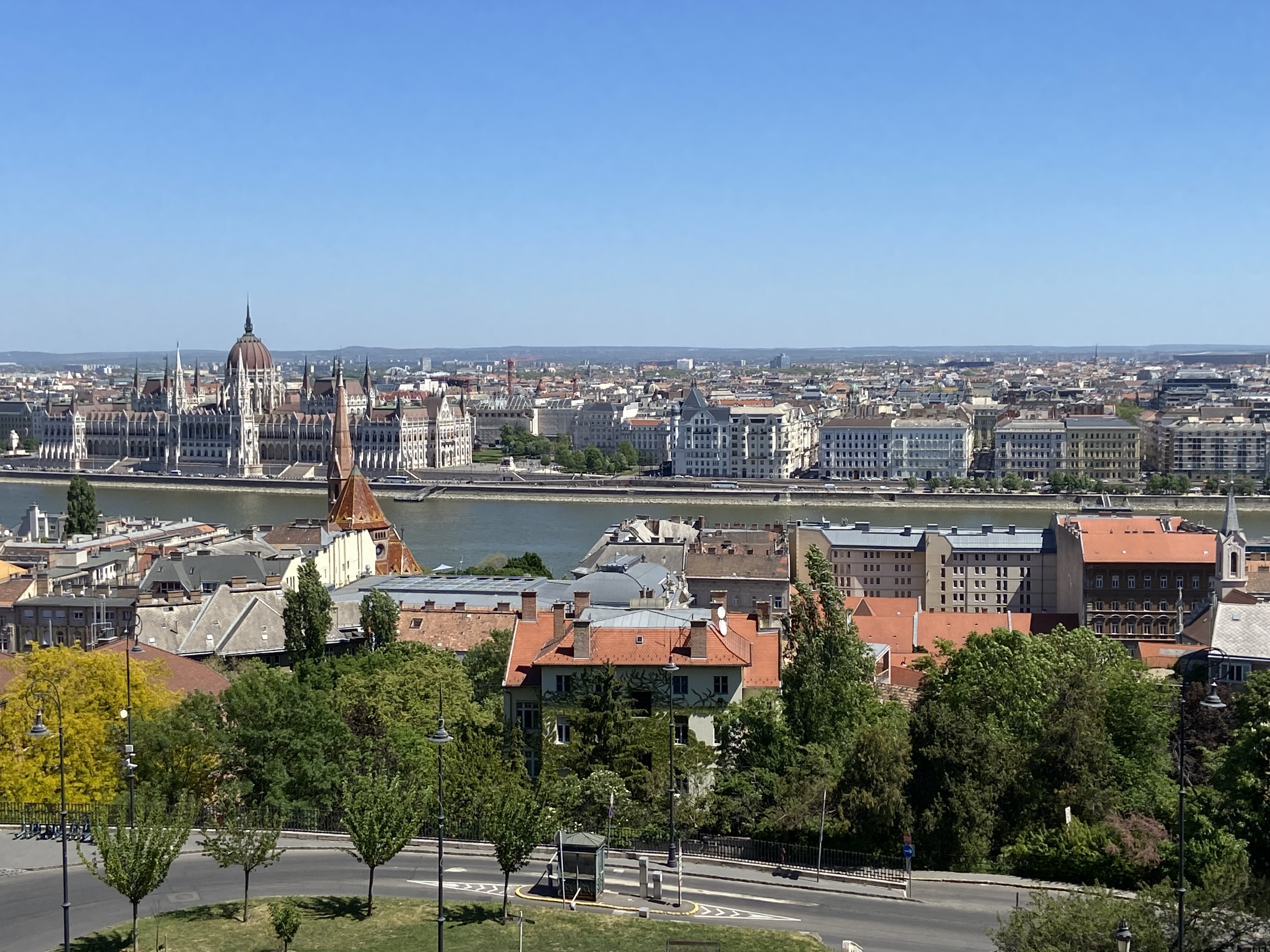
Near Matthias Church are the lookout towers of Fisherman’s Bastion. These towers provide a panoramic view of the city, showing how the Danube River divides the Buda and Pest sides.
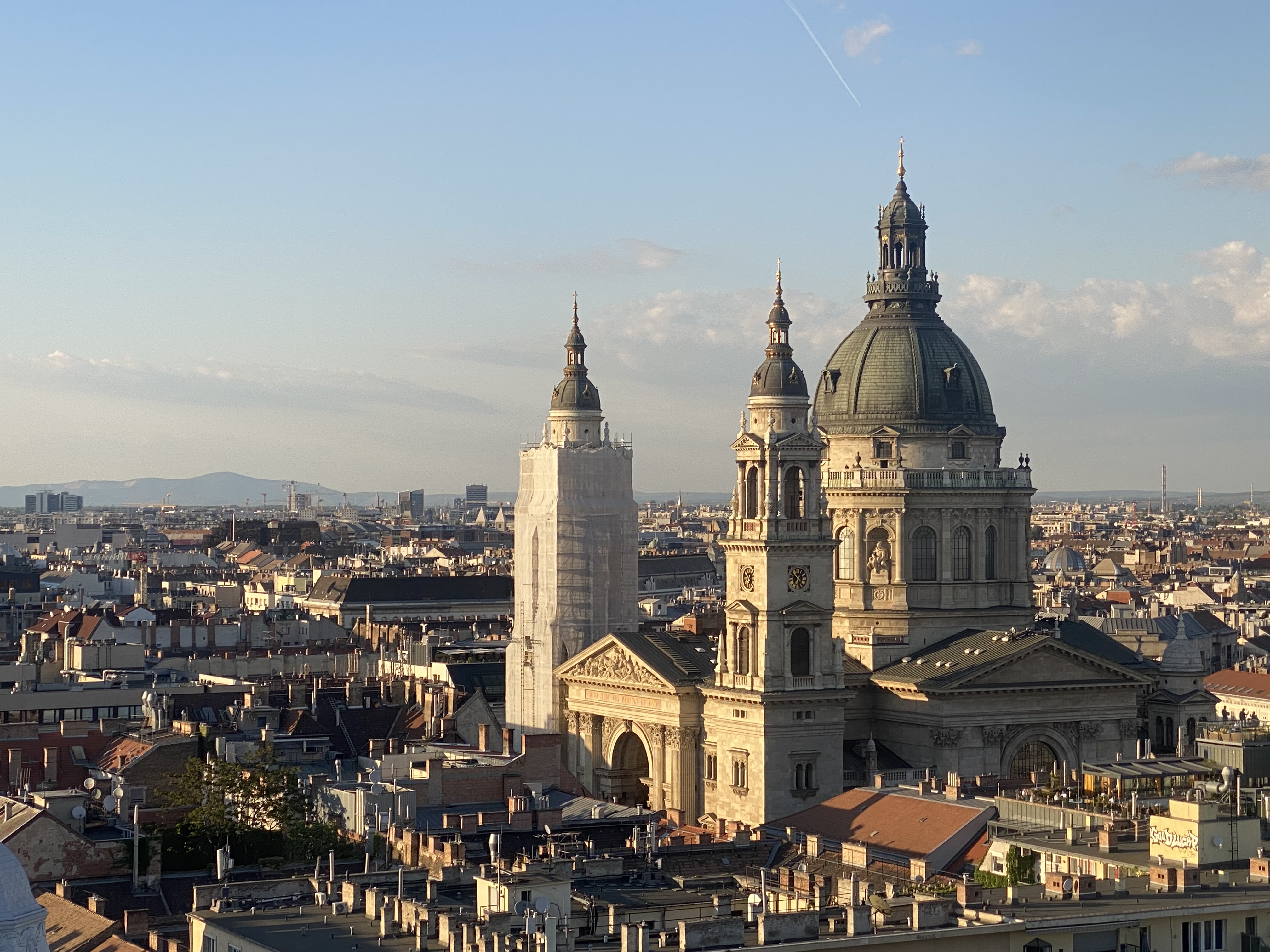
St. Stephen’s Basilica with its twin spires soars above the skyline. This Roman Catholic Basilica is named in honor of Stephen, the first Christian king of Hungary. We were told that his mummified right hand is housed inside and is considered an important religious relic.
One last tourist attraction we visited was Heroes’ Square, one of the major squares in the city. Statues here honor important Hungarian national leaders. The column in the center of the square is supposed to be crowned by a bronze statue of Archangel Gabriel (see circled area). Unfortunately for us, the statue had been removed and sent for restoration. Still, there were lots of impressive sculptures to admire.
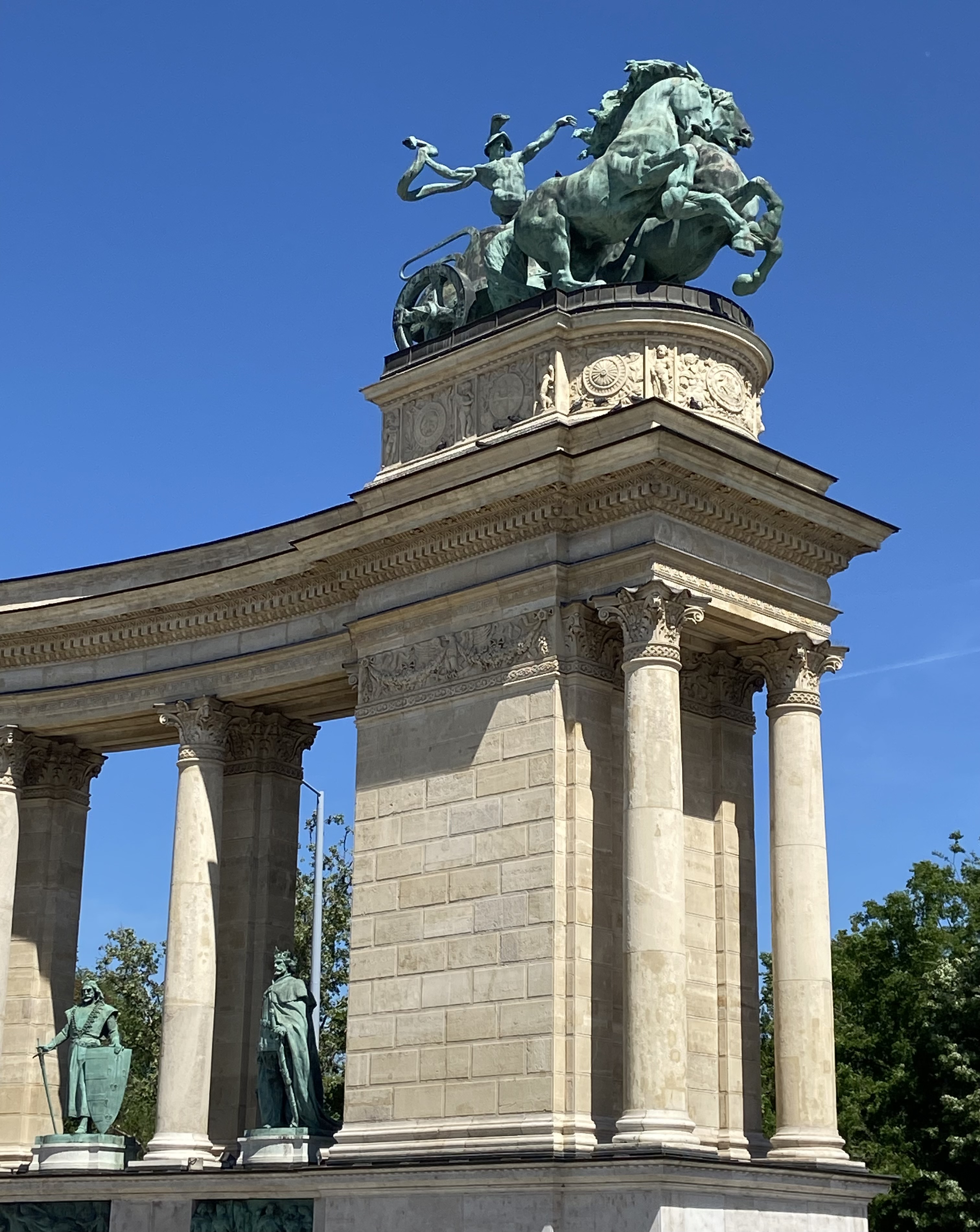
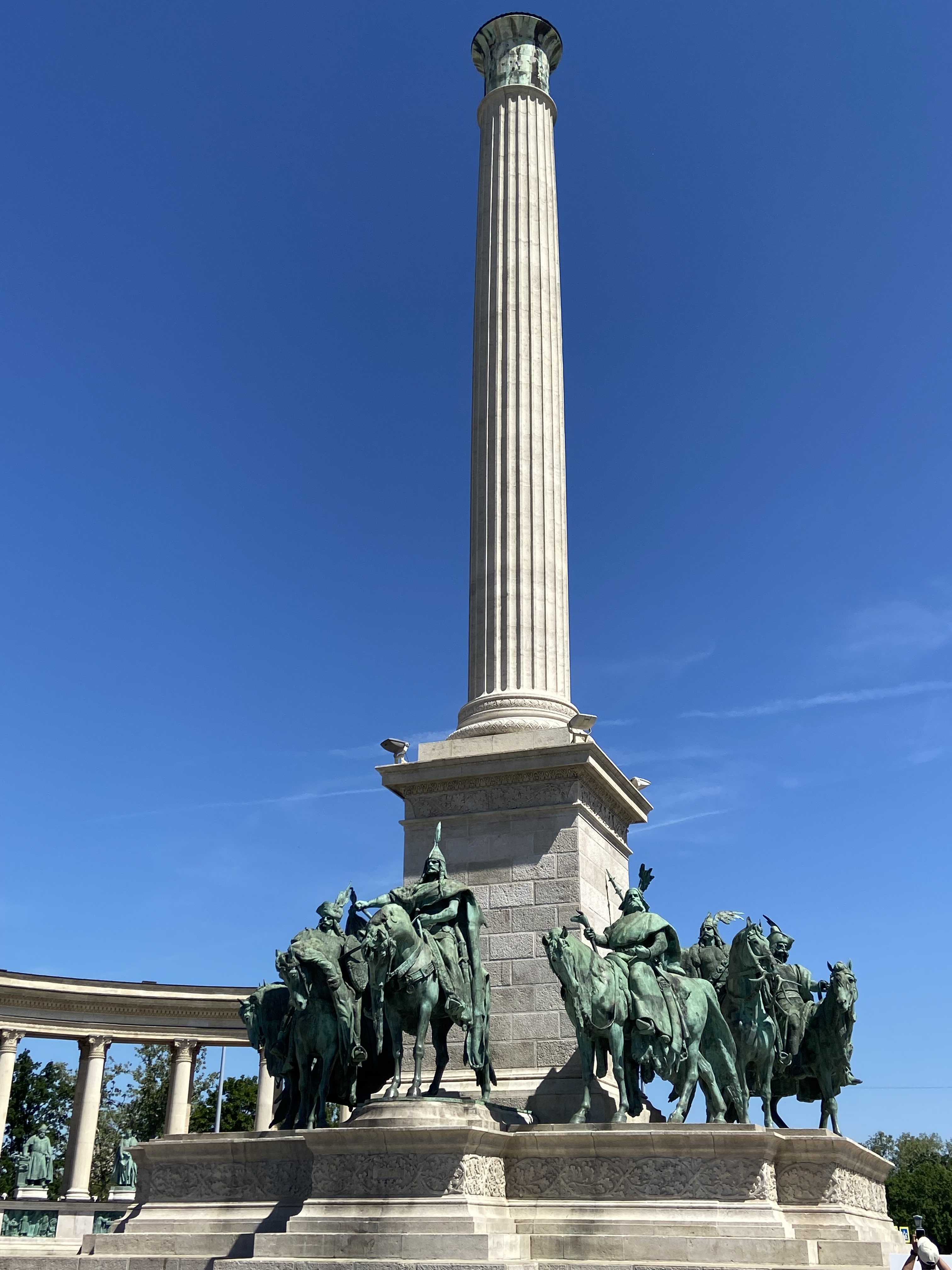
I found Budapest to be a beautiful, vibrant city. Despite the trauma suffered from World War II and subsequent Soviet domination, the capital today welcomes visitors and shows them a good time along with a dose of Hungarian history.
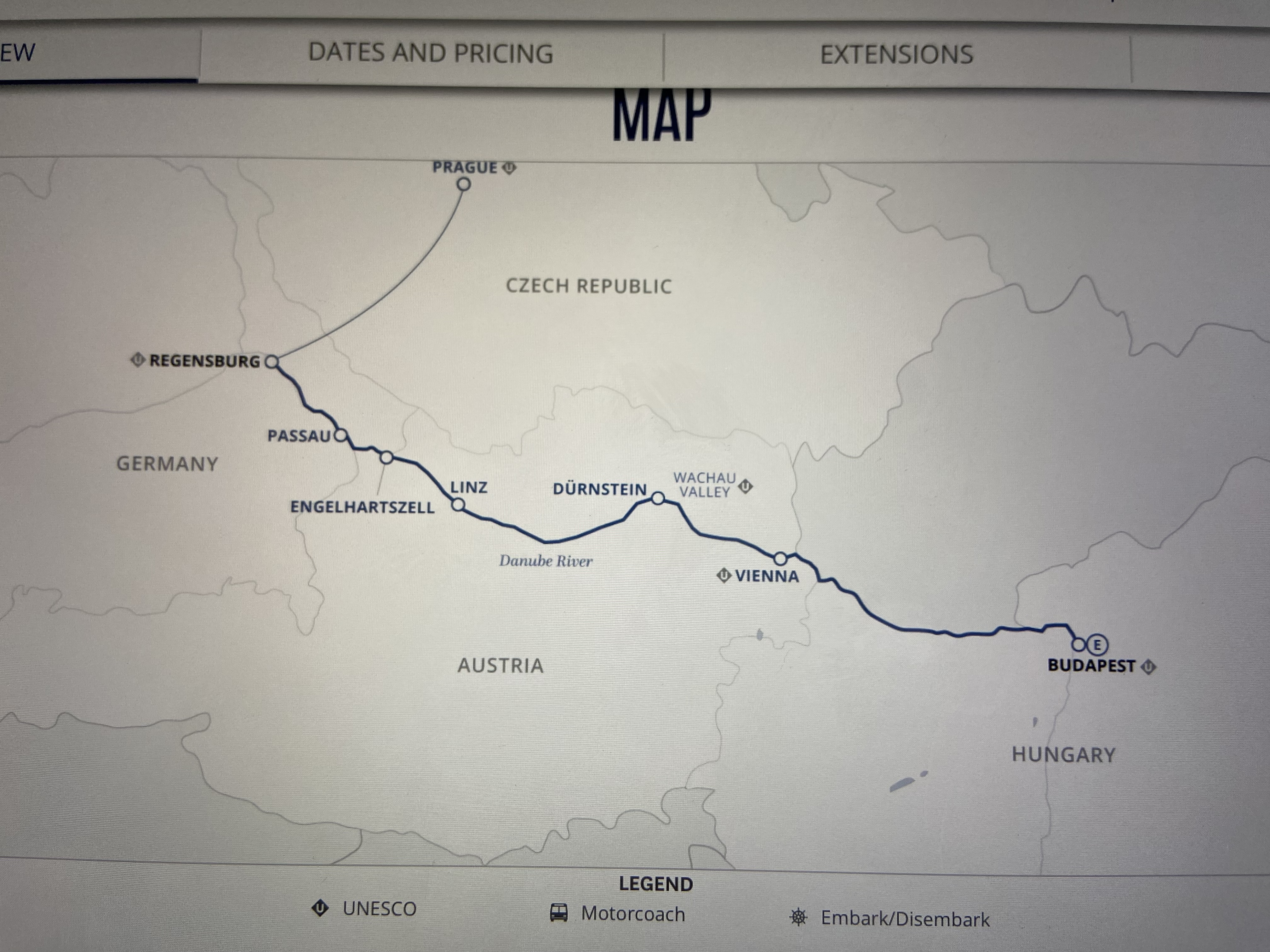
Budapest was our first stop on our riverboat/land trip that ended in Prague. In my next post, we’ll visit Vienna.