I’d passed through Vienna, the capital and largest city of Austria, a couple of times before in my European travels. I remembered it as a place of majestic buildings and ornate statues. My most recent trip there with my husband confirmed this impression.
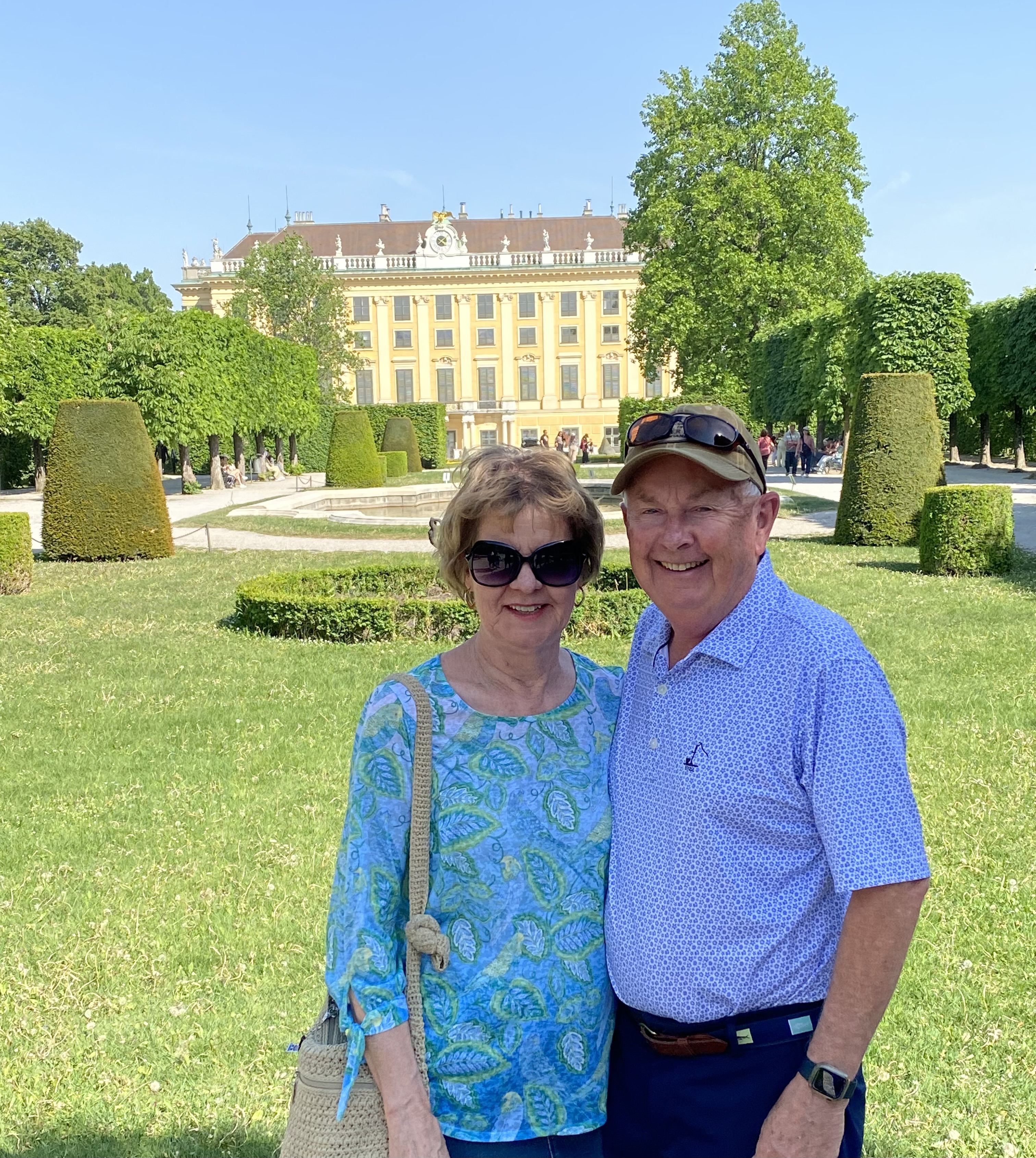
Of course, when you visit two palaces, it’s easy to come away with an impression of grandeur. A morning tour took us to the Belvedere Palace, a UNESCO World Heritage site. (There are a lot of these designated sites in Europe.)
The Belvedere Palace was built as a summer residence in the early 18th century for Prince Eugene of Savoy. A pretty nice second home, I’d say.
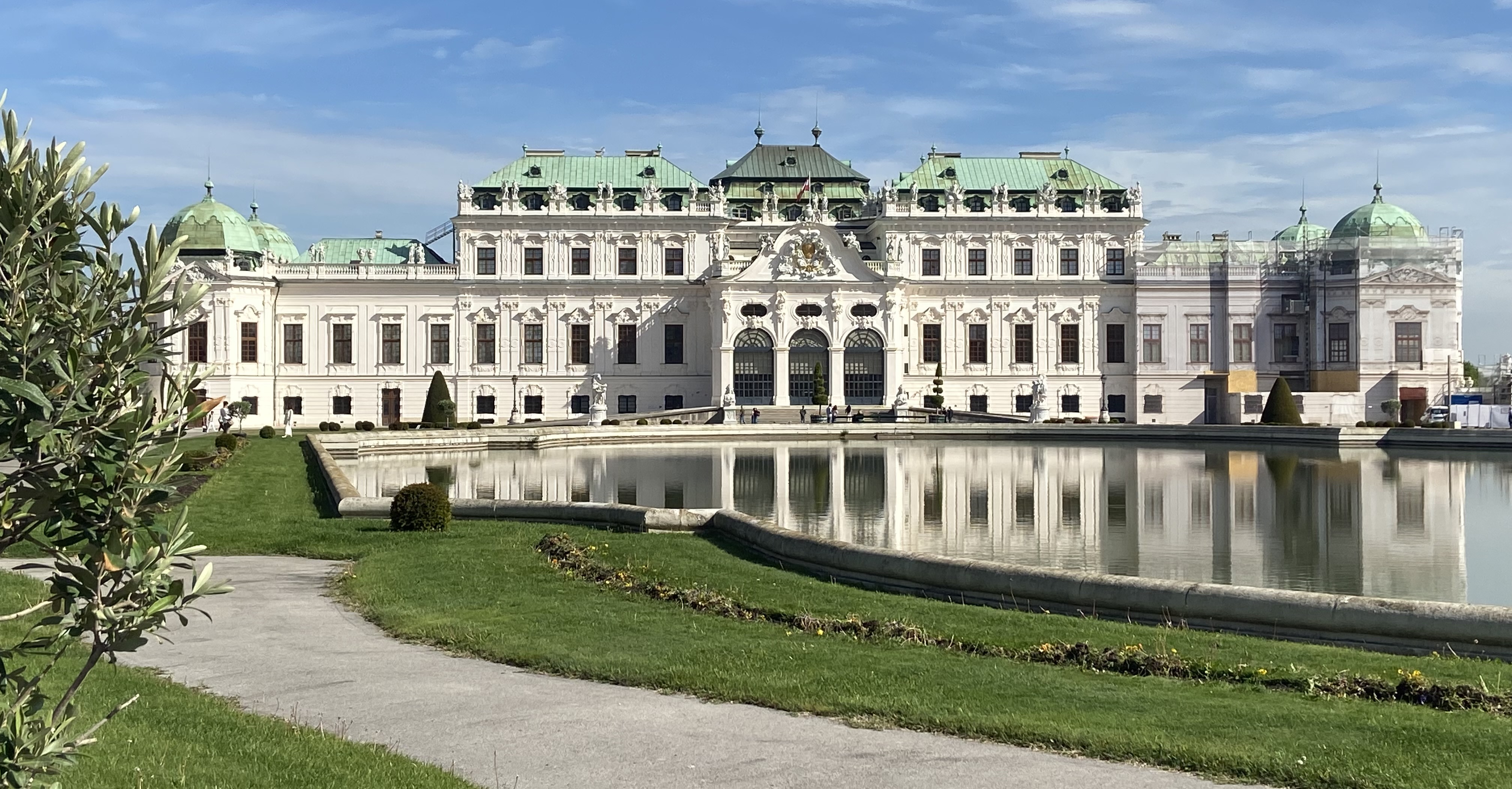
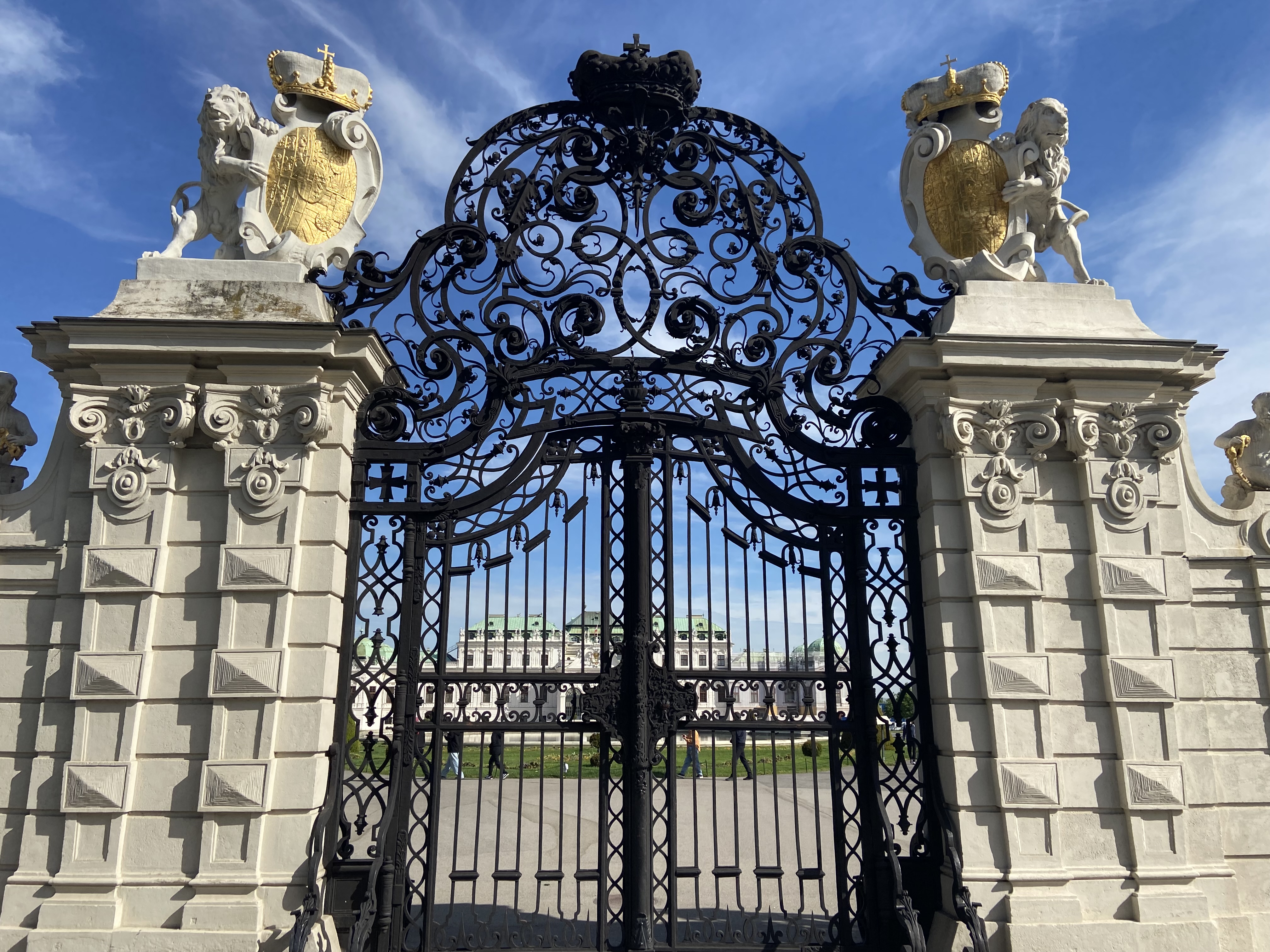
Even the gates are over-the-top elaborate, as well as the interior.
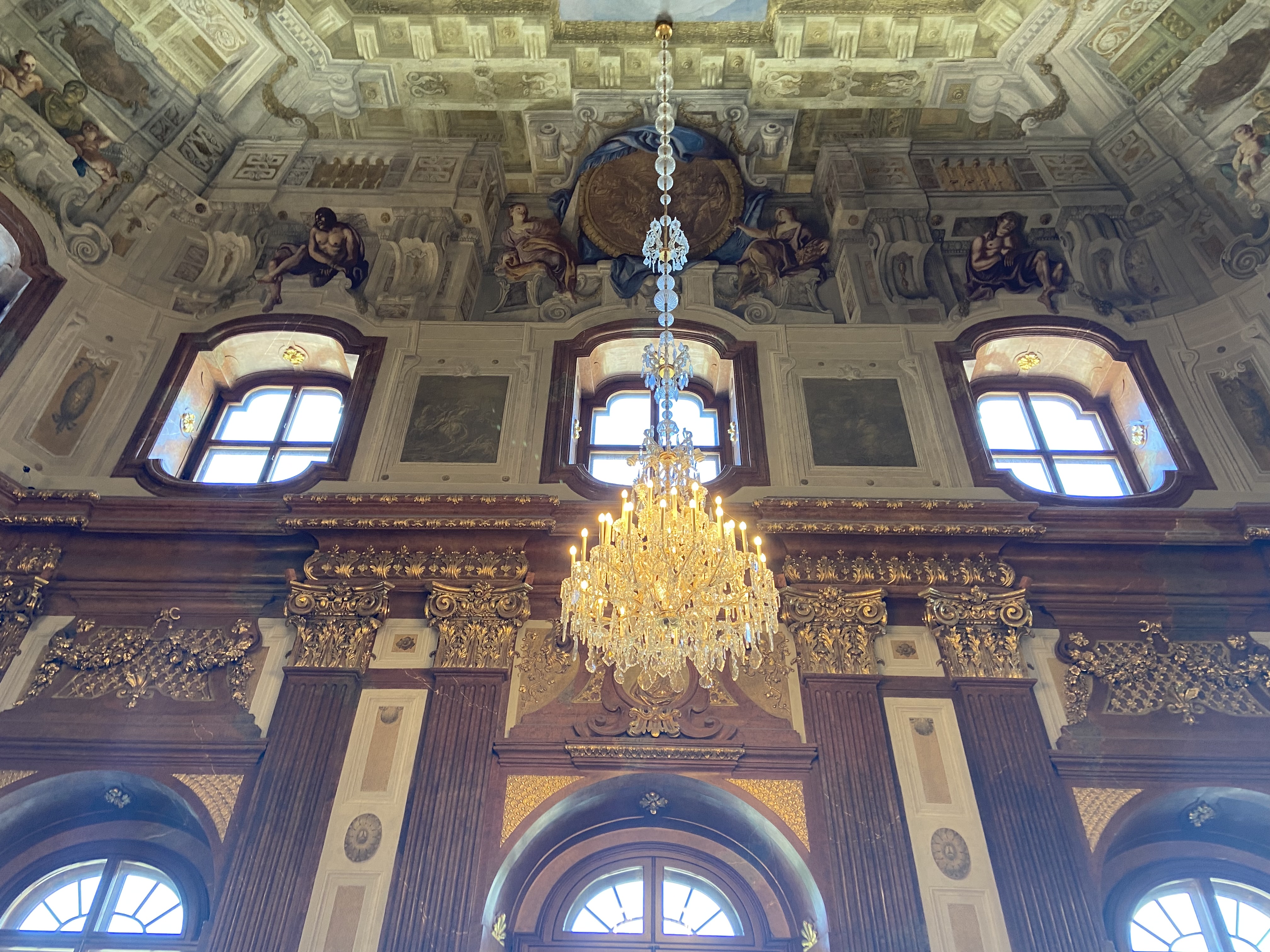
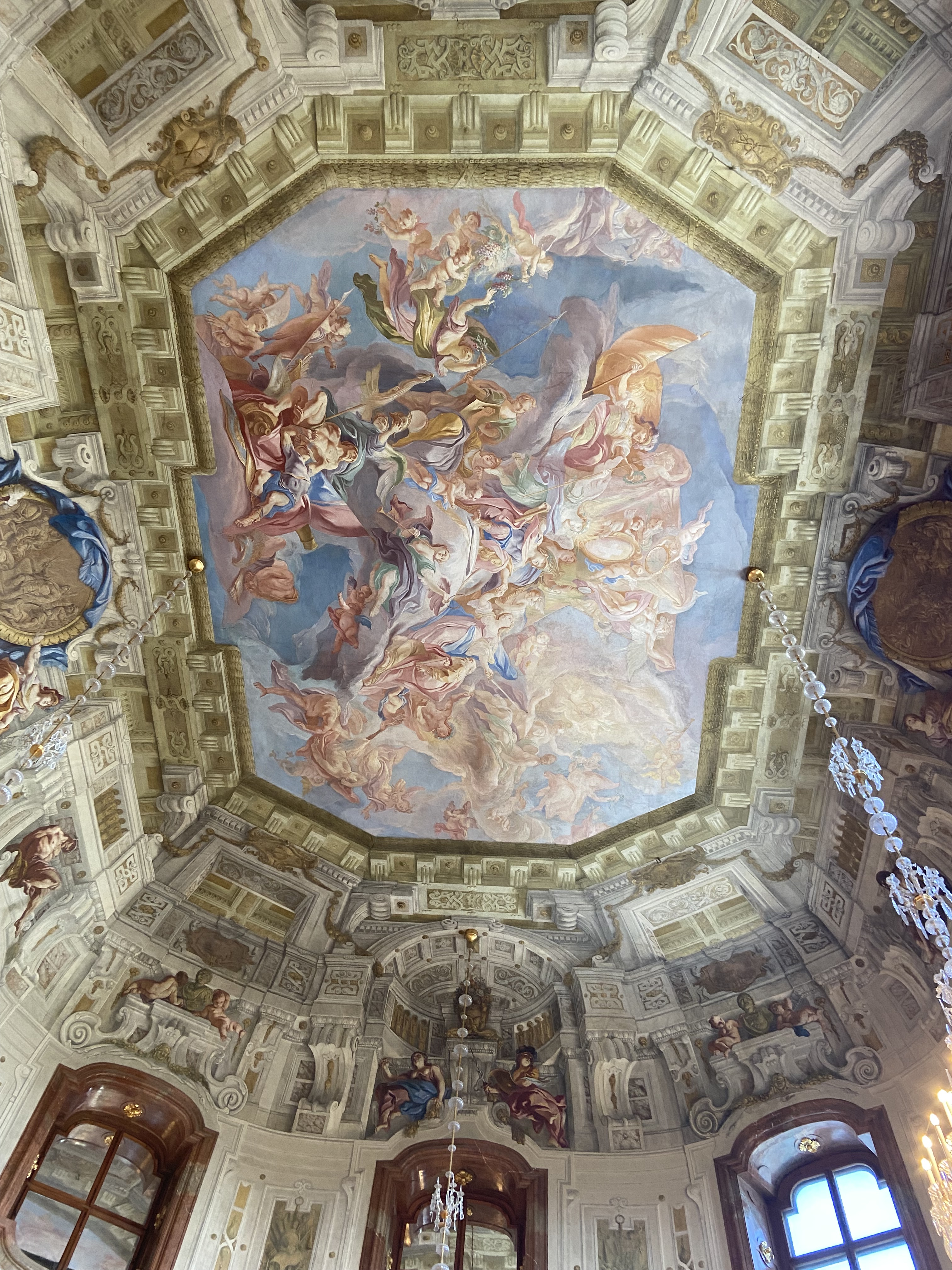
What a ceiling.
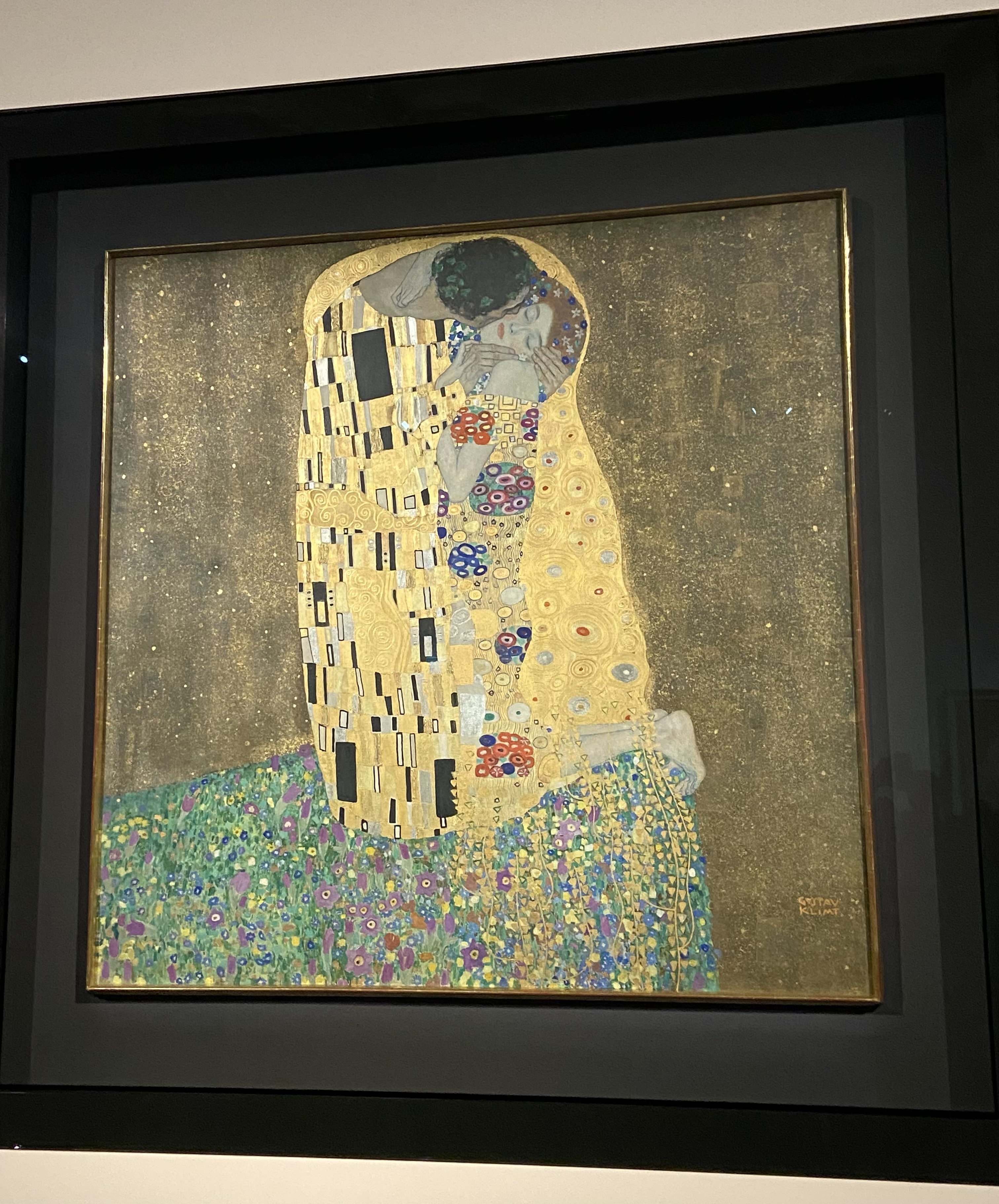
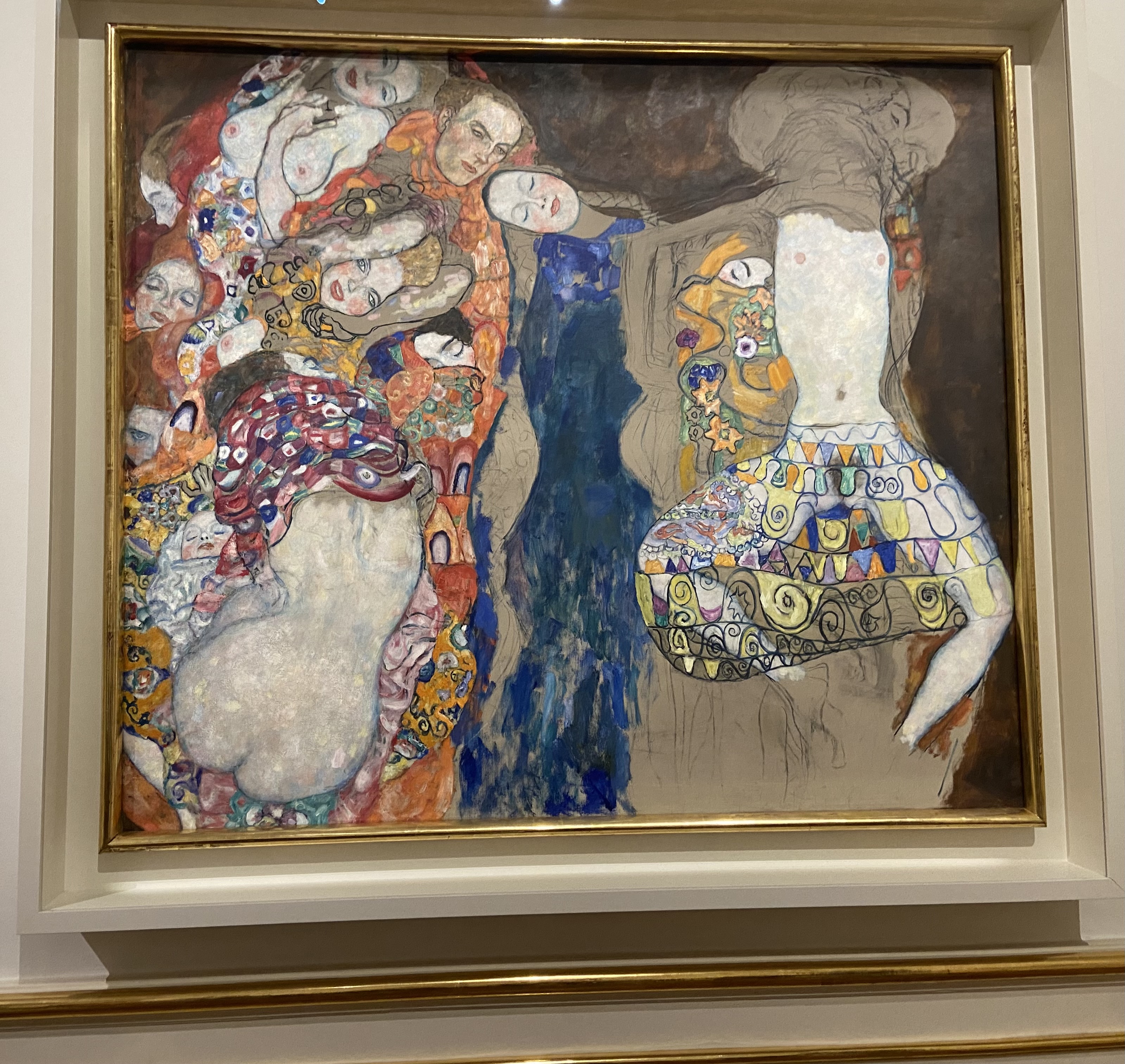
Belvedere Palace is not just a fancy former summer home of royalty, however. Today, it houses an extensive art collection. Probably the most famous paintings are those of Gustav Klimt, especially his masterpiece, The Kiss. You can see some of his same style in another of his paintings, The Bride.
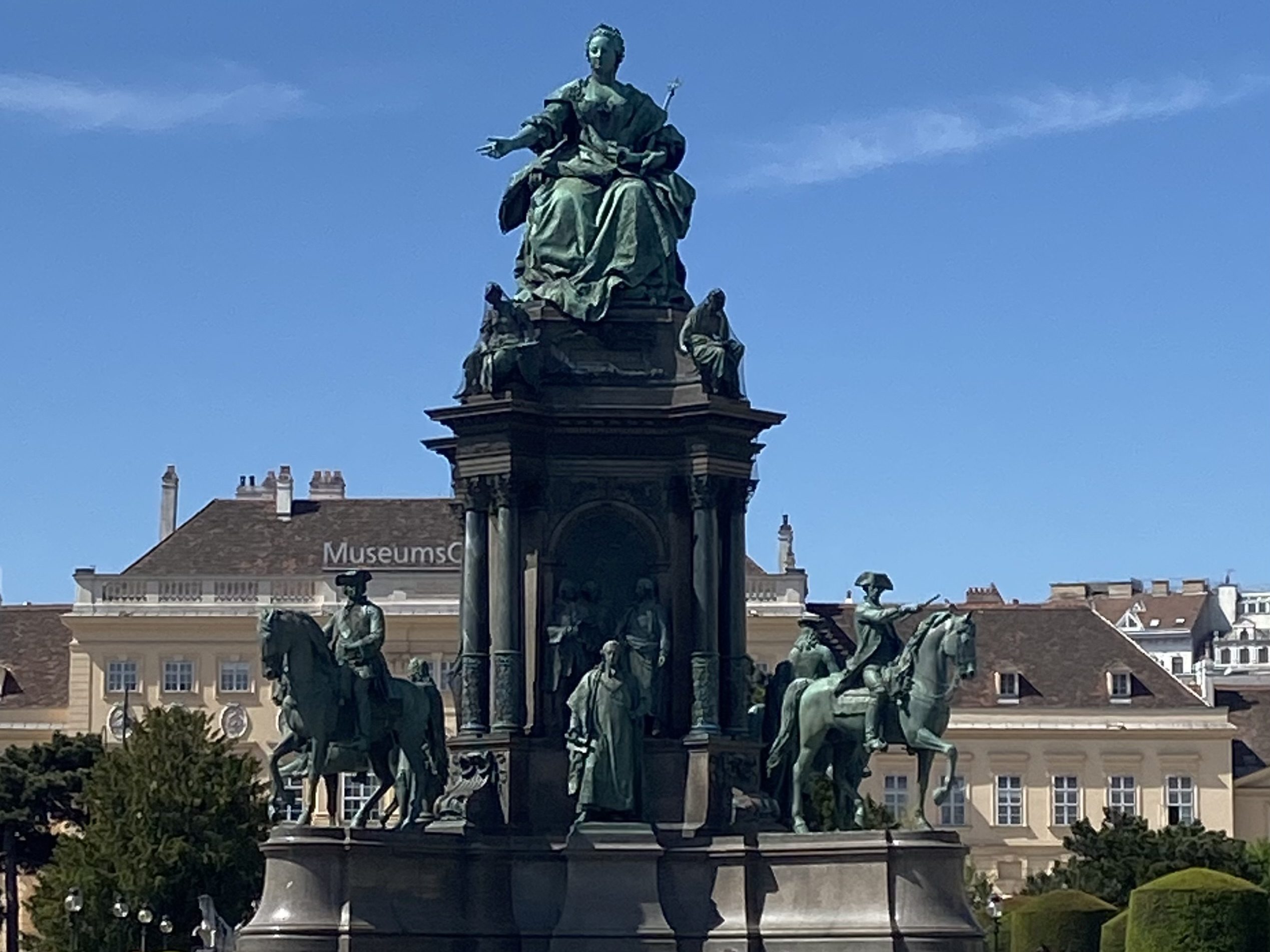
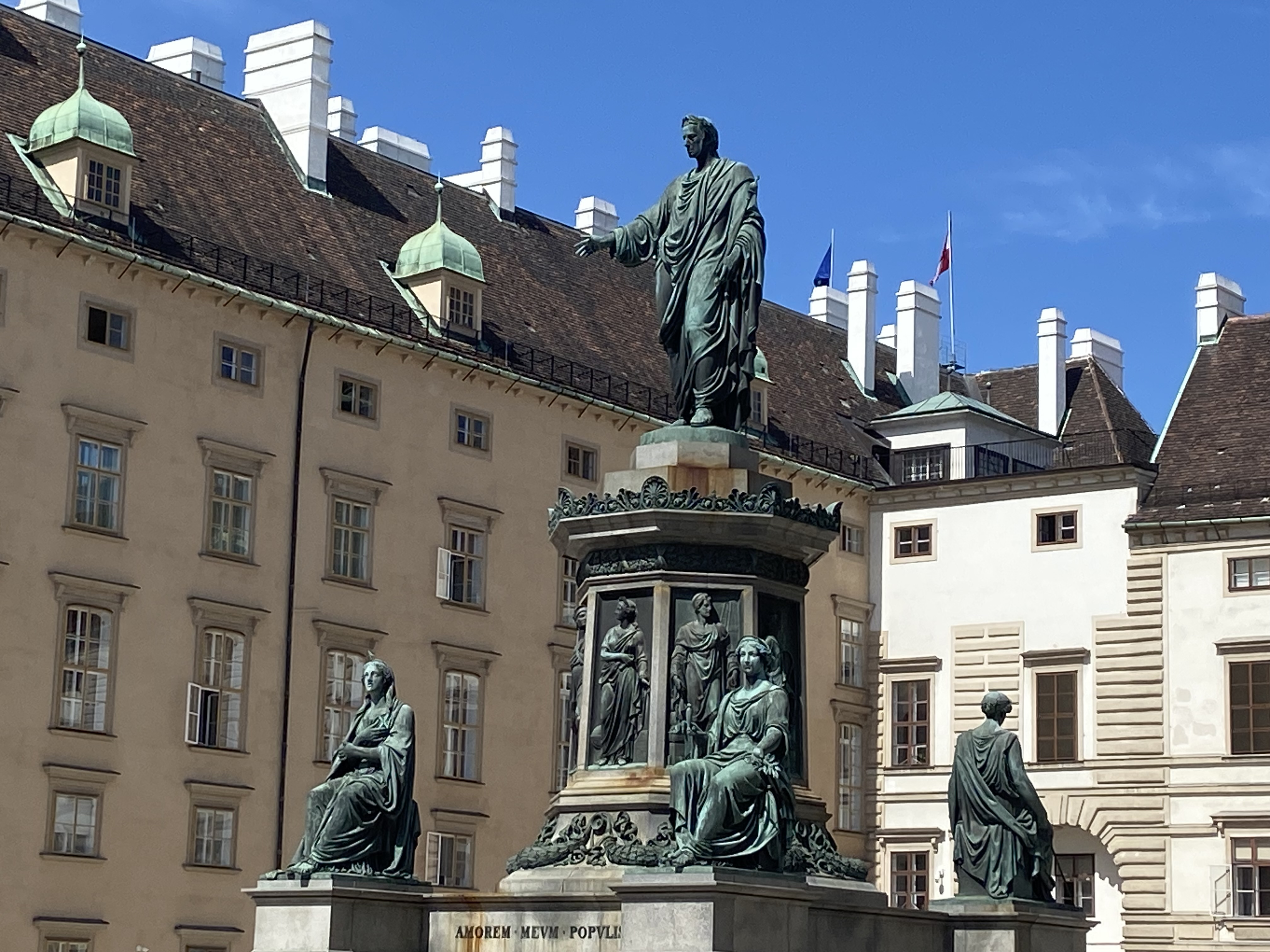
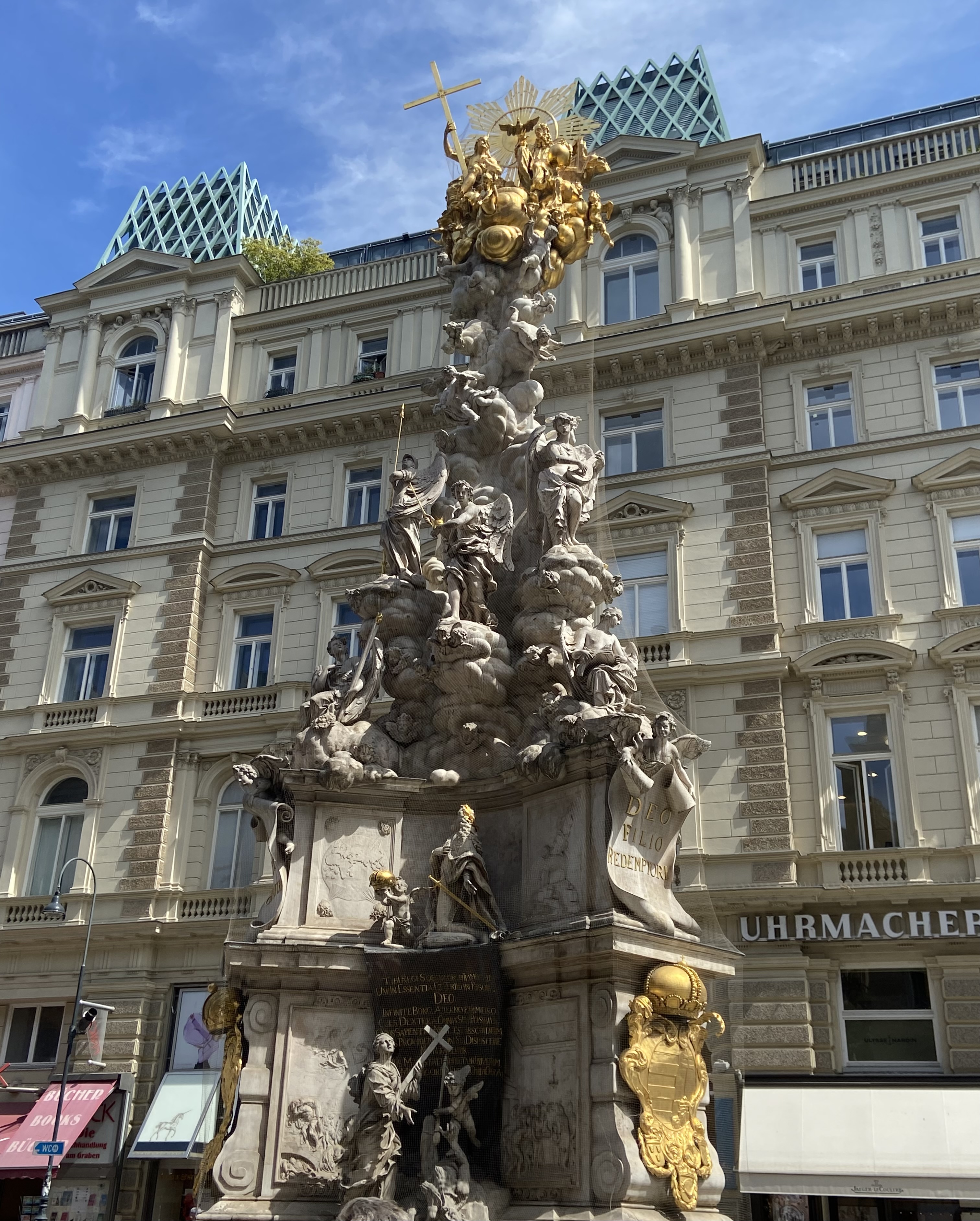
You don’t have to walk far in Vienna before you encounter an impressive statue. Can you imagine living in a city where you can see such magnificent works simply by strolling along the streets?
This eye-catching, intricate sculpture with gold features has an interesting history. Erected after the Great Plague epidemic of 1679 by Emperor Leopold I, it’s called The Plague Column or Trinity Column. The sculpture is located near busy streets. I wonder if Vienna citizens have grown used to seeing it or if they appreciate its beauty as much as I did.
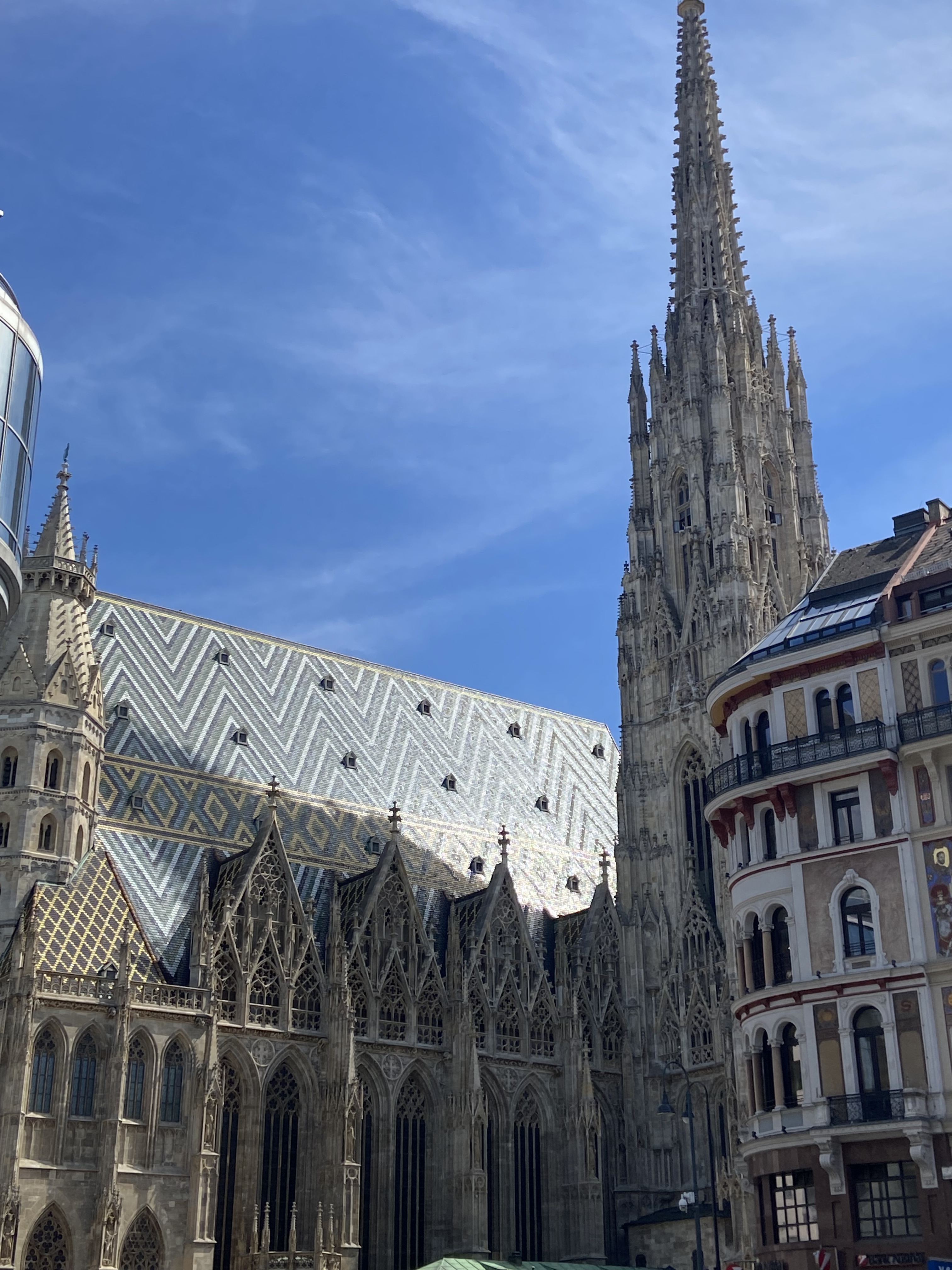
Here’s the St. Stephen’s Cathedral in Vienna, not to be confused with the St. Stephen’s Basilica we saw in Budapest. Yes, there are a lot of cathedrals in Europe.
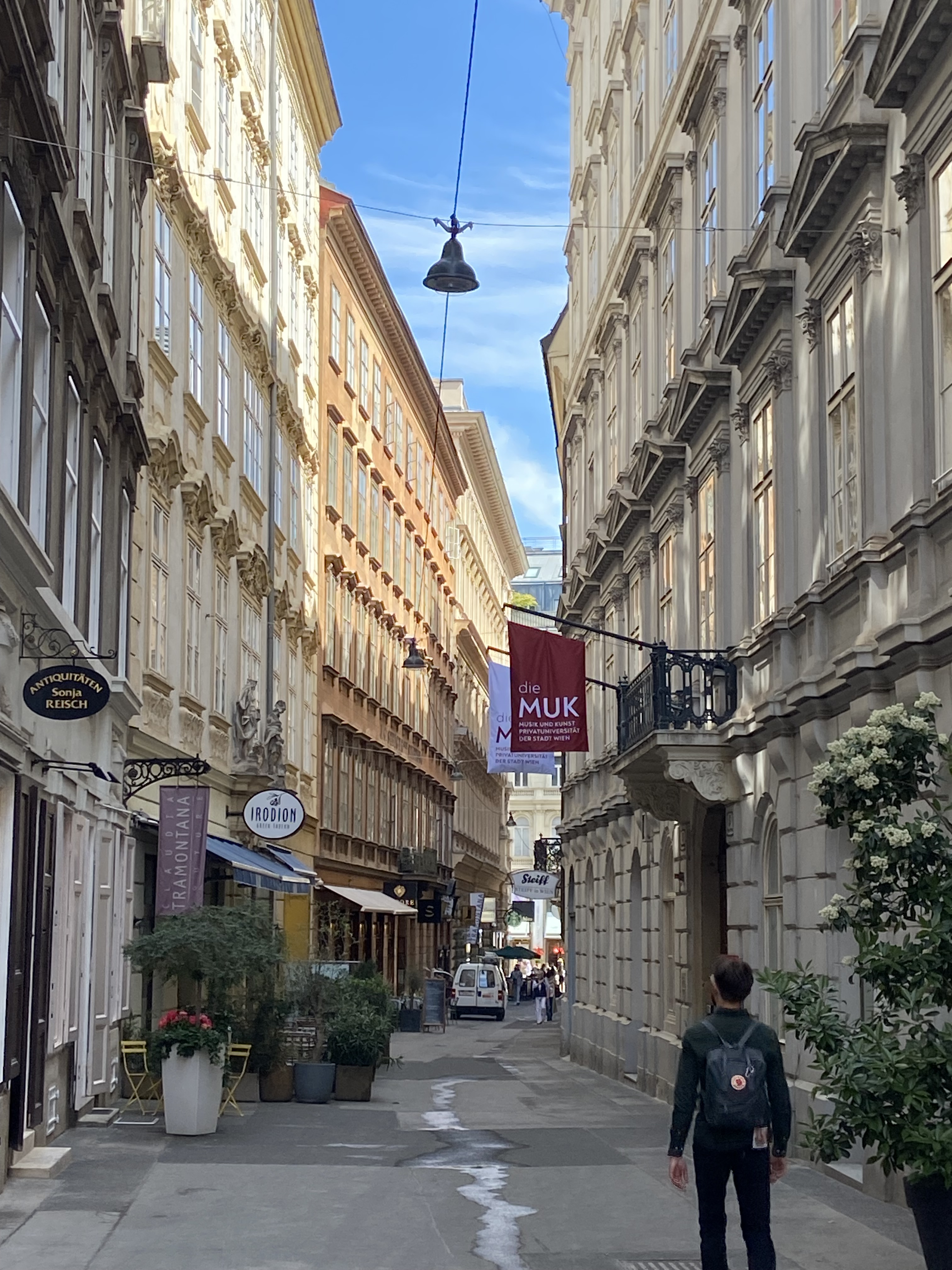
After busy streets, it was a bit relaxing to encounter a quiet alley, an oasis of calm.
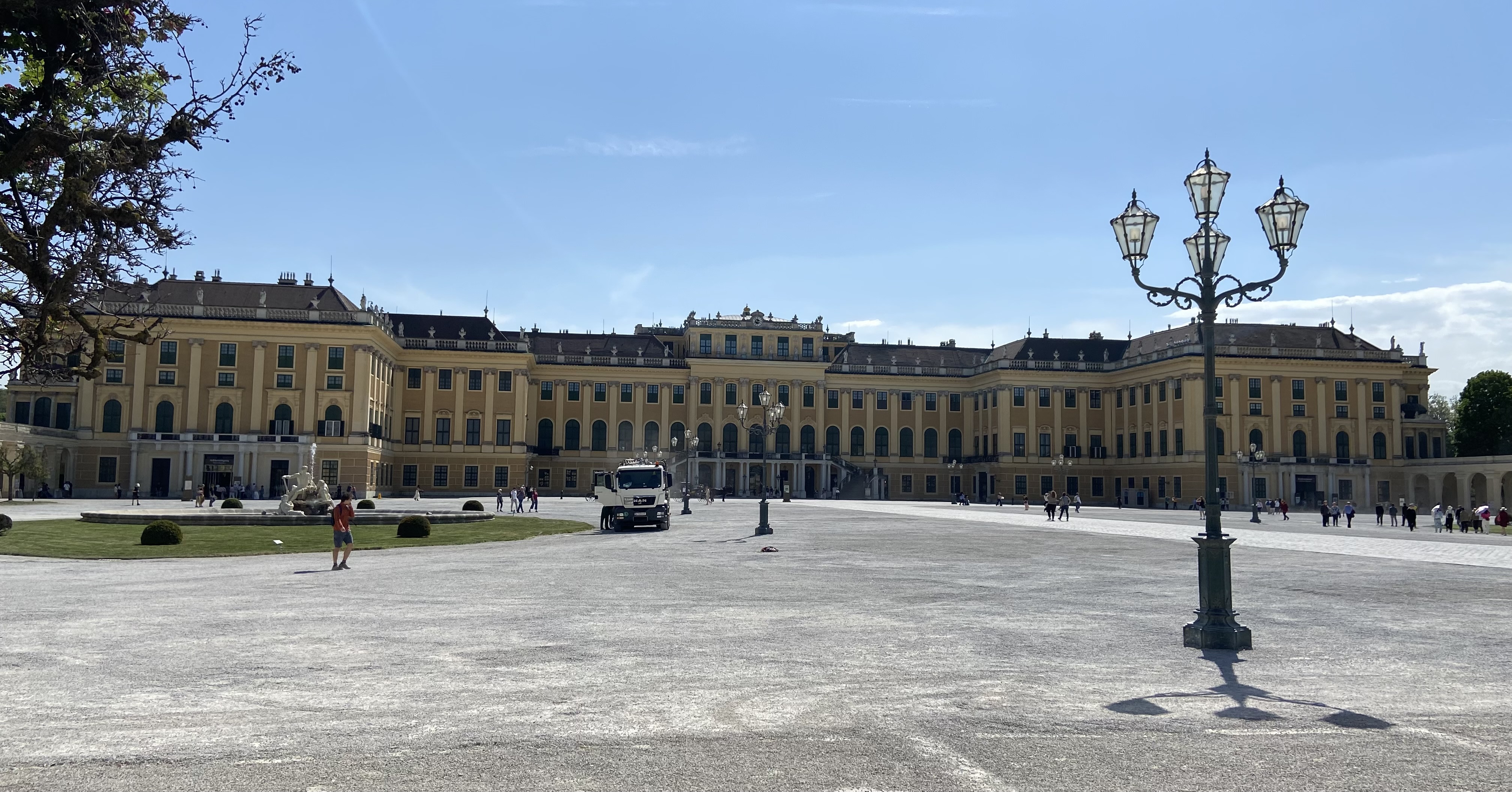
Schonbrunn was the second palace we visited in Vienna. The Schönbrunn Palace in its first renovation copied the architecture of the more famous Palace of Versailles outside Paris.
Maybe you’ve heard of the Austrian Hapsburg rulers, for whom this palace was remodeled. (They’re not as well-known as “let them eat cake” Marie Antoinnette of Versailles.) The Hapsburg ruler Maria Theresa received the estate as a wedding present.
Though the palace isn’t as ornate as Versailles (the family encountered “financial constraints”), it still qualifies as a great wedding gift!
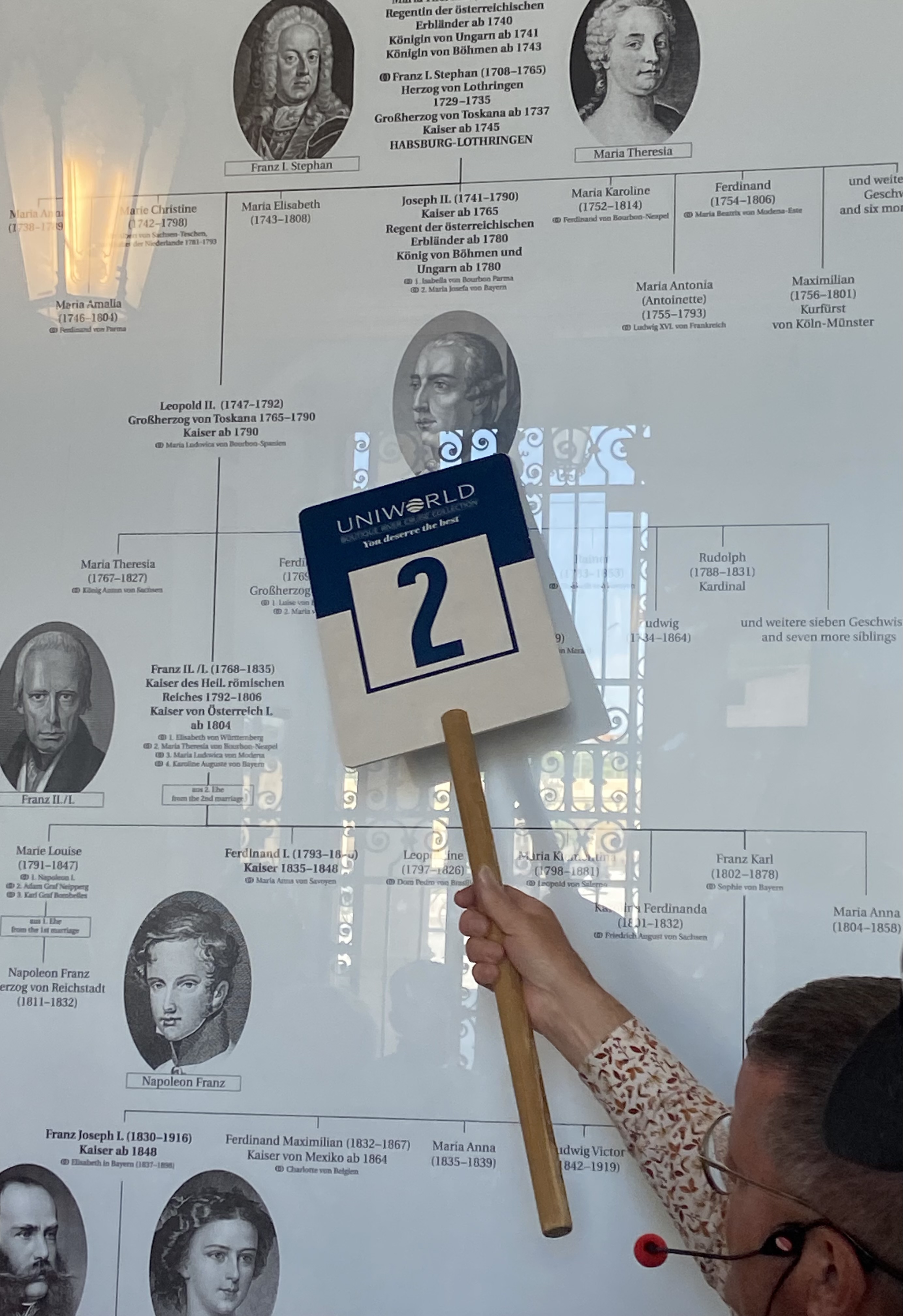
Our guide was well-versed in the Hapsburg family tree. He lost me in most of the details, but the big picture is that Franz Joseph and his wife Maria Theresa lived at Schonbrunn with their sixteen children.
Another interesting fact is that the youngest daughter, Maria Antonia, married Louis, Dauphin of France, and became known as Marie Antoinette.
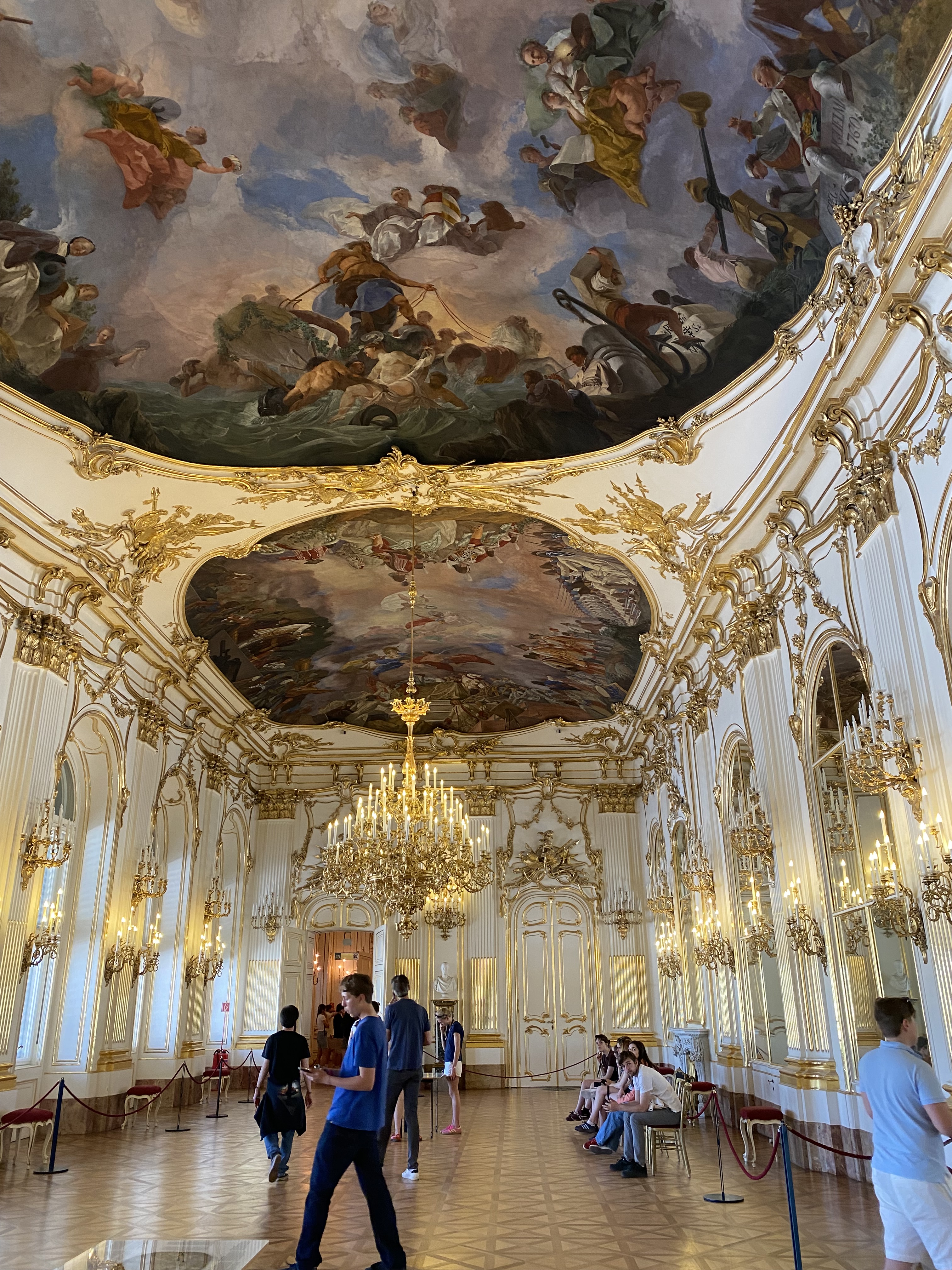
It may not be Versailles, but the interior of Schonbrunn Palace is still quite lavish. The Grand Gallery is just that–grand.
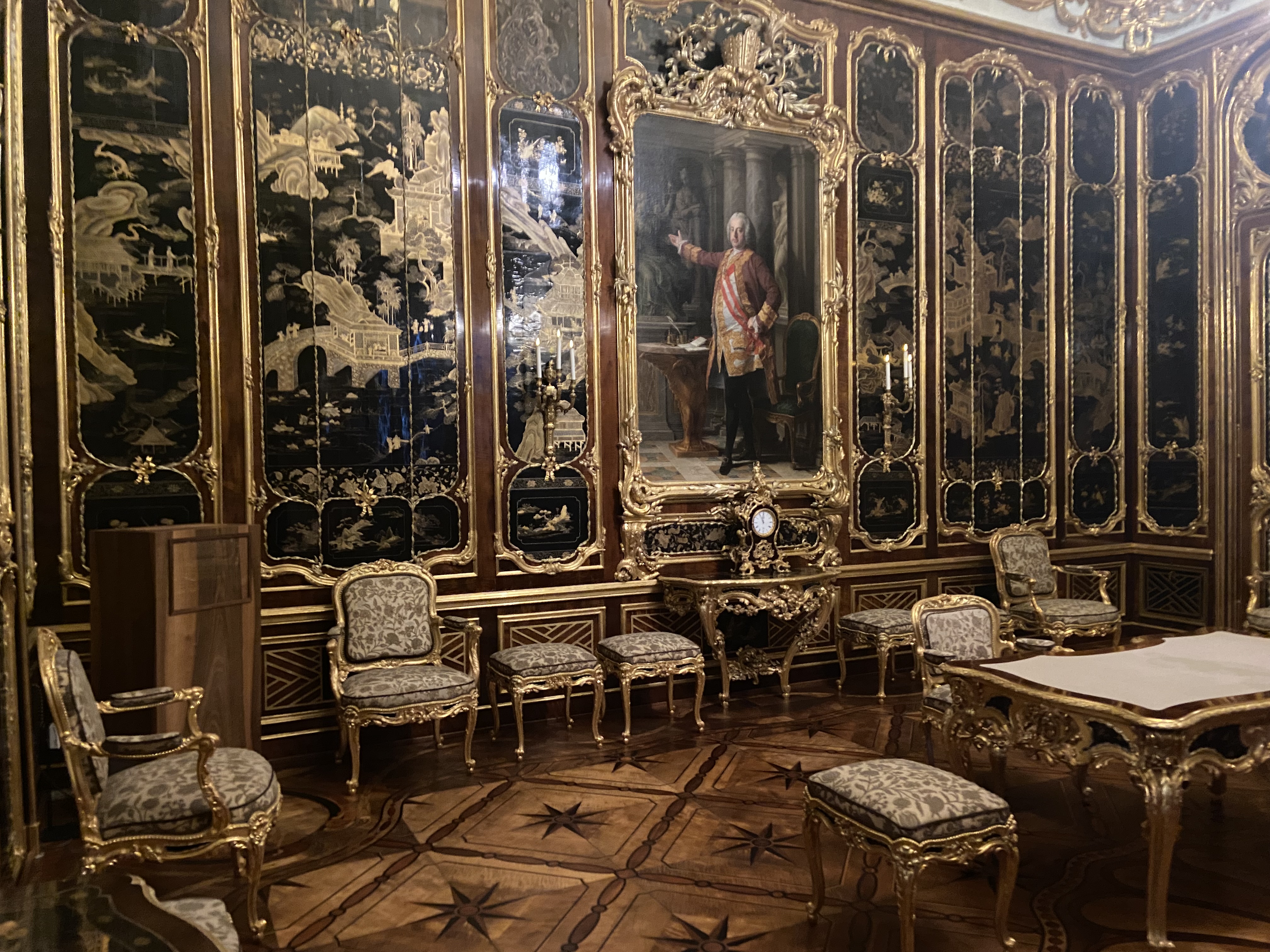
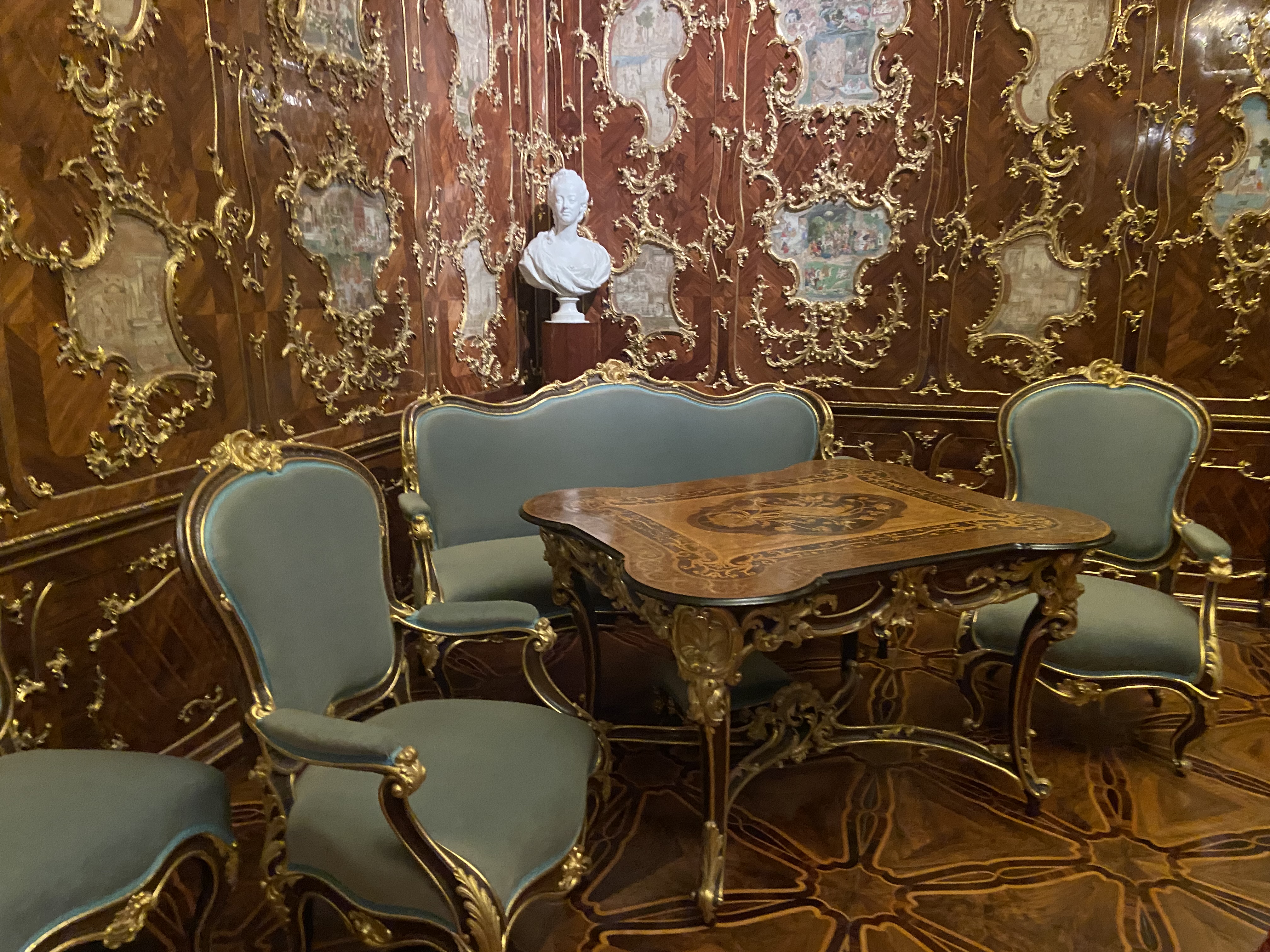
One ornate room after another.
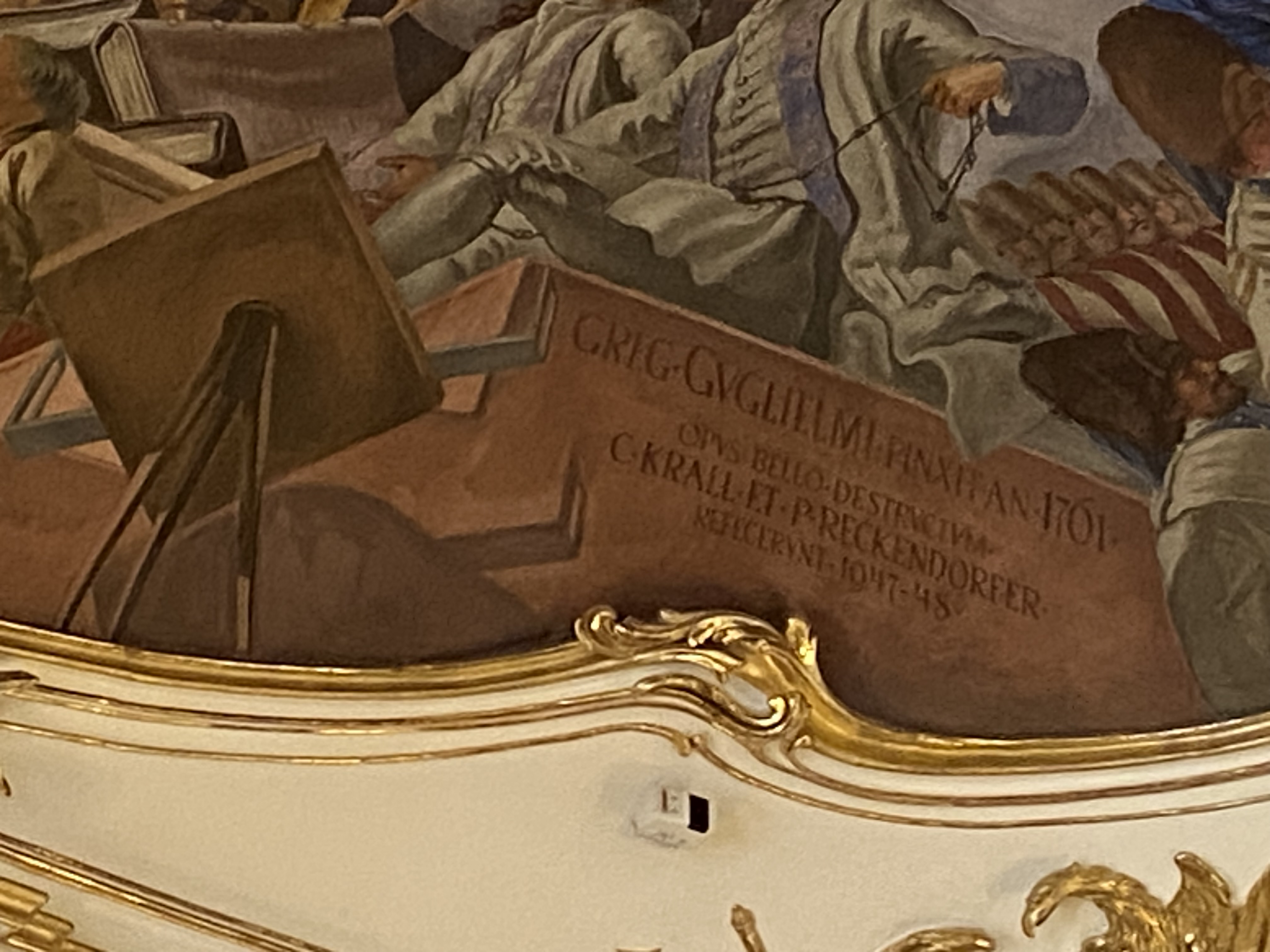
Parts of the palace were damaged during World War II bombing. Our guide pointed out this evidence of a repair in the ceiling made in 1947-48.
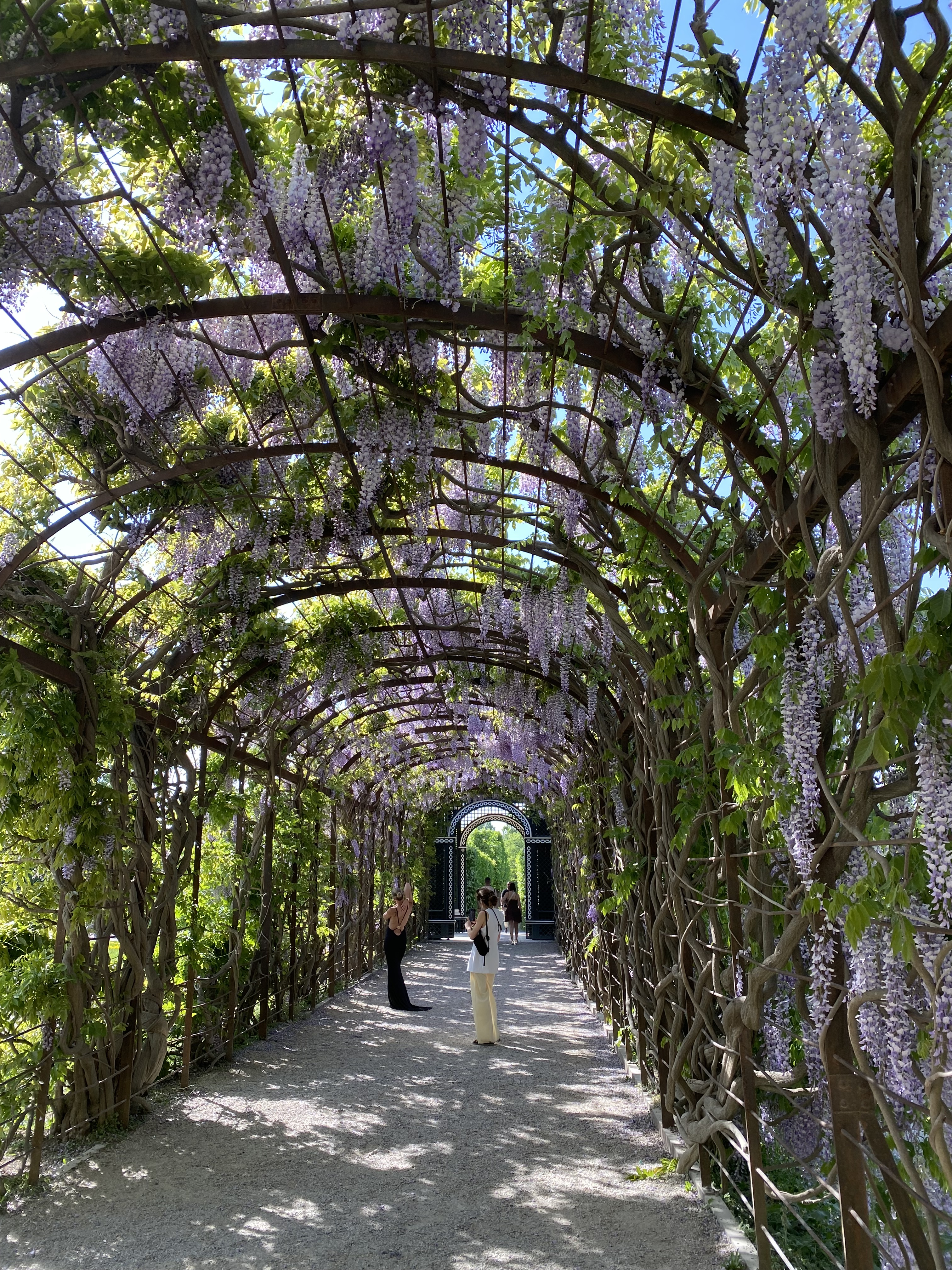
Although the grounds of Schonbrunn Palace were not at their best, walking beneath this wisteria arbor was a lovely way to end our visit.
My next post will be about the small towns where our riverboat docked in Austria and Germany.