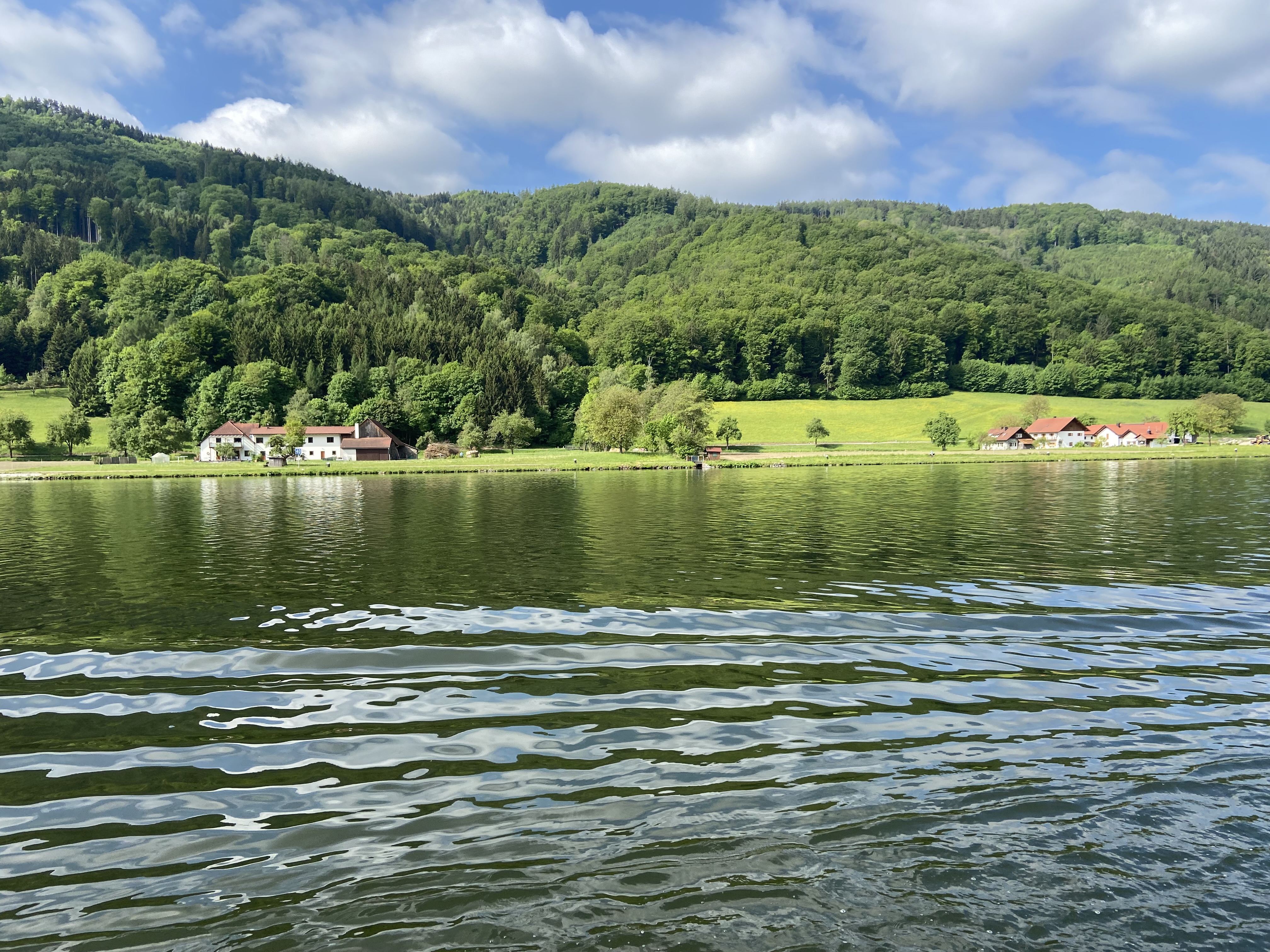
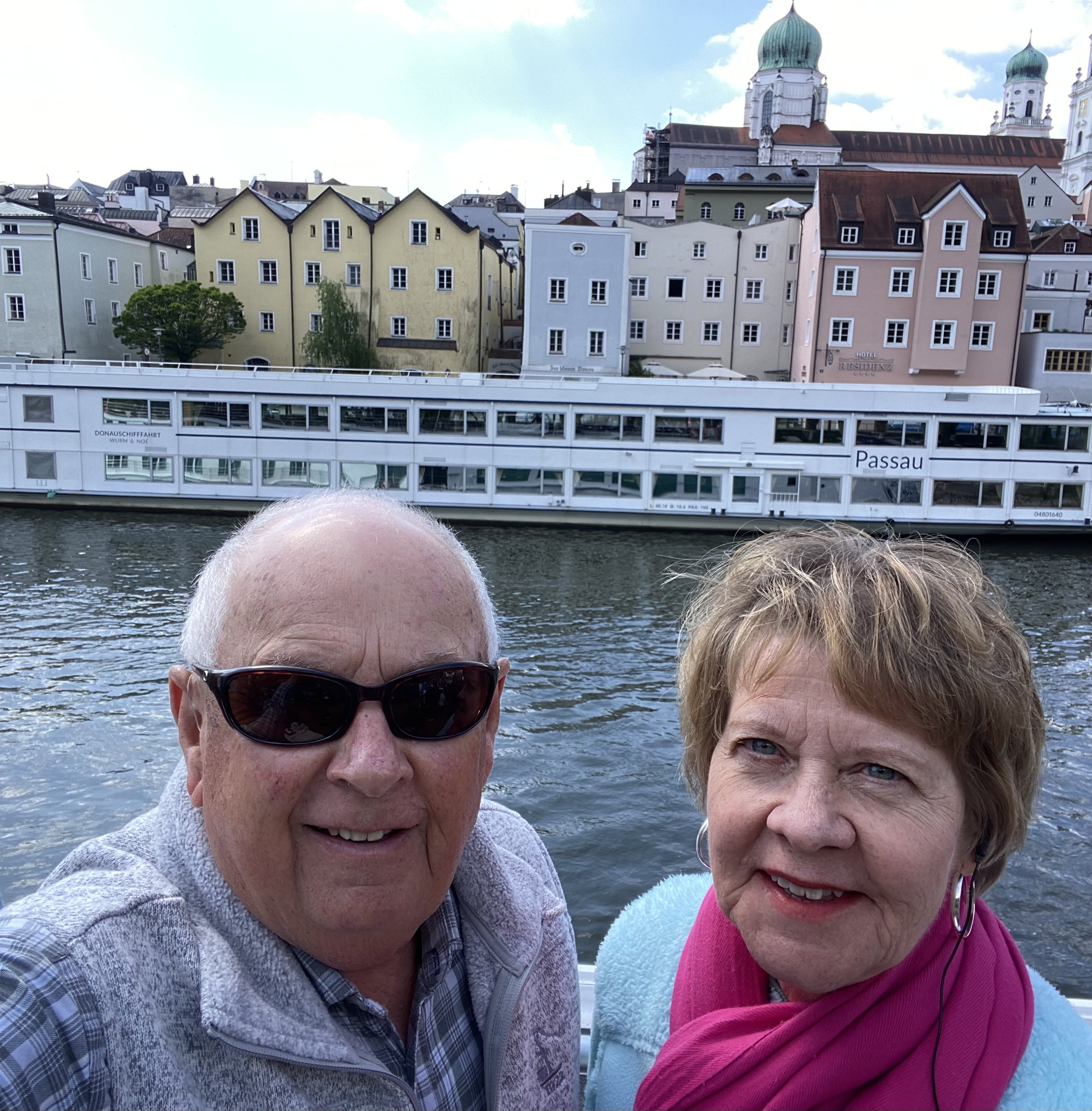
One of the benefits of traveling by riverboat is the time spent on the water, in this case, the lovely Danube River. On our recent trip from Budapest to Prague, we crossed the border from Austria into Germany, arriving at Passau on a crisp early-May morning.
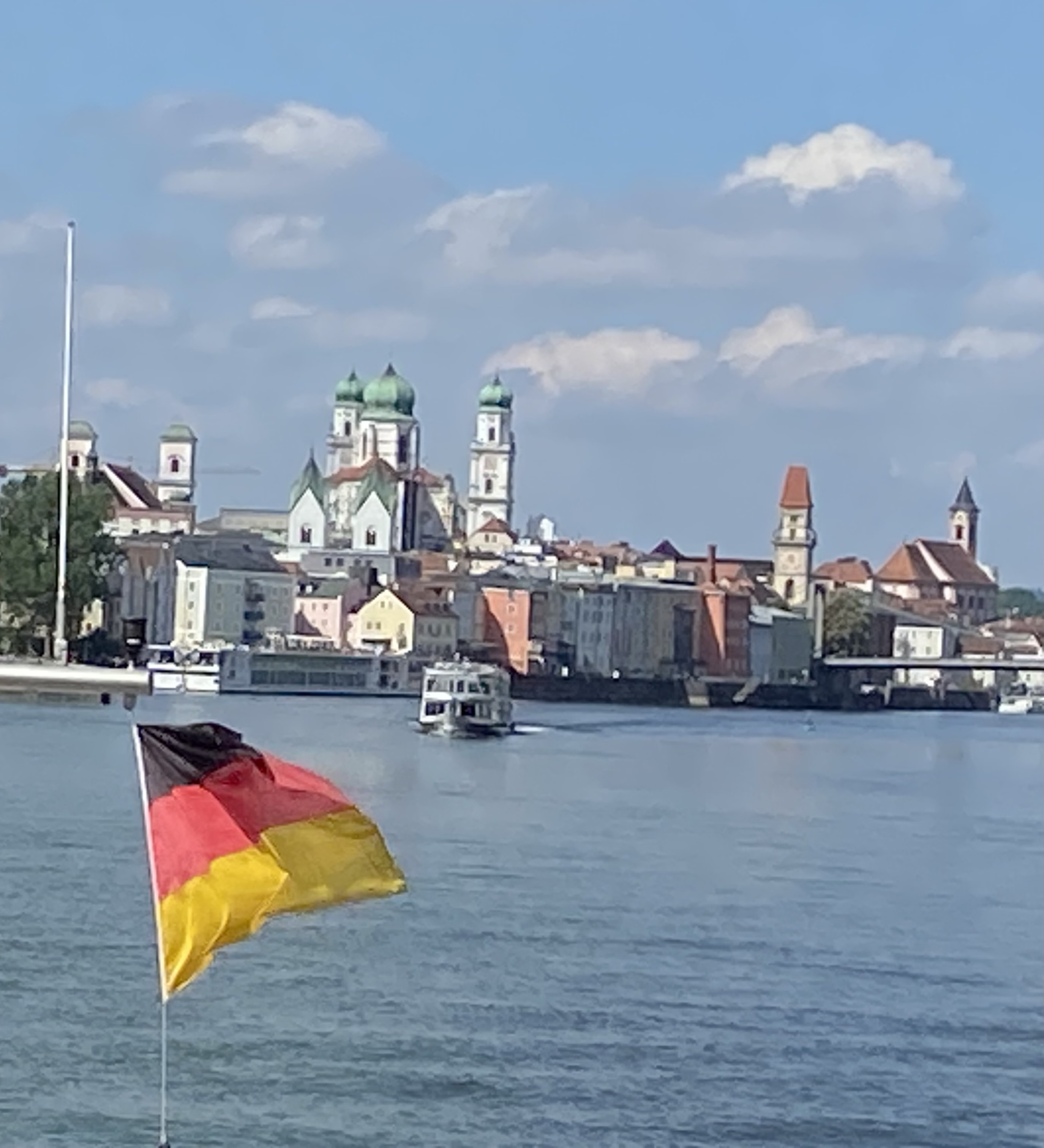
Our Uniworld riverboat swapped out flags when we changed countries. The Austrian flag was replaced by the German. The onion-shaped domes on the buildings here remind me of those in Russia.
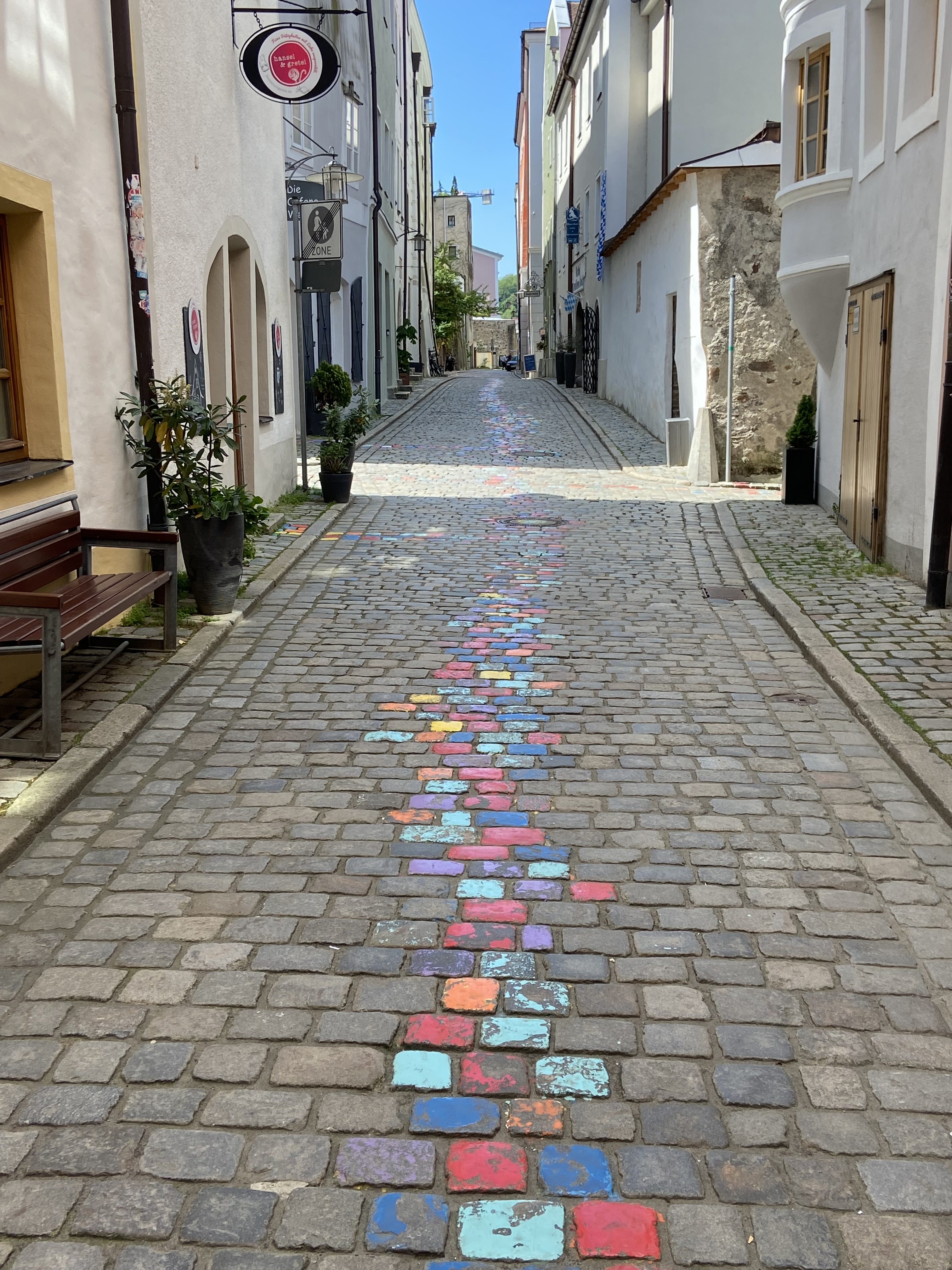
I was charmed by these painted bricks, a fanciful indication that art galleries and studios are located on this street in Passau.
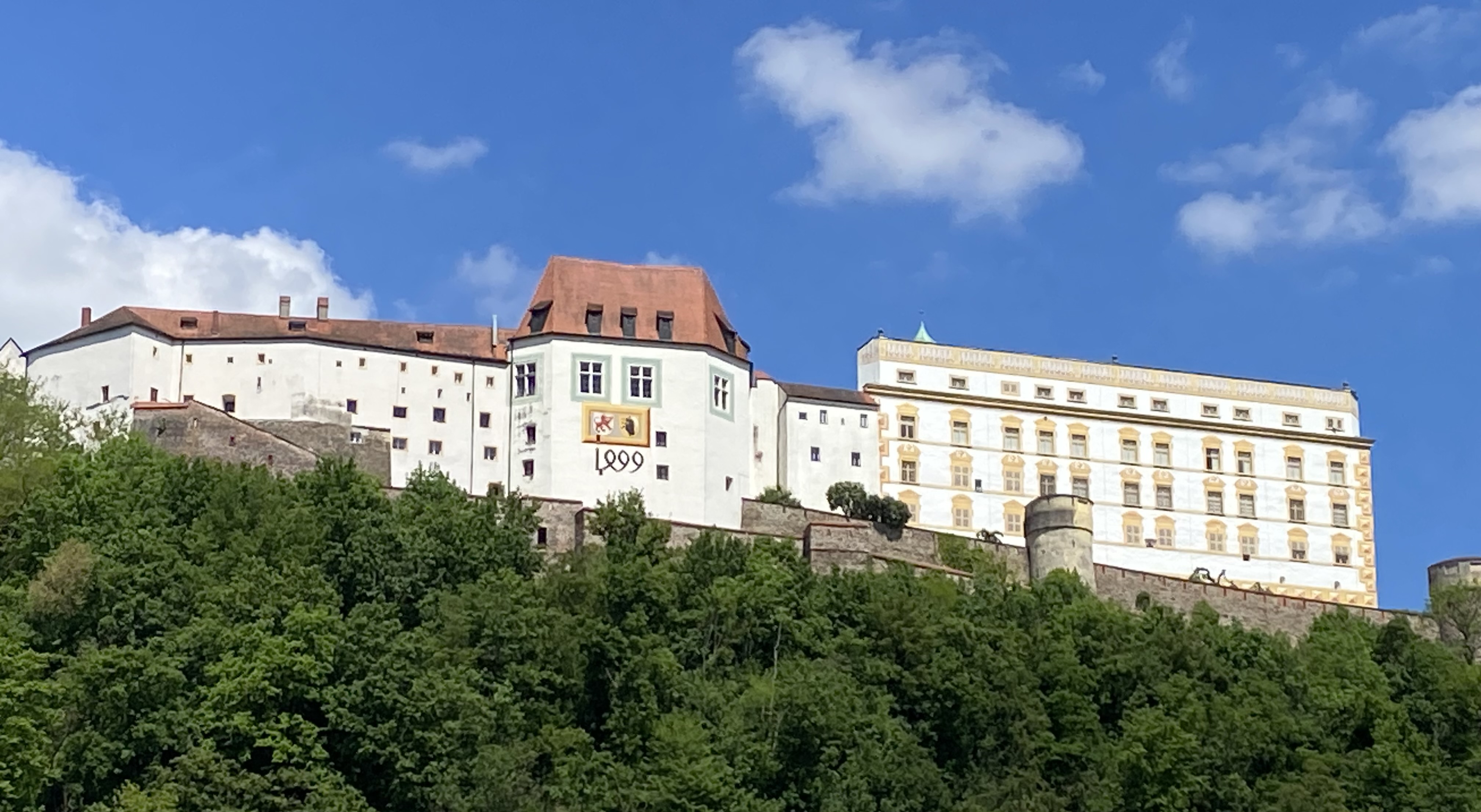
This fortress on top of a hill–where fortresses were often built, the better to see the enemy coming–dates to late medieval times. The Gothic number, 1499, indicates the year the fortress was built. A weird-looking number 4 (second from left), I agree, but our guide explained it’s the Gothic number 4.
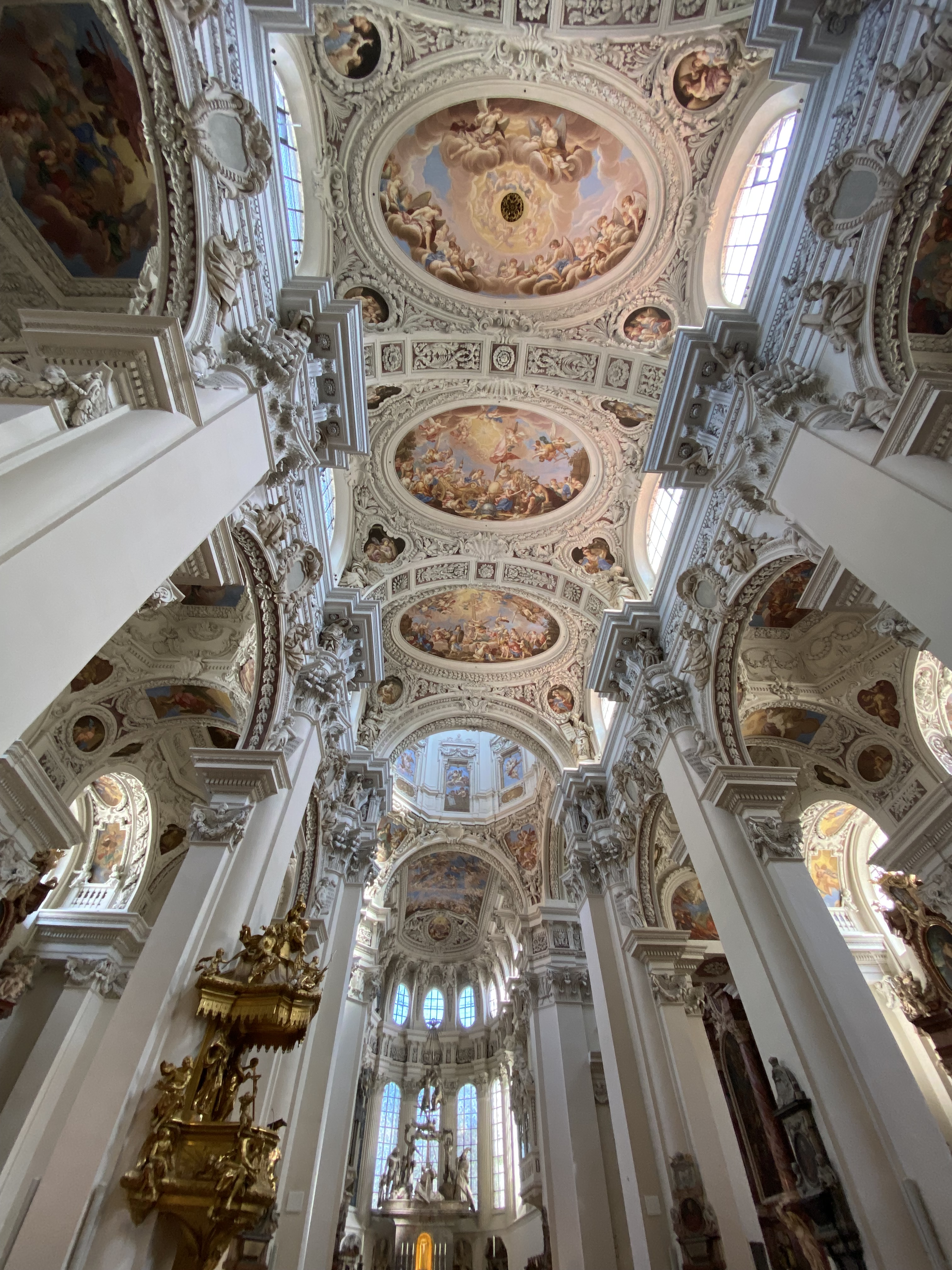
Another impressive building in Passau is Saint Stephen’s Cathedral, which houses the largest organ outside of the U.S. Unfortunately for us, much of the organ is under repair, but we were sufficiently awed by viewing the exquisite exterior and interior of this magnificent church.
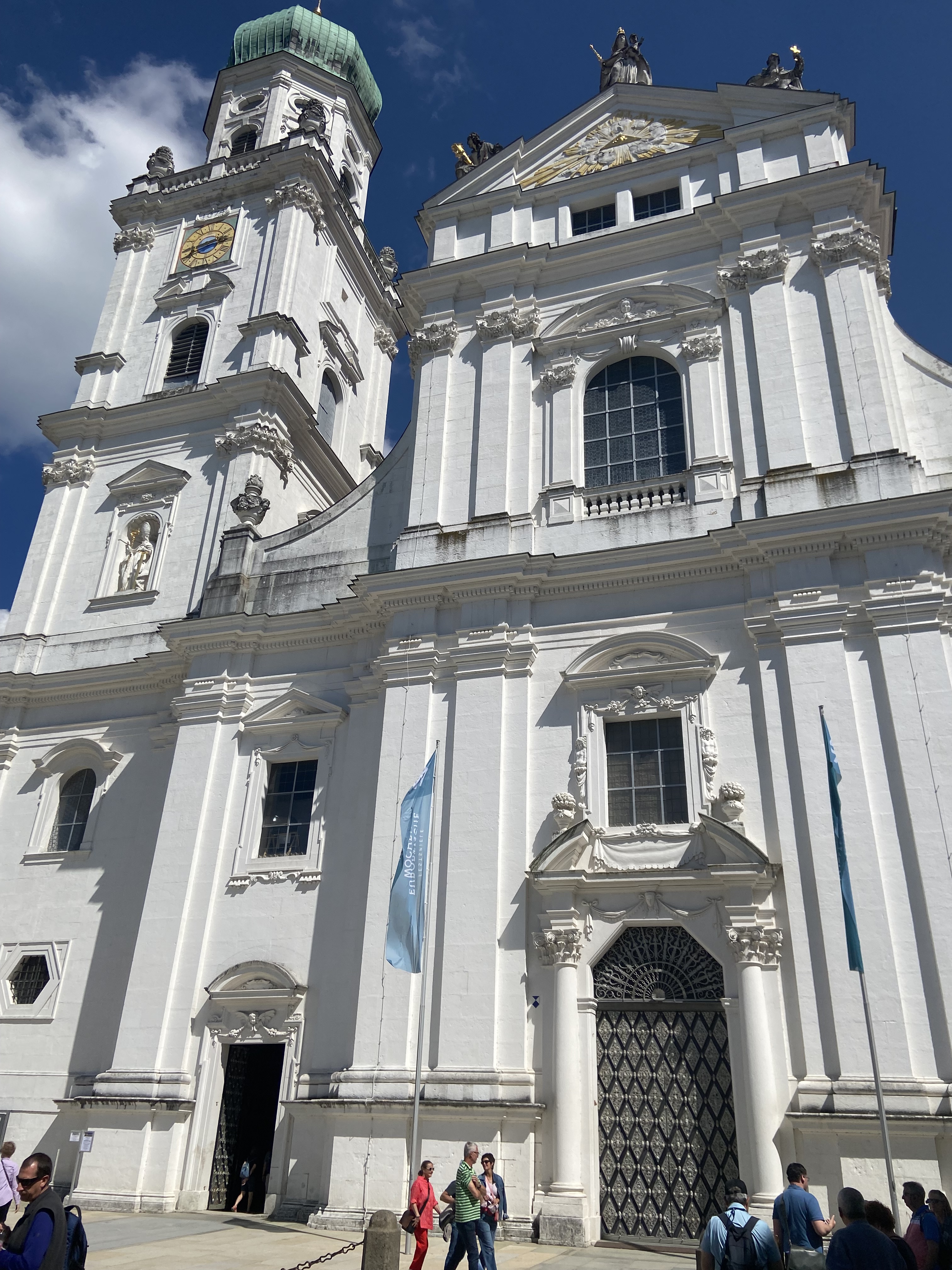
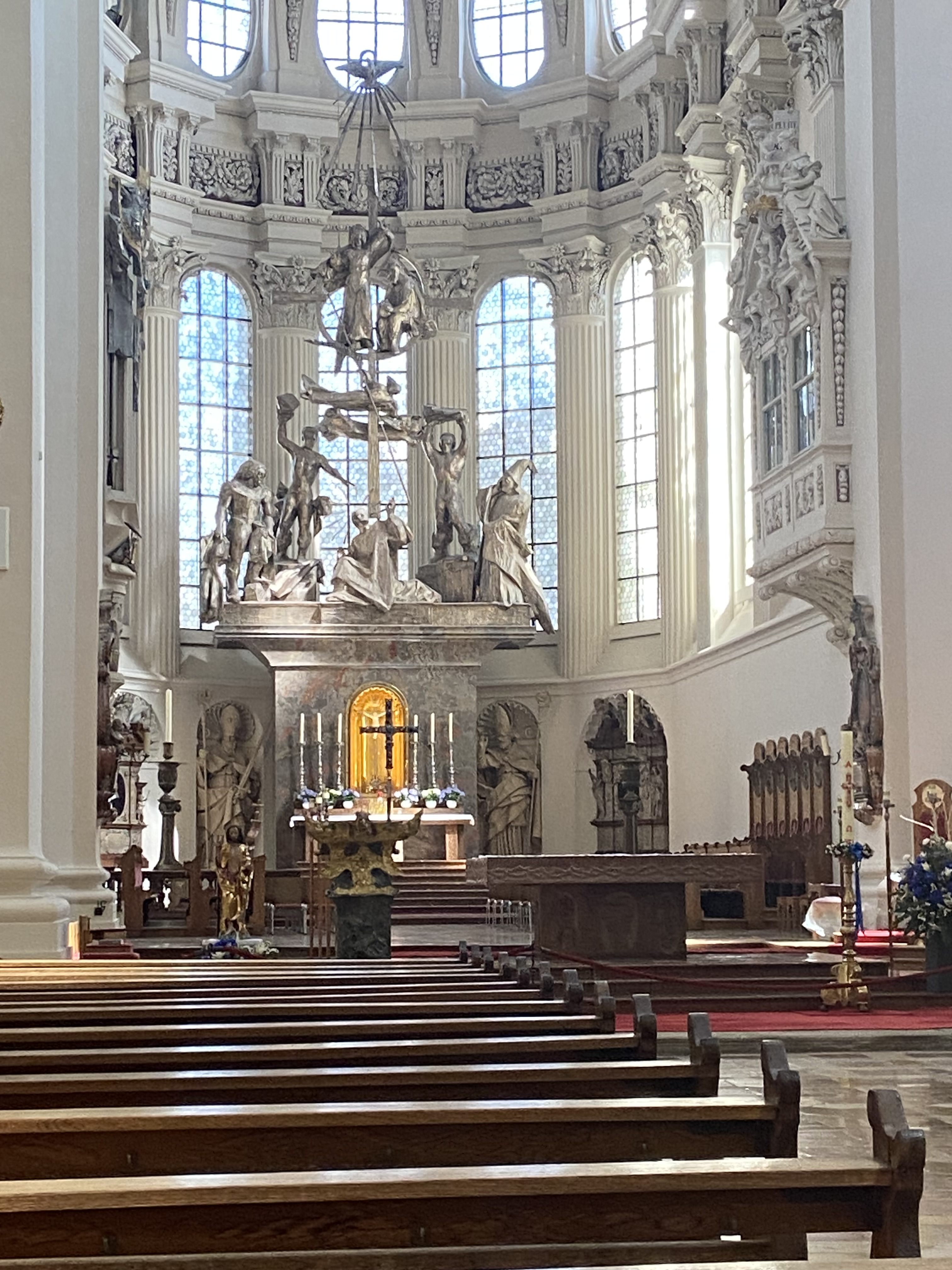
Can you imagine attending a worship service here? I’m afraid I’d be so busy gazing at the architecture and statues that I wouldn’t pay attention. The ceiling alone would have me spellbound, oblivious to anyone speaking.
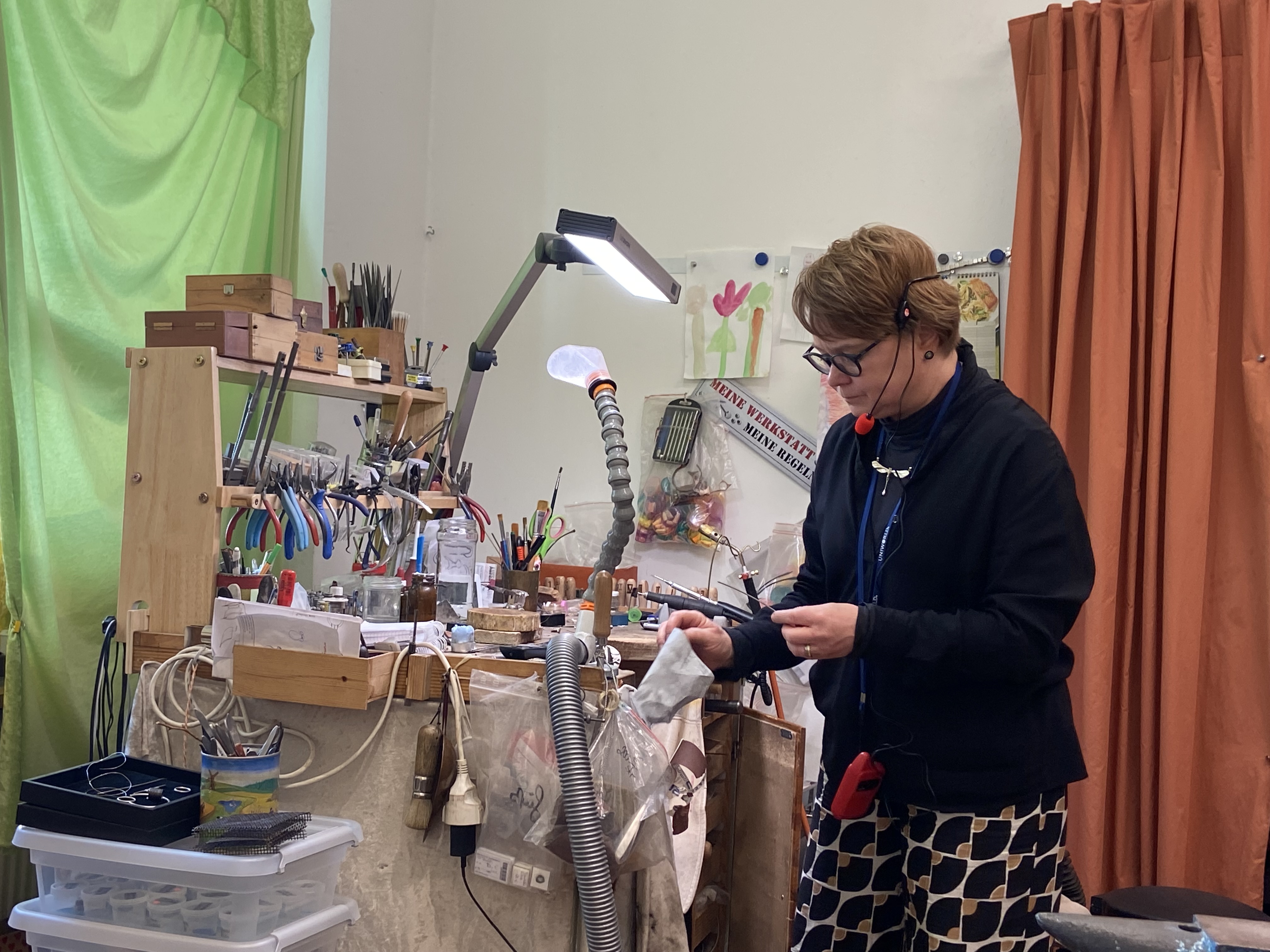
One tour in Passau involved visiting a local merchant, in this case, Julia, the jewelry designer. We watched as she demonstrated her art of creating a bracelet. Noting her painstaking process, I understood why some handmade jewelry is expensive.
Being a member of a garden club, I’m always looking at the landscaping. This flower bed in Passau caught my eye, reminding me it was May and I should be home planting some flowers myself.
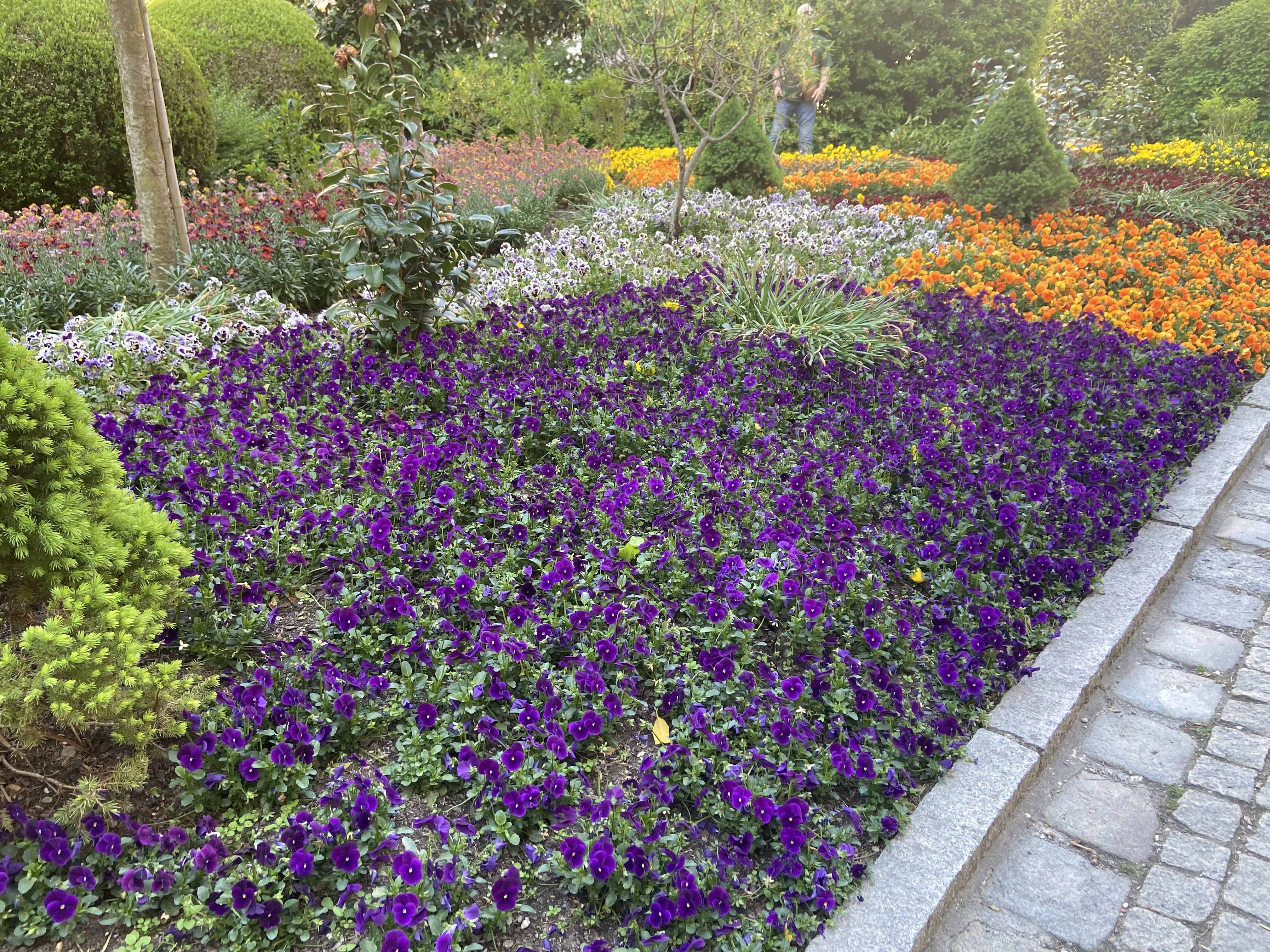
Flower planting would have to wait, though. From Passau, we traveled to another German town, Regensburg. Here, my husband and I opted for the Jewish Heritage tour.
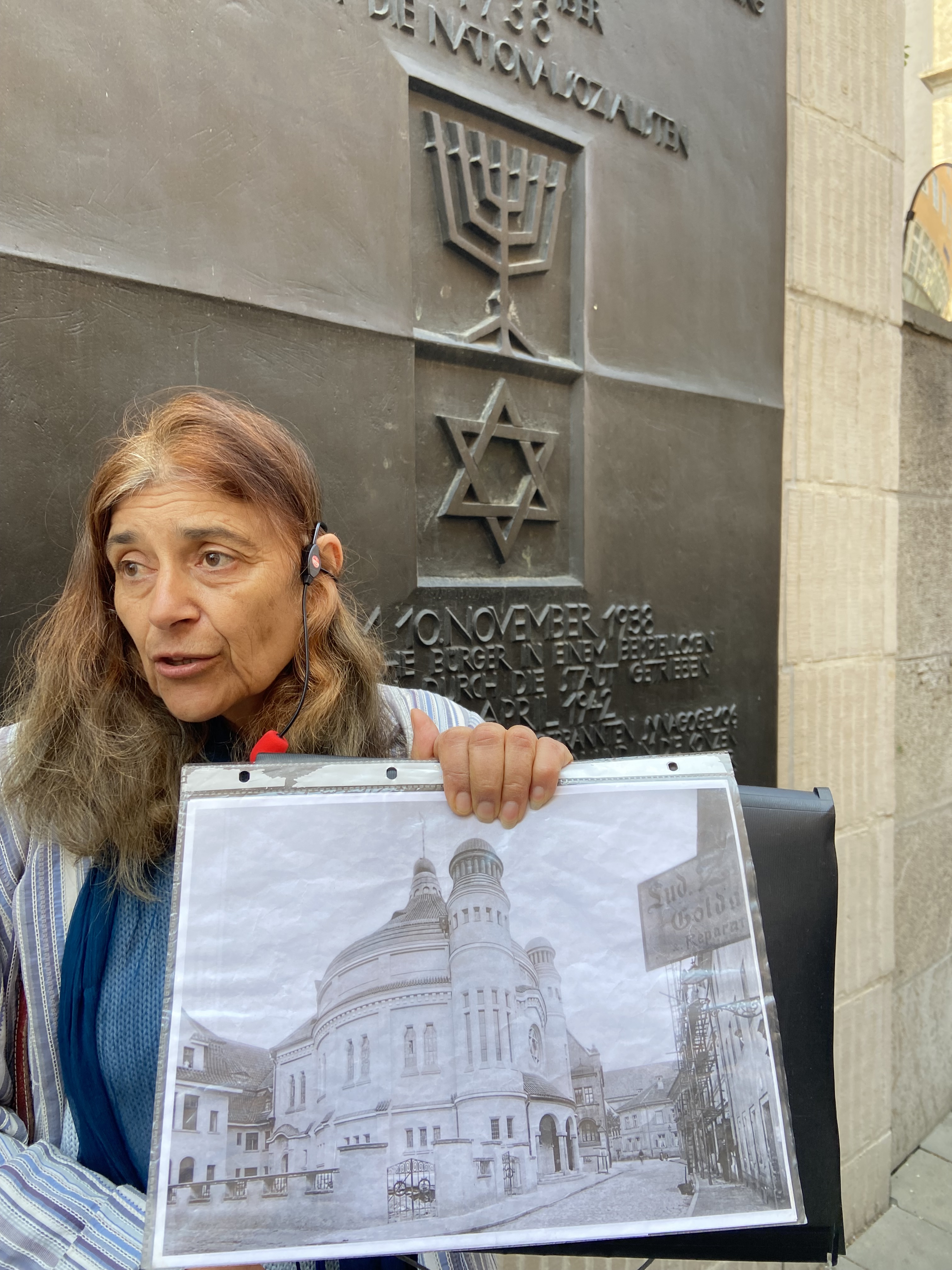
Our guide walked us around town, pointing out significant Jewish sites, many related to the atrocities suffered by the Jewish population of Regensburg during the Nazi regime. Here, she showed us a picture of the Regensburg Synagogue that was destroyed during Kristallnacht (night of broken glass).
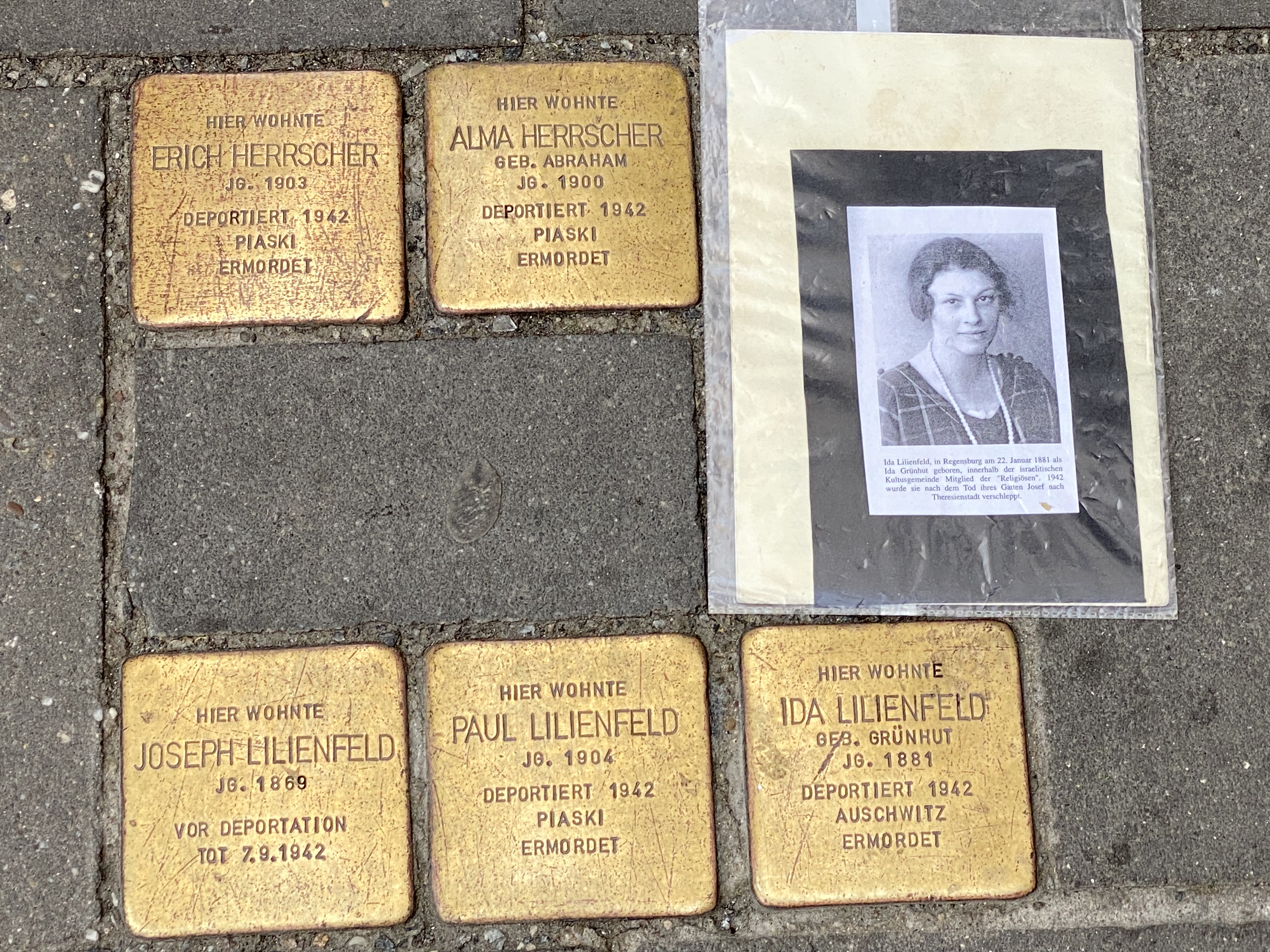
In Regensburg, as in many German cities today, brass plaques mark where deported Jews once lived. Most were sent to concentration camps. Few returned. Our guide placed a picture of this woman, Ida Lilienfeld, above her plaque. As you can probably decipher, she was deported in 1942 to Auschwitz, which was one of the worst concentration camps. Like many others, she perished. Ermordet is German for murdered.
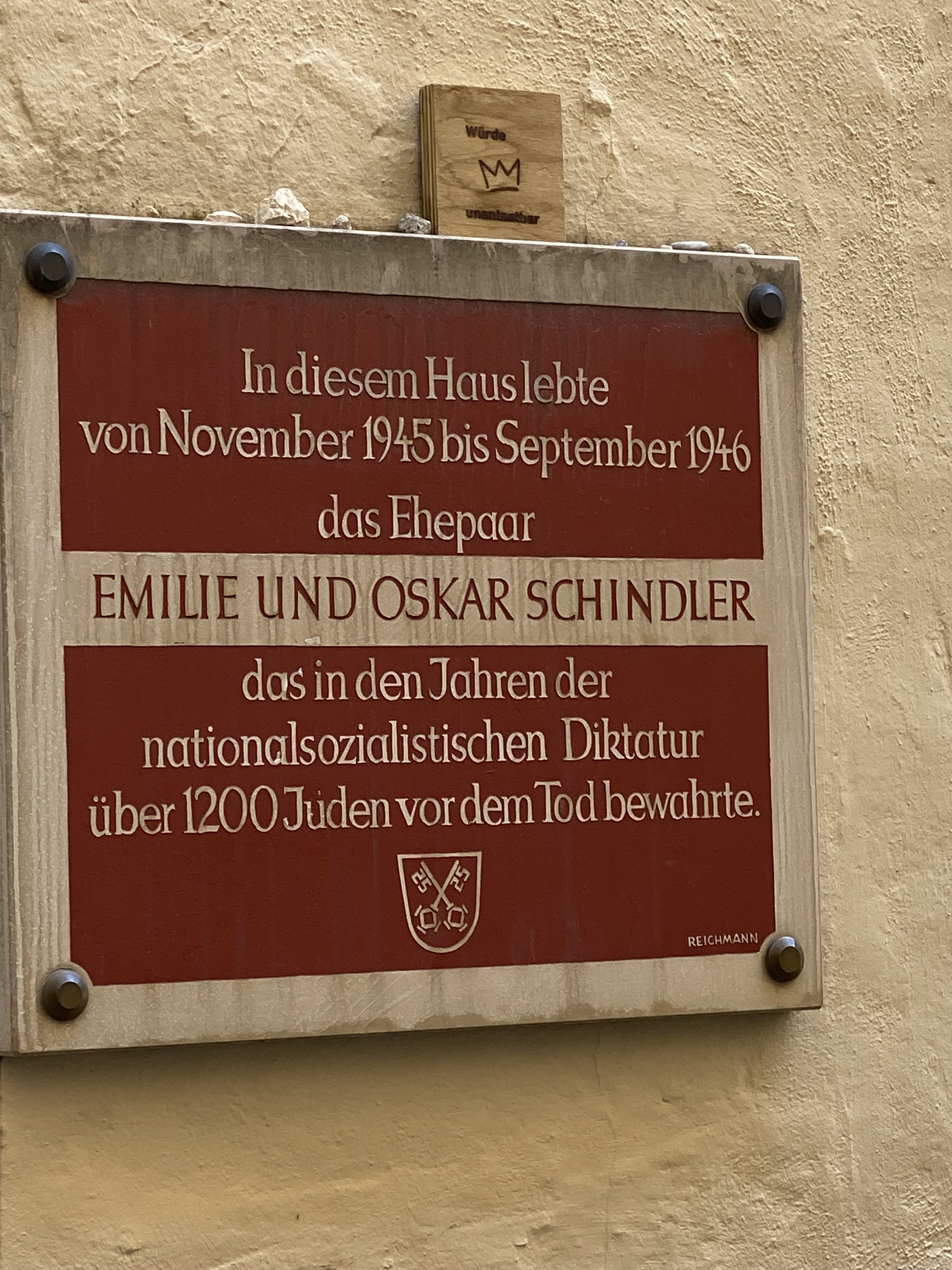
If you’ve ever seen the movie, Schindler’s List, then you know the story of Oscar Schindler, whose heroic efforts saved over twelve thousand Jews from the extermination camps. Our guide gave equal credit to his wife Emilie Schindler, whose jewelry was sold to buy food, clothes, and medicine for the Jews they protected.
A sign notes where some believe the two once lived briefly in Regensburg.
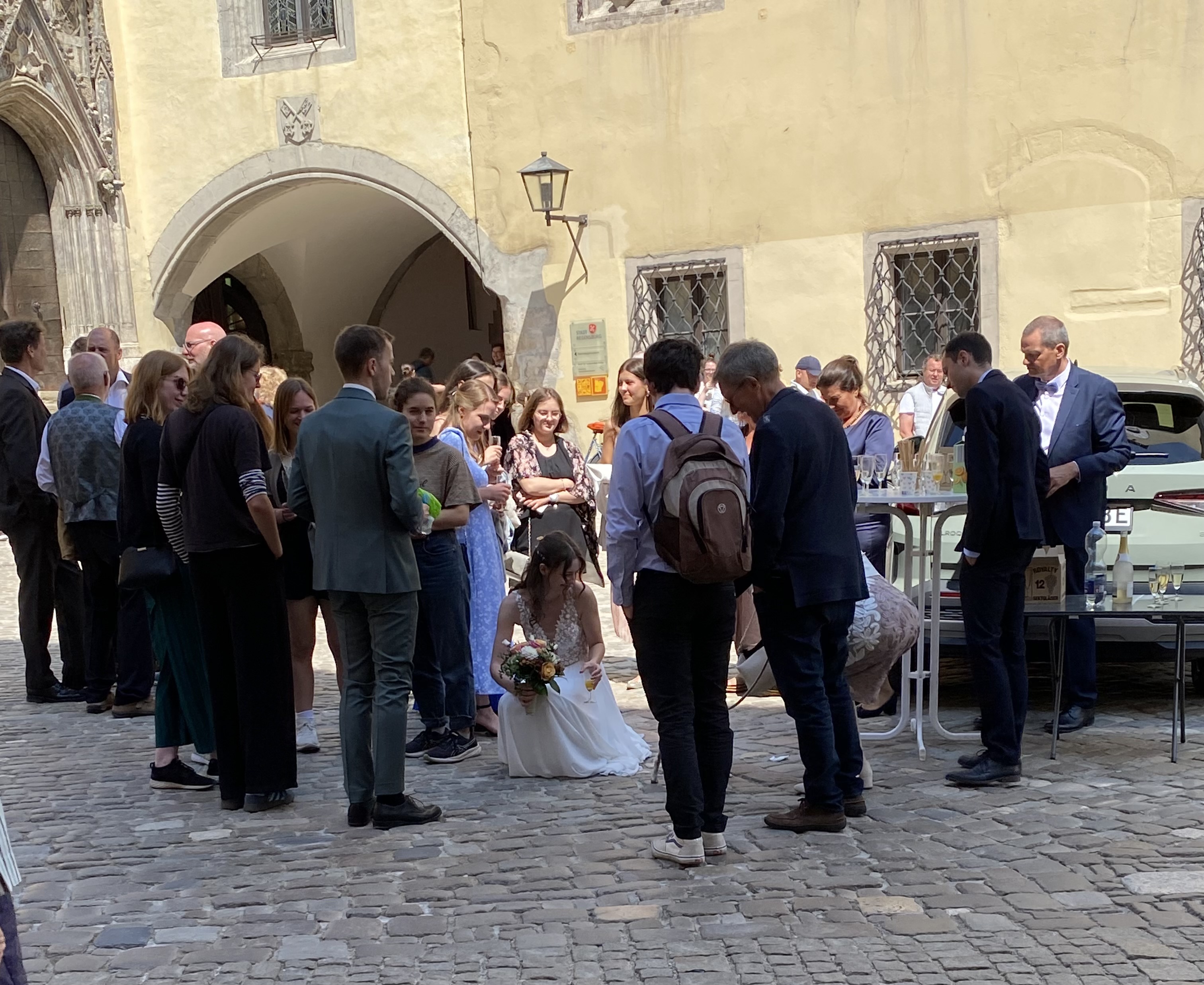
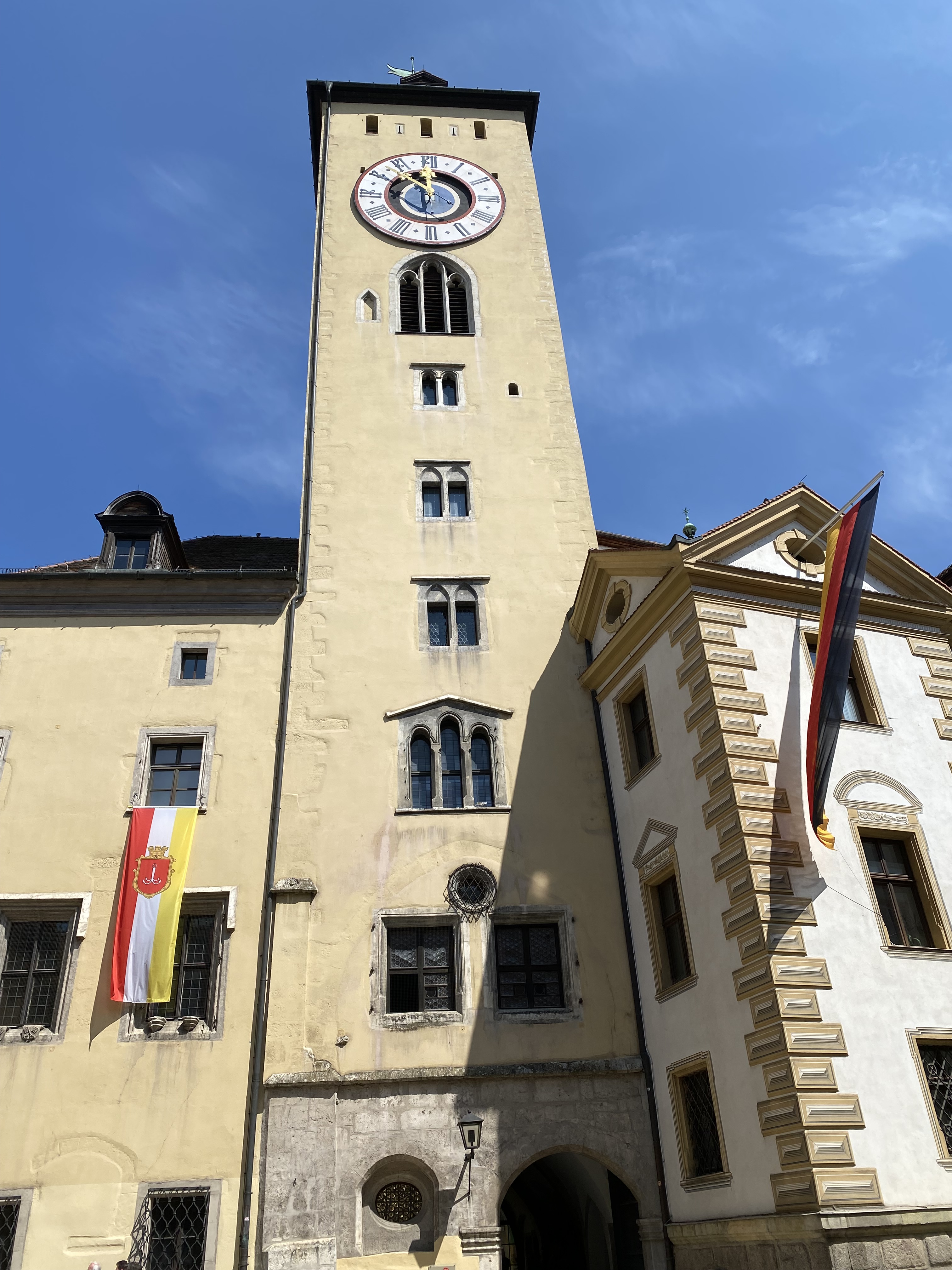
Life today in Regensburg seems a far cry from the dark days of Hitler’s regime. We happened upon a wedding party preparing to go into City Hall, where, according to our tour guide, all marriages are made official. A couple can then opt to go to the church or synagogue to tie the knot again.
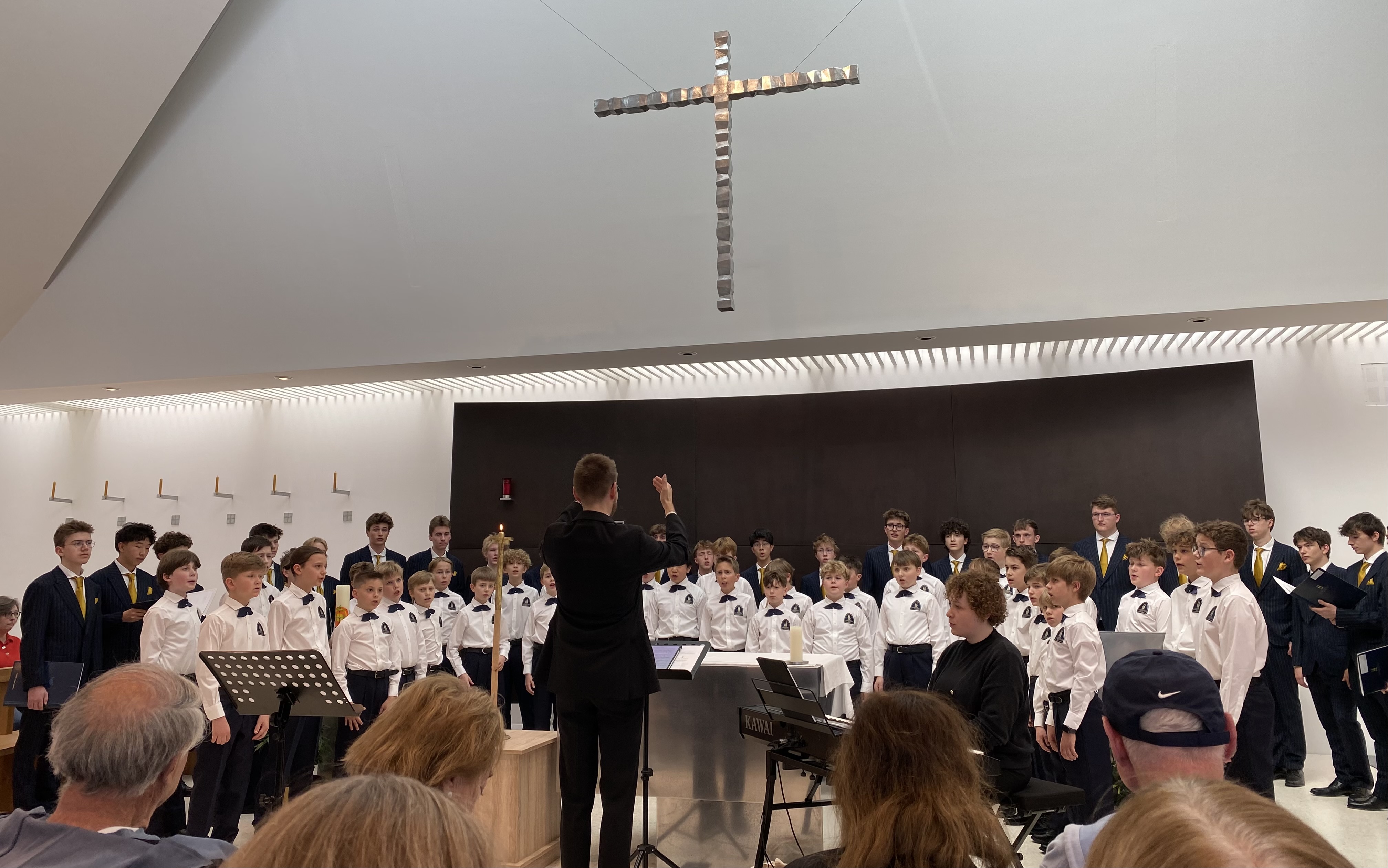
A special treat in Regensburg was hearing a boys’ choir perform at a boarding school. Most of the words were in German, as expected, but the music was universal.
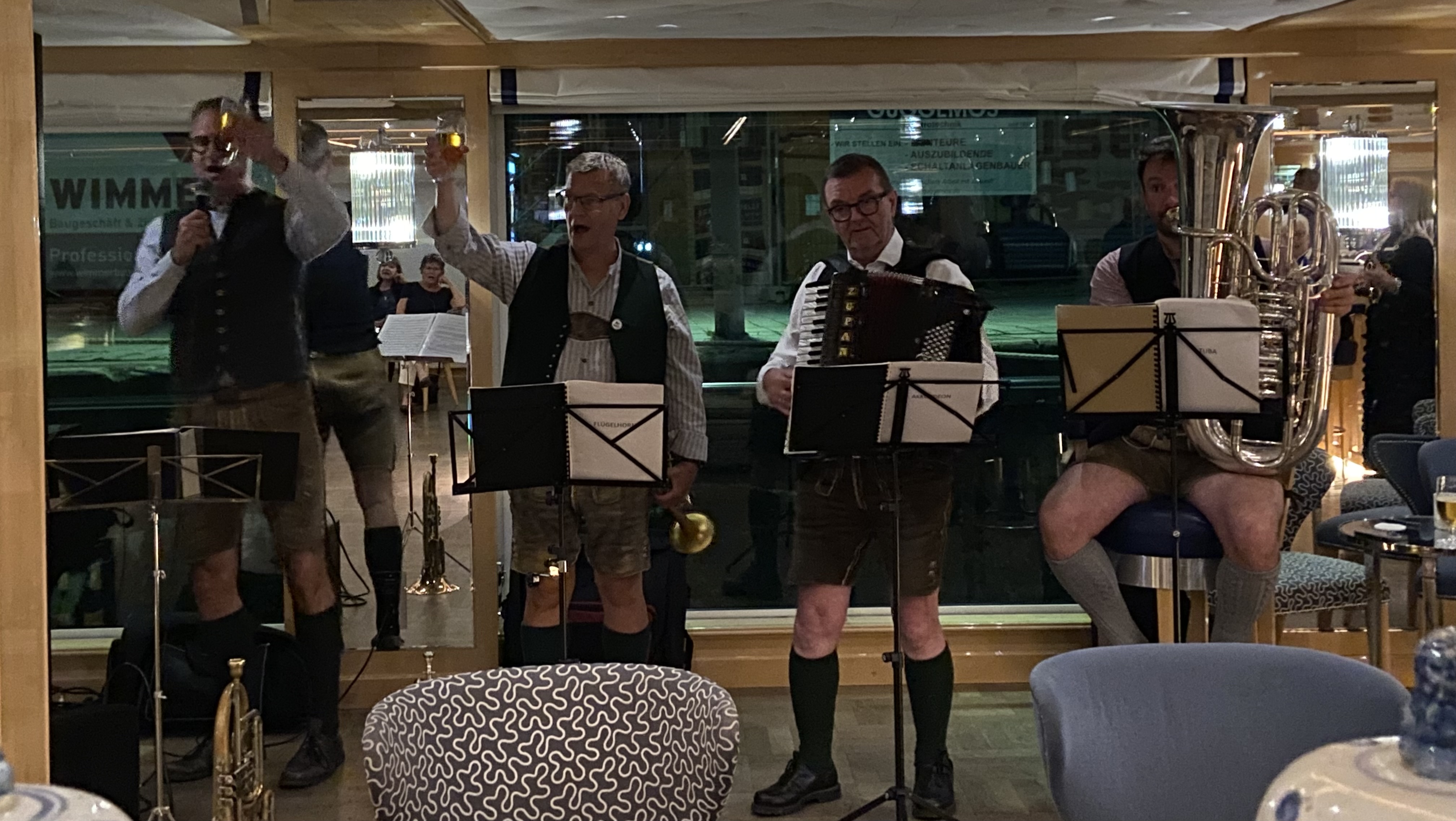
Another type of musical entertainment was the oom-pah-pah band that performed on our boat one night. We were in the Bavarian state of Germany after all, where these bands are popular and play at events like Oktoberfest.
Polka, anyone?
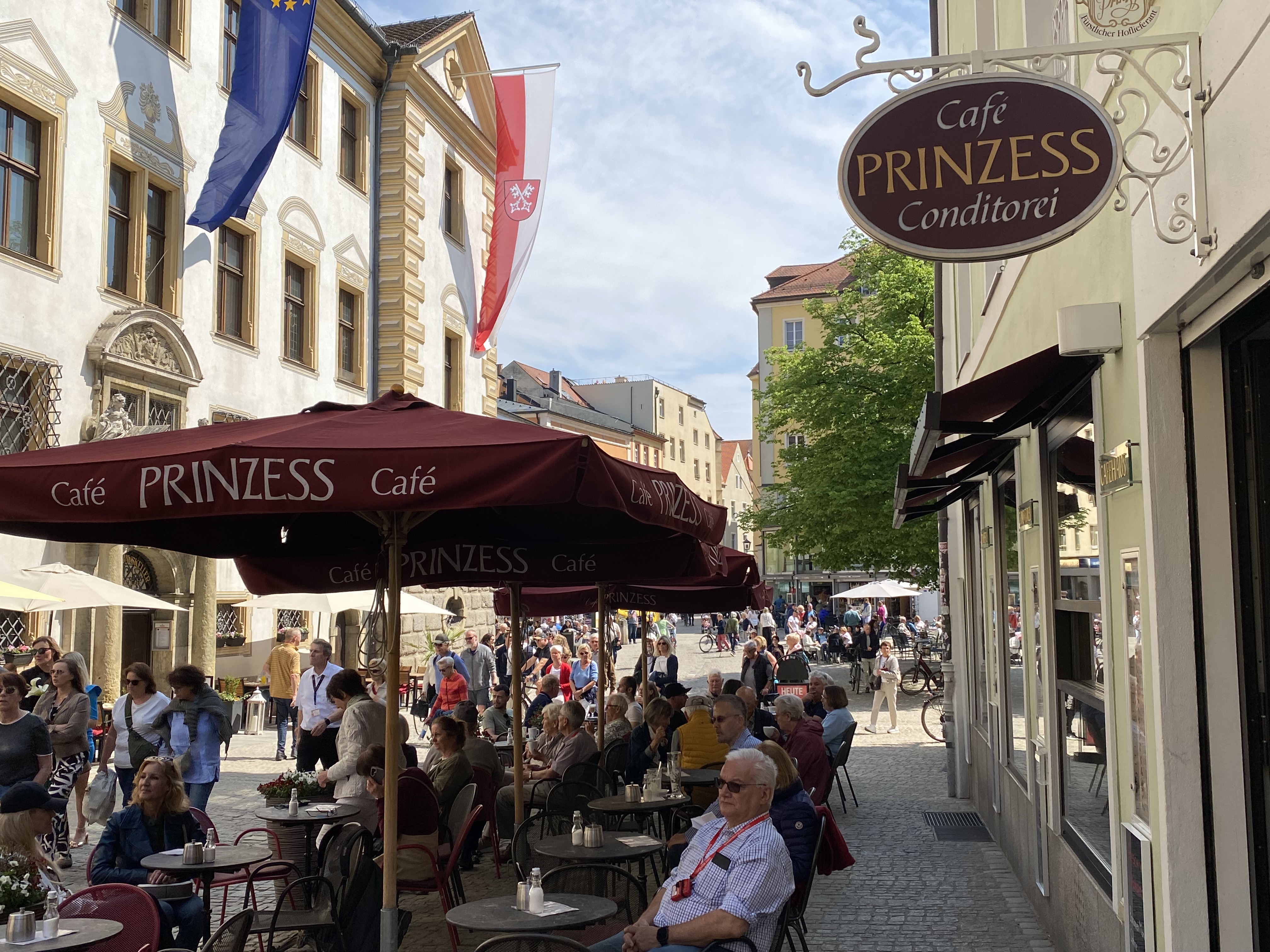
In the midst of checking off all the must-see places and experiences, it’s nice to pause and enjoy sitting at an outdoor cafe. People-watching and soaking up the culture are part of traveling abroad, too.
Our final stop on this trip and the subject of my next post: the lovely city of Prague in the Czech Republic.