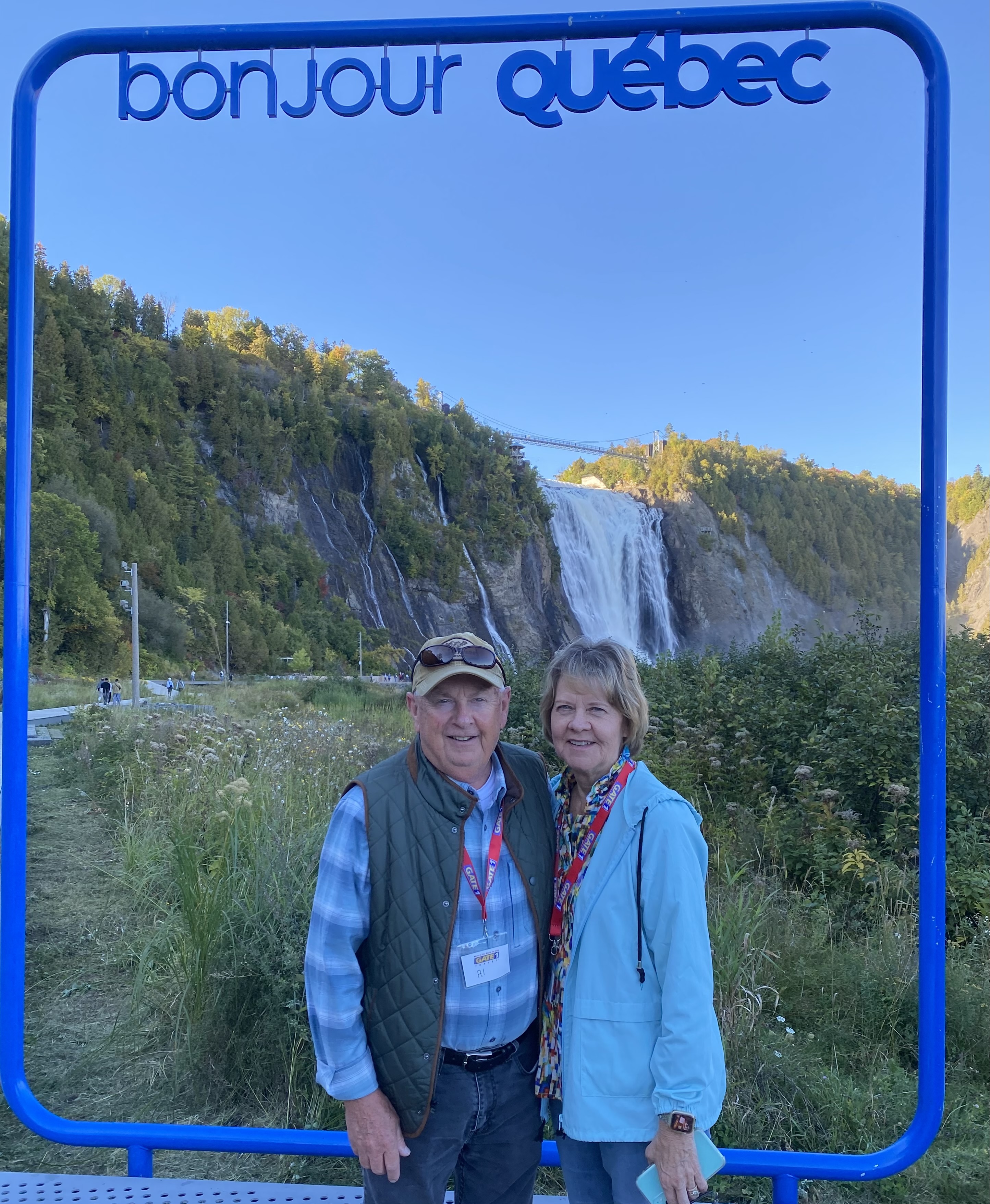
It may not be Paris, but for a French cultural experience, Quebec Province and the city itself are a much shorter plane ride. The landscape, the architecture, and the history of this French-speaking area of Canada made it my favorite part of the trip.
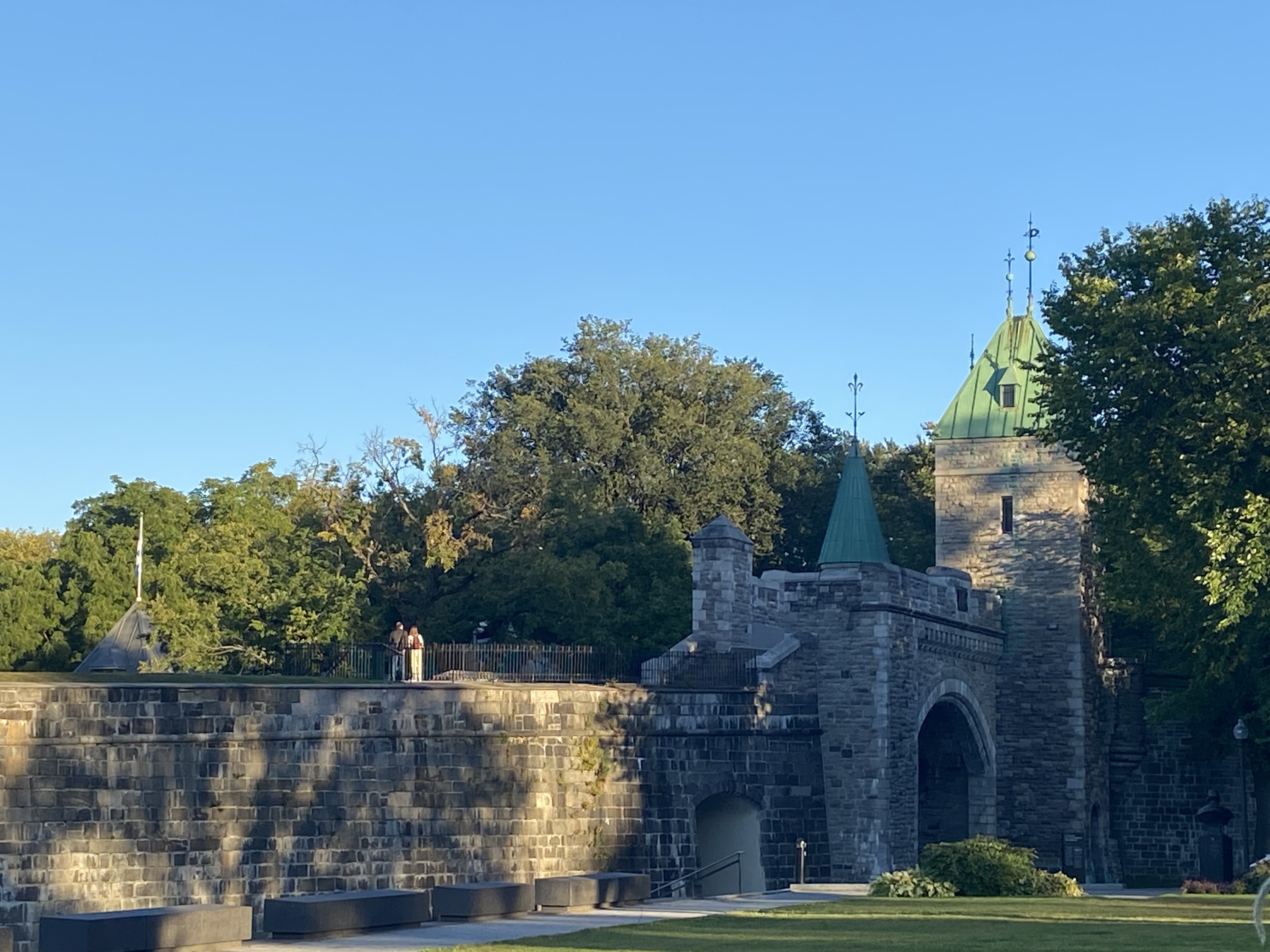
Quebec City is the only walled city in North America. French settlers built fortifications to protect themselves from not only the Indigenous people but also other Europeans, especially the English. Today, these walls form part of a UNESCO World Heritage site.
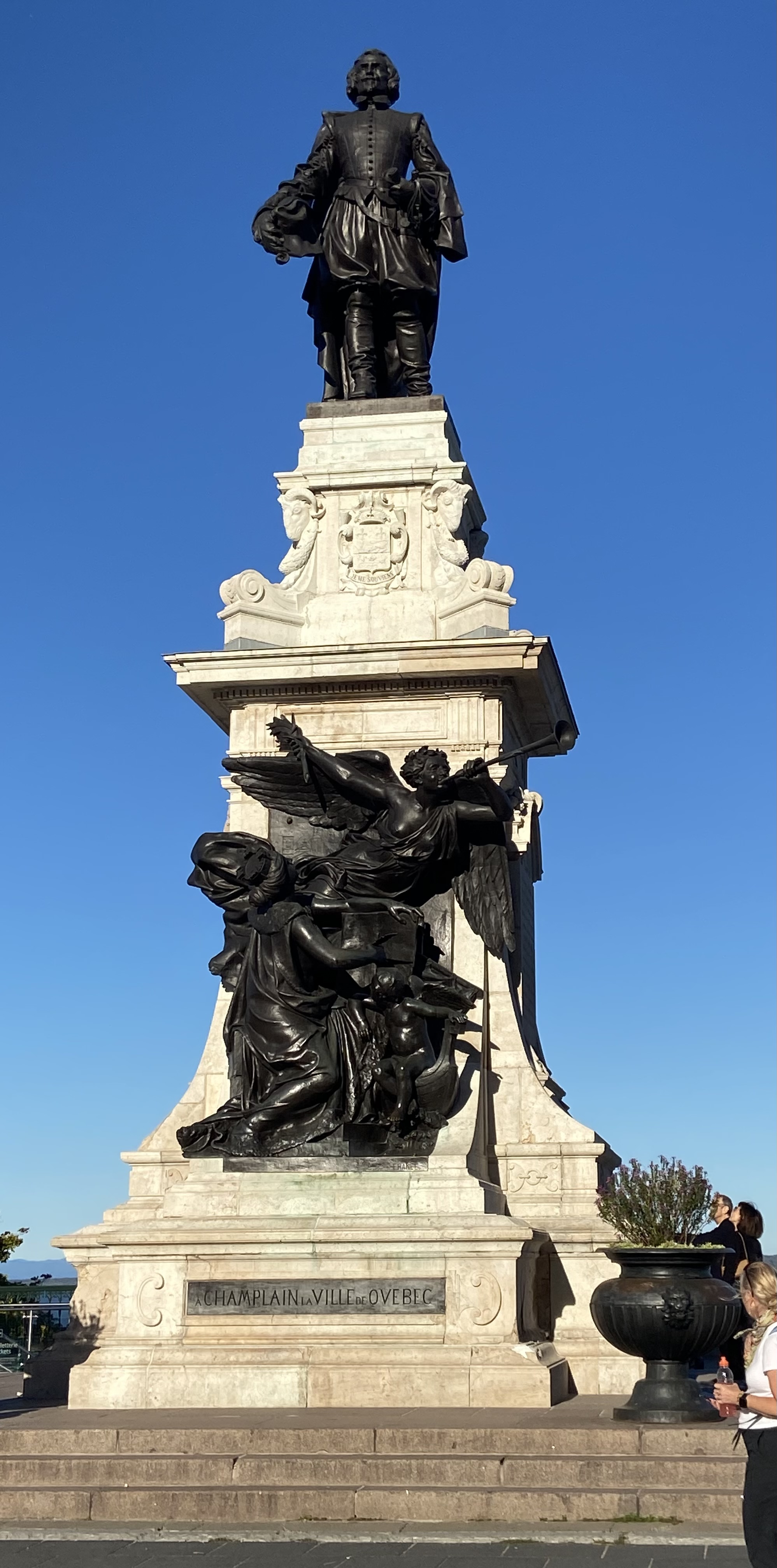
The early French influence has remained in the French-speaking province of Quebec and its capital, Quebec City. Without a doubt, the most famous historical figure in Quebec is Samuel de Champlain, who founded the first permanent French settlement, what became Quebec City, in 1608. Early settlers called this area “New France.” His statue is a focal point in Quebec City.
You gotta love a guide who dresses up as Champlain and pretends to be the founder of the city as he gives you a history lesson.
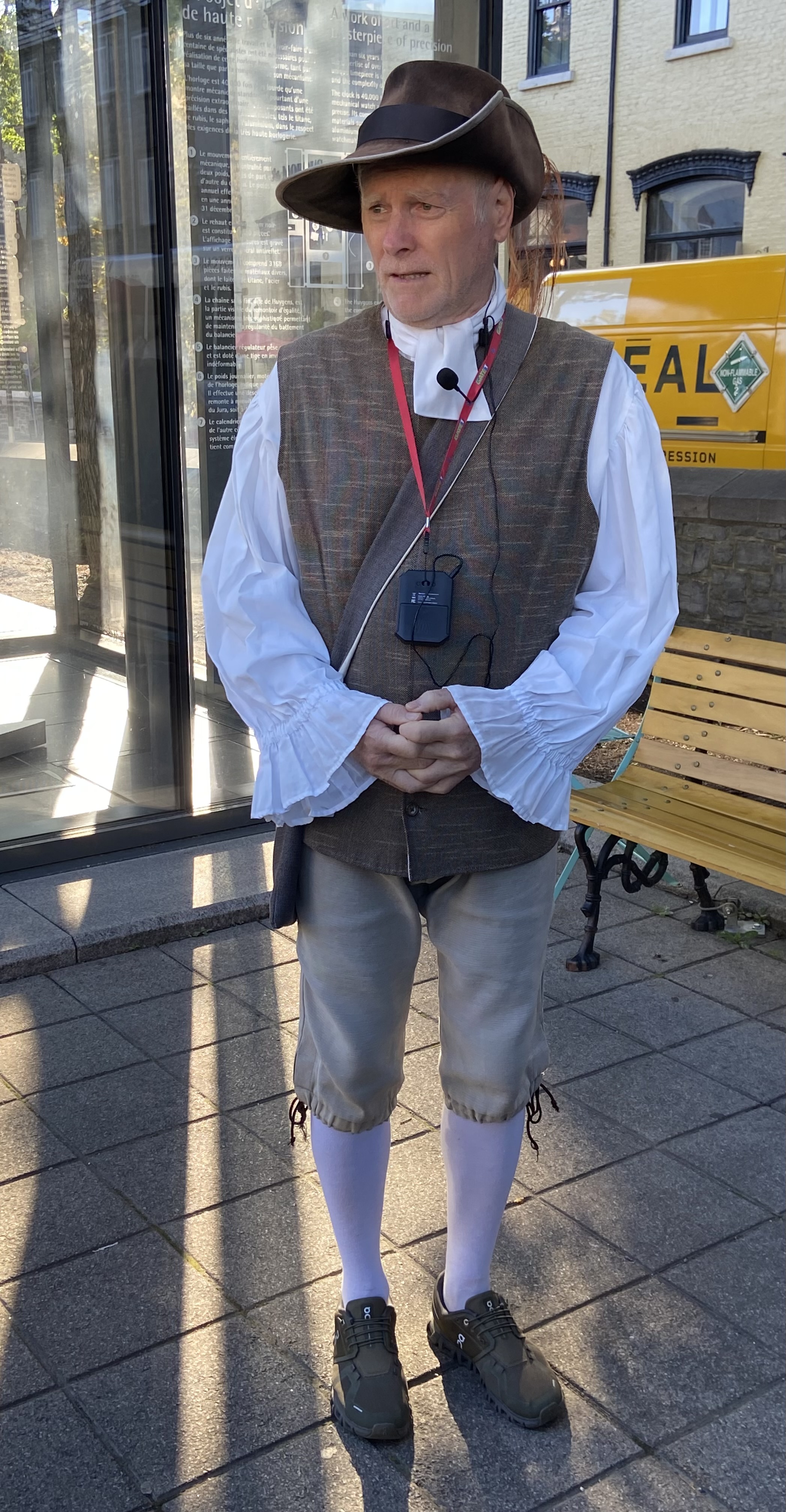
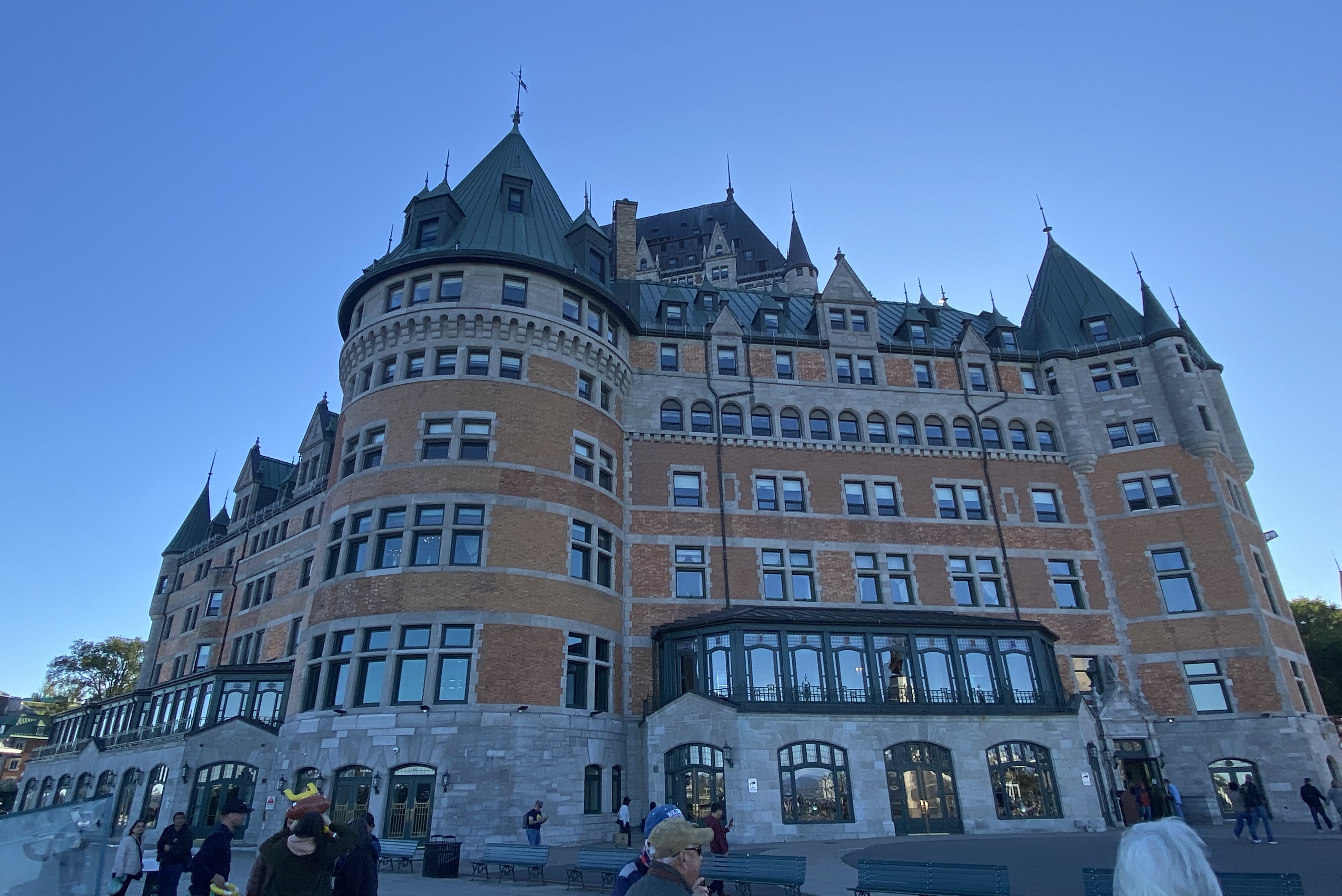
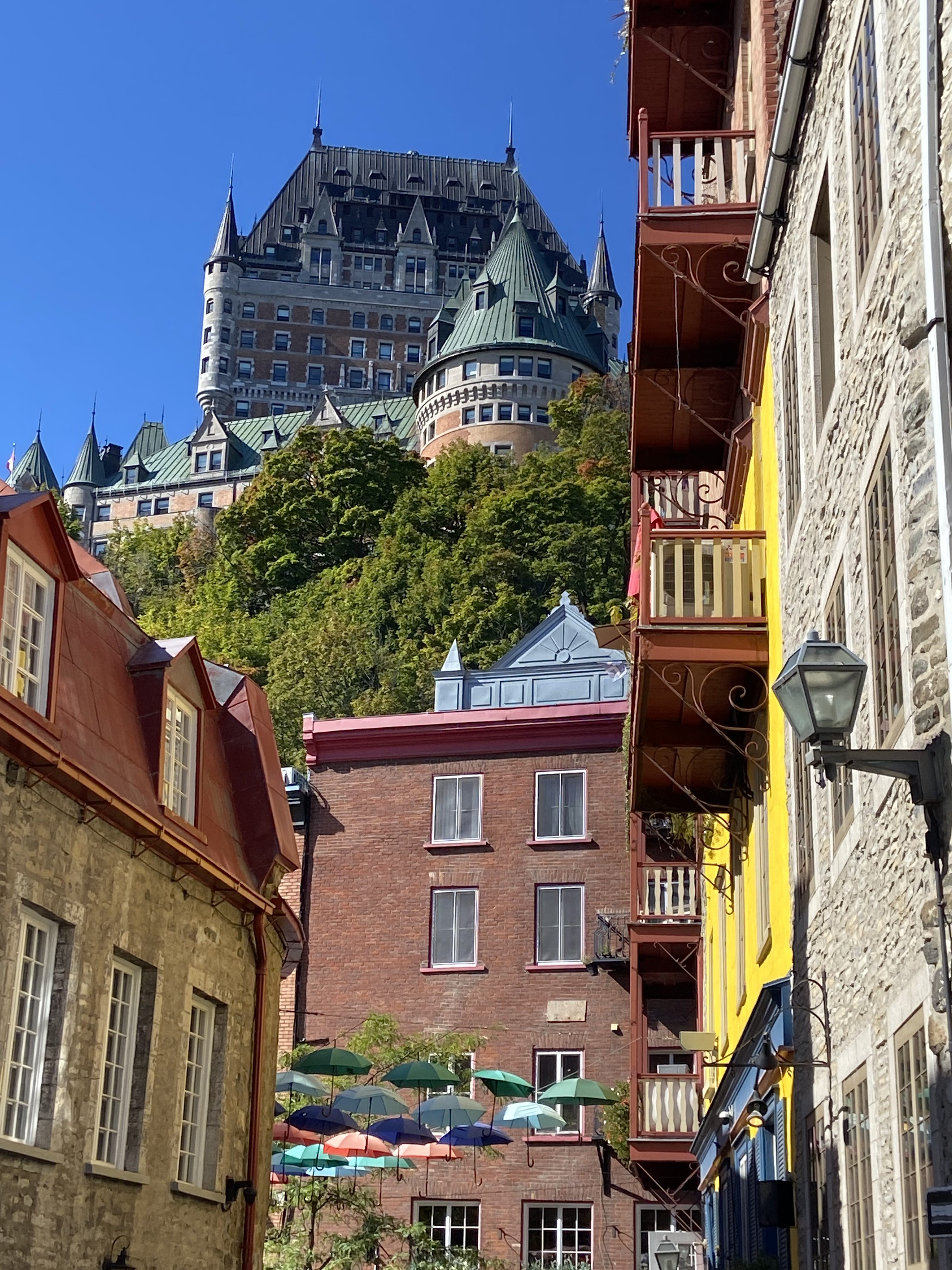
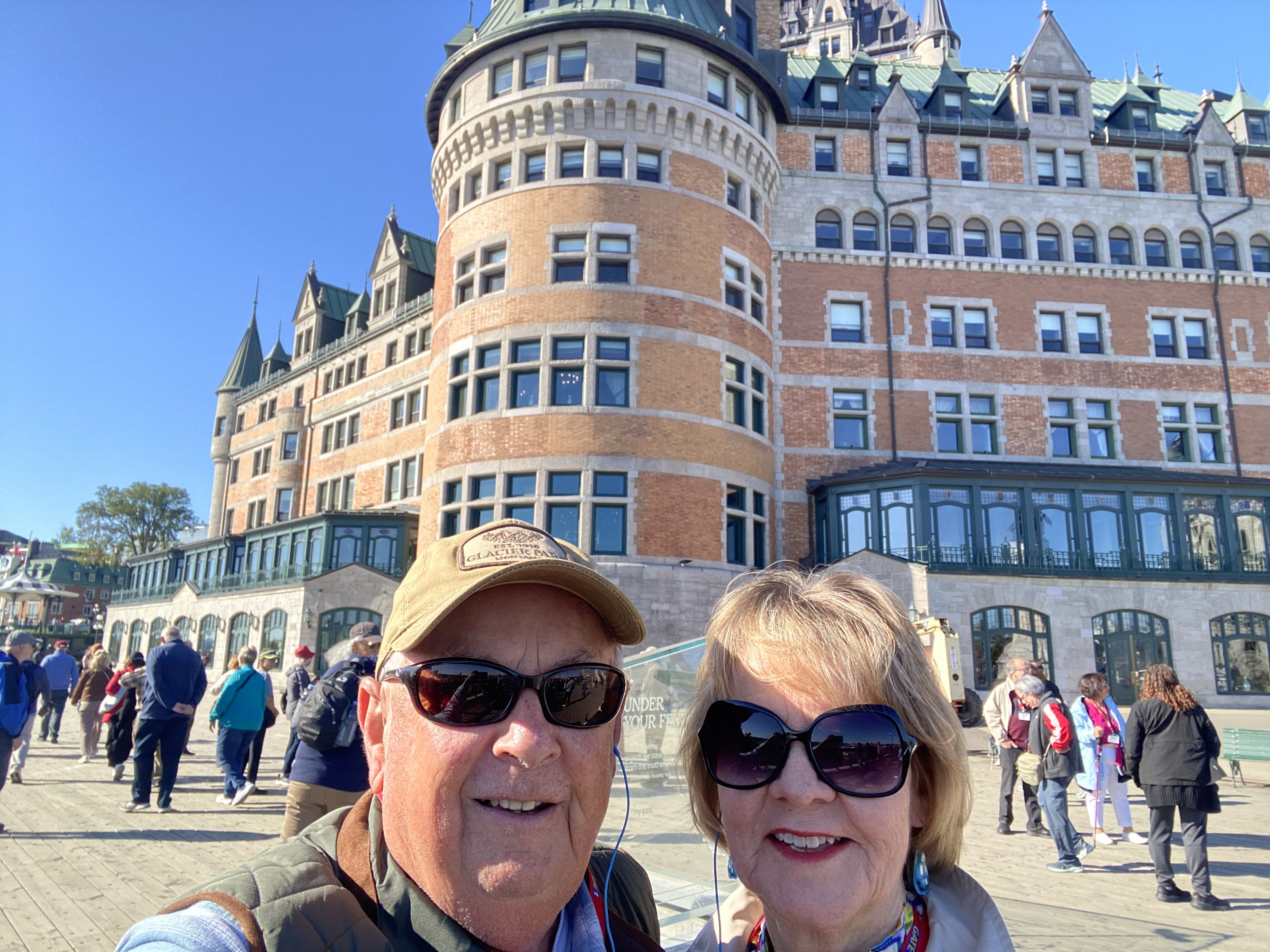
The Fairmont Le Chateau Frontenac, situated near Champlain’s statue, is the most photographed hotel in the world (not sure how this is measured?). I did take a few pictures myself, including a selfie.
The Parliament Building in Quebec City, built between 1877 and 1886, sits close to an entrance to the fortified part of the city. It served as a landmark for my husband and me when we would walk to the walled part of the city.
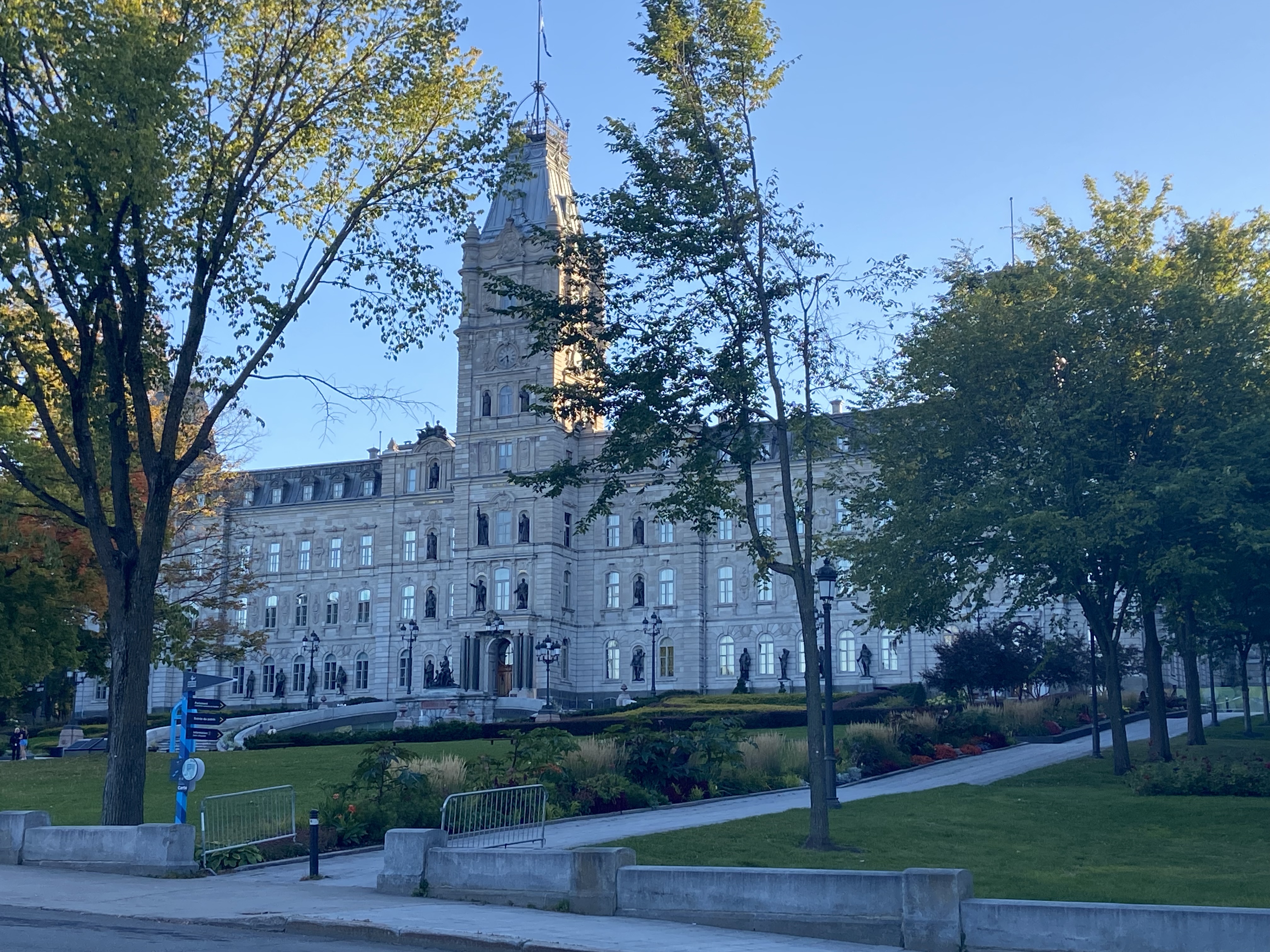
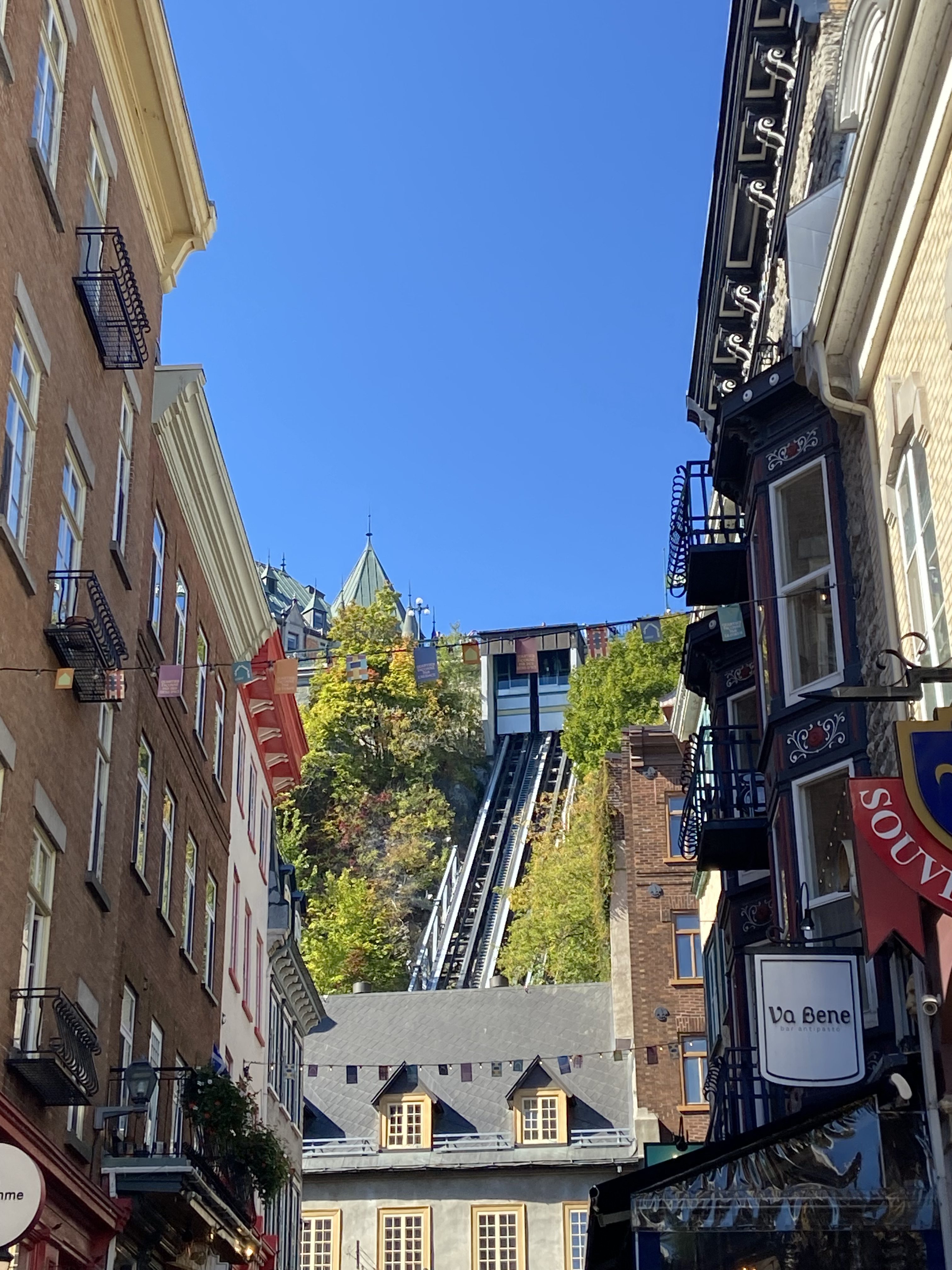
Quebec City is hilly. A funicular connects Upper Town to Lower Town. No, I didn’t get to ride it, one of the disadvantages of traveling with a guide who has other plans, like a bus, for transportation.
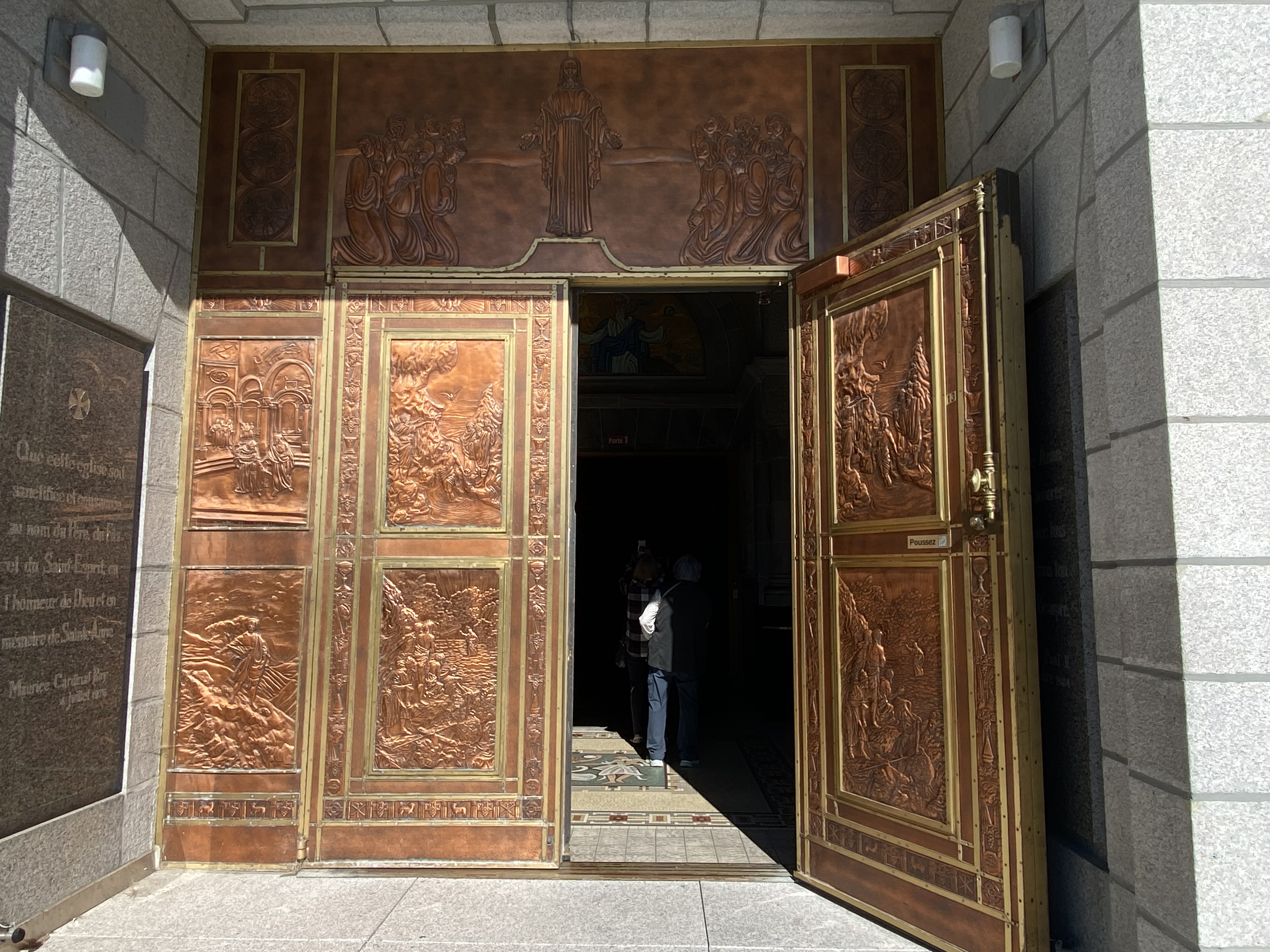
Still, the bus came in handy when we traveled out of Quebec City to visit the Shrine of Saint Anne de Beaupre. The oldest pilgrimage site in North America, the first chapel was built here in 1658. Today’s basilica, constructed in 1922 after fire destroyed the first, boasts intricate carved copper doors that were made in Quebec City.
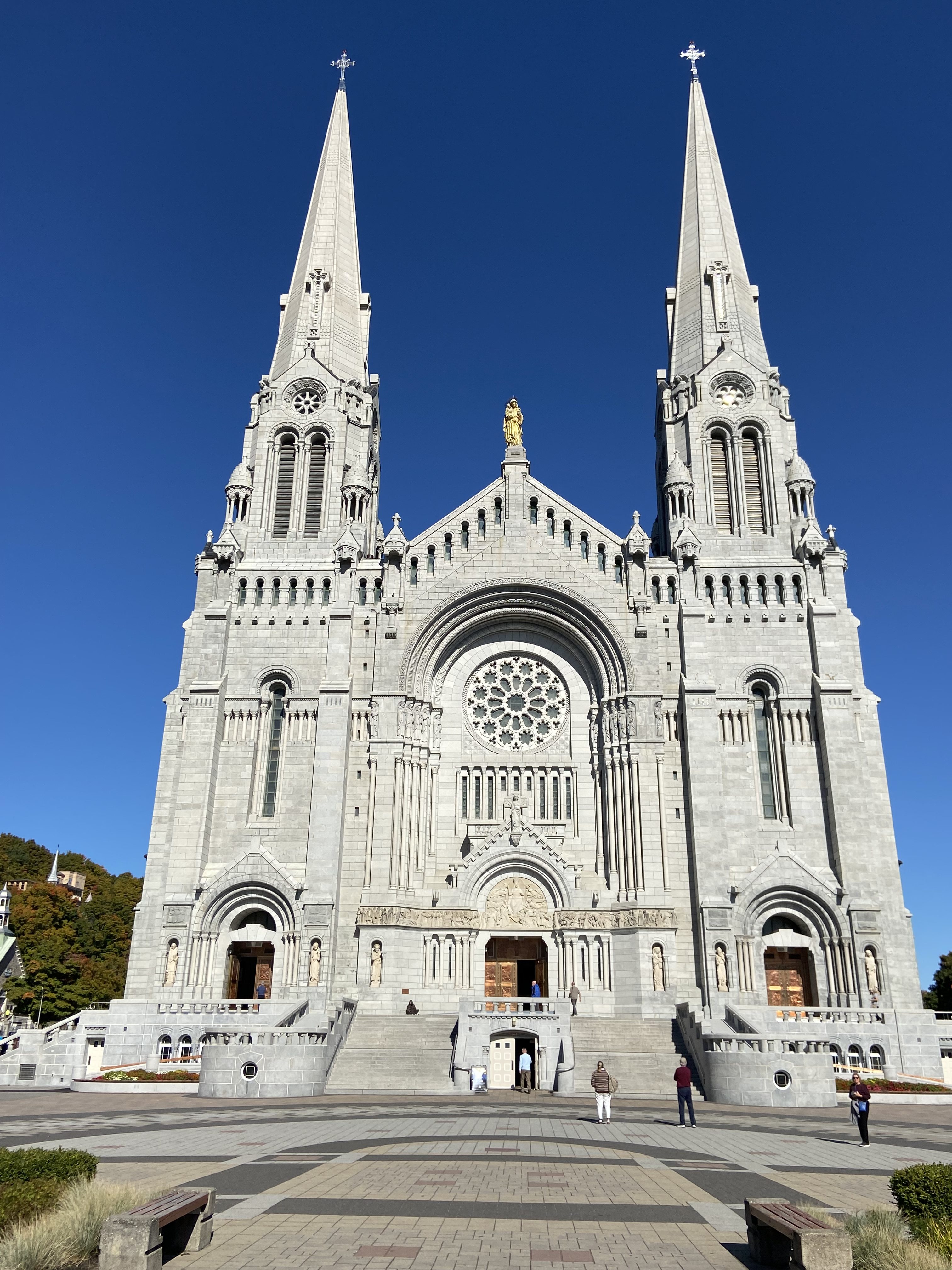
Saint Anne is believed to be the mother of Mary, and thus, the grandmother of Jesus. Her statue is a focal point in the church.
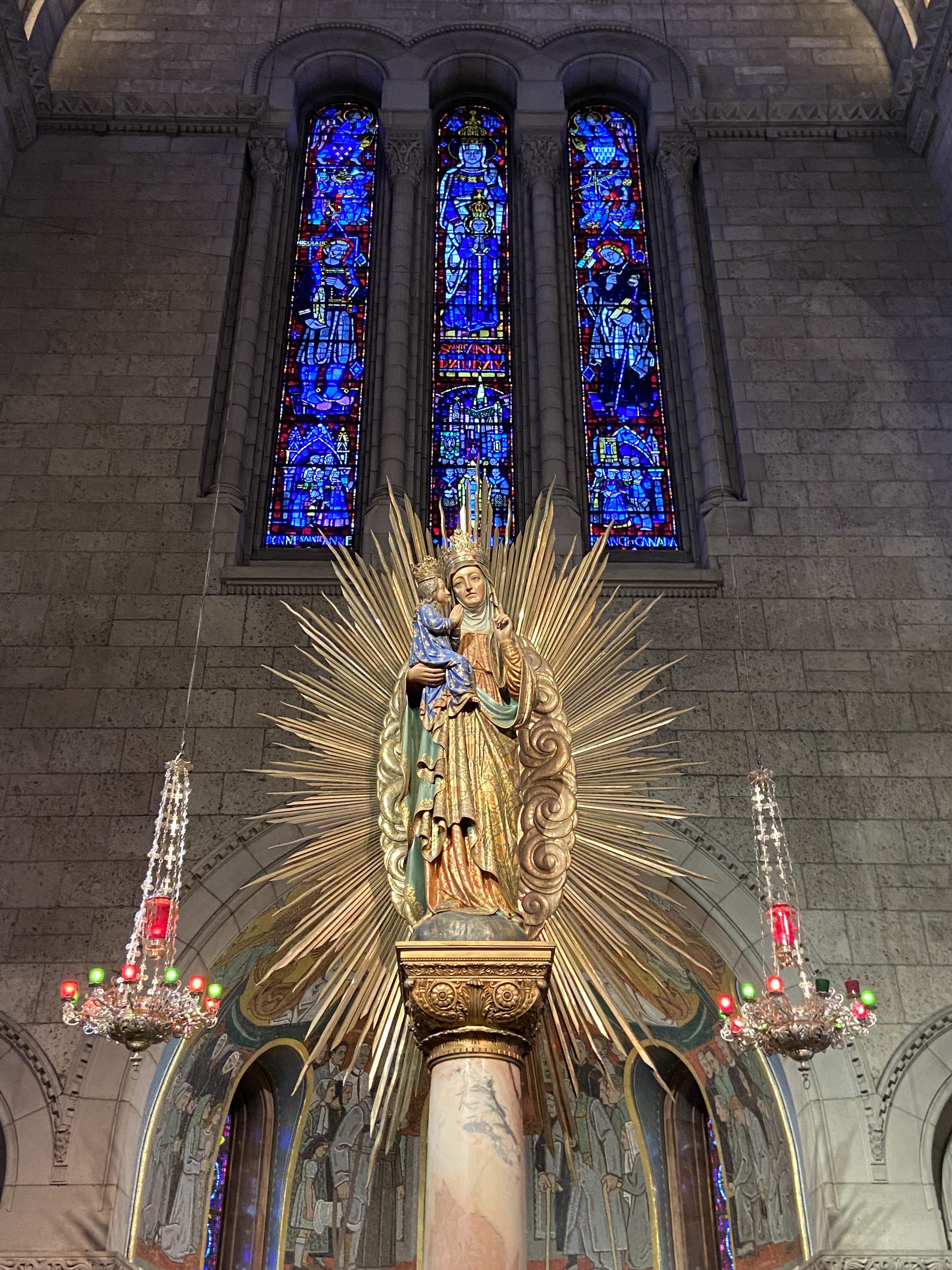
We were surprised to find a stunning replica of Michelangelos’ Pieta on the lower floor of the Basilica.
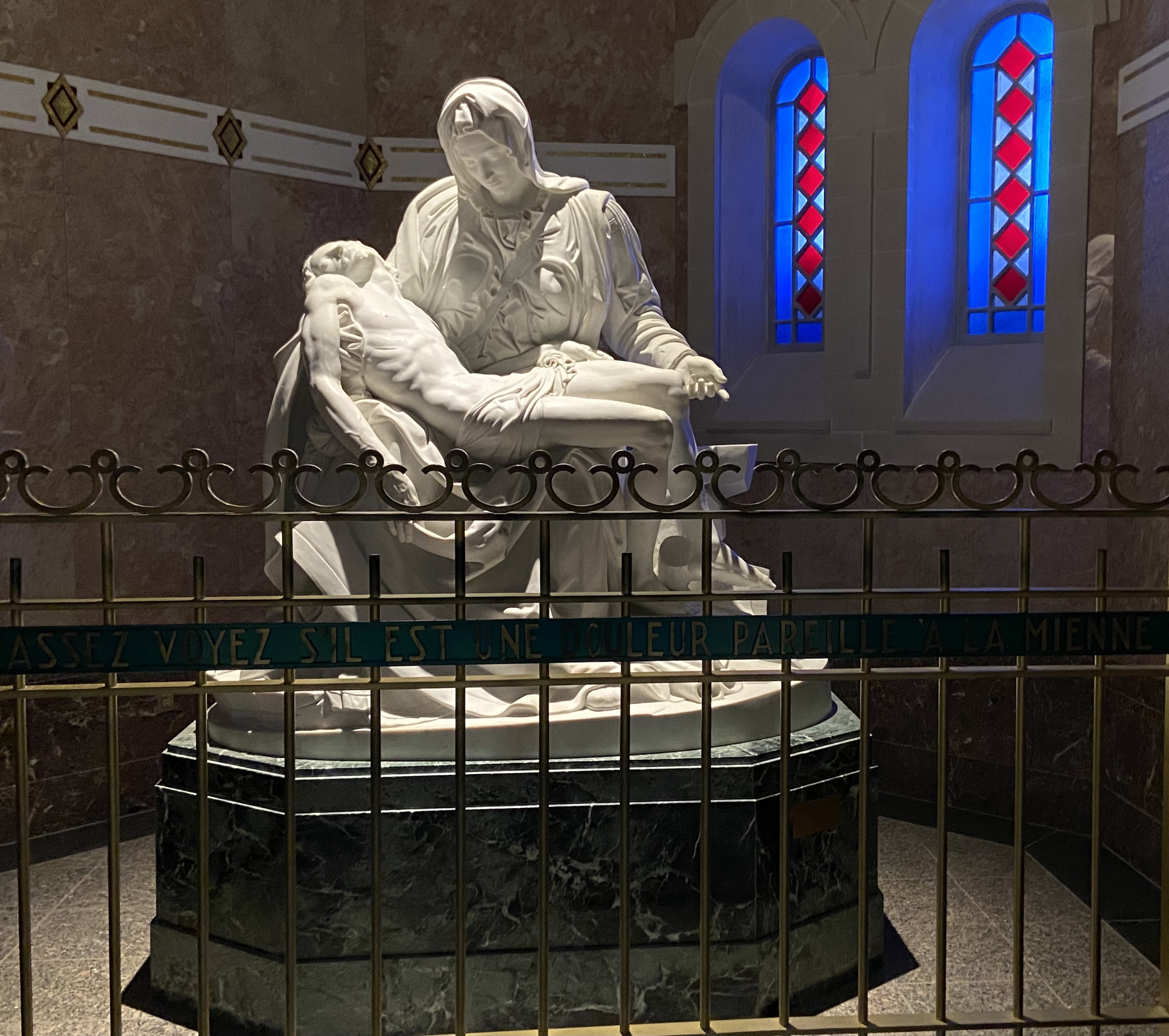
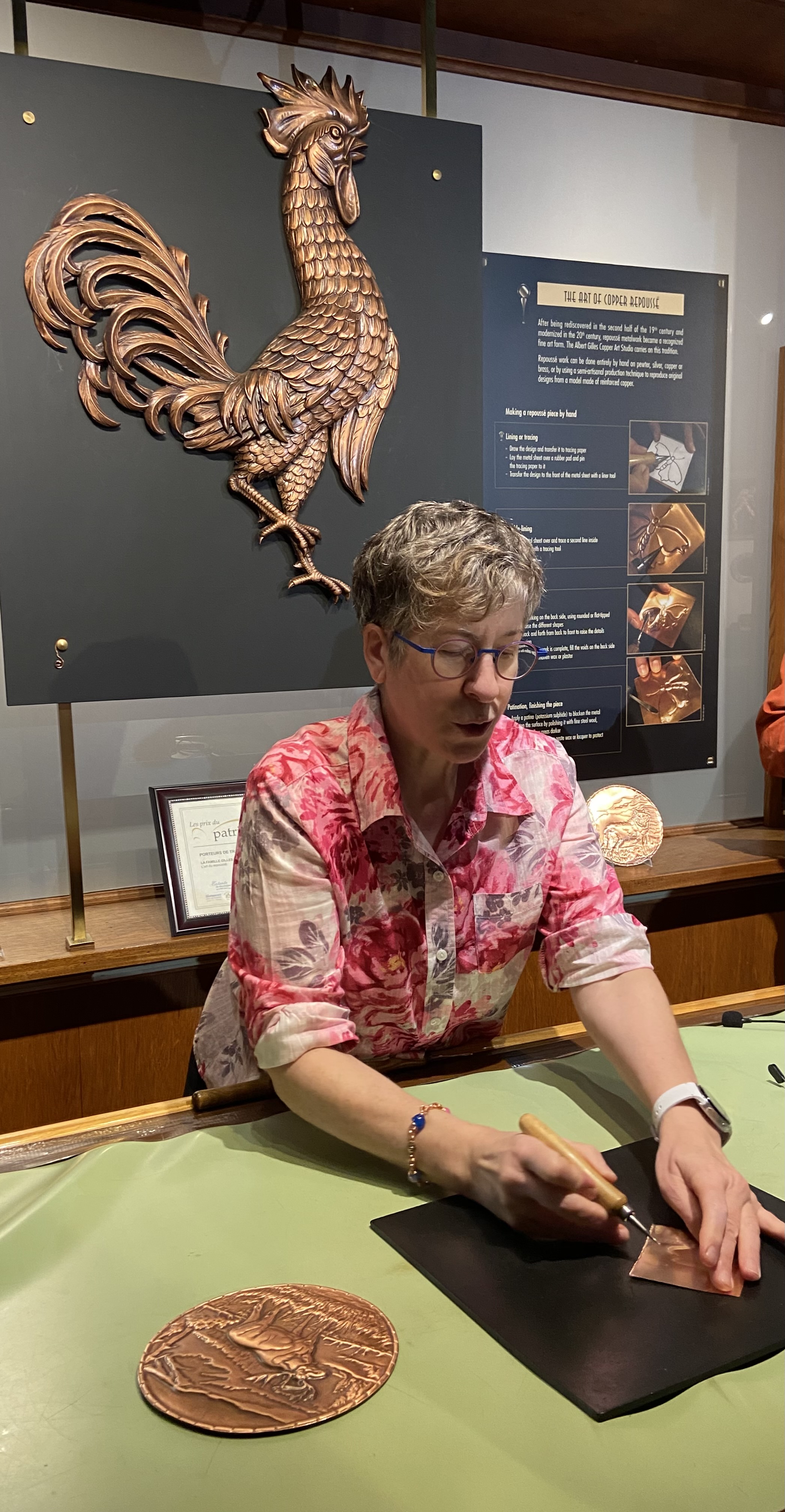
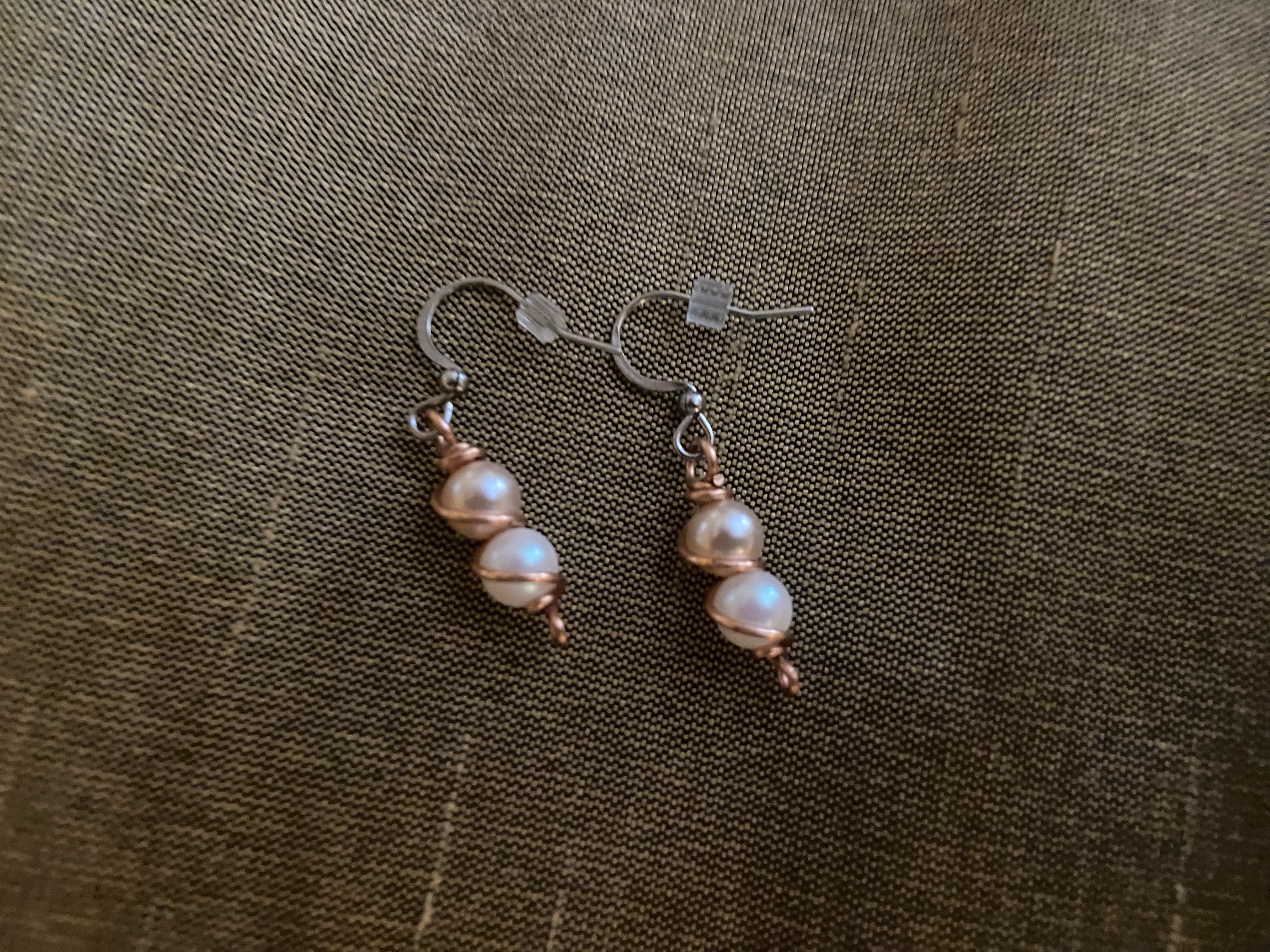
Copper is part of Quebec’s economy. We visited a store with all kinds of copper products from wall hangings to jewelry. Our hostess there demonstrated her craft, and of course, many of the ladies on the tour, myself included, bought handmade copper jewelry.
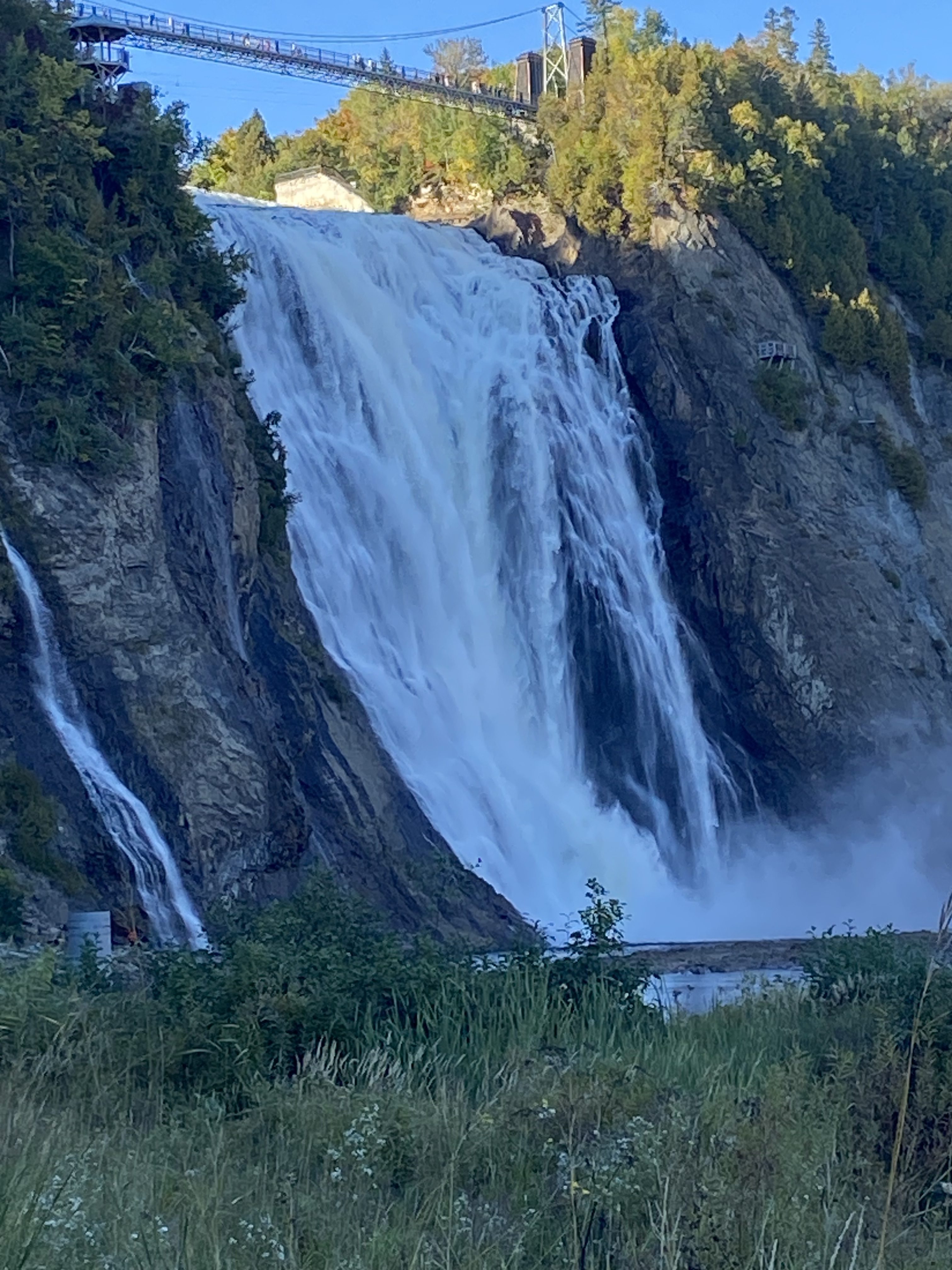
Montgomery Falls (also called Montmorency Falls), located seven miles outside Quebec, is actually 99 feet taller than Niagara Falls. So why isn’t it as famous? Niagara Falls is wider and carries more volume of water.
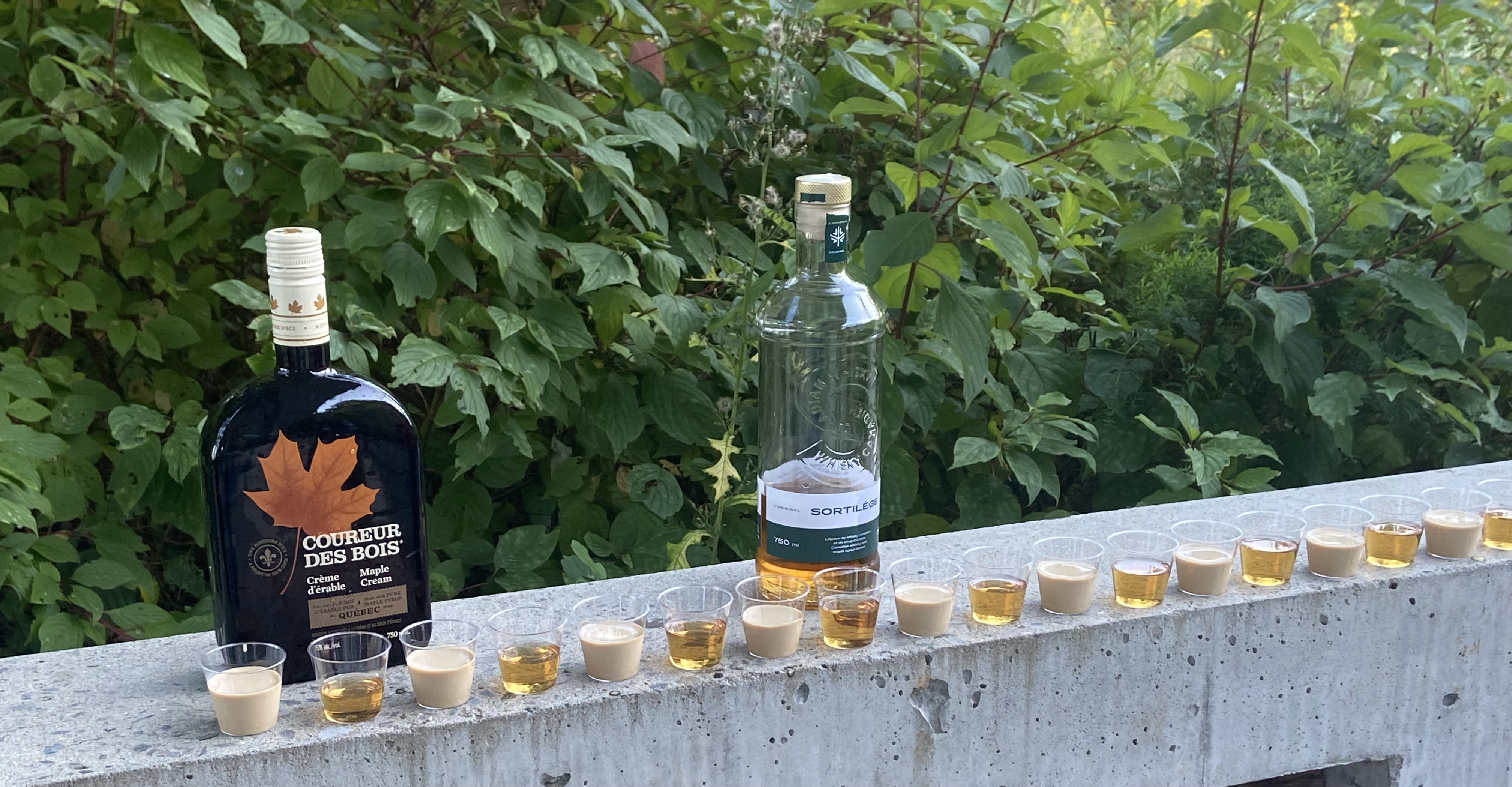
Our tour director set up a tasting of Canadian adult beverages here at the falls. One of the advantages of traveling with a guide!
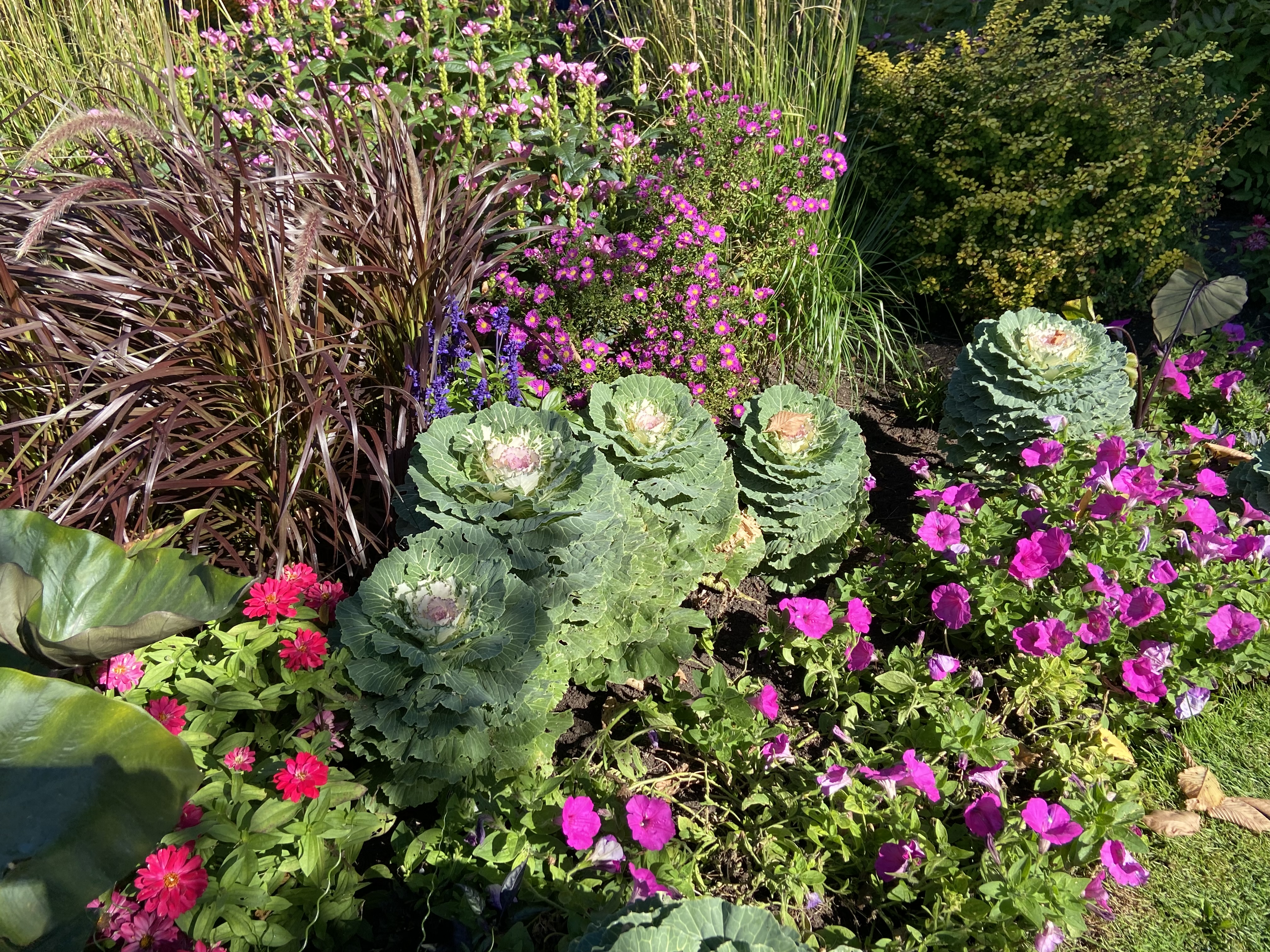
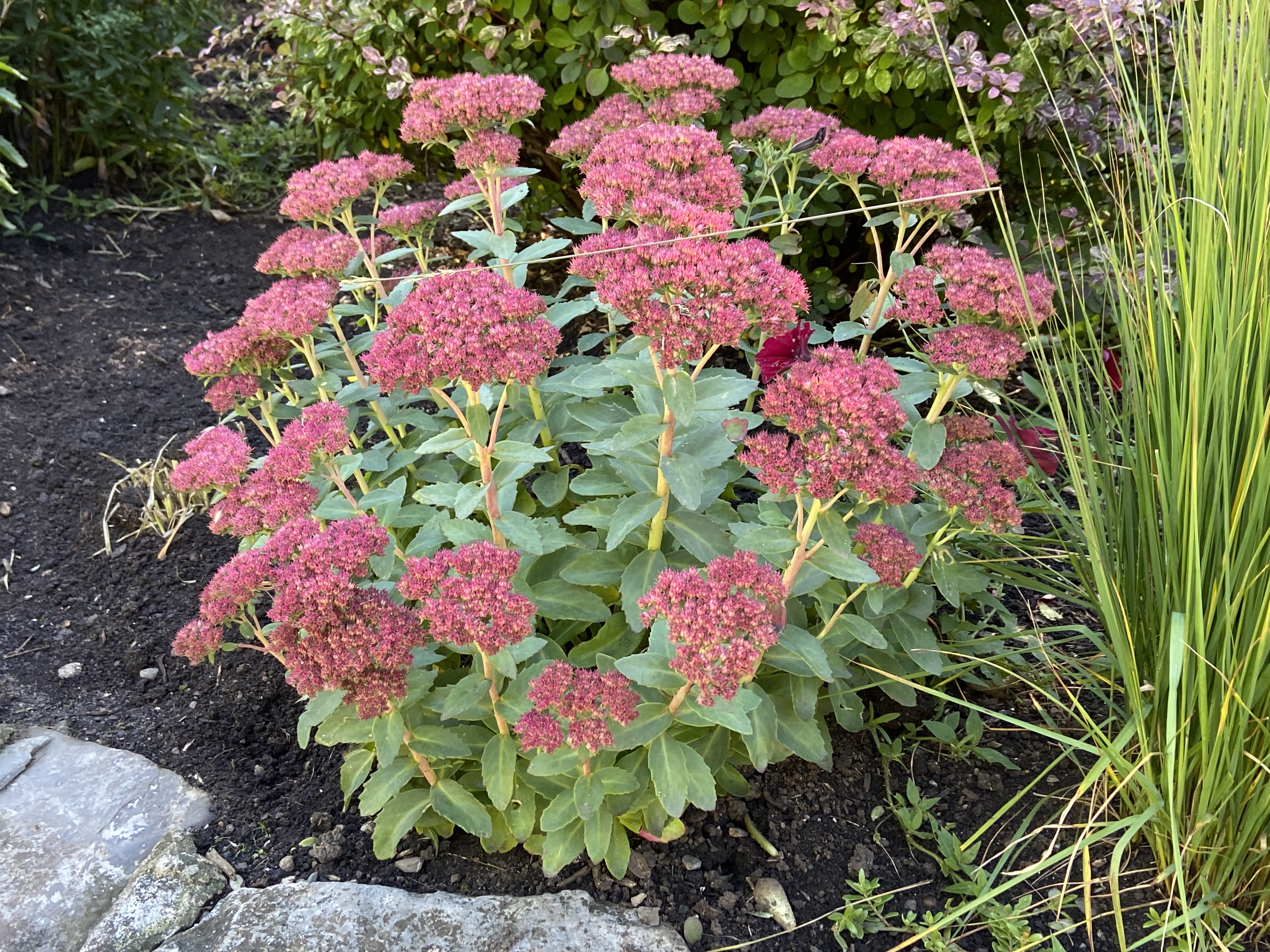
The French and English have a long history of conflict in Quebec. In 1759, a historic battle between the two took place at a place called the Plains of Abraham. The British won, giving them control of Quebec. We rode past the area where the battle took place, but I was more interested in the amazing flowers at an adjacent park.
Just look at the size of those ornamental cabbages and the flowers on that sedum!
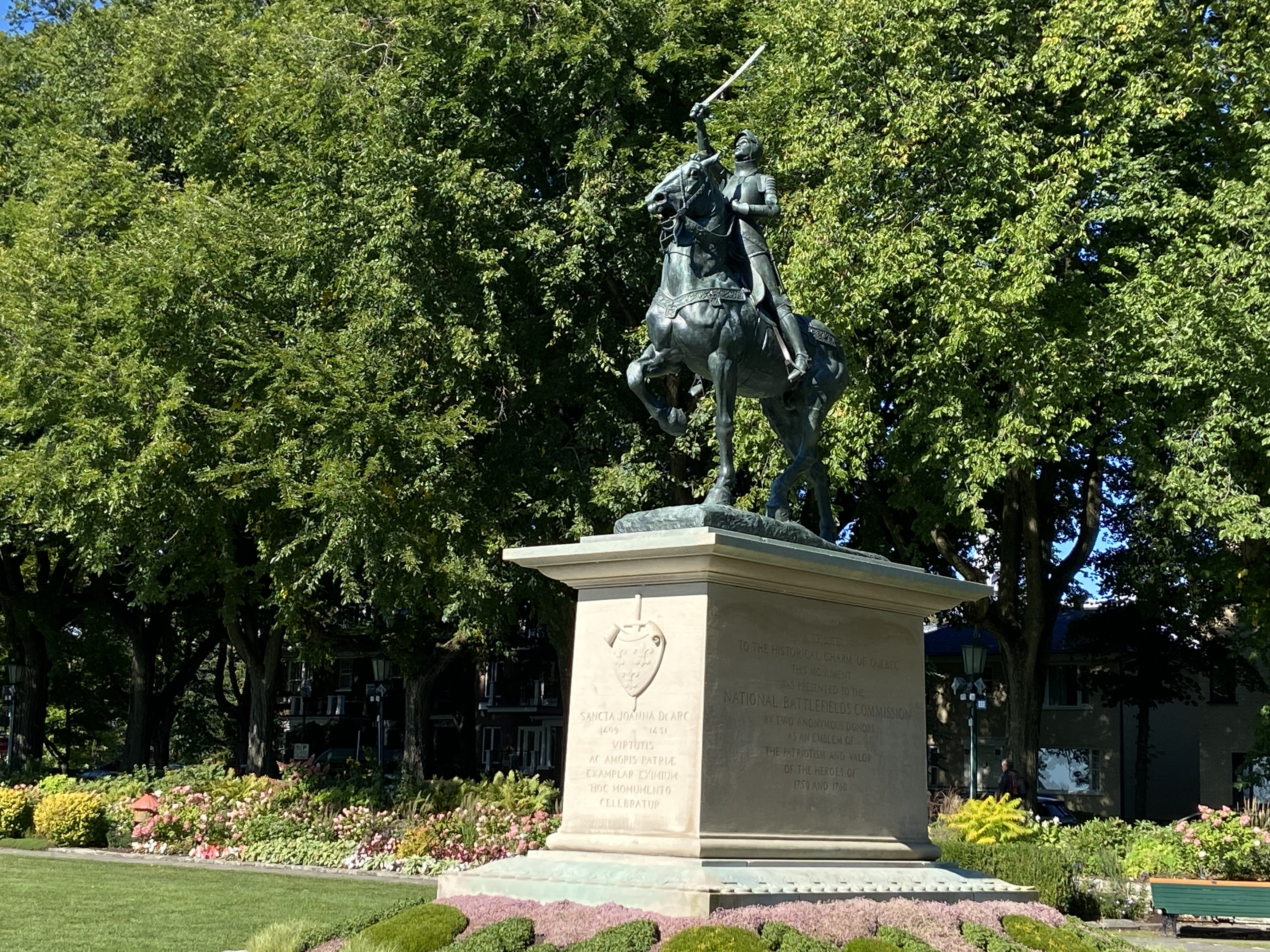
There is also an interesting statue of Joan of Arc at the Plains of Abraham. It’s a bit ironic that this statue is placed here as Joan of Arc is noted for liberating the French from the English, yet the opposite occurred at the Plains of Abraham.
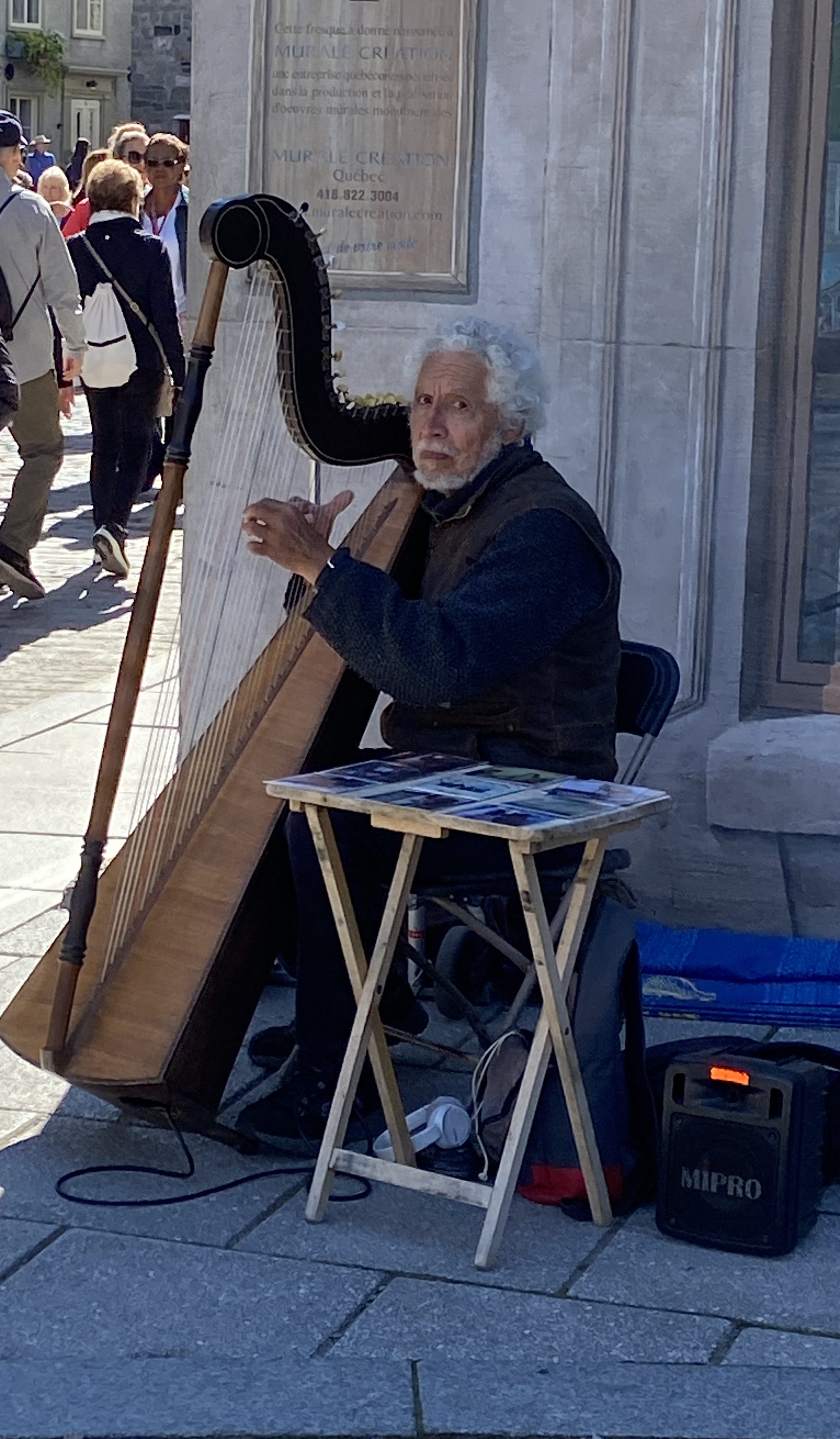
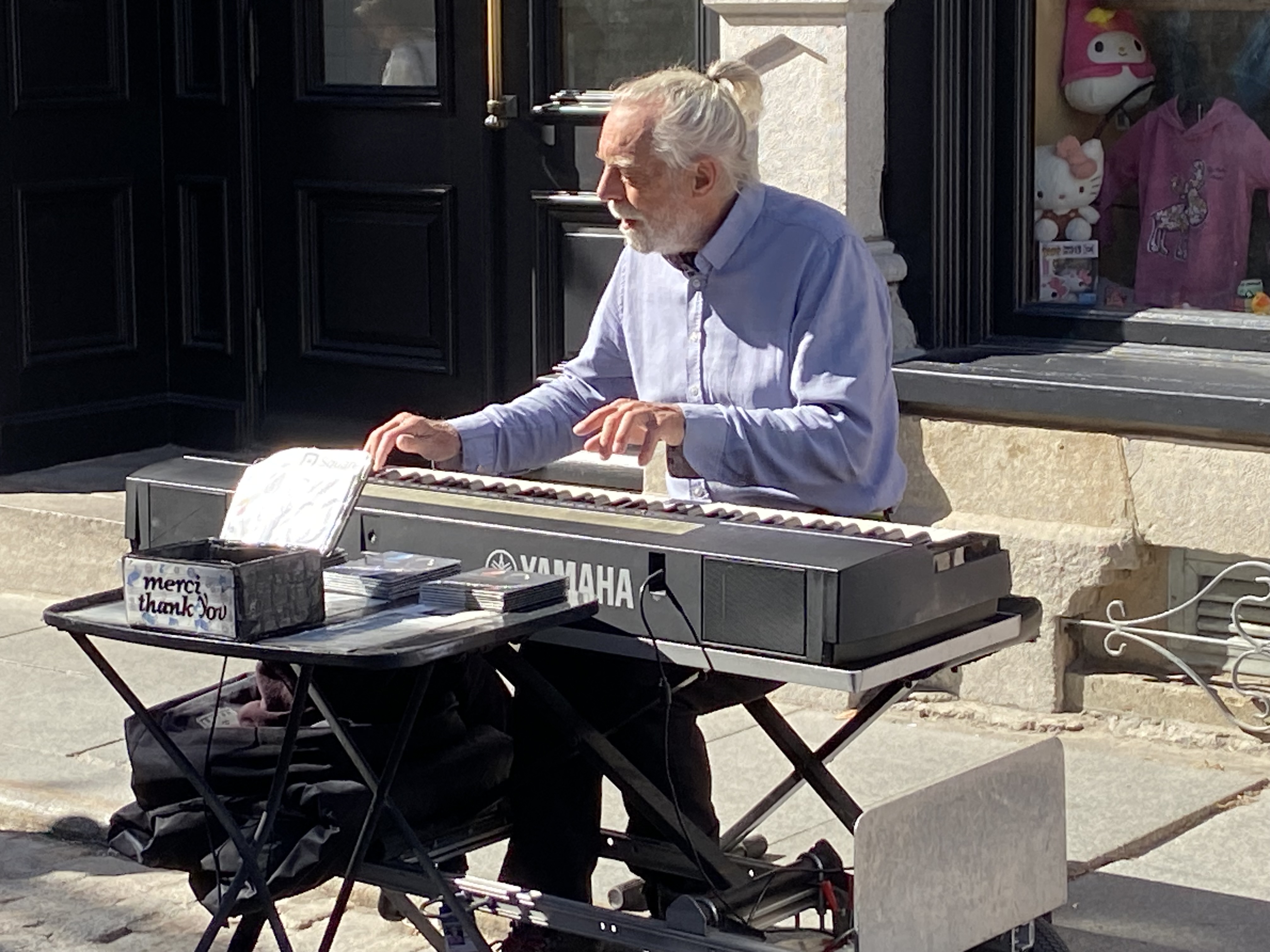
I’ll close with another example of what makes Quebec so European: street musicians playing classical music.
We had several French-Canadian dishes, but I’ll save that food commentary for my final post where I highlight another city in the province of Quebec and our final stop: Montreal.